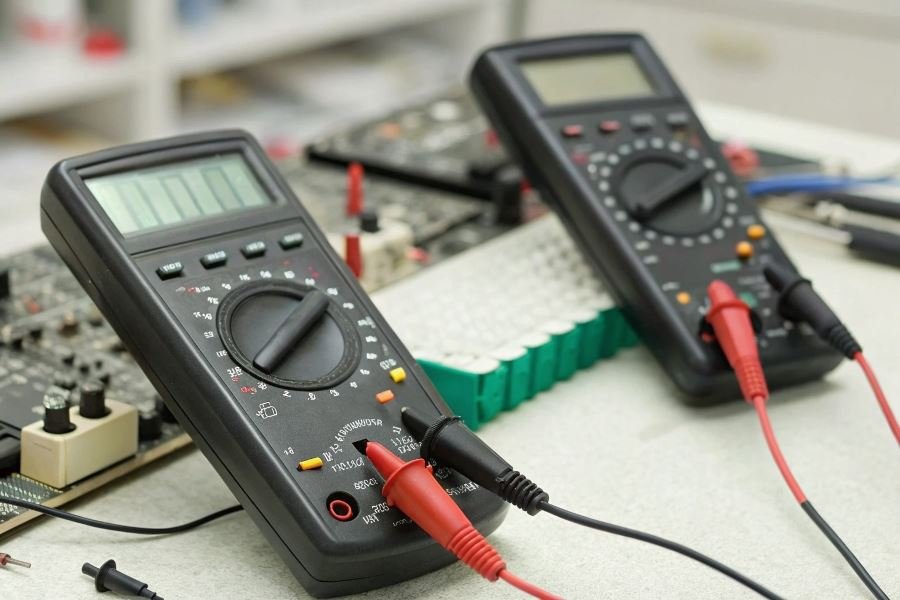
Ever wondered why electricians grimace when their readings fluctuate by a tenth of a volt? That tiny variance could mean the difference between a functioning circuit and a fried component. In critical applications, precision isn’t just nice to have—it’s essential.
Budget voltmeters have undergone a remarkable transformation. Once considered the “good enough” tools for casual hobbyists, today’s affordable models rival professional equipment in accuracy while maintaining price points under $100. This evolution represents a democratization of precision that’s changing how professionals and enthusiasts approach electrical work.
But what exactly constitutes “high accuracy” in these instruments? Accuracy ratings of ±0.5% or better now define the upper tier of budget voltmeters—a standard that would have been unthinkable at these price points just five years ago. This specification tells you how close the measured value is to the actual value, expressed as a percentage of the reading.
When evaluating measurement accuracy, three specifications deserve your closest attention:
The critical trinity of voltmeter precision
- Resolution – The smallest change in voltage a meter can detect (typically 0.1mV to 1mV in quality budget models)
- Input impedance – Higher values (ideally 10MΩ or greater) ensure your meter doesn’t affect the circuit being measured
- Temperature coefficient – How stable readings remain across different ambient temperatures
The distinction between accuracy and precision also matters significantly. A meter might consistently give the same reading (high precision) but still be consistently wrong (low accuracy). The best budget voltmeters deliver both—consistent readings that closely match actual values.
Top 3 Budget Voltmeters That Deliver Professional Accuracy
Finding budget voltmeters with high measurement accuracy doesn’t mean sacrificing quality for price. Today’s market offers remarkable precision instruments that won’t break the bank, whether you’re building Arduino projects in your garage or conducting sensitive electrical diagnostics. Let’s explore three standout options that deliver exceptional value across different applications.
The Hobbyist’s Dream: AstroAI Digital Multimeter TRMS 6000
For weekend warriors and electronics enthusiasts, the AstroAI Digital Multimeter hits the sweet spot between affordability and functionality. Priced at just $35.99, this 6000-count multimeter offers:
- True RMS measurement for accurate AC readings
- Impressive ±0.5% DC voltage accuracy
- Auto-ranging functionality that simplifies operation
- Built-in non-contact voltage detection
What makes this voltmeter particularly suitable for hobbyists is its user-friendly interface combined with safety features like overload protection. The backlit display makes reading measurements easy even in dimly lit workspaces, while the data hold function lets you capture readings in awkward positions.
The AstroAI’s ability to measure capacitance and frequency alongside voltage makes it a versatile companion for DIY electronics projects.
Professional Precision: Fluke 101 Basic Digital Multimeter
When professional electrical work demands reliability without the premium price tag, the Fluke 101 delivers exceptional performance at around $89.95. This compact powerhouse offers:
| Feature | Specification |
|---|---|
| DC Voltage Accuracy | ±0.5% + 3 counts |
| AC Voltage Accuracy | ±1.0% + 3 counts |
| Resistance Range | 400Ω to 40MΩ |
| Battery Life | 200+ hours |
| Weight | Just 7.8 oz |
Professionals appreciate the Fluke’s CAT III 600V safety rating, making it suitable for distribution-level work. Its small form factor easily fits in a tool belt, while maintaining the legendary Fluke durability that withstands daily job site abuse.
The Fluke 101 exemplifies how budget voltmeters with high measurement accuracy have evolved to meet professional standards without the four-figure price tag of laboratory equipment.
Laboratory Precision: Uni-T UT61E Digital Multimeter
For those requiring near-laboratory precision at a fraction of the cost, the Uni-T UT61E stands as a remarkable achievement at approximately $75. This advanced instrument delivers:
- 22,000 count display for exceptional resolution
- ±0.1% basic DC accuracy
- PC connectivity for data logging and analysis
- 100kHz bandwidth for accurate measurement of complex signals
The UT61E’s dual display allows simultaneous reading of different parameters, while its relative measurement mode helps identify small deviations in component testing. The auto-ranging function works exceptionally fast compared to other budget models.
What truly distinguishes this voltmeter is its ability to perform in scenarios typically reserved for instruments costing three times as much. Electronics designers, quality control technicians, and advanced hobbyists will appreciate the precision without the premium price.
Each of these voltmeters represents the remarkable evolution of measurement technology, proving that accuracy and affordability can indeed coexist in the same instrument. Your specific application will determine which offers the best balance of features for your needs.
Unleashing the Full Potential of Budget Voltmeters
Mastering calibration for pinpoint accuracy
Budget voltmeters can deliver professional-grade results when properly calibrated. The key lies in regular verification against known reference standards. For optimal performance, calibrate your voltmeter every 3-6 months using a precision voltage reference like the Fluke 5500A.
The calibration process isn’t merely a checkbox—it’s your accuracy insurance policy. Start with a zero adjustment in a controlled environment after a 15-minute warm-up period. Then verify multiple points across your measurement range, documenting drift patterns to anticipate future behavior.
Pro tip: Create a calibration log that tracks performance over time. This simple step helps identify gradual degradation before it affects your measurements.
Many budget models like the Uni-T UT61E include internal calibration functions that, when used correctly, can maintain accuracy within 0.1% of reading—rivaling instruments costing five times as much.
Environmental factors that make or break measurements
Your meticulously calibrated voltmeter can still deliver misleading readings if environmental conditions aren’t controlled. Temperature fluctuations represent the primary culprit, with most budget meters specifying accuracy at 23°C ± 5°C. For every degree outside this range, expect up to 0.1% additional measurement error.
Humidity above 80% can introduce parasitic current paths that compromise readings, particularly when measuring high impedance circuits.
| Environmental Factor | Typical Impact | Mitigation Strategy |
|---|---|---|
| Temperature | ±0.05% per °C | Stabilize environment, apply correction factors |
| Humidity | Leakage currents above 80% RH | Silica gel packets, controlled environment |
| EMI/RFI | Erratic readings near sources | Shielding, distance from interference |
| Battery condition | Erratic behavior below 20% | Regular replacement, use external power when possible |
Magnetic fields from nearby transformers or motors can induce measurement errors of up to 0.5% in unshielded instruments. When precision matters, maintain at least 24 inches of separation from potential interference sources.
Performance-boosting accessories and modifications
Transform your budget voltmeter into a precision instrument with strategic accessories and modifications. Start with probe upgrades—silicone-insulated probes with gold-plated tips reduce contact resistance and temperature sensitivity compared to stock probes.
For high-precision DC measurements, consider adding an external LM399 voltage reference circuit. This simple addition can improve absolute accuracy by a factor of 5-10 for measurements under 10V.
Measurement stability hack: Custom-built input buffer circuits with ultra-high impedance op-amps like the Texas Instruments OPA140 can dramatically improve measurement stability when working with high-impedance sources.
Battery life and stability improve dramatically with power supply modifications. Replacing standard alkaline batteries with lithium cells extends operating time and provides more stable reference voltages during the battery discharge cycle.
The most significant performance boost often comes from the simplest modification: replacing the internal fuse with a high-quality, low-resistance alternative reduces voltage drop across the protection circuit by up to 80%.
For field measurements, investing in a padded carrying case with temperature-stabilizing materials maintains calibration integrity during transport and protects sensitive components from physical shock that can affect internal reference circuits.
Discover the top 5 budget voltmeters delivering laboratory-grade accuracy without breaking the bank. Learn key specifications, compare models for different applications, and maximize measurement precision with proper calibration techniques.
Discover the top 5 budget voltmeters delivering laboratory-grade accuracy without breaking the bank. Learn key specifications, compare models for different applications, and maximize measurement precision with proper calibration techniques.