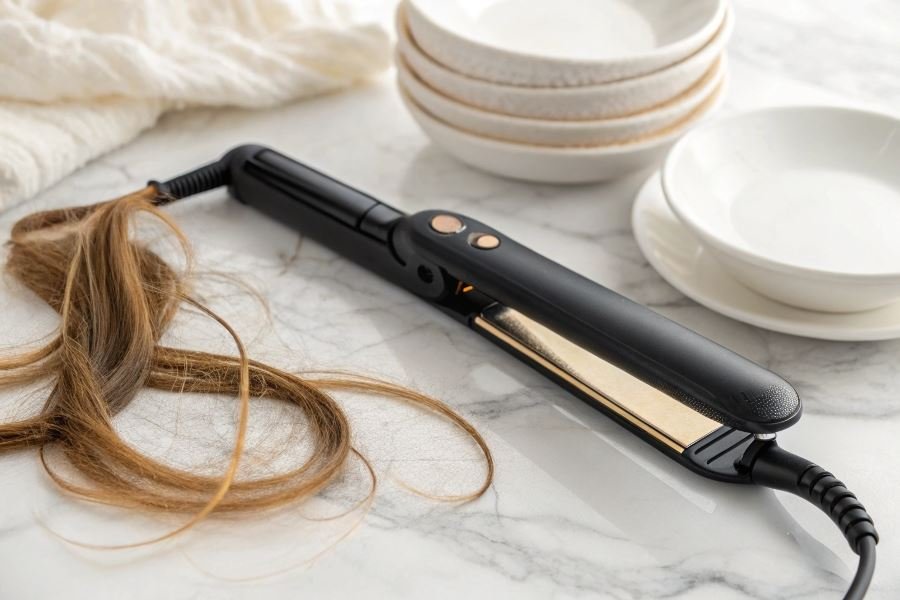
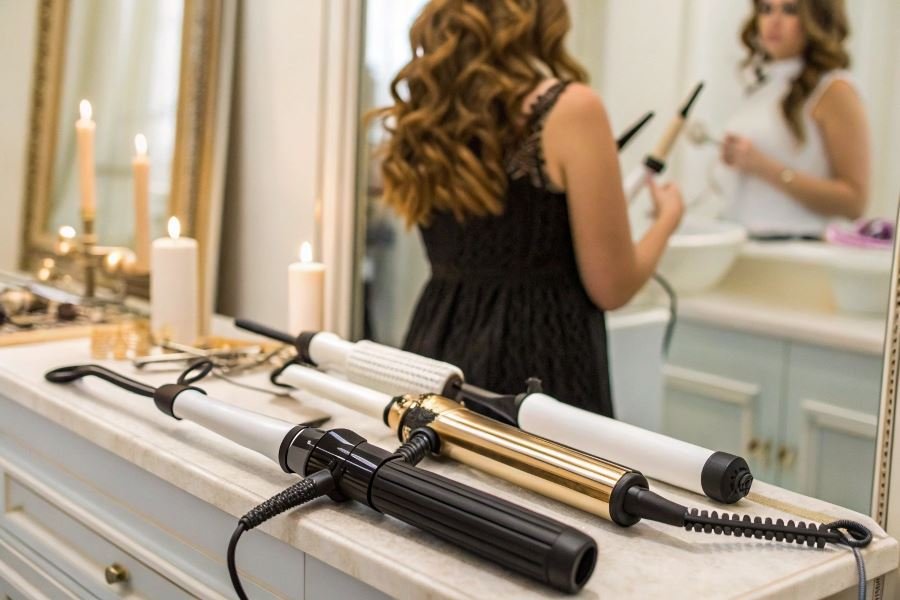
Ever wondered how celebrities achieve those perfect, salon-quality curls day after day? The secret weapon transforming hair routines across America isn’t just skill—it’s technology. Automatic curling irons have quietly revolutionized the way we style our hair, offering precision that manual tools simply can’t match.
At their core, automatic curling irons are sophisticated styling tools that mechanically draw hair into a heated chamber, curl it according to programmed settings, and release it as a perfectly formed curl. Unlike traditional curling wands where user technique determines results, these devices use motorized systems to create consistent curls with minimal effort. The heating element surrounds the hair strand evenly, while timers and temperature controls ensure predictable results every time.
The evolution of this technology tells a fascinating story of innovation. What began as bulky salon equipment in the early 2000s has transformed into sleek, intuitive devices for home use. The global hair styling tools market now exceeds $3.5 billion, with automatic curlers representing the fastest-growing segment.
Before investing $100-300 in one of these devices, consider three critical factors:
- Hair type compatibility – Fine hair requires lower temperatures and shorter curl times than thick or coarse hair
- Direction control – Premium models offer both left and right curl direction for natural-looking results
- Learning curve – Despite being “automatic,” these tools require practice to master
“The best automatic curling iron isn’t necessarily the most expensive—it’s the one that works with your specific hair type and styling goals.”
These intelligent styling tools promise consistency and convenience, but they come with both remarkable advantages and notable limitations worth understanding before making your investment.
The Game-Changing Magic of Automatic Curling Irons
Let’s face it—traditional curling irons require a peculiar kind of coordination that many of us simply weren’t blessed with. Enter automatic curling irons, the hair styling revolution that’s transforming morning routines across America. These ingenious devices have completely reimagined how we approach hair styling, offering significant advantages that make traditional curling tools seem almost primitive by comparison.
When examining automatic curling irons: advantages and disadvantages become immediately apparent, though the benefits dramatically outweigh the drawbacks for most users. The technology behind these tools represents a genuine leap forward in both functionality and user experience, making salon-quality curls accessible to virtually anyone.
Effortless Styling for Every Skill Level
The primary appeal of automatic curling irons lies in their remarkable time efficiency. What once took 30-45 minutes with traditional tools can now be accomplished in as little as 10-15 minutes. The Dyson Airwrap and T3 Curl ID models, for instance, feature chambers that automatically draw hair in, heat it to the perfect temperature, and release it as a perfectly formed curl.
No more awkward wrist positions or burned fingertips. The learning curve practically disappears, making these tools ideal for:
- Busy professionals with limited morning prep time
- Those with mobility issues in their hands or wrists
- Complete beginners who’ve never mastered manual curling techniques
Safety Innovations That Protect Hair and Skin
The safety enhancements in automatic curling irons represent a significant advancement over their traditional counterparts:
| Safety Feature | Benefit |
|---|---|
| Auto shut-off | Prevents accidental fires and overheating |
| Cool-touch exteriors | Minimizes burn risk to fingers and scalp |
| Heat distribution sensors | Prevents hot spots that damage hair |
| Tangle prevention | Automatically releases hair if too much is inserted |
The CHI Spin N Curl incorporates ceramic heat technology that reduces heat damage by up to 50% compared to traditional metal barrels. Meanwhile, the BaBylissPRO Nano Titanium line features negative ion technology that seals the hair cuticle, resulting in smoother, shinier curls with significantly less frizz and damage.
Styling Versatility That Rivals Professional Tools
Perhaps most impressive is the range of styling options packed into these devices:
- Multiple heat settings calibrated for different hair types (fine, medium, coarse)
- Adjustable timer functions that determine how tight or loose curls will be
- Bi-directional curling for more natural-looking results
- Varying barrel sizes in some models for different curl diameters
The Conair Unbound Auto Curler offers five distinct heat settings and three timer options, creating 15 different curl combinations from a single device. Similarly, the Beachwaver provides programmable rotation speeds and automatic reversal functions that create everything from tight ringlets to beachy waves.
What truly sets these tools apart is their ability to create consistent results. Even when styling the back of your head—traditionally the most challenging area—automatic curlers deliver uniform curls that would make a professional stylist proud.
For those who’ve struggled with traditional curling methods or simply value efficiency without sacrificing quality, automatic curling irons represent not just a convenience but a genuine breakthrough in personal hair styling technology.
The Real Cost of Convenience: Automatic Curling Iron Tradeoffs
Let’s be honest—automatic curling irons have revolutionized home styling, but they’re not without their drawbacks. While these technological marvels promise perfect curls with minimal effort, there’s always a flip side to innovation. Before you rush to replace your traditional styling tools, let’s examine the less-discussed limitations that might impact your decision.
Premium pricing for automated styling
Automatic curling irons command significantly higher price points than their manual counterparts. While basic manual curling wands start around $20-30, entry-level automatic options typically begin at $80-100, with premium models from brands like Dyson and T3 reaching $500+.
This substantial price difference reflects the advanced technology packed inside—motors, sensors, timers, and heat distribution systems don’t come cheap. The question becomes: is the convenience worth the investment? For occasional styling, the cost-per-use calculation might not justify the expense, especially when professional-grade manual tools deliver excellent results at half the price.
Mastering the learning curve
Despite marketing claims of “instant mastery,” most users experience a significant adjustment period when switching to automatic curlers:
The technique differs fundamentally from traditional curling methods
Positioning hair correctly in the chamber requires practice
Understanding timing settings for different curl types takes experimentation
Many users report a frustrating first few weeks where results may actually be worse than with their manual tools. According to styling professionals, expect 5-7 styling sessions before achieving consistent results—a commitment some busy individuals aren’t prepared to make.
“The irony of automatic curlers is that they require a very specific technique. You’re essentially learning a completely new skill rather than transferring your existing curling knowledge.” — Professional stylist insight
Hair type and style limitations
Not all automatic curlers work equally well across hair types and desired styles:
| Hair Type | Common Limitations |
|---|---|
| Very thick | May require multiple passes; chamber capacity issues |
| Very fine | Can get tangled in mechanisms; may overheat |
| Very long | Length restrictions (typically 16″ maximum) |
| Textured/curly | May struggle with consistent curl formation |
Style versatility also presents challenges. While automatic curlers excel at creating uniform, polished curls, they often struggle with:
- Beach waves and loose styles – The automated chamber typically creates more defined curls
- Root volume – Most units can’t get close enough to the scalp
- Directional styling – Limited control over curl direction compared to manual tools
- Partial curling techniques – Difficult to curl just the ends or mid-lengths
For styling chameleons who enjoy varied looks, an automatic curler might become just one tool in a larger arsenal rather than a complete replacement—adding to both cost and storage requirements.
The technology continues advancing rapidly, with newer models addressing many of these limitations. However, understanding these potential drawbacks ensures your investment aligns with your specific styling needs, hair type, and budget priorities.
Discover the pros and cons of automatic curling irons in our comprehensive guide. Learn about time-saving benefits, safety features, and styling versatility versus higher costs and potential limitations for different hair types.
Discover the pros and cons of automatic curling irons in our comprehensive guide. Learn about time-saving benefits, safety features, and styling versatility versus higher costs and potential limitations for different hair types.