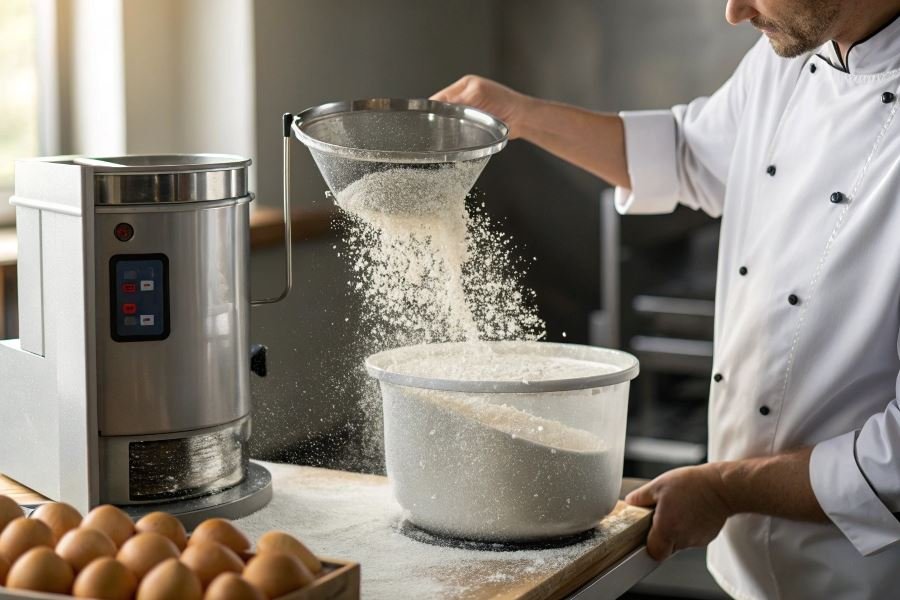
Ever wondered why professional bakers insist on sifting flour while you might skip this step at home? The difference could be what’s standing between you and bakery-quality results.
Flour sifters serve as the unsung heroes of the baking world, performing the crucial task of aerating flour while removing unwanted lumps and foreign particles. This seemingly simple process introduces oxygen into the flour, creating a lighter texture in your final baked goods. The difference between properly sifted and unsifted flour can transform dense, disappointing bread into airy, professional-quality loaves.
The evolution of flour sifting
Flour sifting technology has come remarkably far from its humble beginnings. Traditional hand-cranked sifters—those iconic metal cups with mesh bottoms and squeeze handles—dominated kitchens for generations. The first mechanical sifters appeared in commercial bakeries during the 1920s, but it wasn’t until the post-WWII era that technology truly advanced.
Automatic vs. semi-automatic: What’s the difference?
Semi-automatic sifters require some manual intervention—typically hand-cranking or shaking—to push flour through the mesh. They offer precise control and connect bakers physically to the process, much like kneading dough by hand.
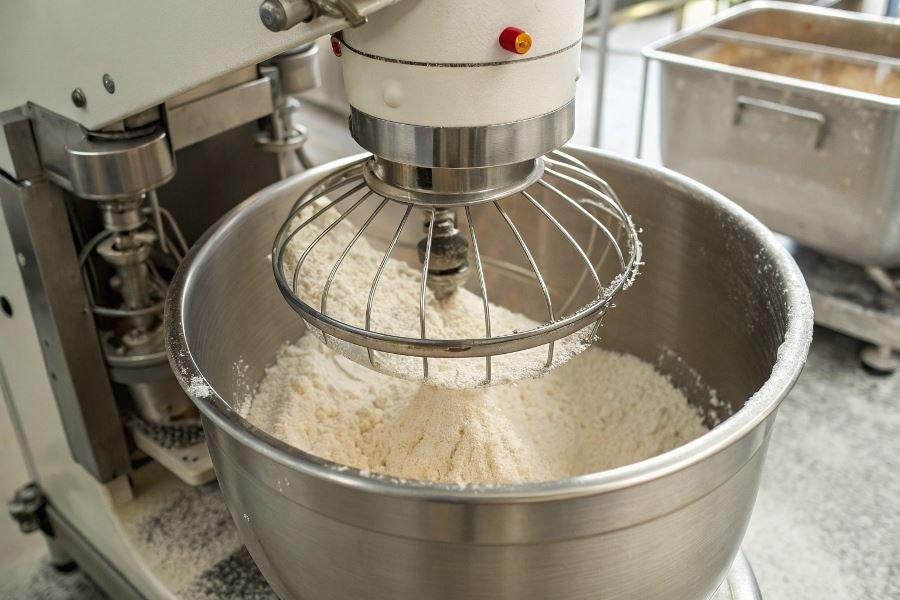
Automatic sifters, by contrast, handle everything with the push of a button. These powerhouses use motorized systems to sift flour continuously, maintaining consistent output without fatigue. Commercial models can process up to 50 pounds of flour per minute—a game-changer for high-volume operations.
The choice between these options ultimately depends on your baking volume, available space, and whether you value the meditative quality of traditional methods or the efficiency of modern technology.
The Ultimate Flour Sifter Showdown: Automatic vs Semi-Automatic
When precision baking demands perfectly aerated flour, the right sifter becomes your kitchen MVP. The difference between good and exceptional results often comes down to how effectively your flour is sifted. A comprehensive comparison of automatic and semi-automatic flour sifters reveals significant differences in performance, design, usability, and value that can dramatically impact your baking outcomes.
Performance that powers perfection
Automatic sifters typically process 1-2 cups of flour per minute, while semi-automatic models average 30-45 seconds per cup when operated efficiently. This speed difference becomes crucial during high-volume baking sessions. The consistency factor can’t be overlooked either—automatic models maintain uniform output regardless of user fatigue, delivering remarkably consistent results batch after batch.
Texture quality emerges as perhaps the most critical performance metric. Automatic sifters typically feature multi-screen filtration systems that remove even microscopic impurities while creating a cloud-like texture. Semi-automatic options with single screens can achieve similar results but require more passes and attention to technique.
Built to last or built to budget
The design differences between these kitchen workhorses extend far beyond aesthetics:
| Feature | Automatic Sifters | Semi-Automatic Sifters |
|---|---|---|
| Capacity | 3-8 cups | 1-4 cups |
| Materials | Stainless steel, commercial-grade plastics | Aluminum, standard plastics, some stainless |
| Motor durability | 5-7 year average lifespan | No motor components |
| Maintenance | Motor cleaning, screen replacement | Simple screen cleaning |
Automatic models from brands like KitchenAid feature sealed motor housings that protect internal components from flour dust—a common cause of mechanical failure. Meanwhile, semi-automatic options from Norpro offer impressive durability through mechanical simplicity, with fewer parts that can potentially fail.
The human factor
Usability considerations often determine which sifter type earns permanent counter space versus drawer banishment.
Automatic sifters excel in operation simplicity—load, press, and walk away. This hands-free operation proves invaluable when managing complex recipes. Semi-automatic models require continuous physical engagement, which some bakers actually prefer for the tactile connection to their ingredients.
Cleaning complexity varies dramatically between types. Most semi-automatic sifters disassemble completely for thorough washing, while automatic models often have sealed components that can trap flour in hard-to-reach areas. Storage footprints differ too—automatic models typically demand 3-4 times the space of their manual counterparts.
Investment versus return
The price gap between these options is substantial. Entry-level automatic sifters start around $75, with premium models reaching $200+. Semi-automatic options begin at $15, rarely exceeding $50 even for professional-grade models.
Value assessment requires honest evaluation of your baking habits. For occasional weekend bakers, the semi-automatic’s lower entry cost and simpler maintenance often represents better value. However, frequent bakers who process large flour volumes will find the automatic sifter’s time savings and consistency justify the higher investment within months.
The efficiency gains from automatic sifters become particularly evident in production environments—one commercial bakery reported 37% time savings after upgrading from semi-automatic to automatic sifting systems, translating to approximately $4,200 annual labor cost reduction.
When selecting between these options, the question isn’t which is objectively better, but rather which aligns with your specific baking volume, physical capabilities, storage limitations, and budget priorities.
Making the Right Choice: Automatic vs Semi-Automatic Flour Sifters
When selecting the perfect flour sifter for your baking adventures, the decision between automatic and semi-automatic models can significantly impact your results. After examining the features, benefits, and limitations of both types, it’s time to determine which sifter aligns with your specific needs.
Automatic Flour Sifters Shine Brightest
Automatic flour sifters excel in high-volume, production-focused environments where consistency is paramount. These powerhouses are ideal for:
Commercial bakeries and restaurants where staff process large quantities of flour daily. The KitchenAid Commercial Sifter attachment, for example, can process up to 4 cups of flour in under a minute—perfect for busy establishments.
Bakers with physical limitations such as arthritis or hand strength issues. The hands-free operation eliminates the physical strain associated with manual sifting, making baking accessible to everyone.
Precision-focused pastry chefs creating delicate confections where flour texture directly impacts the final product. Automatic sifters provide the most consistent results, with some models offering adjustable sifting speeds for different flour types.
The true value of an automatic sifter emerges when consistency becomes non-negotiable and volume demands efficiency.
Semi-Automatic Sifters Prove Their Worth
Semi-automatic models strike an excellent balance between control and convenience, making them perfect for:
Home bakers who bake weekly rather than daily. The OXO Good Grips Flour Sifter offers the perfect middle ground—easier than manual sifters but more affordable than fully automatic options.
Small-batch specialty baking where different recipes require varying degrees of sifting. The tactile feedback from semi-automatic models allows bakers to adjust on the fly.
Budget-conscious culinary enthusiasts seeking quality results without the premium price tag. Most semi-automatic sifters range from $15-30, compared to automatic models that can exceed $100.
Top Recommendations for Every Baker
| Baking Need | Recommended Sifter | Price Range | Key Feature |
|---|---|---|---|
| High-Volume Production | Cuisinart Automatic Flour Sifter | $80-120 | 5-cup capacity with variable speed |
| Artisanal Bread Making | Norpro Semi-Automatic Rotary Sifter | $25-35 | Fine mesh screen for perfect texture |
| Budget-Friendly Option | Winco 8-Cup Semi-Automatic Sifter | $12-20 | Durable stainless steel construction |
For serious home bakers who create everything from sourdough to delicate pastries, the investment in a mid-range automatic sifter pays dividends in consistency and time savings.
Small apartment dwellers with limited storage should consider compact semi-automatic models like the Chef’n Sift’n Sieve, which combines functionality with space efficiency.
Professional bakers looking to elevate their craft should consider the Hobart Commercial Automatic Sifter, which represents the gold standard in flour aeration and consistency.
The perfect flour sifter ultimately depends on your baking frequency, physical needs, and budget constraints. By matching your specific requirements to the right type of sifter, you’ll ensure that this essential tool enhances your baking experience rather than complicating it.
Discover the key differences between automatic and semi-automatic flour sifters in our comprehensive guide. Compare performance, design features, usability, and value to find the perfect sifter for your baking needs and budget.
Discover the key differences between automatic and semi-automatic flour sifters in our comprehensive guide. Compare performance, design features, usability, and value to find the perfect sifter for your baking needs and budget.