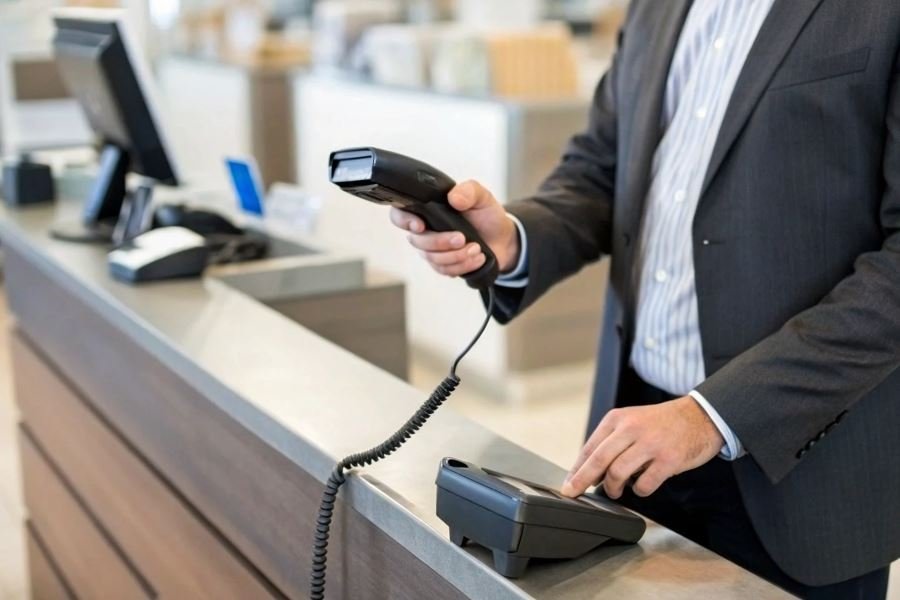
Ever glanced at a cashier effortlessly scanning products and wondered what invisible magic connects that simple beep to your entire business infrastructure? That small device represents a technological revolution that has transformed inventory management, sales tracking, and customer service across industries.
Barcode scanners have evolved dramatically since their commercial introduction in 1974 when a pack of Wrigley’s gum became the first product scanned at a supermarket in Ohio. Today’s scanners are sophisticated tools that can dramatically impact your operational efficiency, data accuracy, and bottom line.
When selecting the right scanner for your business, three factors reign supreme: scanning environment, code types, and integration requirements. A warehouse with distant shelving demands different capabilities than a boutique retail counter. Similarly, a manufacturing plant tracking components needs different durability standards than a hospital managing patient records.
The efficiency equation
The right scanner creates a ripple effect throughout your operation:
“The average worker makes one error per 300 keystrokes. Barcode scanning reduces this error rate to about 1 in 3 million scans.” – Automated Data Collection Systems
This dramatic improvement in accuracy translates directly to:
- Reduced inventory discrepancies
- Faster customer checkout times
- Enhanced data for business intelligence
- Lower training requirements for staff
Whether you’re managing a bustling retail operation, tracking valuable equipment, or streamlining warehouse logistics, your choice of scanner technology isn’t just about capturing data—it’s about capturing opportunity. The difference between basic laser scanners, imagers, and mobile solutions can mean hours saved daily and thousands of dollars annually in recovered productivity.
Choosing the Perfect Barcode Scanner for Your Business
The right barcode scanner can transform your inventory management, checkout process, and overall operational efficiency. With technology evolving rapidly, determining what type of barcode scanner is suitable for your business requires understanding the distinct advantages each type offers for different operational environments. Let’s explore the three main categories and discover which might be your perfect match.
Handheld Barcode Scanners: Versatility Meets Reliability
Handheld barcode scanners remain the workhorses of the scanning world, offering exceptional versatility across numerous business environments. These devices come in two primary technologies: laser scanners and imagers.
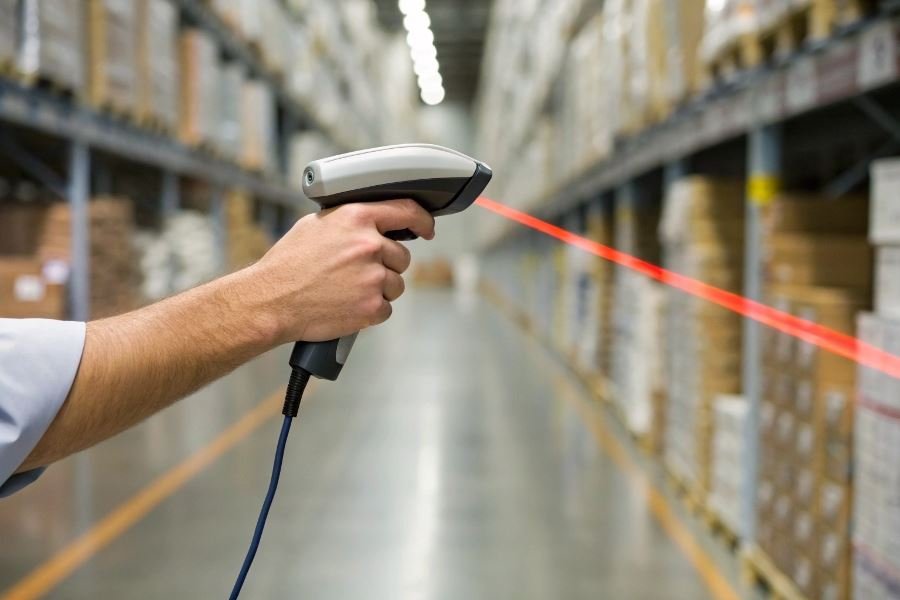
Laser scanners like the Zebra LS2208 excel in retail and warehouse settings where standard 1D barcodes are the norm. They’re particularly effective for businesses processing high volumes of identical product types, offering scan rates of 100+ scans per second with read ranges up to 24 inches.
Imager-based handheld scanners such as the Honeywell Xenon 1952g provide greater flexibility by reading both 1D and 2D barcodes from paper or digital screens. These are ideal for:
- Healthcare facilities scanning patient wristbands
- Retail stores processing digital coupons
- Logistics companies handling shipping labels
Key advantage: The ergonomic design allows for comfortable all-day use, with premium models offering drop resistance from 6+ feet onto concrete.
Fixed-Mount Barcode Scanners: Hands-Free Efficiency
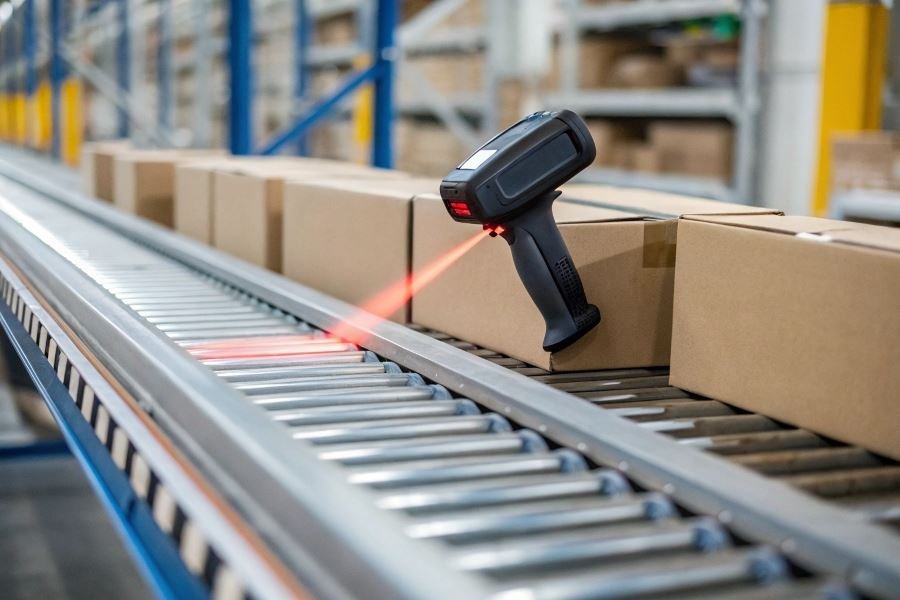
When consistent, high-volume scanning is required without operator intervention, fixed-mount barcode scanners deliver unmatched performance. These stationary powerhouses shine in manufacturing, assembly lines, and high-throughput retail environments.
The Datalogic Matrix 300N exemplifies industrial-grade fixed scanners, capable of reading codes at conveyor speeds exceeding 2 meters per second. For retail applications, the Honeywell Voyager 7980g presentation scanner offers omnidirectional scanning for lightning-fast checkout experiences.
| Business Type | Ideal Fixed Scanner Type | Key Benefit |
|---|---|---|
| Manufacturing | Industrial inline scanner | Continuous operation (24/7) |
| Retail POS | Presentation scanner | Hands-free checkout speed |
| Self-checkout | Bioptic scanner | Multi-plane reading capability |
Fixed-mount scanners truly excel when consistency and throughput are paramount, eliminating the variability of human scanning technique while freeing operators for other tasks.
Mobile and Wireless Barcode Scanners: Freedom in Motion
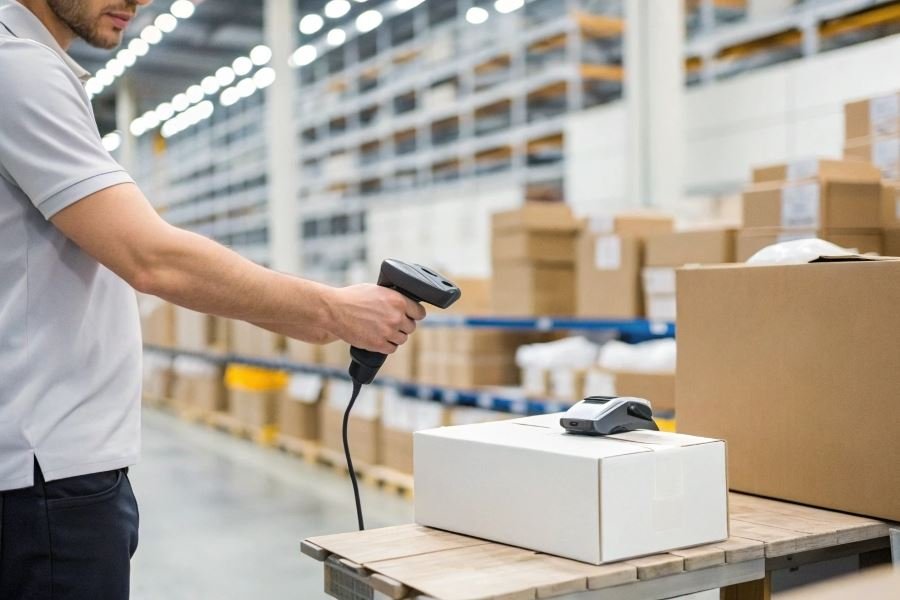
For businesses where mobility is essential, wireless barcode scanners provide the perfect balance of freedom and functionality. These devices have revolutionized inventory management, field service, and event management operations.
Bluetooth-enabled scanners like the Socket Mobile S700 pair seamlessly with smartphones and tablets, creating portable scanning solutions with ranges up to 330 feet from the host device. For enterprises requiring more robust solutions, the Zebra DS3678 offers industrial-grade durability with IP67 sealing against dust and water immersion.
Mobile scanning solutions particularly benefit:
- Retail staff conducting inventory counts
- Delivery personnel confirming package receipt
- Healthcare workers administering medication at bedside
- Event staff validating tickets at multiple entry points
Battery life becomes a critical specification, with premium models offering 24+ hours of continuous use on a single charge, ensuring full-shift reliability without interruption.
The wireless freedom these scanners provide creates operational flexibility that fixed solutions simply cannot match, making them ideal for businesses with dynamic workflows or limited counter space.
Making the Right Barcode Scanner Investment
Cost vs. Functionality: The Long Game
When selecting a barcode scanner, the price tag is just the opening chapter of your investment story. The true cost of ownership extends far beyond the initial purchase.
A basic Symbol handheld scanner might start around $200, while industrial-grade wireless models from Honeywell can exceed $1,200. But here’s where smart business thinking comes in: that $1,000 difference might pay for itself within months.
Consider this reality check:
- A budget scanner with 99.5% accuracy means 5 errors per 1,000 scans
- Each inventory error costs approximately $70-100 in lost productivity
- Premium scanners offering 99.999% accuracy virtually eliminate these costs
The cheapest scanner is rarely the most economical solution.
For businesses processing hundreds of transactions daily, investing in a premium 2D imager with durability ratings for multiple drops to concrete and IP65 sealing against dust and water means avoiding replacement costs every 12-18 months.
System Compatibility: The Integration Puzzle
Your barcode scanner doesn’t exist in isolation—it’s one piece of your operational ecosystem. Compatibility failures create expensive bottlenecks that can paralyze your workflow.
| Scanner Type | Common Compatibility Considerations |
|---|---|
| USB Scanners | Plug-and-play with most systems but limited mobility |
| Bluetooth Models | Require pairing protocols and battery management |
| Wi-Fi Scanners | Need network configuration and security protocols |
| Mobile Computer Scanners | Require specific OS compatibility (Android/Windows) |
Before purchase, verify compatibility with your:
- Point-of-sale software
- Inventory management system
- Enterprise resource planning (ERP) platform
- Database architecture
Many businesses discover too late that their Square POS works seamlessly with certain scanner protocols but struggles with others. Similarly, Shopify and QuickBooks each have their own compatibility requirements.
Always test scanner models with your actual systems before full deployment.
Implementation Strategy: Beyond the Purchase
The most sophisticated scanner becomes worthless without proper implementation. Successful deployment requires methodical planning rather than simply unboxing and hoping for the best.
For laser scanners, implementation might be as simple as plug-and-connect with minimal training. However, 2D imagers with advanced features like image capture or OCR capabilities demand comprehensive staff training.
Your implementation roadmap should include:
- Pilot testing with a small team before full deployment
- Documented procedures for common scanning scenarios
- Troubleshooting protocols for scan failures or connectivity issues
- Performance metrics to evaluate scanner effectiveness
Training requirements vary dramatically by scanner type. While counter-mounted presentation scanners might require minimal instruction, mobile computer scanners with Android Enterprise may necessitate multiple training sessions.
The most successful implementations follow a phased approach, with careful attention to user feedback during each stage. This methodical strategy prevents the productivity dips that often accompany new technology adoption.
Remember: The best scanner is the one your team actually uses correctly.
Discover the perfect barcode scanner for your business needs. Compare handheld, fixed-mount, and wireless options to boost efficiency and productivity while ensuring compatibility with your existing systems.
Discover the perfect barcode scanner for your business needs. Compare handheld, fixed-mount, and wireless options to boost efficiency and productivity while ensuring compatibility with your existing systems.