What if the future of beauty isn’t in a jar, but in a device that reads your skin better than you can?
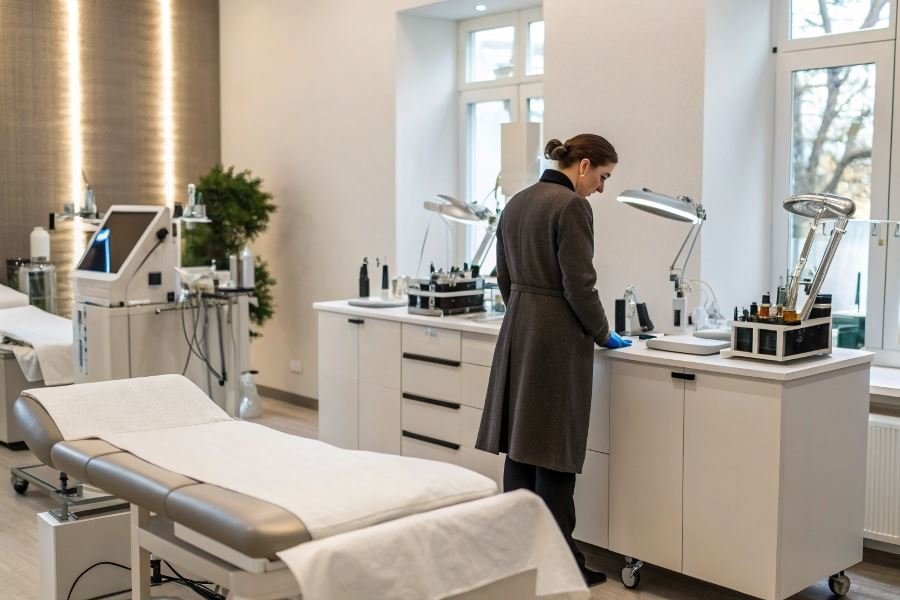
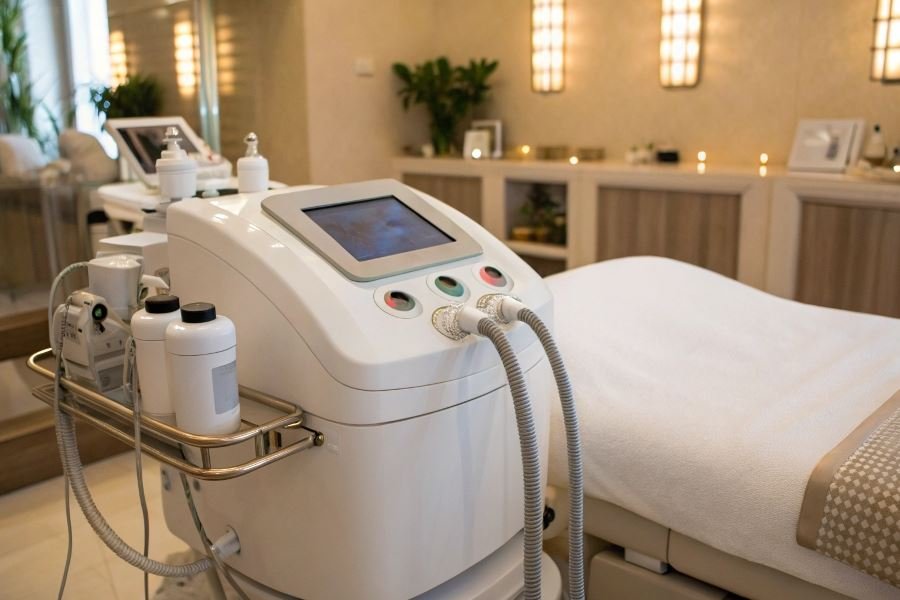
The landscape of cosmetology has undergone a remarkable transformation since 2015. Remember when a facial meant simply steam and cream? Today’s aesthetic treatments leverage artificial intelligence, radiofrequency, and even ultrasound technologies that were once exclusive to medical settings. These innovations aren’t just impressive—they’re reshaping our entire approach to skin health.
From clinical to personal: A decade of transformation
The evolution has been nothing short of extraordinary. Professional treatments that once required recovery time now offer similar results with minimal downtime. Meanwhile, devices that were exclusively available in dermatologists’ offices have inspired sophisticated at-home versions that deliver clinical-grade results.
“Technology has democratized professional-level skincare, bringing medical-grade treatments from the clinic to the living room.”
Market forces driving innovation
Consumer demand for non-invasive alternatives to cosmetic surgery has exploded, creating a market expected to reach $28.9 billion by 2028. This growth isn’t just about vanity—it reflects a fundamental shift toward preventative skincare and personalized treatments based on individual skin analysis.
The home-professional connection
Perhaps most fascinating is how technology is blurring the line between professional and at-home care. Smart mirrors now analyze skin concerns with dermatological precision, while handheld devices use the same core technologies as their professional counterparts, just at lower intensities. This creates an ecosystem where professional treatments and daily home care work in harmony, producing results that neither could achieve alone.
Breakthrough Technologies Reshaping Cosmetic Treatments
The cosmetic treatment landscape has undergone a remarkable transformation in recent years. Innovative technologies in modern cosmetology devices have revolutionized how professionals approach skin rejuvenation, creating results that were once only possible through invasive procedures. These advancements deliver more effective, comfortable, and personalized treatments than ever before.
Let’s explore the three most groundbreaking technologies that are redefining what’s possible in aesthetic medicine today.
Radiofrequency Microneedling: Collagen’s New Best Friend
Radiofrequency (RF) microneedling represents the perfect marriage between two proven technologies. Traditional microneedling creates controlled micro-injuries that stimulate the skin’s natural healing response. When combined with radiofrequency energy, the results become dramatically more impressive.
Devices like Morpheus8 and Profound RF deliver thermal energy deep into the dermis through ultra-fine needles. This dual-action approach:
- Triggers enhanced collagen production at depths up to 4mm
- Tightens existing collagen fibers through controlled heat
- Remodels adipose tissue for improved facial contouring
The technology’s precision allows practitioners to target specific skin layers with customized energy settings. Clinical studies show RF microneedling can improve skin laxity by up to 37% in a single treatment, with results continuing to develop over 3-6 months as new collagen forms.
LED Light Therapy: Beyond Basic Illumination
LED (Light Emitting Diode) therapy has evolved far beyond its early iterations. Today’s advanced LED devices utilize specific wavelengths to trigger cellular responses that address multiple skin concerns simultaneously.
Modern systems like Déesse Pro and OmniLux feature:
| Wavelength | Color | Primary Benefits |
|---|---|---|
| 415-420nm | Blue | Destroys P. acnes bacteria, reduces oil production |
| 630-635nm | Red | Stimulates collagen, reduces inflammation |
| 830nm | Near-infrared | Accelerates healing, penetrates deepest |
| 590nm | Yellow | Reduces redness, improves lymphatic flow |
The latest devices combine multiple wavelengths in programmable sequences, allowing for customized protocols based on individual skin conditions. Many now incorporate pulsation technology that enhances cellular energy production (ATP) by up to 200% compared to continuous light exposure.
What makes current LED systems truly revolutionary is their ability to deliver clinical results without downtime. Treatment sessions typically last 10-20 minutes, with visible improvements appearing after 4-6 sessions.
AI-Powered Skin Analysis: The Personalization Revolution
Perhaps the most exciting development in cosmetic technology is the integration of artificial intelligence into treatment planning and delivery systems.
Advanced imaging systems like VISIA and Observ 520x capture multi-spectral images that reveal skin conditions invisible to the naked eye. These systems:
- Analyze over 20 different skin parameters including pore size, wrinkle depth, and vascular conditions
- Track treatment progress with unprecedented precision
- Create customized treatment recommendations based on comparative data
The true breakthrough comes when AI analysis integrates directly with treatment devices. Systems like ATERA use real-time skin analysis to automatically adjust treatment parameters during procedures, ensuring optimal energy delivery for each skin type and condition.
This technology eliminates the guesswork from cosmetic treatments, creating truly personalized protocols that maximize results while minimizing risks. Practitioners report up to 40% improvement in treatment outcomes when using AI-guided systems compared to standard approaches.
These three technologies—RF microneedling, advanced LED therapy, and AI-powered analysis—represent just the beginning of a new era in cosmetic treatments. As they continue to evolve and integrate, we can expect even more impressive results with greater comfort and convenience.
The Future of Beauty Tech: Where Cosmetology Meets Innovation
Non-invasive treatments redefine possibilities
The landscape of non-invasive cosmetology is undergoing a remarkable transformation. High-intensity focused ultrasound (HIFU) technologies have evolved beyond basic skin tightening to deliver precision treatments that target specific skin layers with unprecedented accuracy. The latest HIFU devices can now differentiate between skin types and conditions in real-time, adjusting energy delivery accordingly.
Radio frequency (RF) microneedling has similarly advanced, with new systems incorporating variable needle depths that change during treatment based on skin thickness measurements. This dynamic adjustment capability represents a significant leap from the static settings of earlier generations.
Perhaps most exciting is the emergence of combination therapy devices that synchronize multiple technologies simultaneously. For instance, Cutera’s advanced systems now coordinate laser, RF, and cooling technologies in a single treatment head, maximizing efficacy while minimizing recovery time.
Smart beauty enters the connected era
The integration of Internet of Things (IoT) capabilities has fundamentally transformed cosmetology devices from standalone tools to connected health ecosystems. Modern devices now feature:
- Real-time treatment monitoring with cloud-based data analysis
- Personalized treatment protocols based on cumulative patient data
- Remote diagnostics and software updates that extend device capabilities
Smart mirrors equipped with AI-powered skin analysis can now communicate directly with treatment devices, creating a closed-loop system that measures results objectively. The HiMirror ecosystem exemplifies this trend, offering detailed skin analysis that integrates with treatment recommendations.
The true breakthrough lies not just in connectivity, but in how these devices learn and improve over time.
Professional results become accessible
The democratization of professional-grade technologies represents perhaps the most significant shift in the industry. Technologies once exclusive to high-end clinics are increasingly available for home use, though with appropriate safety modifications.
| Professional Technology | Consumer Adaptation | Price Point |
|---|---|---|
| Clinic-grade lasers | Targeted wavelength home devices | $400-1,200 |
| Professional RF systems | Simplified RF tools with safety limiters | $200-600 |
| Medical-grade microcurrent | Consumer-friendly microcurrent devices | $250-500 |
This accessibility trend is driven by miniaturization of components and sophisticated safety systems that prevent misuse. The FOREO line demonstrates how professional-grade technologies can be reimagined for consumer use without compromising core efficacy.
The cost barriers are falling as well. Devices that would have cost thousands of dollars just five years ago are now available at consumer-friendly price points, often with subscription models that include consumables and software updates.
The future of cosmetology technology isn’t just about better results—it’s about making those results available to everyone, regardless of proximity to high-end clinics.
As these technologies continue to evolve, we’re witnessing the emergence of a new paradigm where professional-grade treatments become increasingly personalized, connected, and accessible. The distinction between clinical and home treatments continues to blur, creating unprecedented opportunities for comprehensive skincare regimens that combine the best of both worlds.
Discover how AI-powered cosmetology innovations are revolutionizing skincare with advanced radiofrequency microneedling, LED therapy, and personalized treatment systems. Explore cutting-edge technologies transforming both professional and at-home skincare solutions.
Discover how AI-powered cosmetology innovations are revolutionizing skincare with advanced radiofrequency microneedling, LED therapy, and personalized treatment systems. Explore cutting-edge technologies transforming both professional and at-home skincare solutions.