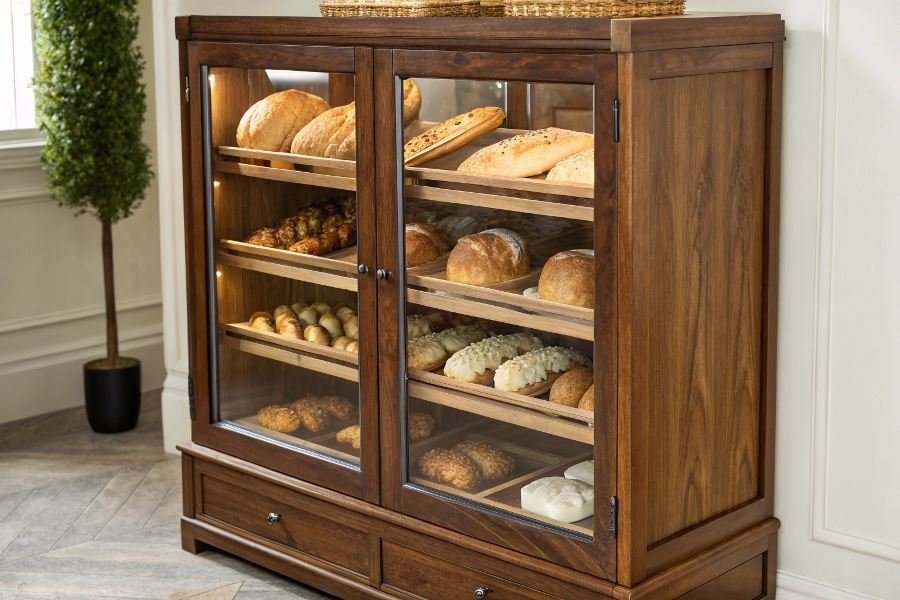
That perfect crust shattering between your fingers. The pillowy interior releasing its aroma. The first bite that makes customers close their eyes in appreciation. All of this magic can vanish overnight with improper storage techniques.
Behind every successful bakery lies a carefully orchestrated storage system that preserves not just bread, but reputation. Professional bakers understand that storage isn’t an afterthought—it’s the critical bridge between production excellence and customer experience. When bread leaves your oven, the clock starts ticking on a complex dance of moisture, temperature, and environmental factors.
The challenges facing bakeries are multifaceted. Humidity fluctuations can transform crisp crusts into leathery disappointments. Temperature inconsistencies accelerate staling. Cross-contamination between varieties threatens both flavor profiles and allergen safety. Even the most meticulously crafted sourdough can deteriorate within hours when improperly stored.
“Storage is where good bread goes to thrive or die. It’s the unsung hero of bakery operations.”
Research from the Artisan Bakers Association shows properly stored artisanal breads can maintain peak quality up to 40% longer than those kept in suboptimal conditions. This directly translates to reduced waste, higher profit margins, and—most importantly—consistently delighted customers who return again and again.
The ripple effects extend beyond the bread itself. Efficient storage systems streamline operations, reduce early-morning chaos, and create a more organized workflow for your entire team. Your storage strategy isn’t just preserving bread—it’s preserving your business reputation.
Essential Equipment for Professional Bread Storage
The difference between amateur bread storage and professional bakery organization isn’t just scale—it’s systematic precision. Professional bakers understand that proper storage equipment isn’t just about keeping bread fresh; it’s about maximizing efficiency, reducing waste, and maintaining consistent quality.
Commercial bread racks represent the backbone of any well-organized bakery storage system. The industry standard Metro racks offer adjustable shelving that accommodates various bread sizes while maximizing vertical space. Stainless steel options from Winco provide durability with the added benefit of being easy to sanitize—critical for maintaining food safety standards. For artisanal bakeries producing specialty loaves, consider investing in specialized bread racks with proper spacing to prevent crushing delicate crusts while allowing adequate air circulation.
How to properly organize bread storage in a bakery extends beyond just having the right shelving—it requires creating a comprehensive ecosystem where temperature, humidity, and inventory management work in harmony. This integrated approach ensures every loaf maintains optimal freshness from production to sale.
Temperature and Humidity: The Invisible Guardians
Temperature and humidity control systems represent the unsung heroes of bread preservation. Commercial bakeries should maintain storage areas at 65-75°F (18-24°C) with relative humidity between 50-60% for most bread varieties.
Digital monitoring systems have revolutionized this aspect of storage. The SensorPush wireless hygrometer allows real-time monitoring via smartphone, sending alerts when conditions fall outside optimal ranges. For larger operations, comprehensive climate control systems from Controlled Environments Ltd offer precision regulation across multiple storage zones.
Consider this comparison of humidity control options:
| System Type | Initial Cost | Precision | Maintenance | Best For |
|---|---|---|---|---|
| Basic Humidifiers | $200-500 | ±10% RH | Weekly | Small bakeries |
| Integrated HVAC | $2,000-5,000 | ±5% RH | Quarterly | Medium operations |
| Automated Systems | $5,000+ | ±2% RH | Bi-annual | Large production |
Inventory Management: Beyond Basic Labeling
Modern bakery inventory management has evolved far beyond handwritten labels. Smart labeling systems now integrate with inventory software to track not just product types but production dates, shelf life, and sales patterns.
The Avery industrial label printers paired with heat-resistant labels ensure identification remains intact even in bakery environments. For comprehensive tracking, the Square for Retail system allows bakeries to scan products in and out of storage, maintaining real-time inventory counts and generating automatic reorder alerts.
Color-coding systems provide visual efficiency—many bakeries use different colored containers or tags to indicate:
- Day of production
- Type of bread
- Special dietary considerations (gluten-free, nut-free)
- Custom orders
Storage containers themselves deserve careful consideration. Breathable options like Cambro food storage boxes with proper ventilation prevent condensation while protecting bread from environmental contaminants. For crusty artisanal breads, cloth-lined baskets provide the ideal balance of protection and airflow.
By investing in these essential equipment systems, bakeries can transform bread storage from a necessary chore into a strategic advantage that preserves quality, reduces waste, and ultimately enhances customer satisfaction.
Mastering Bread Storage Systems for Bakery Success
Fresh bread is the heartbeat of any successful bakery operation. Yet even the most exquisitely crafted loaves can quickly lose their appeal without proper storage protocols. The difference between bread that flies off the shelves and bread that languishes often comes down to how meticulously you manage your storage systems.
FIFO: The Golden Rule of Inventory Management
The First In, First Out (FIFO) principle isn’t just accounting jargon—it’s the fundamental backbone of effective bakery operations. When implemented correctly, FIFO ensures older products sell before newer ones, dramatically reducing waste and maintaining consistent quality.
Digital tracking systems have revolutionized FIFO implementation. Solutions like Square for Retail offer bakery-specific inventory management that tracks batch dates automatically. For smaller operations, color-coded date labels or repositionable shelving systems can achieve similar results without the technology investment.
The average bakery wastes 12-18% of daily production due to improper rotation systems. Effective FIFO implementation can slash this figure to under 5%.
The most successful bakeries incorporate FIFO directly into their physical storage design—sloped shelving that naturally rotates stock forward as items are removed, or mobile racks that can be positioned with oldest batches facing customers first.
Bread-Specific Storage Solutions
Different bread varieties demand tailored storage approaches:
| Bread Type | Ideal Temperature | Humidity Level | Maximum Storage Time | Container Type |
|---|---|---|---|---|
| Crusty Artisan | 65-70°F (18-21°C) | 40-50% | 24-36 hours | Paper bags/open air |
| Soft Sandwich | 68-72°F (20-22°C) | 60-70% | 48-72 hours | Plastic containers |
| Enriched Breads | 65-68°F (18-20°C) | 50-60% | 36-48 hours | Breathable cloth |
| Flatbreads | 70-75°F (21-24°C) | 30-40% | 24-48 hours | Stacked with parchment |
Airflow management is critical yet often overlooked. Proper spacing between loaves prevents moisture transfer and mold development. The most effective storage systems incorporate adjustable shelving that can be reconfigured based on daily production volumes.
For specialty items like sourdough, dedicated storage zones with controlled humidity using solutions like Cambro Food Storage Containers can extend shelf life by up to 30% compared to standard storage methods.
Staff Training and Maintenance Protocols
Even the most sophisticated storage systems fail without rigorous staff training and maintenance protocols.
Comprehensive training programs should include:
- Hands-on demonstrations of proper handling techniques
- Visual identification guides for assessing bread freshness
- Clear documentation of rotation procedures
- Regular quality control checks
Maintenance schedules must be non-negotiable. Storage areas require daily cleaning with food-grade sanitizers, weekly deep cleaning of all surfaces, and monthly inspection of equipment integrity.
The most successful bakeries implement accountability systems where specific team members “own” storage areas during their shifts. This ownership model, combined with regular audits using detailed checklists, ensures consistent application of protocols even during peak production periods.
Temperature and humidity monitoring using devices like Thermoworks BlueTherm Duo provides real-time alerts when storage conditions drift outside optimal ranges, allowing for immediate corrective action before product quality suffers.
By implementing these systematic approaches to bread storage, bakeries can significantly extend product freshness, reduce waste, and ultimately deliver the consistent quality that builds lasting customer loyalty.
Discover professional techniques for optimal bread storage in bakeries to extend freshness, maximize shelf life, and enhance customer satisfaction. Learn about equipment, temperature control, and inventory systems that preserve quality.
Discover professional techniques for optimal bread storage in bakeries to extend freshness, maximize shelf life, and enhance customer satisfaction. Learn about equipment, temperature control, and inventory systems that preserve quality.