Ever wondered why that artisanal sourdough you splurged on turned rock-hard by morning? The culprit isn’t the bread—it’s how you’re storing it.
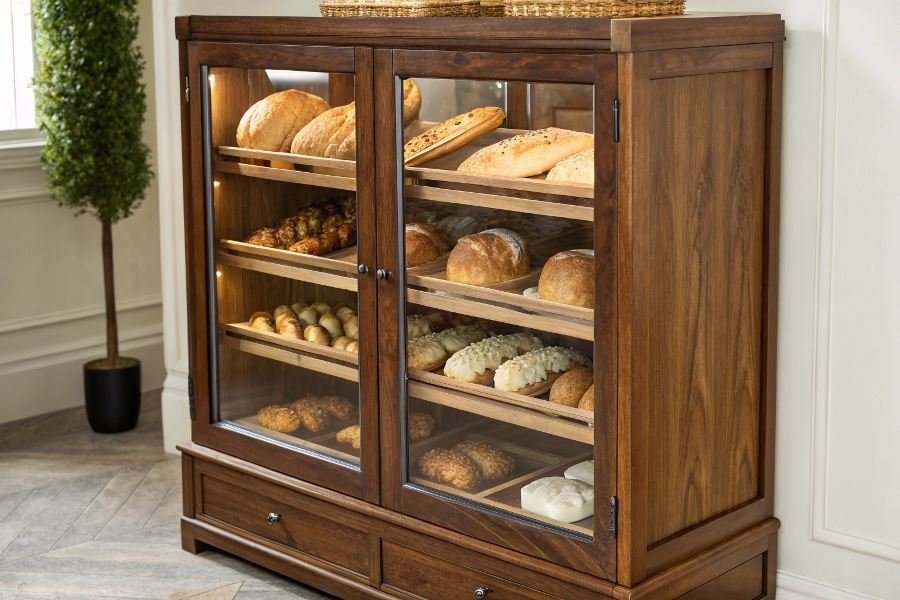
Bread cabinets with humidity control function represent the pinnacle of bread preservation technology, designed specifically to maintain that perfect balance between moisture retention and air circulation. These specialized storage solutions have transformed how bakeries, restaurants, and discerning home chefs maintain bread quality, extending freshness from hours to days.
“Bread is alive until it’s not. The right humidity environment keeps it in that sweet spot of perfection longer than anyone thought possible.” — Master Baker James Reinhart
The journey to perfect bread preservation has been centuries in the making. From simple cloth wrappings used in ancient times to the primitive bread boxes of the 1800s, humanity has always sought better ways to keep bread fresh. The breakthrough came in the late 1990s when commercial bakers began experimenting with controlled microenvironments that could be precisely calibrated to different bread types.
The science of humidity and bread freshness
Bread preservation is fundamentally about moisture management. Too dry, and your bread becomes a crumbly disappointment; too humid, and mold quickly takes over. The ideal relative humidity for most breads falls between 65-75%, with artisanal varieties often requiring the higher end of that spectrum.
Modern humidity-controlled bread cabinets use sophisticated sensors and micro-climate technology to maintain these precise conditions, adapting in real-time to environmental changes and the specific needs of different bread varieties—from delicate brioche to hearty rye loaves.
The Engineering Marvel Behind Bread Preservation
The humble bread cabinet has undergone a remarkable transformation in recent years. No longer just a simple storage box, modern bread cabinets with humidity control function represent a sophisticated intersection of food science and precision engineering. These specialized units maintain the delicate balance between moisture retention and air circulation that keeps bread products at their peak quality for extended periods.
When examining bread cabinets with humidity control function: features and advantages, it becomes clear that these systems offer bakeries, restaurants, and specialty shops a competitive edge through superior product preservation. The technology behind these cabinets addresses the fundamental challenge that has plagued bread storage since antiquity: maintaining the perfect moisture level to prevent both staleness and mold growth.
Advanced Humidity Regulation Systems
The heart of any quality bread cabinet is its humidity regulation system. Modern units employ multiple methods of moisture control that work in concert:
- Evaporative humidifiers that release precise amounts of water vapor
- Humidity sensors accurate to ±2% relative humidity
- Microprocessor-controlled feedback systems that make real-time adjustments
The most advanced models from manufacturers like Pavailler and Wiesheu utilize closed-loop systems that continuously monitor internal conditions. When humidity levels drop below the set threshold (typically 65-85% depending on bread type), the system activates humidification elements to release moisture into the cabinet.
The difference between 70% and 75% relative humidity might seem insignificant, but it can extend shelf life by up to 30% for artisanal sourdough products.
Temperature and Humidity: The Perfect Partnership
Temperature control works hand-in-glove with humidity management to create the ideal preservation environment. This integration represents one of the most significant advances in bread storage technology.
| Temperature Range | Ideal Humidity | Best For |
|---|---|---|
| 59-64°F (15-18°C) | 70-75% | Crusty artisanal breads |
| 64-68°F (18-20°C) | 75-80% | Soft breads and rolls |
| 50-55°F (10-13°C) | 65-70% | Long-term storage |
Thermal stability is crucial for preventing condensation that can make crusts soggy. The best systems employ:
- Multi-zone temperature control
- Thermal insulation with R-values exceeding 8.0
- Rapid recovery after door openings
- Uniform air circulation patterns
Debag and Miwe have pioneered systems that maintain temperature variance of less than 2°F throughout the entire cabinet, eliminating hot and cold spots that can compromise bread quality.
Materials and Design Elements That Preserve Perfection
The physical construction of humidity-controlled bread cabinets plays a critical role in their effectiveness. Material selection directly impacts both functionality and longevity of these specialized units.
Premium cabinets feature:
- Food-grade stainless steel interiors (typically 304 or 316 grade) that resist corrosion from constant humidity exposure
- Tempered glass doors with multi-point sealing systems and thermal breaks
- UV-resistant materials that prevent degradation from constant light exposure
- Antimicrobial surface treatments that inhibit mold growth
The internal architecture incorporates strategic airflow channels that ensure humidity is distributed evenly throughout the cabinet. Adjustable shelving systems made from perforated materials allow for customization based on product size while maintaining consistent air circulation.
The most innovative designs from Rational incorporate modular humidity zones that can be independently controlled, allowing different bread varieties with varying moisture requirements to be stored in the same unit—a game-changer for establishments with diverse product offerings.
The Financial Upside of Humidity-Controlled Bread Storage
Bread cabinets with humidity control aren’t just fancy display cases—they’re profit-protection systems disguised as bakery equipment. The numbers tell a compelling story that every bakery owner and food retailer should understand.
Extending shelf life means extending profits
The average bakery throws away 5-12% of its daily bread production due to staling. Humidity-controlled bread cabinets dramatically reduce this waste by creating the perfect microclimate for bread preservation.
Most traditional bread displays allow products to begin staling within hours. In contrast, Pavailler and Wiesheu cabinets with advanced humidity systems can extend shelf life by 2-3 days for crusty artisan loaves and up to 5 days for enriched breads.
The math is simple: longer shelf life = fewer products in the trash = more revenue in your pocket.
A mid-sized bakery producing 200 loaves daily at $4.50 each could save approximately $18,000 annually by reducing waste from 10% to just 2% through proper humidity control.
Quality preservation translates to premium pricing
Humidity-controlled cabinets maintain bread’s sensory qualities with remarkable precision:
| Bread Quality Factor | Without Humidity Control | With Humidity Control |
|---|---|---|
| Crust crispness | Deteriorates in 4-6 hours | Maintained up to 24+ hours |
| Crumb softness | Begins firming within 12 hours | Remains soft for 48+ hours |
| Aroma retention | Dissipates quickly | Preserved significantly longer |
| Visual appeal | Dulls within a day | Maintains “fresh-baked” appearance |
This quality preservation allows bakeries to command premium prices throughout the day. When customers experience consistent quality regardless of purchase time, they’re willing to pay full price rather than expecting “end-of-day” discounts.
The ROI equation that makes sense
The investment in quality humidity-controlled bread cabinets from manufacturers like Bongard or Miwe typically ranges from $3,000 to $12,000 depending on size and features.
Let’s break down a realistic ROI scenario:
For a retail bakery investing $8,500 in a premium humidity-controlled display:
- Reduced waste savings: ~$1,500 monthly
- Extended selling window revenue increase: ~$800 monthly
- Decreased labor costs (less frequent baking): ~$400 monthly
- Total monthly benefit: ~$2,700
This represents a complete return on investment in just over 3 months.
Beyond the direct financial returns, these systems deliver additional benefits that impact the bottom line:
- Consistent customer experience builds loyalty and repeat business
- Reduced production pressure allows for more efficient staffing
- Lower energy costs compared to frequent rebaking to maintain fresh inventory
- Enhanced product presentation drives impulse purchases
The most successful bakeries and retail establishments view humidity-controlled bread cabinets not as expenses but as strategic investments that pay dividends through waste reduction, quality preservation, and enhanced customer satisfaction.
When properly implemented, these systems transform bread storage from a necessary operational function into a genuine competitive advantage with measurable financial returns.
Discover how humidity-controlled bread cabinets extend shelf life while preserving texture and flavor. Learn about advanced preservation technology that reduces waste and maximizes ROI for bakeries and retailers.
Discover how humidity-controlled bread cabinets extend shelf life while preserving texture and flavor. Learn about advanced preservation technology that reduces waste and maximizes ROI for bakeries and retailers.