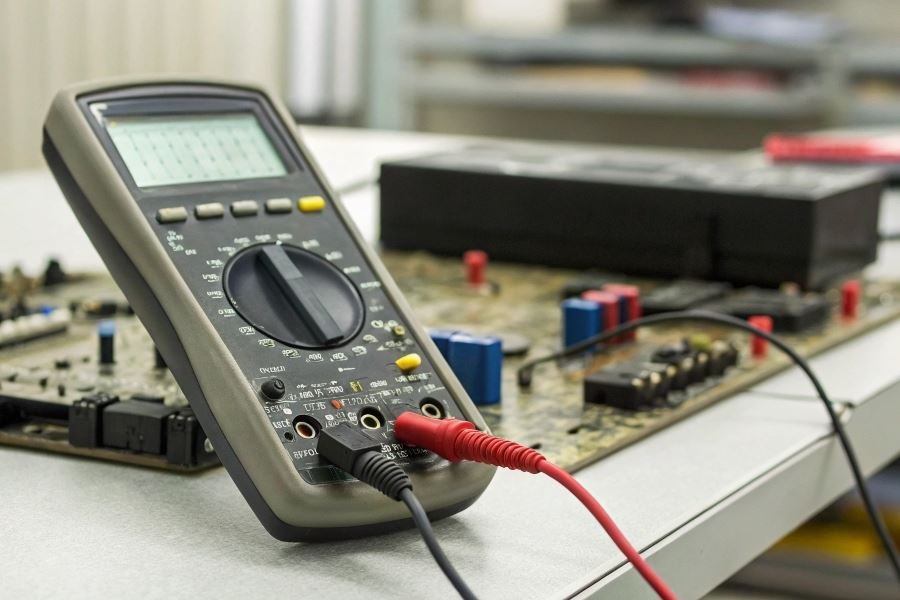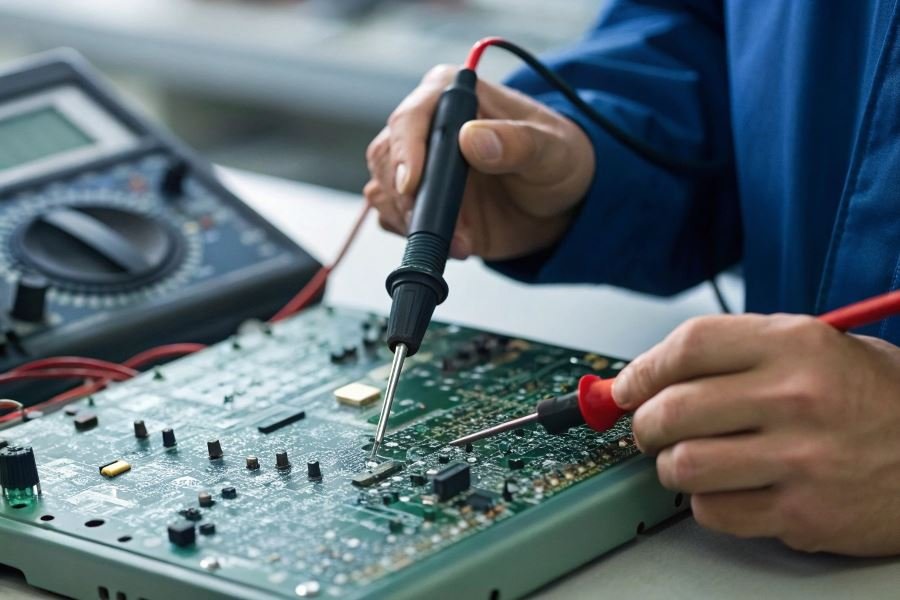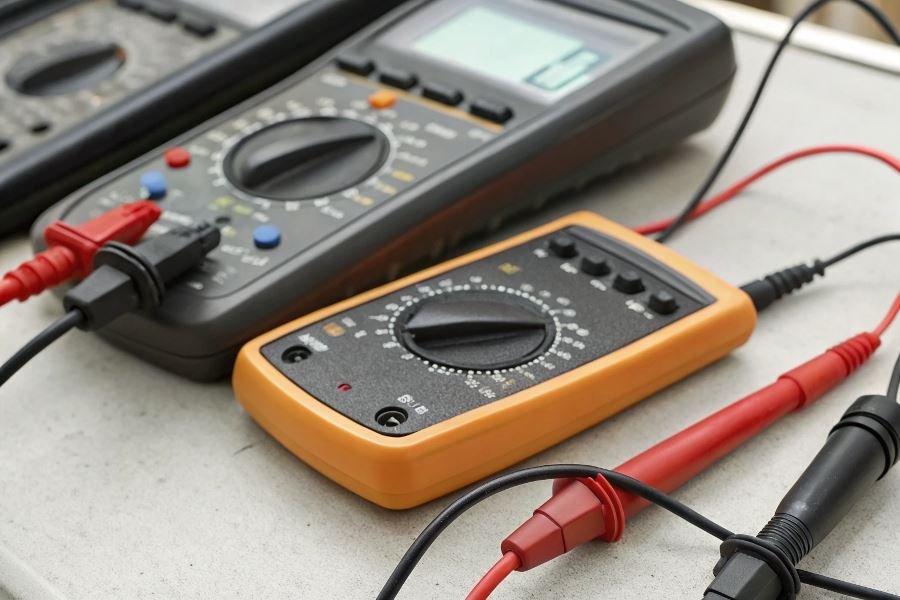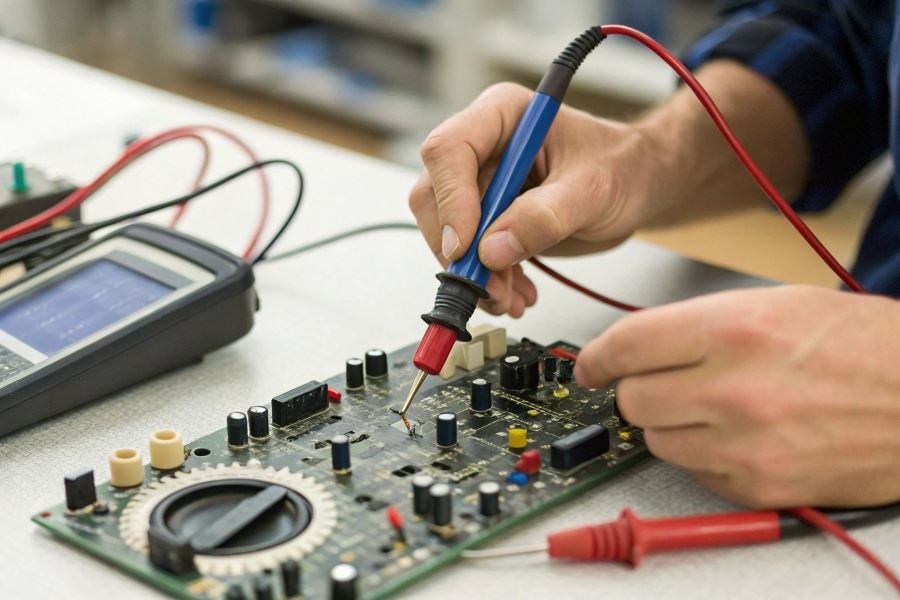
Ever picked up a mystery electronic component and wondered what secrets it holds? That small cylindrical part might be a capacitor—one of electronics’ most fundamental components—and knowing its value could be the difference between a successful project and a smoking circuit board.
Capacitance meters are the unsung heroes of the electronics workbench. These specialized instruments measure a component’s ability to store electrical charge—a property called capacitance. While multimeters might offer basic capacitance measurement, dedicated capacitance meters provide the precision and range that serious work demands.
The science behind the measurement
At their core, capacitance meters work by charging a capacitor with a known current for a specific time, then measuring the resulting voltage. This relationship follows the fundamental equation: C = Q/V, where capacitance equals charge divided over voltage. Modern digital meters handle these calculations automatically, displaying results in units from picofarads (pF) to farads (F).
Where capacitance meters prove their worth
From troubleshooting vintage audio equipment to developing cutting-edge IoT devices, capacitance meters earn their keep in countless scenarios:
- Circuit design verification: Ensuring your actual components match their stated values
- Fault diagnosis: Identifying failed capacitors in everything from power supplies to motherboards
- Component sorting: Organizing that overflowing parts bin with precision
- Quality control: Verifying components meet specifications before assembly
Whether you’re restoring classic electronics, building custom guitar pedals, or designing your next microcontroller project, a reliable capacitance meter transforms guesswork into confidence. The right measurement tool doesn’t just save time—it fundamentally changes how you approach electronics work.
Essential Features of Capacitance Meters for Beginners
When diving into electronics projects, having the right measurement tools can make the difference between frustration and success. For those just starting to explore capacitance meters for beginners, what to pay attention to often comes down to three critical features that determine both usability and accuracy. Let’s examine what truly matters when selecting your first capacitance measurement tool.
Measurement Range and Precision Matters
The heart of any capacitance meter is its ability to measure accurately across different ranges. Entry-level meters typically offer measurement capabilities from picofarads (pF) to microfarads (μF), with some extending to millifarads (mF).
Basic models generally provide readings from 200pF to 20μF, which covers most common capacitors found in consumer electronics. More advanced options like the Extech LCR200 can measure from 0.1pF all the way to 20mF with accuracy ratings of ±0.5% + 2 digits.
The accuracy specification deserves special attention. It’s typically expressed as a percentage of the reading plus a fixed number of “counts” or digits. For instance, ±1.0% + 5 digits means your reading could be off by 1% of the displayed value, plus an additional error of 5 units in the least significant digit.
| Meter Type | Typical Range | Typical Accuracy | Price Range |
|---|---|---|---|
| Budget | 200pF – 20μF | ±2.0% + 8 digits | 20−50 |
| Mid-range | 0.1pF – 2000μF | ±1.0% + 5 digits | 50−150 |
| Professional | 0.01pF – 20mF | ±0.5% + 2 digits | 150−400 |
Display Options That Won’t Strain Your Eyes
The display is your window into measurement results, and not all are created equal.
LCD displays dominate the market, but their quality varies dramatically. Look for:
- Digit height of at least 10mm for comfortable reading
- Backlit screens for working in dimly lit environments
- Dual displays that show multiple parameters simultaneously
Some premium models feature color displays that use different colors to indicate measurement modes or out-of-range values. The Keysight U1733C offers a high-contrast display visible from wide angles, crucial when working in awkward positions around circuit boards.
Bargain-basement meters often sacrifice display quality, leading to eyestrain and misread measurements—a false economy that can cost more in troubleshooting time than the price difference for a better model.
Standalone vs. Multimeter Functionality
Perhaps the most fundamental decision is whether to purchase a dedicated capacitance meter or a multimeter with capacitance measurement capability.
Dedicated capacitance meters offer:
- Greater measurement range and precision
- Specialized features like ESR (Equivalent Series Resistance) measurement
- Often faster and more reliable readings for capacitance specifically
Multimeters with capacitance function provide:
- Cost-effective solution for occasional capacitance measurements
- Versatility for measuring voltage, current, and resistance
- Space-saving for hobbyists with limited workbench area
The Fluke 87V multimeter includes respectable capacitance measurement capabilities up to 10,000μF, making it suitable for beginners who need an all-in-one solution. However, if you’re working extensively with capacitors, the dedicated BK Precision 890C might justify its higher price tag through superior accuracy and specialized features.
Remember that while multimeters offer convenience, their capacitance measurement functions typically have slower response times and more limited ranges than dedicated instruments. Your choice should align with how frequently you’ll be measuring capacitance and the precision your projects demand.
Top 3 Capacitance Meters That Deliver Professional Results
Finding the right capacitance meter can transform your electronics projects from frustrating guesswork into precise science. Whether you’re troubleshooting circuits or building your own creations, the right tool makes all the difference.
Budget-friendly precision under $50
Entry-level doesn’t have to mean entry-quality. Several affordable options deliver impressive performance without breaking the bank:
The Extech RC100 stands out with its remarkable 0.5% accuracy—a specification typically found in meters twice its price. Its pocket-sized design and auto-ranging capability make it perfect for beginners who need reliability without complexity.
For those working with surface-mount components, the Smart Tweezers ST5S-BT offers an ingenious solution. While pushing the $50 boundary, its tweezer-style probes make testing tiny SMD capacitors almost effortless—a feature worth its weight in gold when working with modern electronics.
The ANENG AN8002 deserves mention for its versatility. Beyond capacitance measurement, it functions as a complete multimeter with temperature sensing and transistor testing. Its backlit display makes it ideal for poorly lit workbenches—a common scenario in many home workshops.
| Model | Accuracy | Range | Special Features | Price |
|---|---|---|---|---|
| Extech RC100 | 0.5% | 0.1pF-20mF | Auto-ranging | $39.95 |
| Smart Tweezers ST5S-BT | 0.2% | 0.05pF-10mF | SMD optimized | $49.99 |
| ANENG AN8002 | 1.0% | 1pF-100μF | Full multimeter | $29.95 |
Mid-range meters with professional capabilities
When your projects demand more sophisticated measurements, these mid-range options deliver enhanced functionality:
The Keysight U1733C represents the sweet spot between professional features and accessibility. Its dual display simultaneously shows dissipation factor and capacitance—critical for evaluating capacitor health, not just value. The included sorting function categorizes components automatically, saving hours of manual work.
Component analysis becomes dramatically more intuitive with the BK Precision 890C. Its graphical display plots impedance curves, revealing behavior across different frequencies—essential knowledge when designing timing circuits or filters. The data logging feature exports measurements to your computer, enabling trend analysis over time.
Finding your perfect match
Selecting the right capacitance meter ultimately depends on your specific needs:
For hobbyists and beginners working primarily with through-hole components, the Extech RC100 provides the best balance of accuracy and simplicity. Its straightforward interface eliminates the learning curve that often discourages newcomers.
Electronics repair technicians will benefit most from the ANENG AN8002’s versatility. When diagnosing failures in consumer electronics, having multiple measurement capabilities in one tool streamlines the troubleshooting process significantly.
Circuit designers and engineers should invest in the Keysight U1733C. The ability to measure ESR (Equivalent Series Resistance) reveals capacitor quality issues that simple capacitance measurements miss—preventing frustrating performance problems in finished designs.
Students and educators find the BK Precision 890C’s visualization features invaluable for understanding component behavior. Seeing capacitance change with frequency creates those “aha!” moments that transform theoretical knowledge into practical understanding.
The best capacitance meter isn’t necessarily the most expensive—it’s the one that addresses your specific challenges while remaining accessible enough that you’ll actually use it. Start with your typical projects, identify your measurement priorities, and choose accordingly.
Discover the essential features of capacitance meters for electronics beginners. Learn what to look for in measurement range, display types, and price points from entry-level to advanced options for your specific needs.
Discover the essential features of capacitance meters for electronics beginners. Learn what to look for in measurement range, display types, and price points from entry-level to advanced options for your specific needs.