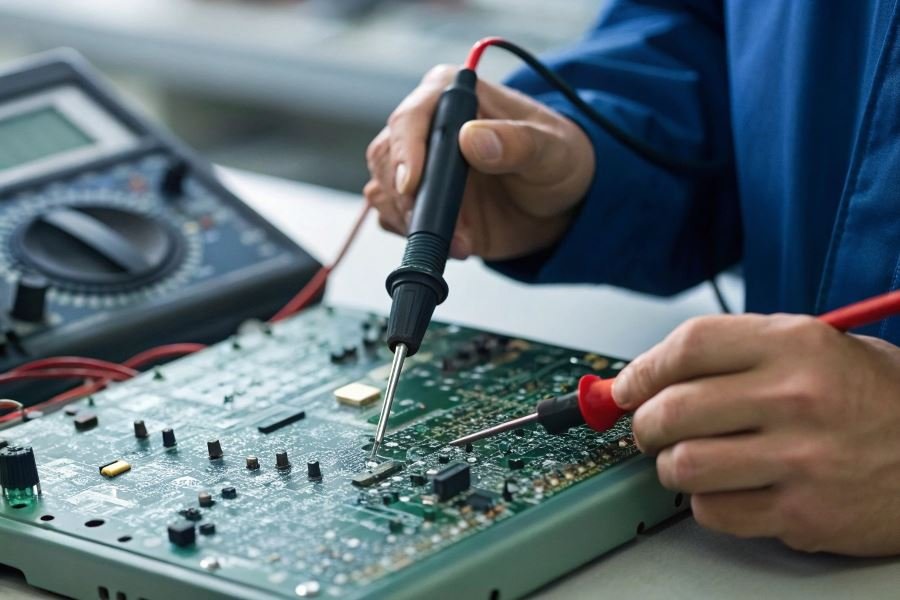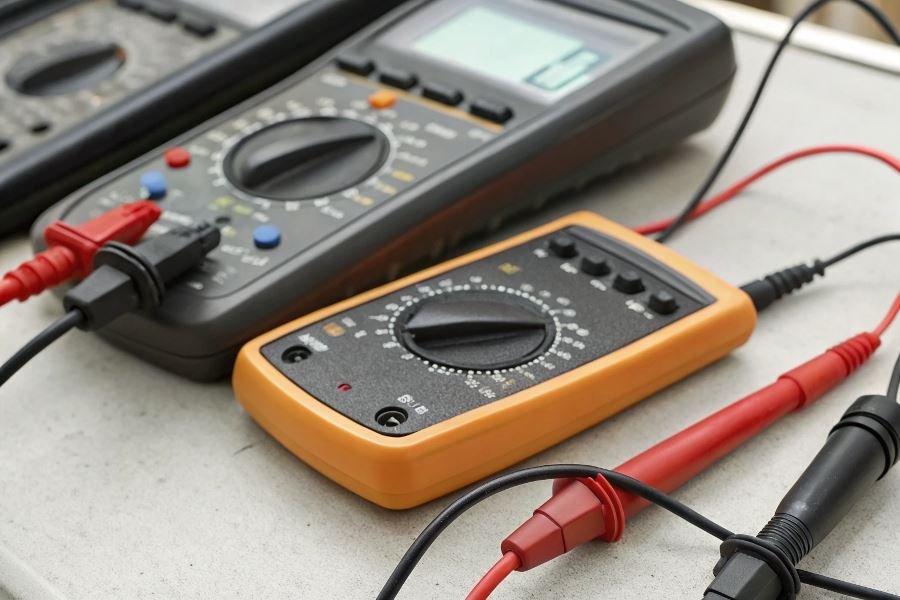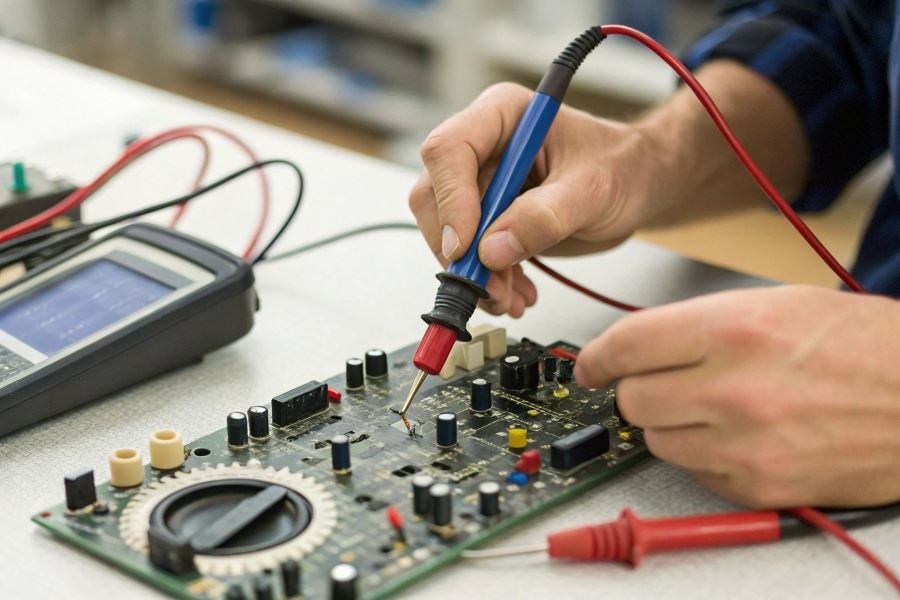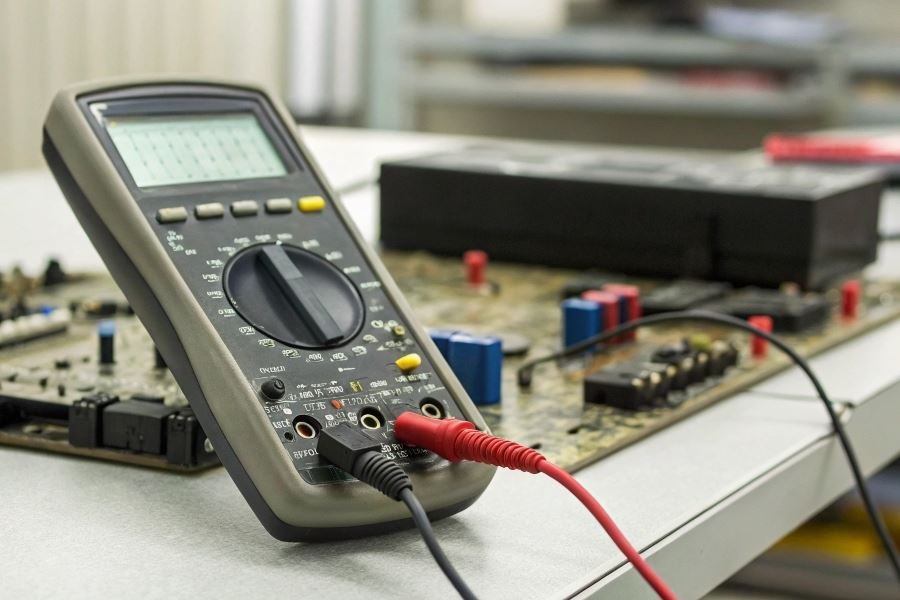
Ever wondered why a circuit board works flawlessly one moment and fails the next? The answer often lies in the invisible world of capacitance—where even the slightest measurement error can mean the difference between success and failure.
A capacitance meter is essentially your electrical detective, designed to measure a component’s ability to store electrical charge. Unlike basic multimeters with capacitance functions, professional-grade meters offer precision down to picofarads (that’s one trillionth of a farad!), making them indispensable for engineers, electronics manufacturers, and maintenance professionals who can’t afford to guess.
The stakes couldn’t be higher in professional settings. In aerospace applications, imprecise capacitance measurements might lead to navigation system failures. In medical equipment, they could result in misdiagnosis. Even in manufacturing quality control, incorrect readings translate directly to product failures and costly recalls.
The evolution of these precision instruments tells a fascinating story of technological advancement. From the bridge circuits of the 1940s that required manual balancing to today’s microprocessor-controlled digital meters with automatic ranging, we’ve witnessed remarkable progress. The introduction of four-terminal measurement techniques in the 1970s revolutionized accuracy, while modern instruments now incorporate temperature compensation and specialized test frequencies for different material types.
What truly separates professional capacitance meters from consumer models isn’t just price—it’s the reliability, repeatability, and resolution that make them worth every penny for those whose work demands nothing less than excellence.
The Precision Game: Essential Capacitance Meter Characteristics
When selecting instrumentation for electronic design, testing, or repair work, understanding the key characteristics of capacitance meters for professional use becomes critical to achieving reliable results. These specialized instruments serve as the backbone of quality control and troubleshooting processes across industries from aerospace to consumer electronics manufacturing.
Measurement Range and Accuracy: The Foundation of Reliability
Professional-grade capacitance meters distinguish themselves through their expansive measurement capabilities. Top-tier models like the Keysight U1733C offer measurement ranges from 0.1 pF to 199.99 mF—spanning an impressive 12 orders of magnitude. This breadth allows engineers to work with everything from tiny ceramic capacitors in mobile devices to massive power supply filter capacitors.
Accuracy specifications typically fall between ±0.1% and ±1% of reading plus a small number of counts. The Fluke 289 multimeter, for instance, delivers ±1% + 2 counts accuracy for capacitance measurements, making it suitable for most field applications. Laboratory-grade instruments like the Wayne Kerr 6500B precision impedance analyzer push accuracy boundaries to ±0.05% for specialized research applications.
| Meter Type | Typical Range | Typical Accuracy | Best Applications |
|---|---|---|---|
| Handheld DMM | 1 nF – 10 mF | ±1.0% + 5 counts | Field service, quick checks |
| Bench LCR | 0.01 pF – 100 mF | ±0.2% + 2 counts | R&D, production testing |
| Precision Analyzer | 0.001 pF – 1 F | ±0.05% + 1 count | Calibration labs, research |
Resolution and Sensitivity: Seeing the Invisible
The resolution of a capacitance meter determines its ability to detect minute changes in measurement values—a critical factor when working with precision components or when troubleshooting subtle issues.
High-end instruments provide resolution down to 0.001 pF (femtofarad territory), enabling the measurement of parasitic capacitances on circuit boards or characterization of semiconductor devices. The Keithley 590 CV analyzer exemplifies this capability, offering femtofarad resolution for semiconductor testing.
Sensitivity relates directly to a meter’s ability to measure extremely small capacitance values reliably. This becomes particularly important when:
- Measuring stray capacitance between PCB traces
- Characterizing RF components where picofarad variations matter
- Testing high-precision timing circuits
Instruments with superior sensitivity typically employ four-terminal (Kelvin) connections to eliminate lead resistance and parasitic capacitance effects that would otherwise compromise measurement accuracy.
Response Time and Measurement Speed: The Productivity Factor
In production environments, measurement speed directly impacts throughput and efficiency. Modern capacitance meters balance the competing demands of accuracy and speed through sophisticated algorithms and hardware design.
Fast-scanning LCR meters like the Hioki IM3536 can perform measurements in as little as 0.5 milliseconds, making them ideal for automated testing systems. These instruments often offer adjustable measurement speeds with corresponding accuracy tradeoffs:
- Slow mode: Maximum accuracy, typically 10-20 measurements per second
- Medium mode: Balanced performance, 50-100 measurements per second
- Fast mode: Maximum speed, 200+ measurements per second with slightly reduced accuracy
For R&D applications, meters with graphing capabilities provide valuable insights into capacitor behavior over time, temperature, or applied voltage. The B&K Precision 891 offers this functionality while maintaining measurement speeds suitable for bench work.
When selecting a professional capacitance meter, these three characteristics—measurement range/accuracy, resolution/sensitivity, and response time/speed—form the essential evaluation criteria that will determine whether the instrument meets your specific application requirements.
Advanced Capabilities That Define Professional Capacitance Meters
Connectivity That Transforms Workflow
Professional capacitance meters have evolved far beyond simple measurement tools. Today’s advanced models feature robust connectivity options that revolutionize how data is collected and analyzed. USB interfaces have become standard, allowing direct connection to computers for real-time monitoring and analysis. Many high-end models from manufacturers like Keysight and Fluke now include Bluetooth and Wi-Fi capabilities, enabling wireless operation in environments where physical connections are impractical.
Data logging capabilities have similarly advanced, with internal memory capacities reaching up to 50,000 readings in premium models. This extensive storage allows technicians to conduct long-term testing without constant supervision. The Tektronix DMM7510 exemplifies this evolution with its ability to capture and timestamp measurements at microsecond intervals, creating comprehensive capacitance profiles that reveal subtle performance variations invisible to basic meters.
The integration of cloud connectivity represents perhaps the most significant advancement, allowing teams to access measurement data remotely and collaborate across multiple locations—critical for organizations with distributed engineering teams or multiple testing facilities.
Calibration Excellence and Long-term Stability
The difference between consumer and professional capacitance meters becomes most apparent in their calibration features and stability characteristics. Professional instruments typically offer:
- Self-calibration routines that compensate for temperature drift
- Zero-offset compensation that eliminates parasitic capacitance
- Traceable calibration certificates with documented uncertainty values
Long-term stability—the meter’s ability to maintain accuracy over extended periods—separates truly professional instruments from merely adequate ones. Premium capacitance meters maintain their specified accuracy for 1-2 years between calibrations, compared to 3-6 months for consumer-grade alternatives.
The stability factor becomes particularly crucial in manufacturing environments where consistent measurements directly impact product quality and compliance.
Environmental Resilience and Build Quality
Professional capacitance meters must perform reliably in challenging environments that would render consumer devices useless. This resilience manifests in several key specifications:
| Environmental Factor | Consumer Grade | Professional Grade |
|---|---|---|
| Operating Temperature | 0°C to 40°C | -20°C to 55°C |
| Humidity Tolerance | Up to 80% non-condensing | Up to 95% non-condensing |
| Drop Resistance | 1 meter | 3+ meters |
| Dust/Water Protection | Limited/None | IP67 rating common |
The Agilent U1733C exemplifies this rugged approach with its ability to maintain specified accuracy even when subjected to significant electromagnetic interference—a common challenge in industrial settings. Similarly, the Fluke 289 features reinforced casing that protects sensitive internal components from impacts that would destroy lesser instruments.
The true value of professional capacitance meters lies not just in their precision during ideal conditions, but in their ability to deliver reliable measurements when conditions are anything but ideal.
This durability translates directly to lower total ownership costs despite higher initial investment. While consumer meters might need replacement every 2-3 years in demanding environments, professional instruments routinely deliver 7-10 years of reliable service—making them the economically sound choice for serious applications.
Discover the essential features of professional capacitance meters for precision electronics work. Learn about measurement accuracy, resolution, connectivity options, and durability factors that distinguish high-quality instruments for reliable capacitance testing.
Discover the essential features of professional capacitance meters for precision electronics work. Learn about measurement accuracy, resolution, connectivity options, and durability factors that distinguish high-quality instruments for reliable capacitance testing.