The moment you press record, you’re capturing more than sound—you’re preserving a moment in time. But should your first recording companion be something that fits in your pocket, or a dedicated setup that transforms a corner of your home into a mini-studio?
The recording landscape has evolved dramatically since the days of bulky tape machines. Today’s beginners face a fundamental choice between two distinct paths: portable recorders that go wherever inspiration strikes, and stationary setups that provide stability and control. This isn’t just about mobility—it’s about your entire approach to capturing sound.
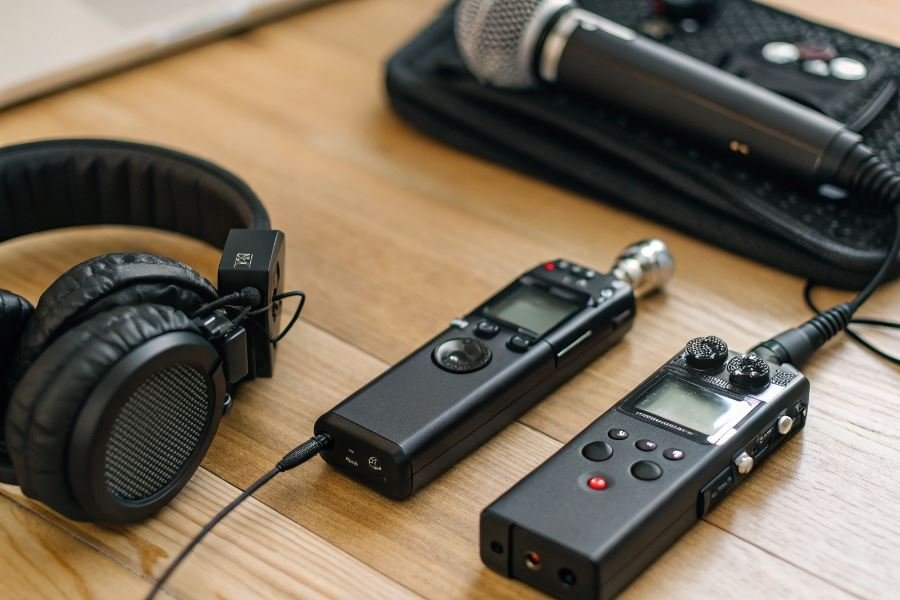
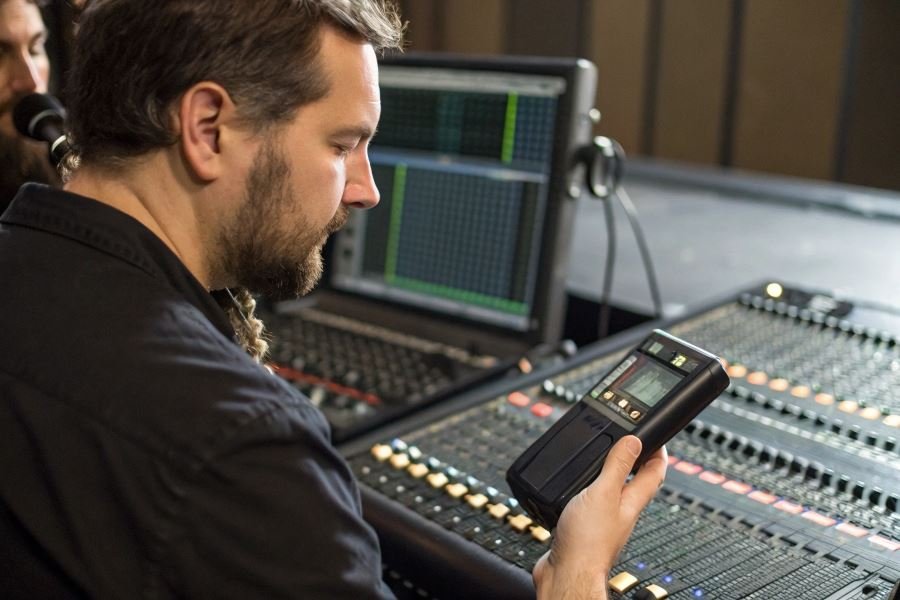
Portable recorders are self-contained units with built-in microphones and storage, designed for field recording and spontaneity. Think of them as the Swiss Army knives of audio—versatile, ready at a moment’s notice, and surprisingly capable. Modern handheld recorders from brands like Zoom and Tascam offer impressive sound quality that was unimaginable in portable devices just a decade ago.
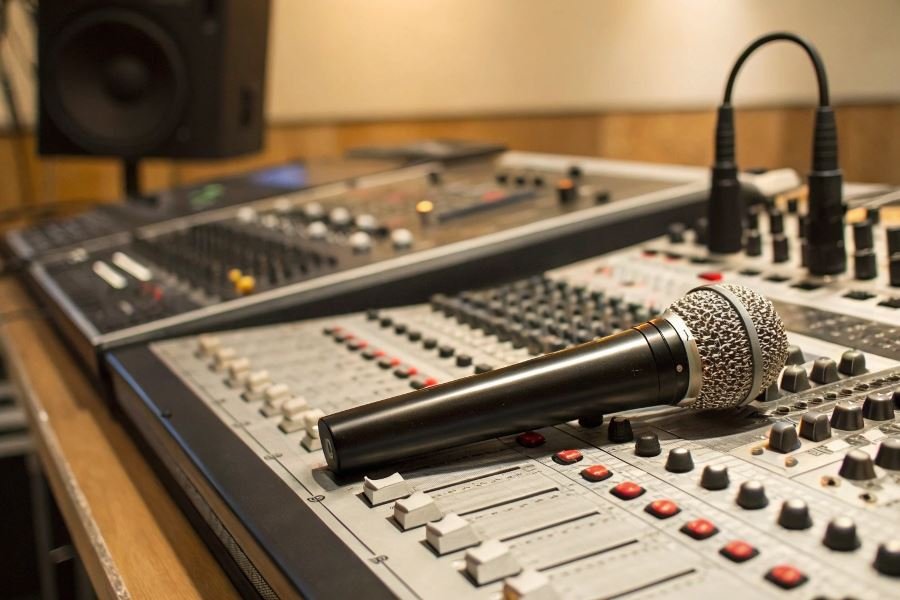
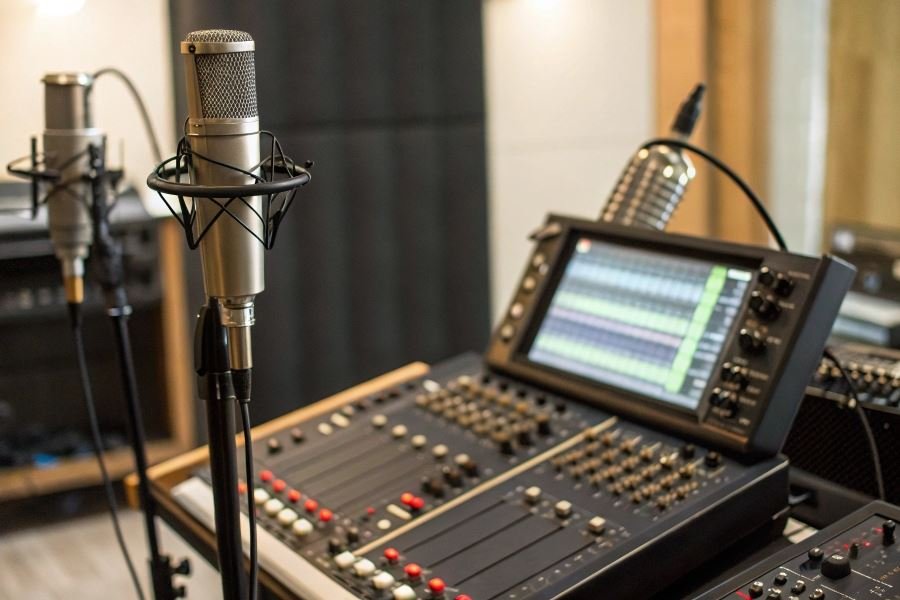
Stationary setups, by contrast, typically involve separate components: an audio interface connected to your computer, external microphones, and dedicated software. They excel in controlled environments where consistency matters, offering expandability as your skills grow.
For beginners, three factors should guide your decision:
- Your recording environment – Will you record in different locations or primarily in one space?
- Learning curve – Portable recorders offer faster gratification with fewer technical hurdles
- Future expansion – Stationary setups provide more room to grow as your skills advance
The technology landscape continues to blur these boundaries, with portable recorders offering increasingly professional features, while computer-based setups become more streamlined. Your choice ultimately reflects not just technical needs, but your personal approach to the creative process itself.
The Ultimate Recorder Showdown for Beginners
Sound Quality: The Make-or-Break Factor
When diving into the world of audio recording, the first question that inevitably surfaces is about sound quality. Portable vs stationary recorders: which is better for beginners often comes down to understanding what each option delivers in terms of audio fidelity and recording capabilities.
Stationary recorders (often called desktop or studio recorders) typically offer superior preamps and converters, resulting in cleaner recordings with less self-noise. The Tascam Model 24, for instance, delivers 24-bit/48kHz recording quality with remarkably low noise floor measurements below -100dB. Meanwhile, portable options like the Zoom H5 offer impressive 24-bit/96kHz capabilities but typically present noise floors around -90dB.
The microphone advantage can’t be overlooked either. Stationary recorders often allow connection to professional XLR microphones, while portable units frequently rely on built-in mics that, while convenient, can’t match dedicated studio microphones for nuance and depth.
Price Points That Make Sense
| Recorder Type | Entry Level | Mid-Range | Professional |
|---|---|---|---|
| Portable | 99−199 | 200−399 | 400−1,000 |
| Stationary | 199−399 | 400−799 | 800−3,000+ |
The financial investment required presents a clear distinction between these options. Portable recorders like the Sony PCM-A10 start around $199 and deliver remarkable value with built-in stereo mics, long battery life, and pocket-sized convenience.
Stationary setups demand more investment—not just for the recorder itself but also for microphones, cables, and often acoustic treatment. The Focusrite Scarlett 2i2 interface ($169) paired with a computer represents the entry point, but additional gear quickly pushes costs upward.
The value proposition shifts dramatically when considering long-term goals. Beginners planning to eventually create professional-quality recordings might find the higher initial investment in stationary equipment more economical than upgrading portable gear later.
Learning Curve and Usability
Portable recorders win decisively in the ease-of-use category. Most feature intuitive interfaces designed for quick operation—press record and you’re capturing audio. The Zoom H1n exemplifies this simplicity with its straightforward button layout and instant-on capability.
Stationary setups introduce complexity through:
- Software interfaces requiring configuration
- Signal routing concepts that must be mastered
- Multiple connection types and their appropriate uses
- Monitoring systems that need proper setup
This steeper learning curve delivers greater control and flexibility, however. Once mastered, stationary systems allow for multi-track recording, advanced editing capabilities, and integration with digital audio workstations like Pro Tools or Logic Pro.
The best recorder isn’t necessarily the one with the most impressive specifications—it’s the one you’ll actually use consistently to develop your skills.
For absolute beginners focused on learning audio fundamentals without technical distractions, portable recorders offer the gentlest introduction. Their all-in-one nature eliminates variables and allows concentration on microphone placement, recording levels, and basic editing concepts.
Those with technical aptitude or specific professional aspirations might benefit from starting with a simple stationary setup, accepting the steeper learning curve for greater long-term capability.
Making the Final Decision: Your Perfect Recording Companion
Matching Your Recording Goals to the Right Gear
The recorder you choose should align perfectly with your recording ambitions. Let’s break down which option excels in specific scenarios:
Portable recorders shine when:
- You’re capturing field recordings or nature sounds
- You need to record interviews in various locations
- You’re documenting live performances or events
- You have limited space in your recording environment
- You travel frequently and need recording capabilities on-the-go
Stationary recorders excel when:
- You’re setting up a dedicated home studio space
- You need multiple simultaneous inputs for band recordings
- You require extensive routing options and effects processing
- Sound quality is your absolute top priority
- You plan to record primarily in one controlled environment
The best recorder isn’t necessarily the most expensive one—it’s the one that removes barriers between your creative vision and its execution.
For podcasters just starting out, a portable recorder like the Zoom H4n Pro offers the flexibility to record both at home and on location. Musicians might benefit more from a stationary interface like the Focusrite Scarlett 2i2 that can grow with their studio setup.
Top Recommendations for Beginners
Based on reliability, sound quality, ease of use, and value, here are the standout options in each category:
Portable Recorders
| Model | Key Features | Price Range |
|---|---|---|
| Zoom H1n | X/Y stereo mics, one-touch recording, 10-hour battery life | $120-140 |
| Tascam DR-40X | Adjustable mics, 4-track recording, XLR/TRS inputs | $170-200 |
| Sony PCM-A10 | High-res recording, adjustable mic sensitivity, Bluetooth | $230-250 |
Stationary Recorders/Interfaces
| Model | Key Features | Price Range |
|---|---|---|
| Focusrite Scarlett Solo | 1 mic preamp, 1 instrument input, 24-bit/192kHz | $120-140 |
| PreSonus AudioBox USB 96 | 2 combo inputs, MIDI I/O, bundled software | $100-130 |
| Audient iD4 MKII | Class-leading preamp, ScrollControl feature, all-metal build | $200-230 |
Future-Proofing Your Investment
Think of your first recorder as the foundation of your audio journey, not the final destination. Here’s how to ensure your choice supports long-term growth:
For portable recorder users:
- Look for models with external mic inputs that allow upgrading microphones later
- Consider units with line outputs for integration with larger systems
- Prioritize formats with robust storage options and file compatibility
For stationary setup enthusiasts:
- Choose interfaces with expandable I/O through digital protocols (ADAT, S/PDIF)
- Consider ecosystem compatibility—some brands offer natural upgrade paths
- Look for units with direct monitoring capabilities to minimize latency issues
The most sustainable approach is often starting with a quality portable recorder that can later serve as a backup or specialized tool when you eventually upgrade to a more comprehensive stationary setup. The Zoom H6 exemplifies this philosophy—it works brilliantly as a standalone recorder but can also function as a USB interface in a studio environment.
Remember that your skills will ultimately matter more than your gear. The perfect recorder is one that gets out of your way and lets you focus on capturing great audio.
Discover which recording solution fits your needs: portable convenience or stationary power? Compare sound quality, price points, and ease of use for beginners entering the audio recording world. Find your perfect starter device!
Discover which recording solution fits your needs: portable convenience or stationary power? Compare sound quality, price points, and ease of use for beginners entering the audio recording world. Find your perfect starter device!