Did you know that a refrigerant leak as small as 4 ounces per year can reduce system efficiency by up to 25%? That tiny, invisible escape of gas isn’t just hurting your equipment—it’s draining your wallet and harming our environment with every passing hour.
When refrigerants escape into the atmosphere, they don’t just disappear. Many refrigerants have global warming potentials hundreds or thousands of times greater than CO2. This environmental impact, combined with strict EPA regulations established since the Clean Air Act amendments of 1990, makes leak detection not just good practice—it’s essential business.
The critical foundation of system integrity
Refrigerant leak detection forms the backbone of effective HVAC and refrigeration maintenance. Beyond compliance and environmental concerns, undetected leaks lead to decreased cooling capacity, increased energy consumption, and ultimately, complete system failure. The question isn’t whether you need leak detection—it’s which type best suits your operation.
Portable vs. stationary: Two approaches to the same challenge
The market offers two distinct solutions: portable detectors that travel with technicians and stationary systems that maintain constant vigilance. Each represents a fundamentally different philosophy about how to protect your equipment.
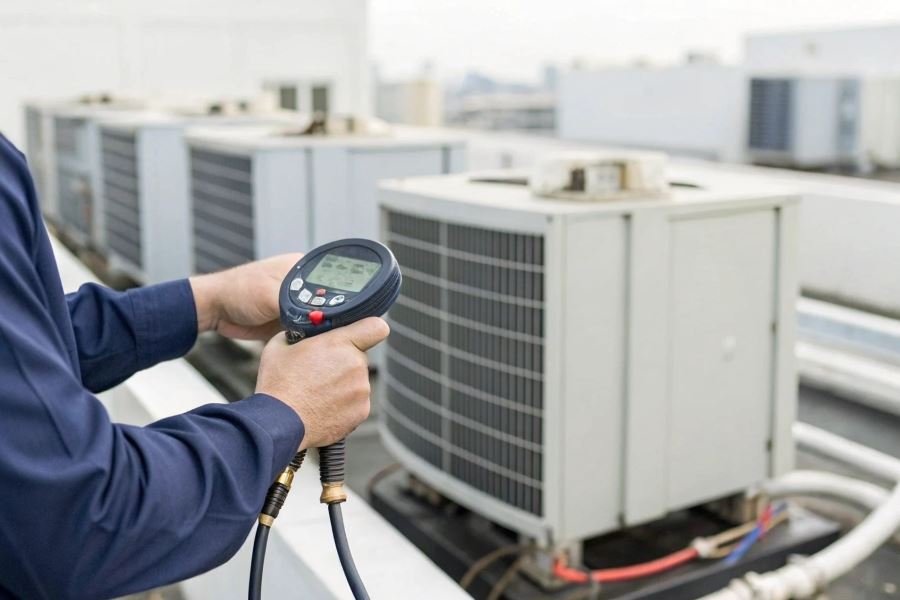
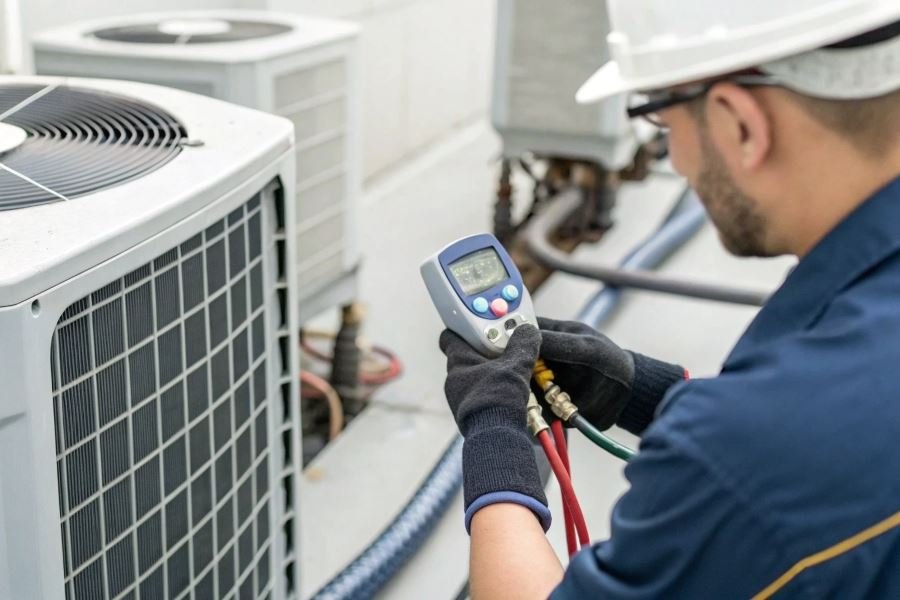
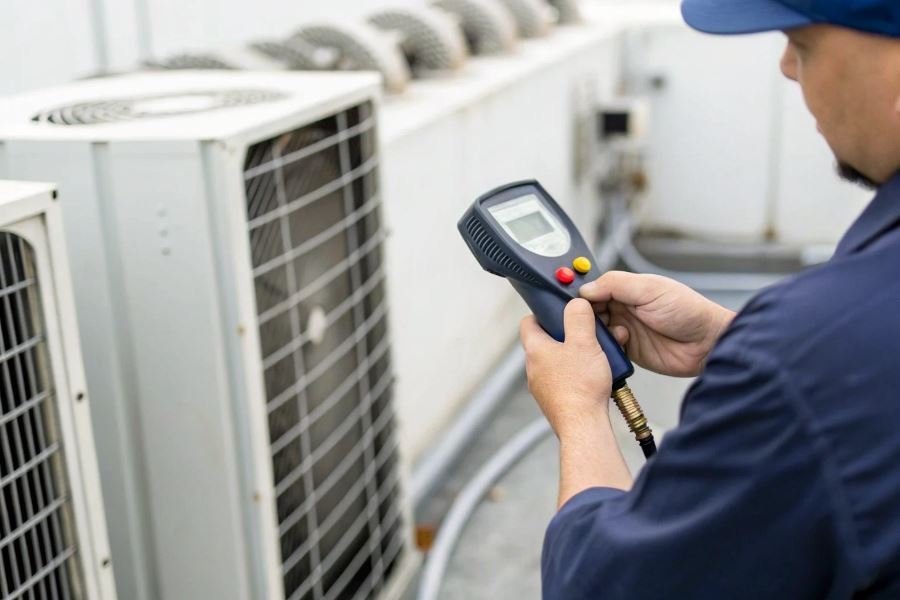
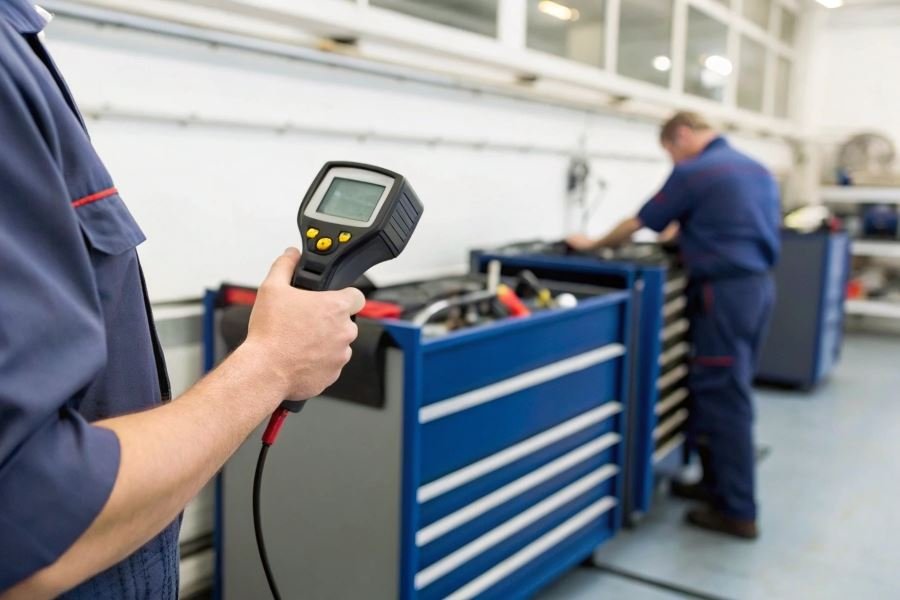
Portable detectors shine in flexibility and targeted diagnostics. These handheld devices allow technicians to investigate specific areas, perform spot checks during maintenance, and respond to suspected leak situations with precision.
Stationary systems, by contrast, offer continuous monitoring—the silent sentinels of your refrigeration infrastructure. They excel in early detection, providing immediate alerts before small problems become catastrophic failures.
Selecting the right solution for your needs
Your choice between these technologies should consider:
- System size and complexity: Larger installations with multiple potential leak points often justify stationary systems
- Frequency of inspection: How often can you realistically perform manual checks?
- Response time requirements: Can you afford to discover leaks during scheduled maintenance, or do you need immediate alerts?
- Budget considerations: Initial investment versus long-term protection
- Environmental conditions: Temperature extremes, vibration, and other factors affect detector performance
The ideal approach often combines both technologies—stationary systems for continuous protection with portable units for verification and precise location identification.
Technical Specifications That Make or Break Leak Detection
When evaluating refrigerant leak detectors, the technical specifications separate the champions from the challengers. The fundamental differences between portable and stationary units extend far beyond mere mobility—they represent distinct approaches to safeguarding facilities and equipment against potentially costly and dangerous refrigerant leaks.
A thorough comparison of portable and stationary refrigerant leak detectors reveals that each type offers unique advantages depending on your specific application needs. While portable units excel in troubleshooting and maintenance scenarios, stationary systems provide continuous monitoring capabilities that are essential for critical environments like server rooms or food storage facilities.
Detection sensitivity that matters
The sensitivity threshold of a leak detector determines its effectiveness in real-world applications:
| Detector Type | Typical Sensitivity | Best Application | Response Time |
|---|---|---|---|
| Portable (Electronic) | 3-5 ppm | Field service, spot checks | 1-3 seconds |
| Portable (Infrared) | 0.1-1 oz/year | Precision diagnostics | 1-2 seconds |
| Stationary | 1 ppm or better | Continuous monitoring | Immediate to 30 seconds |
Stationary detectors from manufacturers like Bacharach typically achieve sensitivity levels down to 1 ppm or better, making them ideal for early detection before leaks become problematic. Meanwhile, portable units like the Fieldpiece DR82 balance sensitivity with practical field use, offering detection capabilities that match the needs of service technicians.
Power requirements and operational constraints
Power infrastructure significantly impacts detector selection and deployment strategy. Stationary systems require:
- Dedicated power connections (typically 110-240V AC)
- Backup power systems for critical applications
- Professional installation with proper wiring
Portable detectors operate on:
- Rechargeable lithium-ion batteries (8-12 hours typical runtime)
- Replaceable alkaline batteries as backup options
- USB charging capabilities in newer models
The operational limitations extend beyond power concerns. Portable units face challenges with battery life in cold environments, while stationary systems must contend with false alarms from cross-sensitive gases and environmental factors.
Refrigerant compatibility across the spectrum
Modern leak detectors must address an increasingly diverse refrigerant landscape:
Portable detectors typically detect:
- Traditional HFCs (R-134a, R-404A, R-410A)
- Natural refrigerants (limited sensitivity to ammonia, CO2)
- New HFO blends (R-452A, R-513A)
Stationary systems offer:
- Specialized sensors for specific refrigerant families
- Multi-zone monitoring capabilities
- Configurable alarm thresholds by refrigerant type
The Inficon Stratus exemplifies versatility in stationary detection with its ability to monitor multiple refrigerant types simultaneously across different zones. For portable options, the Robinair TIFZX provides impressive cross-compatibility with both traditional and newer refrigerant formulations.
When selecting between these detector types, consider not just the immediate detection needs but also future-proofing against refrigerant transitions. The technical specifications that seem minor on paper often determine real-world effectiveness when facing an actual leak scenario.
Making the Right Choice: Portable vs Stationary Leak Detectors
When investing in refrigerant leak detection technology, the decision between portable and stationary systems can significantly impact operational efficiency, safety compliance, and your bottom line. Let’s cut through the complexity and provide actionable guidance for making this critical choice.
Matching technology to facility needs
The size and complexity of your facility should drive your detection strategy. For smaller operations under 10,000 square feet with limited refrigeration equipment, portable detectors like the Fieldpiece SRL8 offer sufficient coverage with flexibility. Their sensitivity ranges of 0.03-0.1 oz/yr provide adequate protection for limited installations.
For medium-sized facilities (10,000-50,000 square feet), a hybrid approach often delivers optimal results:
- Stationary monitors at high-risk points (compressor rooms, valve stations)
- Portable units for maintenance rounds and verification
Large industrial facilities with extensive refrigeration systems virtually demand stationary systems. The Bacharach MVR-300 and similar enterprise-grade solutions provide continuous monitoring across multiple zones with sensitivity levels reaching 1 ppm.
The most expensive leak detector is the one that fails to detect a critical leak when it matters most.
Healthcare and food storage facilities should prioritize stationary systems regardless of size due to the critical nature of temperature control and product safety requirements.
ROI considerations beyond the price tag
Initial investment represents only a fraction of total ownership costs:
| System Type | Initial Cost | Annual Maintenance | Expected Lifespan | Staff Hours Required |
|---|---|---|---|---|
| Portable | 500−3,000 | 100−300 | 3-5 years | 100-200 hrs/yr |
| Stationary | 5, 000−30,000+ | 500−2,000 | 7-10 years | 10-50 hrs/yr |
While stationary systems require higher upfront investment, their true ROI emerges through:
- Reduced refrigerant replacement costs (often $50-100 per pound)
- Minimized equipment downtime and emergency service calls
- Prevention of product loss in temperature-sensitive environments
- Decreased liability exposure from regulatory non-compliance
- Lower labor costs for monitoring activities
For facilities with refrigerant charges exceeding 500 pounds, stationary systems typically achieve positive ROI within 18-36 months through early leak detection alone.
Tomorrow’s detection technology today
The refrigerant leak detection landscape is evolving rapidly with several emerging trends:
IoT integration is transforming both portable and stationary systems. Modern detectors from Testo and Danfoss now offer cloud connectivity, enabling remote monitoring and automated compliance reporting.
AI-powered analytics are enhancing detection accuracy by learning normal operational patterns and identifying anomalies before traditional thresholds are triggered. These systems can reduce false positives by up to 85%.
Miniaturization continues to improve portable technology, with new microelectromechanical sensors (MEMS) delivering stationary-level sensitivity in handheld packages.
Environmental considerations are driving development of detectors optimized for natural refrigerants like CO₂ and ammonia as the industry transitions away from high-GWP options.
The most forward-thinking facilities are implementing distributed sensor networks that combine hundreds of low-cost sensors with centralized analytics, creating detection meshes that provide unprecedented coverage at lower costs than traditional approaches.
By aligning your detection strategy with facility requirements, calculating comprehensive ROI beyond initial purchase price, and considering emerging technologies, you’ll make an investment decision that delivers safety, compliance, and operational efficiency for years to come.
Discover the key differences between portable and stationary refrigerant leak detectors in this comprehensive guide. Learn about sensitivity thresholds, power requirements, and compatibility to make the best choice for your HVAC system needs.
Discover the key differences between portable and stationary refrigerant leak detectors in this comprehensive guide. Learn about sensitivity thresholds, power requirements, and compatibility to make the best choice for your HVAC system needs.