Ever watched a master hairdresser effortlessly create volume, smoothness, and perfect curls with seemingly magical hand movements? The secret isn’t just in their technique—it’s in their tools. The right brush in skilled hands can be the difference between a satisfied client who books their next appointment before leaving and one who smiles politely while silently vowing never to return.
Behind every successful hairstyle stands a carefully selected arsenal of brushes. For those just starting their journey in the hairstyling profession, understanding which brushes to invest in isn’t just about spending money wisely—it’s about building the foundation for your entire career.
Quality matters more than quantity
The brush market is flooded with options ranging from $5 bargain bin finds to $150 professional-grade tools. While budget constraints are real for new stylists, this is one area where cutting corners can significantly impact your results. High-quality brushes distribute natural oils, minimize breakage, and provide consistent tension—all critical factors in creating polished, long-lasting styles.
The client experience multiplier
When clients sit in your chair, they’re not just paying for a haircut—they’re investing in how they’ll look and feel afterward. A quality round brush that creates perfect tension can transform a basic blowout into a bounce-filled style that lasts for days. The right paddle brush can turn a standard smoothing session into a scalp-massaging experience clients will rave about.
Essential brush categories for your starter kit
For beginners, focus on these core categories:
- Detangling brushes: The foundation of any styling session
- Round brushes: Available in various diameters for different curl sizes and volume
- Paddle brushes: For smoothing and straightening
- Vent brushes: For quick drying without excessive heat damage
- Teasing brushes: For creating volume and texture
Each category serves distinct purposes in your styling repertoire, allowing you to tackle everything from basic blowouts to elaborate updos as your skills develop.
The Essential Brush Arsenal for Styling Success
When building your professional toolkit, understanding what brushes does a beginner hairdresser need can make the difference between styling success and frustration. The right brushes not only protect your clients’ hair but also help you achieve those magazine-worthy styles that build your reputation. Let’s dive into the three fundamental brush types that should be in every new stylist’s arsenal.
Round Brushes: Your Blowout Secret Weapon
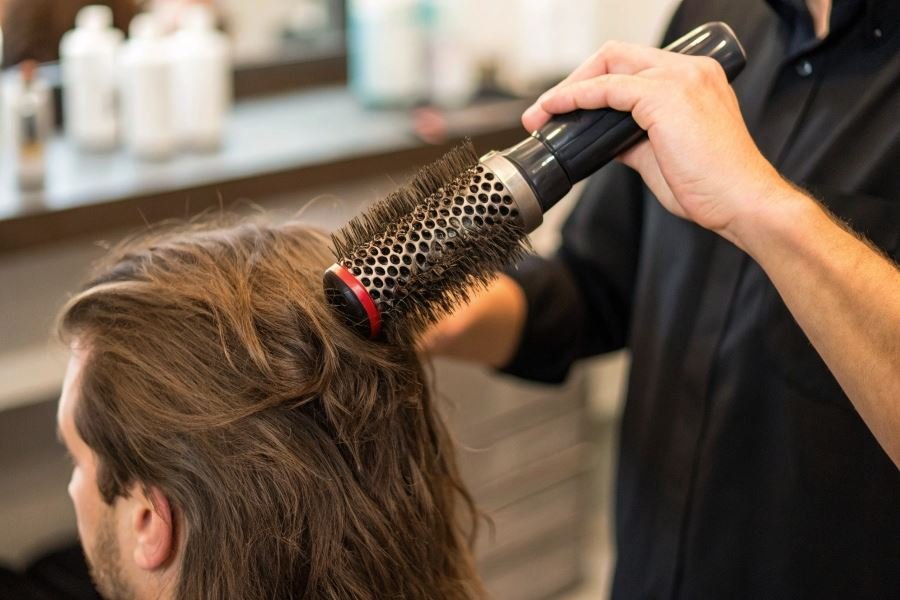
Round brushes are the workhorses of professional styling, creating everything from subtle bends to dramatic volume. Their cylindrical shape allows for tension and control while the bristles grip hair for precise styling.
Size matters significantly with round brushes:
- Small (½-1 inch): Perfect for short styles, creating tight curls, and adding lift at the roots
- Medium (1½-2 inches): The versatile middle ground for shoulder-length hair and creating natural-looking waves
- Large (2½-3+ inches): Ideal for long hair, creating gentle curves, and achieving maximum smoothness
The bristle material dramatically affects performance. Ceramic-coated barrels distribute heat evenly, reducing styling time by up to 30%. Natural boar bristles distribute oils beautifully while creating tension without damage, while nylon bristles provide stronger grip for coarser hair types.
Pro technique tip: When creating volume, always direct airflow down the hair shaft while keeping the brush moving to prevent heat damage.
Paddle Brushes: Smoothing Specialists
The wide, flat surface of paddle brushes makes them indispensable for detangling and creating sleek, straight styles. Their generous surface area covers more hair with each stroke, significantly reducing styling time.
Key paddle brush features to consider:
- Cushioned base: Provides flexibility that conforms to the scalp, reducing tension and breakage
- Mixed bristle composition: Combines gentle natural bristles with stronger synthetic ones for optimal detangling
- Vented design: Allows airflow for faster drying when used with a blow dryer
| Paddle Brush Type | Best For | Key Benefit |
|---|---|---|
| Wooden | Static reduction | Natural hair health |
| Ceramic | Heat styling | Even heat distribution |
| Plastic | Wet detangling | Lightweight handling |
For beginners, a medium-sized paddle brush with mixed bristles offers the most versatility. Use long, gentle strokes from roots to ends, working in sections to prevent overwhelming tangles.
Vent Brushes: Speed Styling Champions
Vent brushes feature openings (or “vents”) throughout the brush body that allow maximum airflow during blow-drying, reducing drying time by up to 50% compared to solid brushes.
Design elements that make vent brushes special:
- Strategic hole placement: Maximizes airflow while maintaining structural integrity
- Widely-spaced bristles: Prevents tangling while allowing air to reach the hair shaft
- Lightweight construction: Reduces arm fatigue during extended styling sessions
These brushes excel at creating natural, tousled looks and are perfect for clients who prefer a more casual, lived-in style. They’re also ideal for pre-styling before using more specialized brushes.
Application technique: Use a vent brush with a lifting motion at the roots while directing the dryer’s airflow through the brush’s vents for maximum volume with minimal effort.
By mastering these three fundamental brush types, you’ll be equipped to handle virtually any styling challenge that walks through your door. Remember that quality matters—investing in professional-grade tools now will save you frustration and deliver better results as you build your clientele.
Building Your Professional Brush Collection: The Smart Way Forward
Quality vs. Cost: Making Strategic Investments
Starting your career as a hairdresser requires thoughtful investment in your tools. Professional-grade brushes typically range from 15−150 per brush, with mid-tier options around 30−60 offering the best value proposition for beginners. The difference between a $20 brush and a $100 brush often lies in materials, craftsmanship, and longevity.
Investment wisdom: Rather than purchasing an entire set of budget brushes, consider investing in 3-4 high-quality essential brushes first. A premium round brush, paddle brush, and teasing brush will serve you better than eight mediocre tools.
The most expensive brush isn’t always the best choice, but the cheapest one is rarely a good decision.
Many established stylists report that their Mason Pearson brushes have lasted 10+ years with proper care—making the $120 price tag more reasonable when calculated as a $12 annual investment. Compare this to replacing $25 brushes every 8-12 months.
Extending Brush Lifespan: Maintenance Essentials
Professional brushes require professional care. Implementing these maintenance practices can triple the lifespan of your tools:
- Daily cleaning: Remove hair after each client using a brush cleaner comb
- Weekly deep cleaning: Soak non-wooden brushes in warm water with gentle shampoo
- Proper storage: Use a brush roll or dedicated container to prevent bristle damage
Temperature matters: Never leave brushes on hot surfaces or in direct sunlight, as this can warp handles and damage bristles. Wooden brushes particularly require gentle handling and should never be soaked.
Starter Kits for Different Salon Environments
Your initial brush collection should align with your specific work environment:
| Salon Type | Essential Brushes | Approximate Investment |
|---|---|---|
| High-volume | 2 round brushes (medium, large), 1 paddle brush, 1 vent brush, 1 teasing brush | $150-200 |
| Boutique/Upscale | 1 premium round brush set, 1 high-end paddle brush, 1 specialty styling brush, 1 teasing brush | $250-350 |
| Mobile Stylist | 2 multi-purpose brushes, 1 compact paddle brush, 1 travel-sized round brush | $120-180 |
For those working in full-service salons, prioritize versatility. The Olivia Garden NanoThermic round brush collection offers excellent heat distribution and durability at a mid-range price point.
Specialty salon stylists should invest according to their focus area. Curly hair specialists need denman-style brushes, while those focusing on blowouts should prioritize ceramic round brushes in multiple sizes.
Start small but strategic: Begin with 4-5 quality brushes that cover your most common services, then expand your collection as you develop your clientele and specialties. This approach prevents wasting money on brushes you rarely use while ensuring you have professional-grade tools for your signature services.
Remember that your brushes are an extension of your skill—they should enhance your technique, not limit it. The right foundation of quality tools will grow with your career, serving as reliable partners in your professional journey.
Discover the essential brushes every beginner hairdresser needs—from round brushes for perfect blowouts to paddle brushes for smoothing and vent brushes for quick styling. Learn how to build a professional collection that delivers salon-quality results.
Discover the essential brushes every beginner hairdresser needs—from round brushes for perfect blowouts to paddle brushes for smoothing and vent brushes for quick styling. Learn how to build a professional collection that delivers salon-quality results.