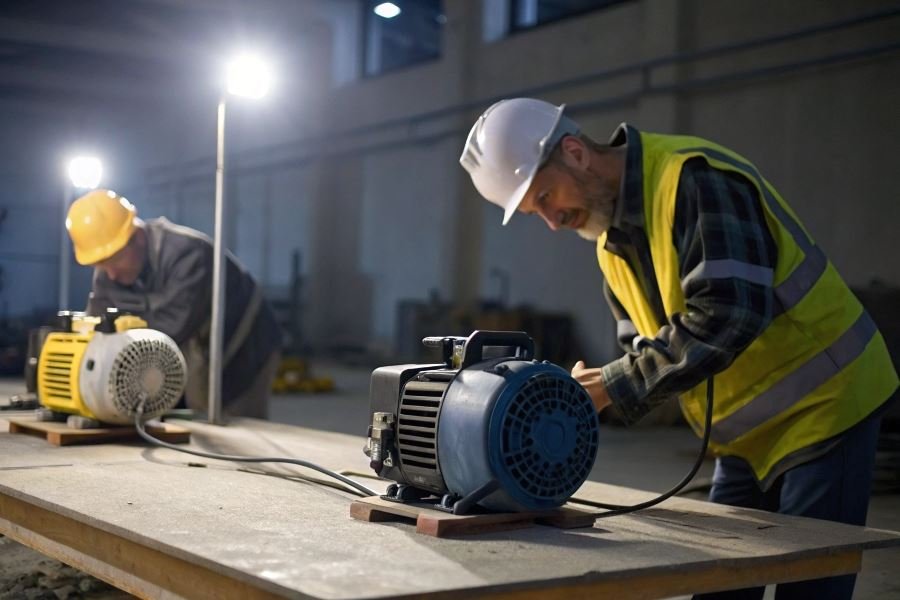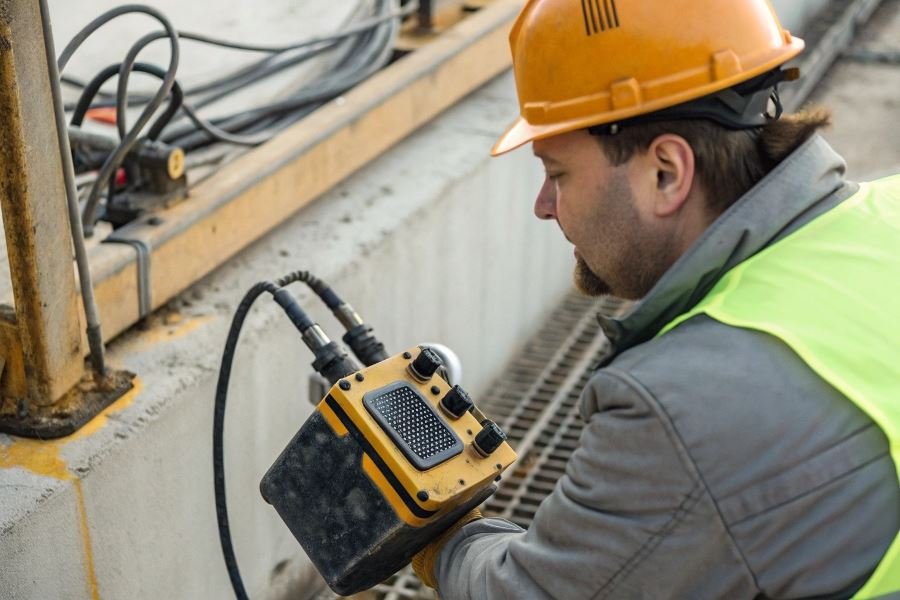
Ever watched a master craftsman transform liquid concrete into a rock-solid foundation? Behind that seamless pour lies a critical component most people never see: the converter that powers the deep vibrator. Getting this match wrong isn’t just inefficient—it can mean the difference between concrete that lasts decades and a structure that fails prematurely.
Deep vibrators eliminate air pockets in concrete, creating dense, strong structures that withstand time and pressure. But these vibrators are only as effective as the converters powering them. Think of converters as the heart of your vibration system—they transform standard electrical current into the precise power needed for optimal vibration frequency and amplitude.
Why matching matters: A 2000-watt vibrator paired with an underpowered 1500-watt converter creates a recipe for disaster. The vibrator will strain, overheat, and ultimately fail—possibly during a critical pour. Conversely, an oversized converter wastes energy and money.
Three key factors determine the right converter choice:
- Power requirements: Match or slightly exceed your vibrator’s wattage
- Input/output specifications: Ensure voltage compatibility with your power source
- Duty cycle: For continuous operation, select converters rated for 100% duty cycle
“The quality of your concrete work is directly proportional to the quality of your vibration system. And that system is only as strong as its weakest link—often the converter.” — Construction Engineering Journal, 2023
Selecting the right converter isn’t just about technical specifications—it’s about understanding how these components work together to deliver results that stand the test of time.
Technical Essentials for Concrete Vibrator Converters
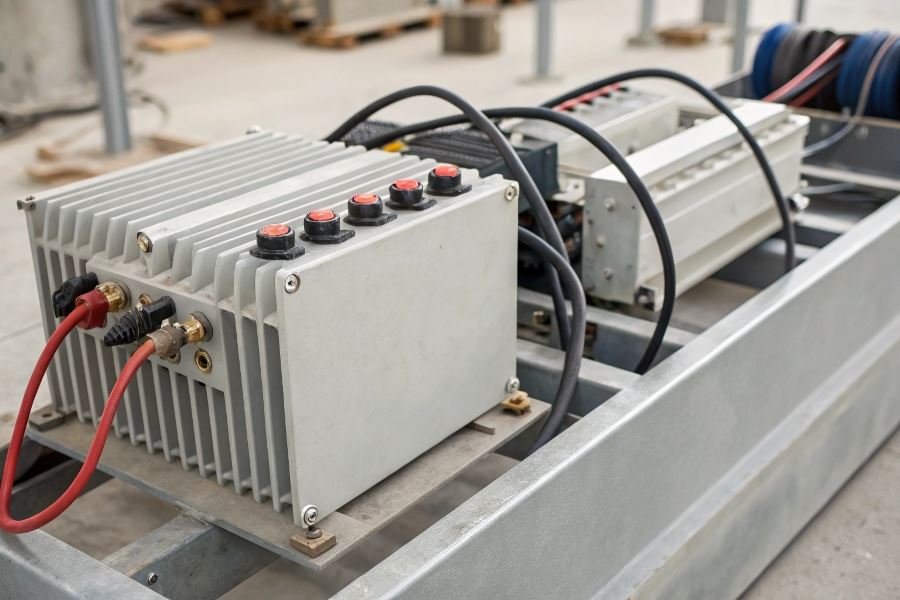
When it comes to achieving perfect concrete consolidation, the relationship between your vibrator and converter is nothing short of critical. The converter—that unassuming box of electrical wizardry—transforms standard power into the precise electrical flow your deep vibrator needs to perform at its peak. Selecting the right converter for a deep vibrator of different power ratings requires understanding several technical parameters that directly impact your project’s success and equipment longevity.
Power Output Compatibility Is Non-Negotiable
The fundamental starting point in converter selection is matching power output to your vibrator’s requirements. Mismatched power ratings are the number one cause of premature equipment failure in concrete vibration systems.
Most professional-grade deep vibrators require converters ranging from 1kW for light-duty applications up to 3kW for heavy industrial work. A 2kW converter, for instance, can typically handle vibrator heads up to 60mm in diameter, while larger 3kW units support heads up to 75mm.
| Vibrator Head Size | Recommended Converter Power | Typical Application |
|---|---|---|
| 25-35mm | 1kW | Thin walls, columns |
| 40-50mm | 1.5-2kW | Medium slabs, beams |
| 60-65mm | 2-2.5kW | Heavy foundations |
| 70-75mm | 3kW+ | Mass concrete, dams |
Always verify the manufacturer’s specifications before making your final selection—a 10% power margin provides valuable operational headroom.
Frequency Range Determines Consolidation Quality
The vibration frequency directly affects how concrete flows and consolidates. Most North American construction projects require converters that deliver:
- Low frequency (100-150Hz): For low-slump, stiff mixes
- Medium frequency (150-200Hz): For standard construction applications
- High frequency (200-250Hz): For high-flow, self-consolidating concrete
Modern electronic frequency converters from manufacturers like Wacker Neuson offer adjustable frequency settings, allowing a single converter to adapt to different concrete mixes and environmental conditions.
Voltage Considerations for Site Flexibility
Voltage compatibility is essential when working across different job sites. The most versatile converters offer:
- Input flexibility (110V-240V)
- Stable output regardless of input fluctuations
- Automatic voltage regulation to protect the vibrator
Multi-voltage converters command a 15-20% price premium but eliminate the need for multiple units when working across sites with different power supplies.
Protection Features Save Thousands in Downtime
Construction sites are brutal environments for electronic equipment. Premium converters include:
- Thermal overload protection
- Short circuit safeguards
- Moisture ingress prevention (IP65 rating or higher)
- Dust filtration systems
These protection features typically add $150-300 to the initial purchase price but can prevent catastrophic failures costing ten times that amount.
Durability Factors for Real-World Conditions
The housing construction dramatically impacts converter lifespan. Look for:
- Impact-resistant casings (reinforced polyethylene or metal)
- Vibration-dampening mounts to prevent internal component damage
- Sealed electronics compartments with rubber gaskets
- Heavy-duty connectors rated for frequent coupling/uncoupling
Converters from Bosch and Husqvarna typically feature reinforced carrying frames that double as protective cages, significantly extending service life in demanding environments.
By carefully evaluating these technical considerations, you’ll select a converter that not only powers your vibrator effectively today but continues performing reliably through years of demanding concrete work.
Making the Smart Converter Investment for Your Deep Vibrator
When you’ve spent hours researching concrete vibrator converters, analyzed specifications, and compared features, it’s time to make that final decision. This isn’t just about buying equipment—it’s about investing in your project’s success and your company’s future productivity.
Value Beyond the Price Tag
The sticker price of a converter can be deceptive. A $300 budget model might seem attractive compared to a $750 professional-grade unit, but the calculation changes when you factor in longevity and performance.
Premium converters typically deliver:
- Lower failure rates during critical pours
- Consistent power delivery under load
- 3-5 years longer operational lifespan
- Better energy efficiency (15-20% on average)
The true cost of equipment isn’t what you pay today—it’s what you pay over its entire lifecycle.
Consider this real-world math: A premium converter costing $200 more but lasting through 500 additional projects actually saves you $0.40 per project while reducing downtime risks. For contractors completing multiple pours weekly, this represents significant value.
Compatibility: The Foundation of System Performance
Your converter doesn’t exist in isolation—it’s part of an ecosystem of equipment that must work in harmony.
| Compatibility Factor | Why It Matters | What To Check |
|---|---|---|
| Input Power | Determines where you can operate | Voltage range (110V-240V) |
| Output Frequency | Affects vibrator performance | 50-400 Hz capability |
| Connection Types | Physical integration | Plug types and adapters needed |
| Future Expansion | Scalability | Maximum load capacity |
When evaluating compatibility, think beyond your current vibrator. Will you be upgrading to higher-powered vibrators in the future? Are you planning to run multiple vibrators simultaneously? A converter with 20% more capacity than your current needs provides valuable headroom for growth.
Support Infrastructure Matters
The best converter becomes a liability when it fails and you can’t get it serviced quickly. Before finalizing your purchase, investigate:
-
Warranty coverage – Look beyond duration to what’s actually covered. Some manufacturers exclude “job site conditions” from coverage.
-
Parts availability – Can replacement components be shipped overnight? Or will you wait weeks for proprietary parts?
-
Technical support access – Is help available during your actual working hours? Many contractors discover too late that support is only available 9-5 Eastern time.
-
Maintenance requirements – Some converters need regular service every 100 hours of operation, while others can go 500+ hours between checks.
The most reliable manufacturers offer detailed maintenance schedules and troubleshooting guides that empower your team to handle routine issues without downtime.
The Decision Framework
When making your final selection, create a weighted scoring system based on:
- Total cost of ownership (not just purchase price)
- Perfect match with your specific vibrator requirements
- Compatibility with your power sources and job site conditions
- Availability of support when and where you operate
- Maintenance demands versus your team’s capabilities
The ideal converter isn’t necessarily the most expensive or feature-rich—it’s the one that delivers consistent performance for your specific concrete applications with minimal hassle and downtime. By focusing on these factors rather than just specifications or price, you’ll select equipment that truly enhances your productivity and project quality for years to come.
Learn how to select the perfect converter for deep vibrators of various power ratings. Our comprehensive guide covers essential technical specifications, compatibility factors, and key considerations to ensure optimal concrete vibration performance.
Learn how to select the perfect converter for deep vibrators of various power ratings. Our comprehensive guide covers essential technical specifications, compatibility factors, and key considerations to ensure optimal concrete vibration performance.