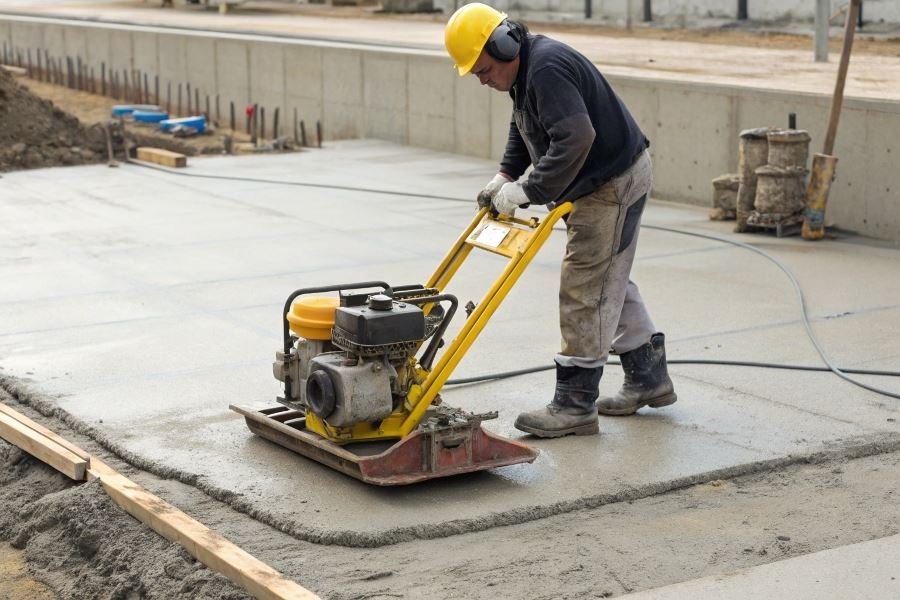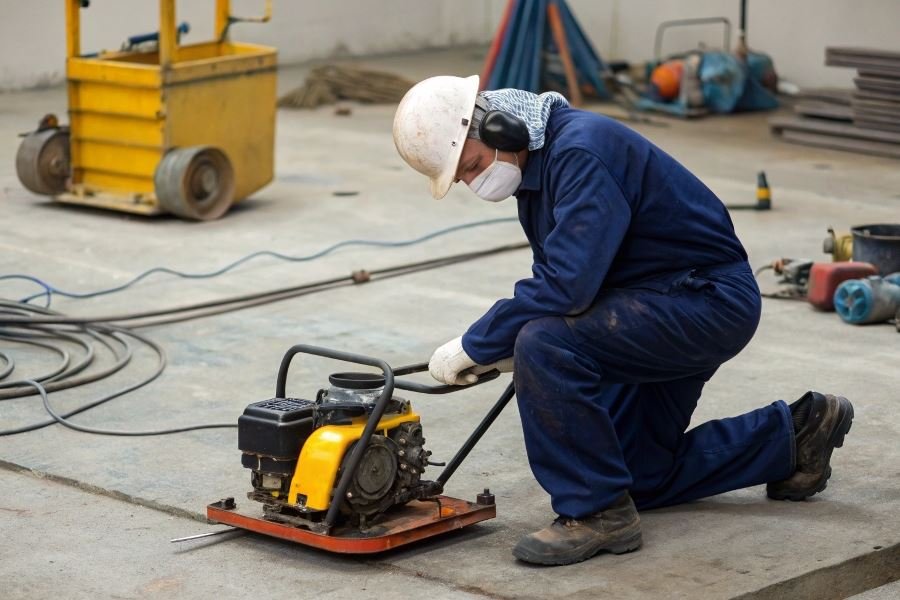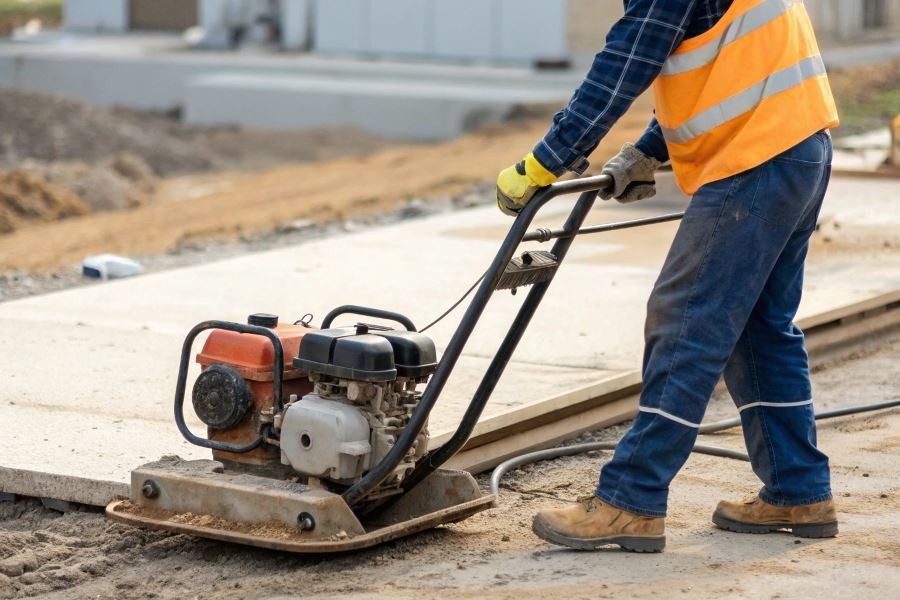
Ever wondered what makes freshly poured concrete settle perfectly? Behind every smooth foundation and flawless concrete structure stands an unsung hero: the site vibrator. This essential tool eliminates air pockets and ensures proper material consolidation—the difference between a structure that lasts decades and one that fails prematurely.
Construction professionals face a critical choice when selecting vibration equipment: electric or gasoline power? This decision impacts everything from project efficiency to bottom-line costs. The power source you choose doesn’t just affect performance—it shapes your entire workflow and environmental footprint.
What exactly are site vibrators?
Site vibrators (also called concrete vibrators) serve as the construction industry’s compaction specialists. They generate controlled vibrations that:
- Force entrapped air out of freshly poured concrete
- Ensure proper material consolidation
- Prevent future structural weaknesses
- Improve overall concrete strength and durability
The power divide: Electric vs. gasoline
The market currently splits between two dominant technologies:
Electric vibrators connect to power sources via cords or battery packs, offering consistent performance with zero direct emissions. Their popularity has surged 37% since 2020, particularly in urban construction and indoor applications.
Gasoline-powered vibrators deliver exceptional mobility and sustained power without electrical connections. They remain the go-to choice for remote sites, with market research showing they still command 58% of the global concrete vibrator market despite environmental concerns.
The industry stands at a fascinating crossroads, with electric models gaining ground as battery technology improves, while gasoline models evolve to meet stricter emissions standards. Your project requirements—not just preference—should ultimately determine which technology deserves a place in your equipment lineup.
Electric vs. Gasoline Vibrators: The Ultimate Compaction Showdown
Raw Power and Performance Metrics
When it comes to construction site efficiency, few tools impact project timelines like concrete vibrators. The comparison of electric and gasoline-powered site vibrators reveals significant performance differences that directly affect your bottom line. Electric models typically deliver 1-3 HP, while gas-powered units can push 5+ HP, creating a substantial power gap that manifests in compaction speed.
Vibration frequency – measured in vibrations per minute (VPM) – tells the real story. Gas-powered vibrators generally operate between 8,000-12,000 VPM, while electric models typically range from 10,000-15,000 VPM. This higher frequency from electric units often translates to smoother finishes despite their lower horsepower ratings.
Compaction efficiency isn’t just about raw power. The Wacker Neuson M3000 gas vibrator might deliver impressive force, but the Bosch GVC 22 electric vibrator often achieves comparable results with less energy consumption in controlled tests.
Cost Considerations Beyond Purchase Price
The financial equation extends far beyond the initial investment:
| Cost Factor | Electric Vibrators | Gas Vibrators |
|---|---|---|
| Initial Cost | 800−2,500 | 1, 200−3,500 |
| Fuel/Energy | 0.15−0.30/hour | 1.50−3.00/hour |
| Annual Maintenance | 100−250 | 300−700 |
| Average Lifespan | 7-10 years | 5-8 years |
Maintenance requirements create another stark contrast. Electric vibrators typically require simple inspections of cords, switches, and bearings. Gas-powered units demand regular oil changes, air filter replacements, spark plug maintenance, and carburetor adjustments – a maintenance schedule that can add 3-5 hours of downtime monthly.
Environmental Footprint and Regulatory Compliance
The environmental impact differential cannot be overstated. A typical gas-powered concrete vibrator emits approximately 5-7 kg of CO₂ per day of operation, while electric models produce zero direct emissions. This distinction becomes increasingly significant as construction sites face stricter emissions regulations and sustainability requirements.
The Honda GX160 engine commonly used in gas vibrators produces approximately 22g/kWh of NOx emissions – pollutants that contribute to smog formation and respiratory issues. Electric alternatives eliminate these concerns entirely, though their overall carbon footprint depends on the local electricity generation mix.
Mobility and Handling Characteristics
Weight and portability create interesting tradeoffs:
- Gas vibrators: 35-70 pounds, completely autonomous operation
- Electric vibrators: 15-40 pounds, but tethered to power sources
This mobility equation shifts dramatically depending on job site conditions. On sprawling sites without reliable power infrastructure, the Multiquip MVH gas vibrator offers unmatched freedom despite its 65-pound frame. For indoor finishing work, the Makita VR electric vibrator’s 28-pound design and zero emissions make it the clear choice.
Noise Levels and Workplace Safety
The workplace safety implications extend beyond the obvious. Gas vibrators typically generate 95-105 dB – requiring hearing protection and potentially limiting communication on site. Electric models operate at a more manageable 75-85 dB, reducing noise fatigue and improving overall site safety.
Vibration-induced injuries represent another critical consideration. Gas units typically transfer more vibration to operators, increasing the risk of hand-arm vibration syndrome (HAVS). Modern electric vibrators often incorporate advanced dampening systems that reduce operator fatigue during extended use.
The choice between electric and gas vibrators ultimately depends on your specific application requirements, site conditions, and long-term operational strategy. While gas units offer unmatched mobility for remote locations, electric vibrators deliver compelling advantages in operating costs, environmental impact, and workplace safety that make them increasingly attractive as power infrastructure improves on construction sites.
Making the Right Vibrator Choice for Your Construction Needs
Project-specific considerations that matter
Choosing between electric and gasoline-powered site vibrators isn’t just about preference—it’s about project requirements. Site accessibility often dictates your choice. Electric vibrators require reliable power sources, making them ideal for urban construction with established grid connections. Meanwhile, gasoline models shine in remote locations where power infrastructure is limited or nonexistent.
Project scale also influences selection. For smaller jobs requiring intermittent vibration, electric models offer simplicity and lower initial costs. However, large-scale projects with continuous operation demands might benefit from gasoline vibrators’ mobility and endurance—especially when factoring in the limitations of extension cords and potential voltage drops over distance.
Environmental conditions create another decision point. Indoor projects practically mandate electric vibrators due to their zero emissions. The Wacker Neuson M1500 electric concrete vibrator, for example, operates at just 76 dB—significantly quieter than most gasoline alternatives that typically exceed 95 dB.
The right vibrator choice aligns perfectly with your project constraints, not just your preferences.
ROI breakdown between vibrator types
Initial investment represents only part of the total ownership equation. Electric vibrators typically cost 15-30% less upfront than comparable gasoline models. A mid-range electric internal vibrator averages $600-900, while equivalent gasoline units start around $1,100.
The operational cost difference becomes striking over time:
| Cost Factor | Electric Vibrator | Gasoline Vibrator |
|---|---|---|
| Initial purchase | $750 (average) | $1,200 (average) |
| Annual fuel/electricity | $120-180 | $450-700 |
| Maintenance (yearly) | $50-100 | $200-350 |
| Average lifespan | 7-10 years | 5-8 years |
| 5-year total cost | $1,400-1,900 | $3,650-4,950 |
Electric vibrators deliver substantial savings through reduced maintenance requirements—no carburetors to clean, no spark plugs to replace, and fewer moving parts overall. The Bosch GVC series demonstrates this with service intervals three times longer than comparable gasoline units.
For contractors completing 10+ projects annually, the ROI calculation typically favors electric models unless remote work constitutes more than 60% of operations.
Tomorrow’s vibration technology today
The vibrator market is experiencing remarkable innovation. Battery technology advancements are revolutionizing cordless electric vibrators. The latest lithium-ion powered models from DeWalt and Makita now deliver 4-6 hours of continuous operation—approaching gasoline endurance without emissions concerns.
Hybrid vibrators represent another emerging category, combining gasoline engines with electric motors. These systems use small engines as generators, powering electric vibration mechanisms that offer precise frequency control while maintaining mobility.
Smart vibration technology is entering the market with embedded sensors that monitor concrete consistency in real-time. The Hilti Intelligent Vibration System adjusts frequency automatically based on concrete density readings, ensuring optimal consolidation while preventing over-vibration.
Sustainability improvements continue in both categories. Gasoline models now feature improved emission controls, with some manufacturers reducing carbon output by up to 40% compared to models from just five years ago. Meanwhile, electric vibrators increasingly incorporate recycled materials in their construction.
The decision between electric and gasoline vibrators ultimately depends on your specific project needs, budget constraints, and operational environment. By carefully weighing these factors against the total cost of ownership, you’ll select equipment that delivers optimal performance and value throughout its service life.
Discover the key differences between electric and gas concrete vibrators in our comprehensive guide comparing performance, efficiency, operational costs, and environmental impact to help you choose the right tool for your construction projects.
Discover the key differences between electric and gas concrete vibrators in our comprehensive guide comparing performance, efficiency, operational costs, and environmental impact to help you choose the right tool for your construction projects.