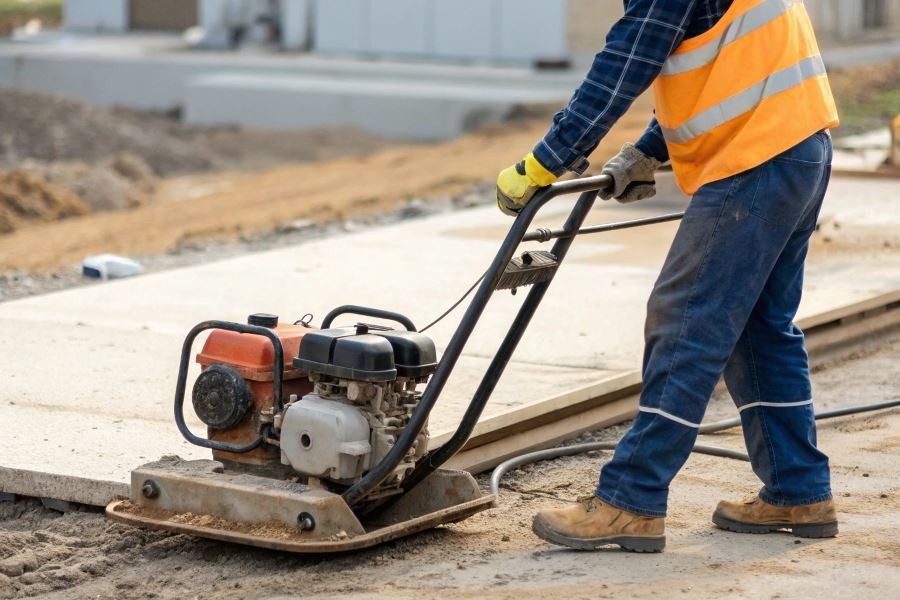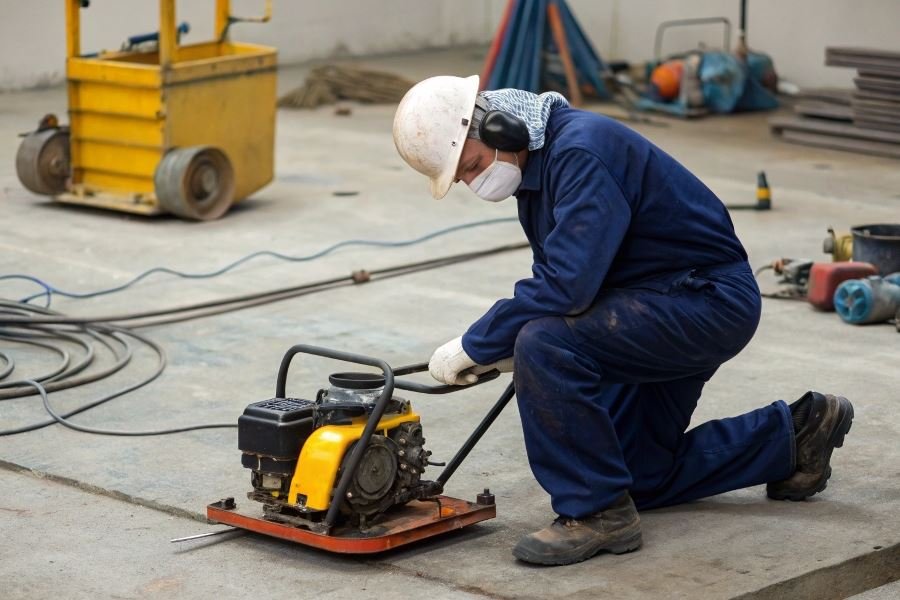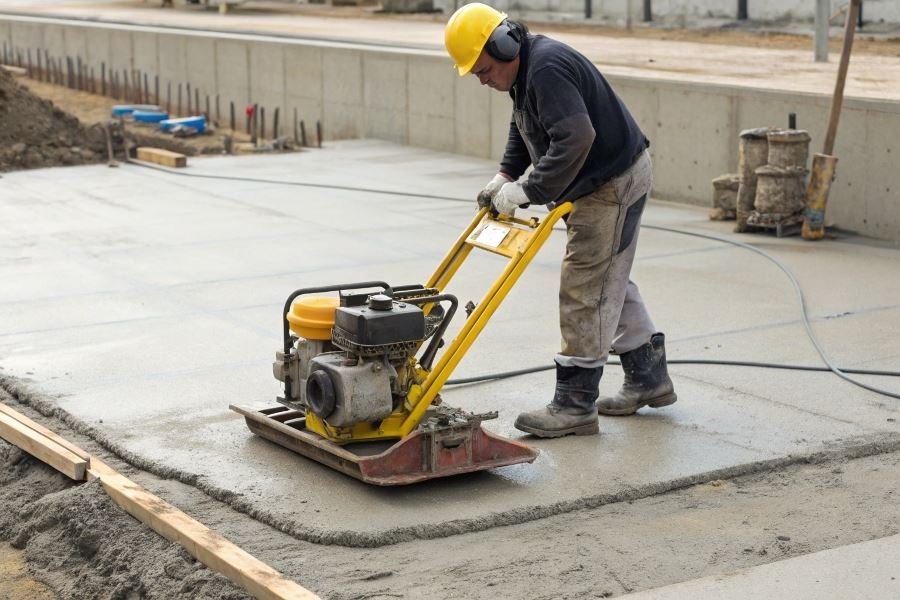
Ever wondered why some concrete structures stand strong for decades while others develop cracks within months? The secret often lies not in the mix, but in how it’s settled.
Platform vibrators might not be the most glamorous tools on a construction site, but they’re absolutely critical to structural integrity. These powerful machines transform freshly poured concrete from a loose aggregate into a dense, void-free material that can withstand tremendous pressure and the test of time.
What exactly are platform vibrators?
At their core, platform vibrators are specialized equipment designed to consolidate concrete by eliminating air pockets and ensuring proper settlement. They work on a simple yet effective principle: controlled vibration energy transfers through concrete, causing particles to rearrange into a more compact formation. Unlike their handheld cousins, platform vibrators support larger areas and provide more consistent results across expansive pours.
Why selection matters more than you think
Choosing the wrong vibrator isn’t just an inconvenience—it can lead to costly structural failures. Improper consolidation creates weaknesses that no amount of quality concrete can overcome. When concrete isn’t properly vibrated, it can develop:
- Honeycombing (visible voids)
- Reduced compressive strength
- Poor bonding with reinforcement
- Increased permeability (leading to water damage)
- Surface defects that compromise both aesthetics and durability
Essential selection parameters
Selecting the right platform vibrator requires balancing several critical factors:
- Frequency range – Different mixes respond to different vibration frequencies
- Amplitude – Determines how effectively the vibration penetrates the concrete
- Force output – Must match the workability of your specific concrete mix
- Operational area – Ensures complete coverage without over-vibration
The difference between mediocre and exceptional results often comes down to matching these parameters precisely to your project requirements. Remember, concrete quality isn’t just about what goes into the mix—it’s about how you handle it once it’s poured.
Mastering Platform Vibrator Selection
When concrete meets vibration, magic happens. The right platform vibrator transforms ordinary pours into flawless structures, while the wrong one can leave you with costly imperfections. Selecting the perfect vibrator for your construction project isn’t just about grabbing whatever’s available—it’s about understanding the science behind consolidation.
Choosing platform vibrators for different types of construction projects requires careful consideration of technical specifications, job requirements, and environmental conditions. The selection criteria must account for material properties, power availability, physical constraints, and long-term reliability. This methodical approach ensures optimal concrete consolidation while maximizing equipment lifespan and project efficiency.
Frequency and Amplitude: The Concrete Whisperers
Frequency matters more than you think. For high-slump concrete mixes, vibrators operating at 9,000-12,000 VPM (vibrations per minute) typically deliver excellent results. However, when working with low-slump, high-strength concrete, you’ll need higher frequencies—often 12,000-15,000 VPM—to properly consolidate the material.
Amplitude requirements vary dramatically by application:
| Material Type | Recommended Amplitude | Ideal Frequency Range |
|---|---|---|
| High-slump concrete | 0.040-0.060 inches | 9,000-12,000 VPM |
| Low-slump concrete | 0.060-0.080 inches | 12,000-15,000 VPM |
| Mass concrete | 0.070-0.090 inches | 8,000-10,000 VPM |
| Precast elements | 0.030-0.050 inches | 12,000-16,000 VPM |
For thin walls and architectural concrete, lower amplitudes prevent segregation while ensuring proper consolidation. Conversely, mass concrete pours benefit from higher amplitudes that drive out air pockets from deeper sections.
Power Source Selection: Electric, Pneumatic, or Hydraulic?
Your power source choice dramatically impacts performance, portability, and operational costs.
Electric vibrators offer consistent performance and lower operational costs, making them ideal for precast yards and controlled environments. Modern Wacker Neuson electric models deliver impressive power-to-weight ratios while maintaining precise frequency control.
Pneumatic options shine in hazardous environments where electrical systems pose safety concerns. They’re virtually maintenance-free but require compressed air infrastructure, which can be limiting on remote sites.
Hydraulic systems dominate large-scale infrastructure projects where maximum power is non-negotiable. Though more expensive initially, their unmatched force and durability make them cost-effective for major dam construction, bridge foundations, and massive structural elements.
Size and Weight: Finding the Perfect Fit
Platform vibrator dimensions must align with your specific application:
- Slab work: Lightweight units (30-50 lbs) with wider platforms (18-24 inches) distribute vibration effectively across horizontal surfaces
- Column forms: Narrow-profile vibrators (12-16 inches wide) with concentrated force for vertical applications
- Bridge decks: Heavy-duty models (60-80 lbs) with extended handles for operator comfort during prolonged use
The Husqvarna Atlas Copco BV series offers adjustable handles and modular weights, allowing contractors to reconfigure a single unit for multiple applications—a significant advantage for versatile construction teams.
Durability and Maintenance: The Long Game
Construction-grade vibrators must withstand punishing conditions. Look for:
- Sealed bearings with dust protection systems
- Reinforced frames with impact-resistant corners
- Vibration-isolated handles to reduce operator fatigue
- Quick-access maintenance panels for field servicing
Preventive maintenance schedules vary by power source:
Electric models require bearing inspections every 100 hours, while hydraulic systems can often operate 300+ hours between service intervals. The VIBCO industrial series features tool-free access panels and color-coded maintenance points, reducing downtime and extending equipment life.
Selecting the right platform vibrator isn’t just about today’s pour—it’s about building a reputation for flawless concrete work that stands the test of time.
The Ultimate Platform Vibrator Showdown
When concrete meets vibration, magic happens. The right platform vibrator transforms ordinary pours into flawless foundations, but choosing between the sea of options requires insider knowledge. Let’s dive into the elite performers that construction professionals swear by—machines that deliver results across different construction scenarios.
High-frequency heroes for perfect concrete
High-frequency platform vibrators have revolutionized concrete consolidation with their ability to eliminate air voids while maintaining structural integrity. The Wacker Neuson P35A stands as the undisputed champion in this category, delivering an impressive 12,000 vibrations per minute (VPM) that ensures even the most stubborn air bubbles surrender.
What makes these high-frequency models exceptional is their ability to work with low-slump concrete without causing aggregate separation. The WYCO Tool W-Series demonstrates this perfectly with its variable frequency control that allows operators to dial in precisely the right amount of energy for different concrete mixes.
Key specifications to demand:
- Frequency range: 9,000-12,000 VPM
- Amplitude: 0.6-1.2 mm
- Power source: Electric (preferably with inverter technology)
- Weight: Under 35 lbs for maneuverability
The difference between properly and improperly consolidated concrete can mean a 40% variation in compressive strength—a margin no quality-focused contractor can afford to ignore.
Industrial foundation workhorses
When foundation work scales up, so must your equipment. Heavy-duty platform vibrators handle the punishing demands of industrial applications where failure isn’t an option.
The MBW GP5000 exemplifies this category with its reinforced steel frame and 5,000-pound centrifugal force—enough to consolidate massive concrete pours for industrial foundations. These machines don’t just vibrate concrete; they command it into submission.
Performance factors that separate contenders from pretenders:
| Feature | Professional Grade | Consumer Grade |
|---|---|---|
| Engine | 5+ HP Honda GX | 3-4 HP Generic |
| Frame Construction | Fully welded steel | Bolted assembly |
| Isolation Mounts | Polyurethane/steel | Rubber only |
| Operating Time | 8+ hours continuous | 2-4 hours |
| Centrifugal Force | 4,000+ lbs | Under 3,000 lbs |
The Multiquip PX3 deserves special mention for its innovative hydraulic system that maintains consistent performance even when the engine RPM fluctuates—a common issue during extended industrial operations.
Small-scale solutions with big impact
Don’t let project size fool you—small-scale construction demands equally serious vibration solutions. Portable platform vibrators deliver professional results without requiring a forklift to transport.
The Tomahawk Power TP-CV90 weighs just 18 pounds but generates 3,600 VPM, making it perfect for sidewalks, driveways, and small foundation repairs. Its foldable handle design allows for storage in standard truck toolboxes—a feature contractors consistently praise.
What truly separates exceptional portable units is battery life and charging speed. The Husqvarna Atlas Copco BV20 offers up to 45 minutes of continuous operation on a single charge, with a quick-charge feature that restores 80% capacity in just 30 minutes.
Smart features worth the investment:
- Ergonomic vibration-dampening handles
- IP65 water resistance rating
- LED battery indicators visible in bright sunlight
- Interchangeable battery compatibility with other tools
The right platform vibrator doesn’t just complete the job—it elevates the entire project’s quality while saving time and reducing physical strain. Choose wisely, and your concrete will thank you with decades of flawless performance.
Discover expert criteria for selecting the right platform vibrator for your construction needs. Learn about frequency, power options, and size specifications to ensure optimal concrete consolidation and foundation work quality across various project types.
Discover expert criteria for selecting the right platform vibrator for your construction needs. Learn about frequency, power options, and size specifications to ensure optimal concrete consolidation and foundation work quality across various project types.