Did you know the average American spends over 100 hours annually cleaning floors? That’s more than four entire days! Yet the technology transforming this essential task has evolved dramatically, creating a fascinating divide between two distinct approaches.
The floor cleaning machine market has undergone remarkable transformation since the first electric vacuum cleaners appeared in the early 1900s. What began as bulky, corded machines has evolved into a sophisticated industry offering diverse solutions for every cleaning challenge. Today’s market presents a critical choice: battery-powered freedom or mains-powered reliability?
The evolution of clean
The fundamental difference between these systems goes beyond the obvious power source. Battery-powered units offer unparalleled mobility—gliding effortlessly from room to room without hunting for outlets. Meanwhile, mains-powered machines deliver consistent, uninterrupted performance for marathon cleaning sessions. This distinction creates cascading effects on everything from cleaning efficiency to operational costs.
Beyond the power cord
When selecting between these technologies, consider your specific environment:
- Space configuration: Large, open areas benefit from mains power’s endurance, while multi-room spaces with limited outlets favor battery mobility
- Cleaning frequency: Daily maintenance might justify battery convenience, while deep, periodic cleaning demands mains power’s sustained performance
- Accessibility requirements: Stairs, tight spaces, and outdoor areas practically necessitate cordless technology
The decision between these technologies isn’t merely practical—it’s strategic. The right choice aligns with your specific cleaning challenges, workflow patterns, and efficiency goals. Understanding these fundamental differences creates the foundation for selecting equipment that transforms cleaning from a chore into a seamlessly efficient process.
The Ultimate Floor Cleaning Showdown: Batteries vs. Cords
Performance that powers your clean
When it comes to floor cleaning machines, performance is where the rubber meets the road—or rather, where the brush meets the grime. Battery-powered units have made remarkable strides in recent years, with lithium-ion technology delivering impressive cleaning power that rivals their corded counterparts. Modern cordless vacuums from brands like Dyson and Shark now generate suction power exceeding 100 air watts—a dramatic improvement from earlier generations.
The comprehensive comparison of battery-powered and mains-powered floor cleaning machines reveals fascinating performance trade-offs that impact your cleaning experience. While corded machines maintain consistent power throughout operation, battery models typically offer 20-60 minutes of runtime depending on power settings and battery capacity. High-end models like the Tineco FLOOR ONE S5 deliver exceptional efficiency by automatically adjusting suction power based on detected dirt levels, extending battery life while maintaining cleaning effectiveness.
Runtime reality check
| Machine Type | Average Runtime | Power Consistency | Best For |
|---|---|---|---|
| Battery-Powered | 20-60 minutes | Gradually decreases | Medium-sized spaces, quick cleanups |
| Mains-Powered | Unlimited | Consistent | Large spaces, deep cleaning sessions |
Battery technology continues to evolve, with some premium models now featuring hot-swappable batteries that effectively double your cleaning time. However, mains-powered machines still dominate when tackling extensive cleaning projects where consistent, uninterrupted power is non-negotiable.
The dollars and sense of clean floors
Initial investment presents the first financial hurdle. Battery-powered floor cleaners typically command a $100-300 premium over comparable corded models. A quality cordless stick vacuum might start around $250, while professional-grade battery floor scrubbers can exceed $2,000.
The operational expense equation isn’t straightforward either. While corded machines consume electricity only during use, battery-powered units require:
- Battery replacement every 2-3 years ($50-150 per battery)
- Slightly higher electricity costs due to charging inefficiencies
- Potential for specialized parts and repairs
Long-term value ultimately depends on your specific usage patterns. Heavy daily users might find mains-powered machines more economical over a 5-year period, while occasional users could benefit from the convenience premium of cordless options.
Freedom vs. reliability: the practical equation
The mobility advantage of battery-powered cleaners cannot be overstated. Without the tether of a power cord, users enjoy:
- Seamless movement between rooms
- No hunting for outlets or managing extension cords
- Access to areas far from power sources
- Reduced tripping hazards
Maintenance requirements diverge significantly between these technologies. Battery-powered units demand diligent:
- Regular charging cycles (following manufacturer guidelines)
- Battery conditioning and proper storage
- Filter cleaning to maintain efficiency and battery life
Meanwhile, mains-powered machines typically require less maintenance focus but sacrifice the freedom of movement that makes cleaning less cumbersome.
The verdict? For smaller spaces and quick cleaning sessions, battery-powered machines deliver convenience that justifies their premium. For commercial applications or homes with extensive square footage, the reliability and consistent power of corded machines remains compelling. Your ideal choice ultimately depends on prioritizing either unlimited runtime or unrestricted movement.
Making the Right Choice: Battery vs. Mains-Powered Floor Cleaners
Selecting the perfect floor cleaning machine isn’t just about budget—it’s about matching technology to your specific cleaning challenges. After examining both battery-powered and mains-powered options in detail, let’s cut through the noise and determine which solution truly belongs in your facility.
Decision Framework for Cleaning Excellence
The right choice hinges on three critical factors: facility characteristics, operational patterns, and specific cleaning requirements.
Facility size matters tremendously. Larger spaces (over 10,000 sq ft) typically demand the consistent power and extended runtime that corded machines provide. Smaller or segmented areas benefit from the maneuverability of battery-powered units.
Cleaning frequency creates distinct patterns. Daily intensive cleaning often justifies mains-powered durability, while intermittent cleaning in multiple locations favors battery flexibility.
Specific requirements create the tiebreaker. Consider:
- Power needs for stubborn soils
- Noise restrictions
- Traffic patterns
- Accessibility challenges
- Staff technical comfort
The perfect floor cleaning machine isn’t the most expensive or the most powerful—it’s the one that solves your specific cleaning challenges while minimizing operational friction.
Where Battery-Powered Machines Shine Brightest
Battery-powered floor cleaners dominate in these three scenarios:
-
Multi-building campuses with distributed cleaning needs
Battery-powered units from manufacturers like Tennant excel when your team needs to clean multiple buildings without hunting for outlets. The latest lithium-ion models offer up to 4 hours of runtime—perfect for maintenance teams managing educational campuses or office complexes. -
High-traffic retail environments during business hours
The cordless advantage becomes clear in busy retail spaces where customer safety is paramount. Kärcher battery scrubbers allow daytime cleaning without creating tripping hazards, with quick-swap battery systems ensuring continuous operation during peak shopping hours. -
Facilities with limited outlet access or historic buildings
Older buildings with insufficient electrical infrastructure or protected historic properties benefit immensely from battery technology. Nilfisk Liberty SC50 and similar models navigate these challenging environments without requiring expensive electrical upgrades.
When Mains-Powered Machines Remain Undefeated
Corded machines maintain clear superiority in these scenarios:
-
Industrial manufacturing with heavy soil loads
Manufacturing floors with oil, metal shavings, and industrial residues demand the consistent high power that only mains-powered machines can deliver. Advance industrial scrubbers maintain peak performance throughout extended shifts without power degradation. -
24/7 facilities requiring continuous operation
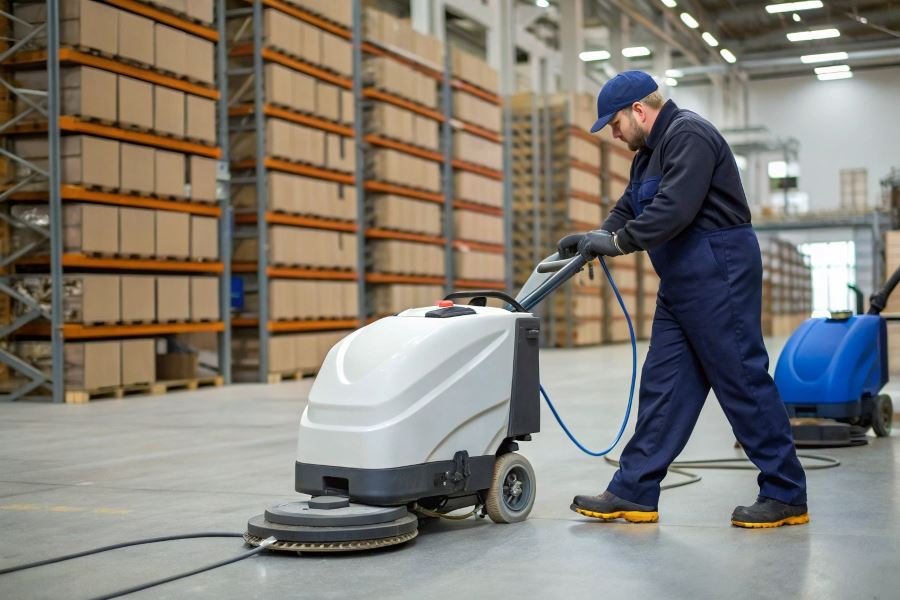
Healthcare facilities, airports, and distribution centers operating around the clock benefit from the elimination of battery charging cycles. A single Clarke corded burnisher can operate continuously across shifts, maximizing equipment utilization. -
Extreme cleaning challenges requiring maximum power
Restoration projects, deep cleaning of neglected surfaces, and stripping operations require sustained maximum power. Tornado mains-powered extractors deliver consistent water lift and suction that battery units simply cannot match for these intensive applications.
The ideal choice ultimately depends on your unique operational reality. By matching your specific requirements against these scenarios, you’ll select equipment that delivers cleaning excellence while maximizing your return on investment.
Discover which floor cleaner delivers superior value: battery or corded models? Compare performance, cost, and convenience factors to find the perfect machine for your specific cleaning needs and space requirements.
Discover which floor cleaner delivers superior value: battery or corded models? Compare performance, cost, and convenience factors to find the perfect machine for your specific cleaning needs and space requirements.