The average industrial facility loses $182,000 annually due to improper floor maintenance. Not just in repair costs, but in workplace accidents, equipment damage, and production delays. Choosing the right floor cleaning machine isn’t just a maintenance decision—it’s a critical business investment.
When production floors become battlegrounds of grease, metal shavings, chemical spills, and daily grime, standard cleaning solutions simply don’t cut it. Industrial environments demand specialized equipment that can handle the unique challenges they present.
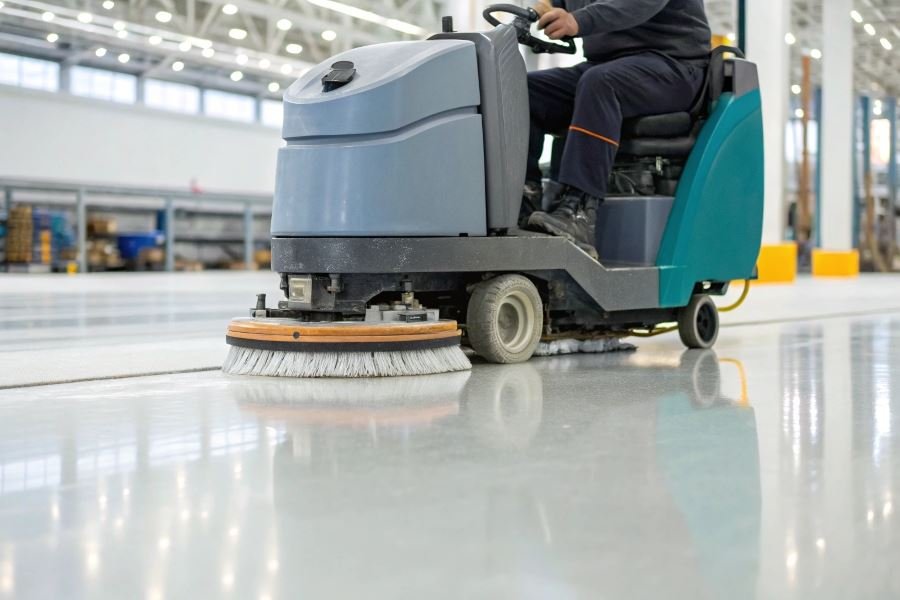
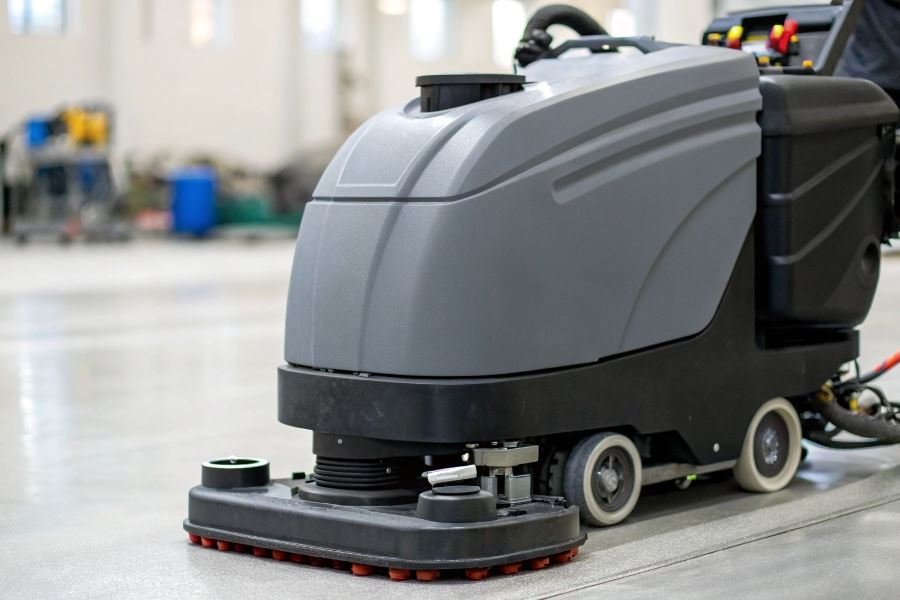
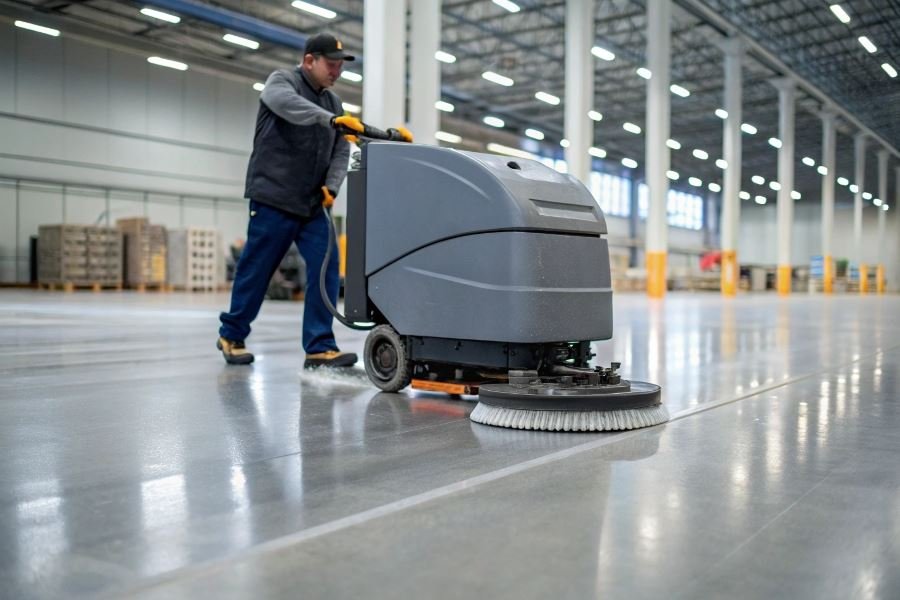
The industrial cleaning equipment landscape has evolved dramatically since the first motorized scrubbers appeared in the 1950s. Today’s machines range from compact walk-behind scrubbers to sophisticated ride-on systems with advanced filtration technology. Each serves a distinct purpose in the industrial cleaning ecosystem:
- Automatic scrubbers excel at removing stubborn stains and residue
- Industrial sweepers efficiently collect debris across large areas
- Combination machines offer versatility for facilities with diverse cleaning needs
- Specialized equipment tackles industry-specific challenges like oil recovery
Key selection factors that drive ROI
The selection process hinges on several critical variables. Floor composition matters tremendously—concrete, epoxy, and tile each respond differently to cleaning methods. Traffic patterns dictate machine maneuverability requirements, while facility size determines appropriate cleaning width and tank capacity.
“The right machine doesn’t just clean floors—it extends surface life, reduces labor costs, and enhances workplace safety.”
Environmental considerations have also become paramount, with water conservation and chemical reduction capabilities now standard features in premium models.
Essential Considerations for Industrial Floor Cleaning Machines
When facility managers dive into the world of industrial floor cleaning equipment, they’re not just buying a machine—they’re investing in operational efficiency, workplace safety, and brand image. The selection process demands careful analysis of multiple factors that extend far beyond the initial price tag.
Selecting the right floor cleaning machine for an industrial facility requires balancing specific cleaning needs against performance capabilities while calculating long-term financial implications. The decision impacts everything from labor costs to maintenance schedules, making it crucial to approach the purchase methodically rather than impulsively.
Mapping Your Facility’s Cleaning Profile
The foundation of any successful equipment selection begins with a thorough facility assessment. Consider these critical factors:
- Square footage coverage – Larger areas typically require ride-on machines while smaller spaces may be efficiently served by walk-behind models
- Floor material composition – Concrete, epoxy, tile, and other surfaces each demand specific cleaning approaches
- Obstruction density – Narrow aisles, machinery placement, and architectural features affect maneuverability requirements
- Soil type and volume – Heavy manufacturing debris differs dramatically from warehouse dust or food processing residue
Traffic patterns also significantly influence your choice. High-traffic zones may require daily cleaning with robust equipment, while less-frequented areas might need only periodic maintenance with lighter machines.
Performance Metrics That Matter
When evaluating machine specifications, focus on these performance indicators:
| Specification | Why It Matters | Typical Range |
|---|---|---|
| Cleaning path width | Determines coverage speed | 17″-40″ |
| Solution tank capacity | Affects refill frequency | 10-75 gallons |
| Productivity rate | Square feet cleaned per hour | 8,000-30,000 sq ft/hr |
| Battery runtime | Operational window between charges | 2-5.5 hours |
The difference between adequate and optimal equipment often comes down to seemingly minor specification details that dramatically impact daily operations.
Beyond raw specifications, consider practical performance factors like:
- Noise levels – Critical in facilities with multiple shifts or sensitive operations
- Water usage efficiency – Particularly important in sustainability-focused operations
- Drying time – Essential for facilities that cannot tolerate wet floors for safety reasons
- Filtration quality – Vital in environments where air quality matters
Financial Intelligence Beyond Purchase Price
The initial cost of an AutoScrubber or Sweeper represents just 20-30% of the total lifetime expense. Smart buyers analyze:
Operational costs including:
- Labor hours per cleaning cycle
- Energy consumption (particularly for battery-powered units)
- Water and chemical usage
Maintenance requirements covering:
- Replacement part availability and pricing
- Service interval frequency
- Technical support quality
Productivity impact measuring:
- Reduction in cleaning time versus current methods
- Labor reallocation opportunities
- Downtime reduction during cleaning operations
The most successful facility managers calculate return on investment based on 3-5 year projections, factoring in both tangible savings and intangible benefits like improved appearance and safety enhancement.
Sealing the Deal: Your Industrial Floor Cleaning Machine
When investing in industrial floor cleaning equipment, the final decision requires balancing performance specifications against practical implementation considerations. Let’s cut through the noise and focus on what truly matters for your facility’s cleanliness and operational efficiency.
Top contenders in industrial floor cleaning
The market offers numerous options, but three machines consistently outperform competitors in industrial settings:
| Machine | Best For | Key Specifications | Price Range |
|---|---|---|---|
| Tennant T16 | Large warehouses | 36″ cleaning path, 6-hour runtime, 50-gallon solution tank | 24, 000−28,000 |
| Nilfisk SC6500 | Manufacturing floors | 48″ scrubbing width, 7-hour runtime, 70-gallon recovery tank | 32, 000−36,000 |
| Kärcher B 250 R | Distribution centers | 42″ cleaning path, 5-hour runtime, quick-change brush system | 27, 000−31,000 |
Each machine excels in specific environments. The Tennant offers exceptional maneuverability in congested spaces, while the Nilfisk handles heavy-duty industrial grime with superior chemical management. The Kärcher strikes an impressive balance between power and efficiency with its intelligent water dosing system.
Implementation strategies that maximize efficiency
Proper implementation transforms good equipment into great results. Start with comprehensive operator training—not just basic operation, but advanced techniques for different floor types and contamination levels.
Map your facility into cleaning zones based on:
- Traffic patterns
- Contamination types
- Surface materials
- Required cleaning frequency
Strategic scheduling dramatically improves outcomes. Consider implementing a rotating schedule that addresses high-traffic areas daily while dedicating specific days to deep-cleaning peripheral spaces.
For manufacturing environments, coordinate cleaning with production downtime. Distribution centers benefit from section-by-section cleaning during shift changes, while food processing facilities require more frequent sanitization cycles throughout operational hours.
Extending machine lifespan through maintenance
The difference between a five-year and ten-year service life often comes down to maintenance discipline. Establish these non-negotiable practices:
-
Daily maintenance rituals: Empty and rinse tanks thoroughly after each use, check and clean squeegees, and inspect brushes for debris.
-
Weekly deep checks: Examine vacuum motors for proper function, clean solution filters, and inspect battery connections.
-
Monthly professional attention: Schedule professional inspections of electrical systems, drive motors, and hydraulic components.
The most expensive floor cleaner is the one sitting idle due to preventable maintenance issues.
Document all maintenance activities in a dedicated log. This creates accountability and helps identify recurring issues before they become costly repairs.
Consider establishing maintenance partnerships with your equipment supplier. Many manufacturers offer service contracts that include regular preventive maintenance visits, priority emergency service, and discounted parts—often paying for themselves through extended equipment life and reduced downtime.
By selecting the right machine, implementing strategic cleaning protocols, and maintaining disciplined upkeep, your industrial floor cleaning investment will deliver years of reliable service and pristine floors that enhance both safety and operational efficiency.
Discover how to select the ideal industrial floor cleaning machine for your facility. Learn essential considerations, performance metrics, and cost analysis to maximize efficiency and maintain pristine industrial floors.
Discover how to select the ideal industrial floor cleaning machine for your facility. Learn essential considerations, performance metrics, and cost analysis to maximize efficiency and maintain pristine industrial floors.