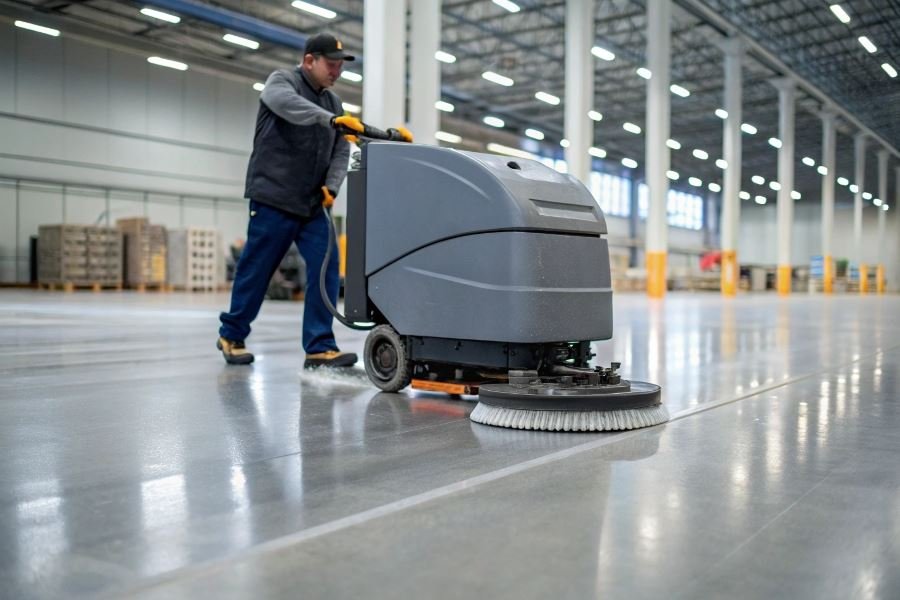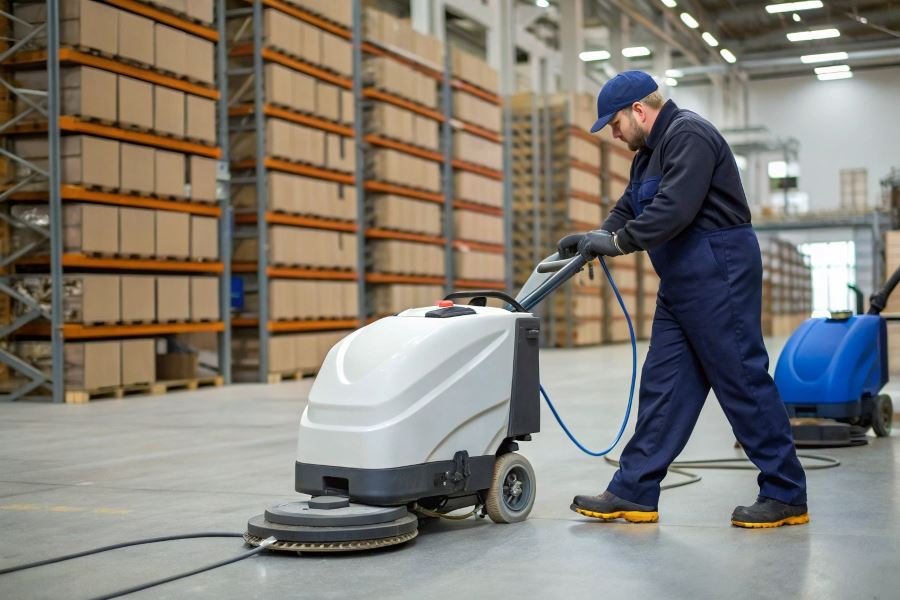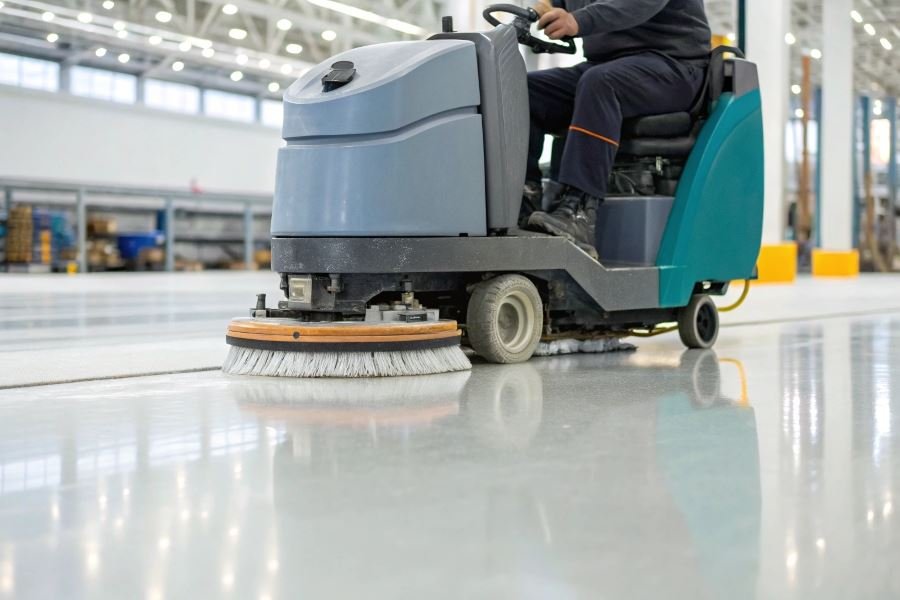
Ever walked into a warehouse where the floors gleam so perfectly you can practically see your reflection? That’s not magic—it’s likely the work of a combined scrubber-sweeper machine. These engineering marvels have quietly transformed how businesses maintain their facilities, delivering efficiency that separate cleaning systems simply can’t match.
Combined scrubber-sweepers represent the Swiss Army knife of industrial cleaning equipment. Unlike their single-function predecessors, these machines perform two critical operations in one pass: first sweeping to collect debris and then scrubbing to deep-clean the surface. This seamless integration eliminates the traditional two-step cleaning process that has dominated facility maintenance for decades.
The advantages extend far beyond mere convenience. When comparing operational costs, businesses using combined units report up to 30% reduction in labor hours and significant savings on maintenance expenses. A single operator can now accomplish what previously required two machines and potentially two staff members. Additionally, these 2-in-1 systems typically use water more efficiently—a critical consideration as resource conservation becomes increasingly important.
Where do these machines truly shine? Manufacturing facilities with high traffic and debris generation lead the pack, followed closely by distribution centers, retail environments, and transportation hubs. Healthcare facilities particularly value the improved sanitation standards these machines help maintain, while food processing plants benefit from their ability to meet stringent cleanliness requirements.
The true brilliance of combined scrubber-sweepers lies in their adaptability. From smooth concrete to textured surfaces, these machines can be configured with specialized brushes and cleaning solutions to tackle virtually any commercial flooring challenge.
Essential Factors When Selecting Your Scrubber-Sweeper
Finding the perfect combined scrubber-sweeper machine requires careful consideration of several critical specifications that directly impact cleaning efficiency and operational costs. The right machine transforms facility maintenance from a constant struggle into a streamlined process that delivers consistently impressive results.
When navigating through a guide to choosing combined scrubber-sweeper machines, four essential factors stand out as make-or-break considerations: physical dimensions and cleaning capacity, power systems, water management, and operator experience. Each factor represents a crucial decision point that will determine whether your investment delivers the expected return.
Size, Capacity and Cleaning Path Width
The physical dimensions of your scrubber-sweeper directly correlate with cleaning efficiency and accessibility. Machines range from compact 20-inch units ideal for tight spaces to industrial 48-inch powerhouses designed for expansive warehouses.
Cleaning path width deserves particular attention as it determines how quickly you can cover ground:
- 20-26 inches: Perfect for congested retail spaces and narrow corridors
- 28-36 inches: The sweet spot for most medium-sized facilities
- 38-48+ inches: Reserved for vast open areas like distribution centers
A machine with a 36-inch cleaning path can cover approximately 33,000 square feet per hour—nearly double what a 24-inch model achieves in the same timeframe.
Battery Performance and Power Options
Power source selection dramatically impacts both operational flexibility and maintenance requirements. Modern machines offer three primary configurations:
| Power Type | Runtime | Advantages | Limitations |
|---|---|---|---|
| Lead-Acid | 3-5 hours | Lower initial cost | Longer charging time (8-10 hours) |
| Lithium-Ion | 4-6+ hours | Rapid charging, longer lifespan | Higher upfront investment |
| Hybrid/Fuel | Continuous | Extended operation | Higher maintenance, emissions concerns |
Battery management technology has evolved significantly, with smart systems from manufacturers like Tennant and Nilfisk that optimize power distribution and extend runtime by up to 20% compared to older models.
Water Tank and Waste Collection Systems
Water management represents a critical efficiency factor that’s often overlooked. Optimal tank sizing balances:
- Solution tank capacity: Typically ranging from 10-75 gallons
- Recovery tank capacity: Usually slightly larger than the solution tank
- Tank ratio: Ideally 1:1.2 for extended operation without emptying
Advanced filtration systems now capture particles down to 5 microns, dramatically improving water efficiency and reducing disposal frequency. The most sophisticated models from Kärcher incorporate multi-stage filtration that can recycle up to 70% of water, slashing consumption rates.
Maneuverability and Operator Comfort
The human-machine interface ultimately determines productivity and consistent usage. Key maneuverability features include:
- Turning radius: Premium models achieve zero-turn capability
- Control accessibility: Intuitive dashboard layouts reduce training time
- Ergonomic considerations: Adjustable seats, vibration dampening, and noise reduction
Operator comfort translates directly to productivity—studies show that ergonomic improvements can increase cleaning efficiency by up to 15% during extended shifts. Features like Clarke’s adjustable steering columns and customizable control panels significantly reduce operator fatigue.
The ideal scrubber-sweeper balances these four critical factors against your specific facility requirements, delivering optimal cleaning performance without unnecessary complexity or expense.
Performance Factors That Make or Break Your Scrubber-Sweeper Investment
When evaluating combined scrubber-sweeper machines, the specifications that truly matter aren’t always the ones highlighted in glossy brochures. Let’s dive into the performance considerations that separate exceptional machines from mediocre ones—factors that directly impact your operational efficiency and bottom line.
Cleaning efficiency that transforms productivity
The primary purpose of any scrubber-sweeper is to clean effectively and efficiently. Modern machines are measured by several key metrics:
Square footage per hour – Top-tier machines can clean between 25,000-45,000 square feet hourly, with industrial models reaching up to 65,000 square feet. This metric directly translates to labor costs saved.
Water usage efficiency – Advanced models now operate with remarkably efficient water systems, using as little as 0.35 gallons per minute while maintaining superior cleaning results. This represents a 30% improvement over machines from just five years ago.
The difference between standard and high-efficiency models can mean thousands of dollars in labor and resource costs annually.
| Machine Class | Sq Ft/Hour | Water Usage | Battery Life |
|---|---|---|---|
| Entry-Level | 20,000-25,000 | 0.5-0.7 gal/min | 3-4 hours |
| Mid-Range | 30,000-40,000 | 0.35-0.5 gal/min | 4-6 hours |
| Industrial | 45,000-65,000 | 0.25-0.35 gal/min | 6-8 hours |
Look for machines with adjustable pressure settings and solution flow rates that can be tailored to specific cleaning challenges. The Tennant T600 and Nilfisk SC6500 exemplify this adaptability, offering multiple cleaning modes that optimize performance based on floor conditions.
Maintenance requirements and lifetime costs
The sticker price is merely the beginning of your investment story. Total Cost of Ownership (TCO) provides a much clearer picture:
Consumable parts replacement – Brushes, squeegees, and filters represent ongoing costs that vary dramatically between manufacturers. Premium machines from Kärcher often feature quick-change brush systems that reduce downtime and extend component life by up to 40%.
Service intervals – Leading manufacturers design machines with 500-hour service intervals, compared to the industry standard of 250-300 hours. This difference cuts maintenance downtime in half.
Energy efficiency – Battery-powered models with energy recovery systems can extend runtime by 20%, reducing charging frequency and extending battery life.
The true cost of ownership emerges over time. A machine that costs $2,000 less upfront but requires twice the maintenance represents a poor value proposition within the first 18 months of operation.
Warranty coverage and support infrastructure
The best machine becomes a liability without proper support. Evaluate these critical factors:
Warranty terms – Industry leaders offer 3-5 year warranties on major components and 1-2 years on labor. Be wary of warranties with excessive exclusions or those requiring proprietary maintenance programs.
Parts availability – Advance and Minuteman maintain parts inventories that ensure 95% of components ship within 24 hours, minimizing downtime when issues arise.
Technical support access – Leading manufacturers provide multiple support channels including 24/7 phone support, video troubleshooting libraries, and mobile technician networks that guarantee service within 48 hours in major markets.
Training resources – Comprehensive operator training can reduce repair incidents by up to 60%. Look for manufacturers offering both in-person and digital training options.
The performance considerations above directly impact your operational efficiency, maintenance costs, and equipment lifespan. By focusing on these factors rather than just upfront price, you’ll select a machine that delivers superior value throughout its operational life.
Discover the ultimate guide to selecting industrial scrubber-sweeper machines for your facility. Learn key factors including size, battery life, cleaning efficiency, and maintenance requirements to make the best investment for your cleaning needs.
Discover the ultimate guide to selecting industrial scrubber-sweeper machines for your facility. Learn key factors including size, battery life, cleaning efficiency, and maintenance requirements to make the best investment for your cleaning needs.