Ever wondered why some buildings feel like Fort Knox while others welcome you with a simple tap of a card? The difference often lies in the invisible handshake between key readers and intercom systems – a technological partnership that’s revolutionizing access control.
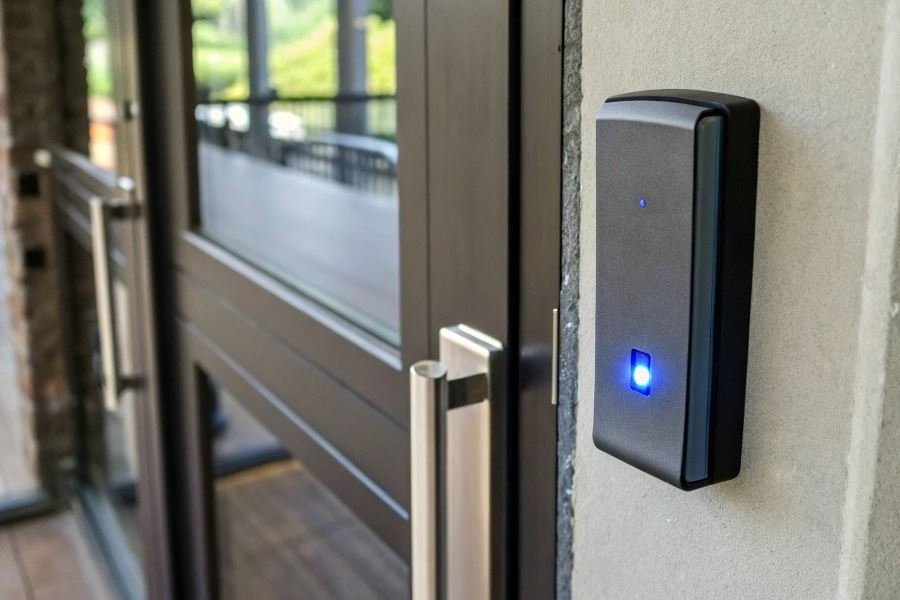
Key readers represent the frontline sentinels of modern security infrastructure. These unassuming devices authenticate credentials through various technologies – from traditional RFID and proximity cards to advanced biometric scanners and mobile credentials. Their importance extends beyond simply unlocking doors; they create accountability, track access patterns, and establish the first layer of defense against unauthorized entry.
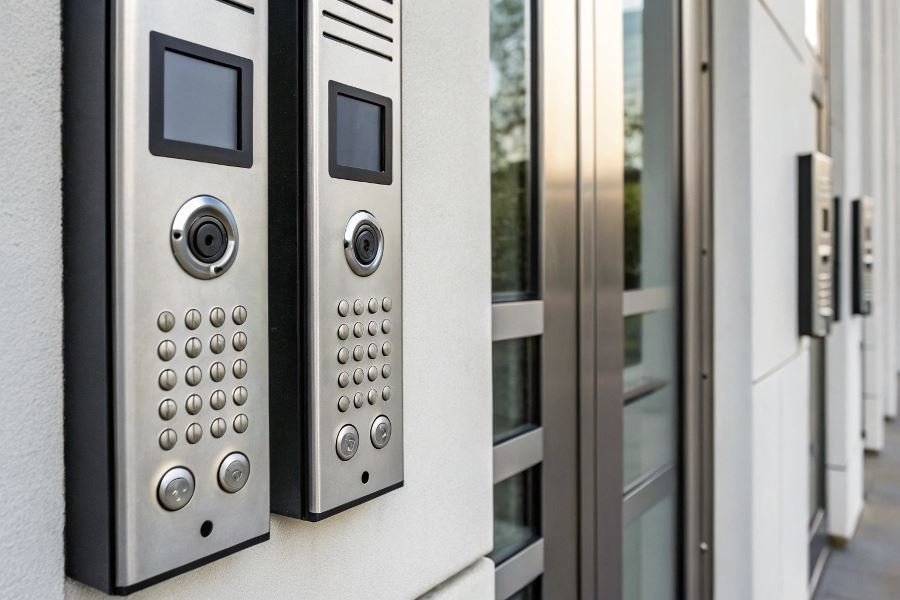
Intercom technology has undergone remarkable transformation since its humble beginnings. What started as simple audio communication devices in the 1950s have evolved into sophisticated systems featuring HD video, smartphone integration, and cloud connectivity. Today’s intercoms don’t just facilitate conversation – they’ve become intelligent gatekeepers capable of facial recognition, visitor logging, and seamless integration with building management systems.
The compatibility between these technologies isn’t guaranteed, however. Three critical factors determine successful integration:
- Communication protocols – Whether systems speak the same digital language
- Power requirements – Ensuring consistent electrical supply without interference
-
Physical installation constraints – Accommodating wiring, mounting, and environmental factors
When properly matched, these systems create a security ecosystem greater than the sum of its parts – offering convenience without compromising protection. The challenge lies in navigating the complex landscape of proprietary technologies, legacy systems, and emerging standards to find the perfect technological match.
Key Reader Compatibility: Unlocking the Perfect Match for Your Intercom
When selecting a key reader for your intercom system, compatibility isn’t just a checkbox—it’s the foundation of a secure, functional access control solution. The relationship between key readers and intercom systems resembles a technological marriage where the wrong pairing can lead to frustrating disconnects and security vulnerabilities.
Understanding the compatibility of key readers with various intercom models requires examining both hardware interfaces and communication protocols. Modern access control systems demand seamless integration, and the right reader-intercom combination can dramatically enhance both security and user experience while reducing installation headaches.
RFID Readers: Bridging Digital and Analog Worlds
RFID technology has revolutionized access control by offering contactless entry solutions that work across multiple platforms. When connecting RFID readers to intercom systems, two critical factors determine compatibility:
Frequency matching is non-negotiable. Most residential systems operate at 125 kHz (low-frequency) or 13.56 MHz (high-frequency). Mismatched frequencies result in complete system failure—like trying to tune an FM radio to an AM station.
Protocol alignment between reader and controller determines whether your hardware speaks the same language. Common protocols include:
| Protocol | Compatibility | Best For |
|---|---|---|
| Wiegand | Universal standard, works with most analog and digital systems | Mixed environments with legacy equipment |
| OSDP | Enhanced security, bidirectional communication | Modern digital systems requiring encryption |
| RS-485 | Extended transmission distance, multi-drop capability | Large installations with significant wiring runs |
Allegion readers with multi-protocol support offer the greatest flexibility when working with mixed intercom environments.
Proximity Readers: Integration Capabilities Across Brands
Proximity readers present unique integration challenges depending on the intercom manufacturer. The most versatile proximity readers feature:
-
Adjustable output formats that can communicate with proprietary intercom systems from Aiphone, Comelit, and other major manufacturers
-
Voltage tolerance ranges (typically 12-24V) that accommodate various power supply configurations
-
Weatherproof ratings appropriate for your installation environment—IP65 for exposed outdoor locations, IP54 for sheltered exteriors
Many building managers discover too late that their proximity readers won’t communicate with existing intercom infrastructure. The HID Multiclass series stands out for its ability to read multiple credential types while maintaining compatibility with diverse intercom backbones.
Universal Solutions: The Compatibility Champions
After testing dozens of combinations, three key reader solutions consistently deliver exceptional multi-brand compatibility:
-
The 2N Access Unit 2.0 supports both RFID and mobile credentials while integrating with virtually any intercom system through its flexible interface options and open API.
-
Kisi Pro Reader offers cloud-based management that bridges the gap between modern and legacy intercom systems through its adaptable output configurations.
-
Salto XS4 Original provides remarkable versatility with its ability to function in online, offline, or hybrid environments while maintaining compatibility with major intercom brands.
The most successful installations leverage middleware solutions when direct compatibility isn’t possible. These interface modules translate between proprietary protocols, enabling previously incompatible systems to work together seamlessly.
When evaluating compatibility, remember that future-proofing your investment often justifies selecting a more versatile reader, even at a higher initial cost. The right reader doesn’t just work today—it adapts to tomorrow’s technology landscape.
Unlocking the Future: Implementation Strategies for Key Reader-Intercom Compatibility
Determining compatibility in three simple steps
Navigating the maze of key reader and intercom compatibility doesn’t require an engineering degree—just a methodical approach. Here’s your roadmap to compatibility success:
Step 1: Identify your intercom’s protocol and interface
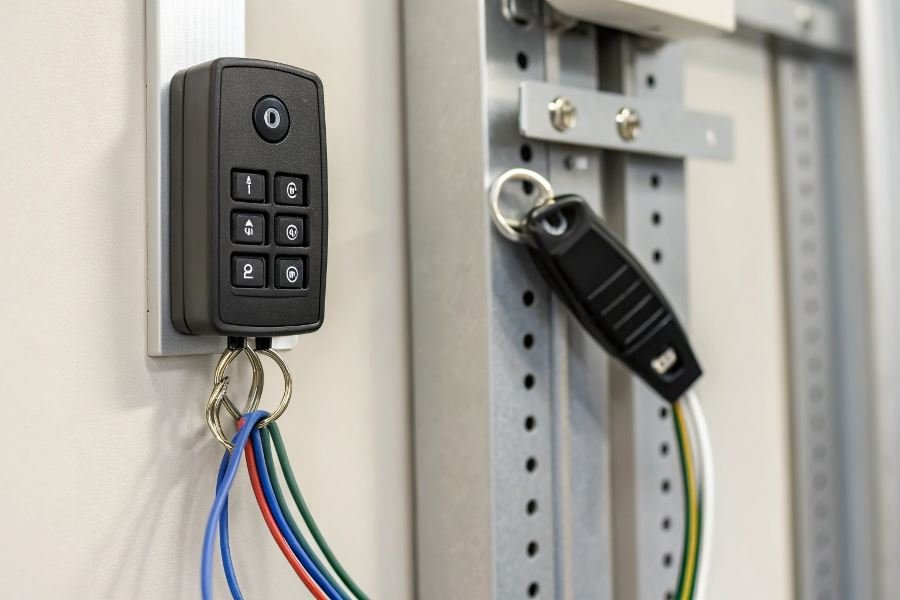
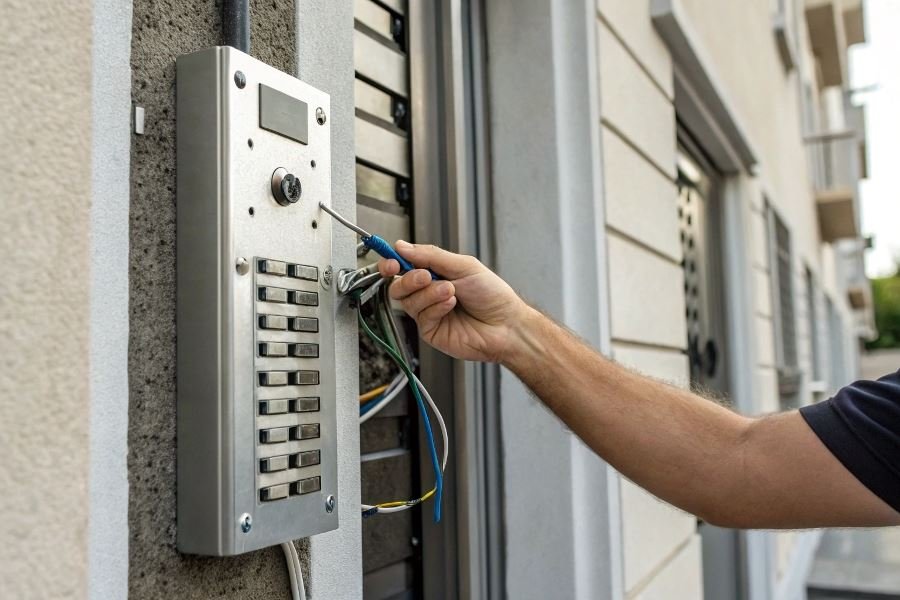
Begin by documenting your existing intercom’s make, model, and communication protocol. Most modern systems use either Wiegand (26-bit or 34-bit), OSDP, or proprietary protocols. Check the manufacturer’s documentation or look for interface markings like “W0/W1” (Wiegand) or “A/B” (OSDP) on terminal blocks.
Step 2: Assess power requirements and physical constraints
Key readers typically require 12-24V DC power. Measure your intercom’s output voltage using a multimeter to ensure compatibility. Also consider physical mounting constraints—most readers require at least 4 inches of clearance and weather protection if mounted outdoors.
Step 3: Verify signal compatibility and encryption standards
Modern security demands encryption. If your intercom supports only unencrypted communications while your desired reader uses AES-128 encryption, you’ll need an interface converter or middleware solution.
The most common compatibility mistake is assuming all Wiegand devices work together. In reality, bit formats matter tremendously—a 26-bit reader won’t properly communicate with a 34-bit intercom without configuration changes.
Troubleshooting the stubborn connections
When your key reader and intercom refuse to play nice, these solutions address the most frequent compatibility headaches:
| Issue | Likely Cause | Solution |
|---|---|---|
| Reader powers up but intercom doesn’t recognize credentials | Protocol mismatch | Install protocol converter ($75-150) |
| Intermittent recognition | Voltage fluctuation or wire interference | Use shielded cable and dedicated power supply |
| Credentials read but door doesn’t unlock | Data format incompatibility | Reprogram reader or add format converter |
| System works in dry weather only | Poor weatherproofing | Apply dielectric grease to connections and seal enclosure |
For stubborn protocol mismatches, middleware solutions like HID® OSDP-Wiegand Converter can bridge the gap between legacy systems and modern readers, extending the life of your existing infrastructure while enabling advanced security features.
The compatibility revolution is here
The future of key reader-intercom compatibility is rapidly evolving with three game-changing technologies:
Universal protocol adapters now support multiple communication standards simultaneously. The latest Mercury Security LP controllers can handle Wiegand, OSDP, and proprietary protocols through software configuration rather than hardware changes.
Cloud-based credential management is eliminating physical compatibility concerns altogether. Systems like Openpath Access Control use mobile credentials that communicate directly with cloud servers, bypassing traditional protocol limitations.
Bluetooth Low Energy (BLE) and NFC standards are creating universal communication channels between previously incompatible systems. These wireless technologies allow readers and intercoms to communicate regardless of their wired interface specifications.
The industry is clearly moving toward open standards and interoperability. Forward-thinking facility managers are already installing protocol-agnostic readers that can adapt to future intercom upgrades without requiring complete system overhauls.
Discover which key readers work with your intercom system in our comprehensive compatibility guide. Learn about RFID, proximity readers, and universal solutions to enhance your security setup without compatibility headaches.
Discover which key readers work with your intercom system in our comprehensive compatibility guide. Learn about RFID, proximity readers, and universal solutions to enhance your security setup without compatibility headaches.