Ever picked up a sewing needle and wondered why there are so many varieties? That tiny sliver of metal—often no longer than two inches—carries the weight of your entire project’s success. The difference between a perfect stitch and a frustrating mess often comes down to this overlooked tool.
At its core, a sewing needle serves one fundamental purpose: to transport thread through fabric, creating stitches that join materials together. This deceptively simple function has remained unchanged since the first bone needles appeared approximately 60,000 years ago. Yet today’s needles have evolved into highly specialized instruments.
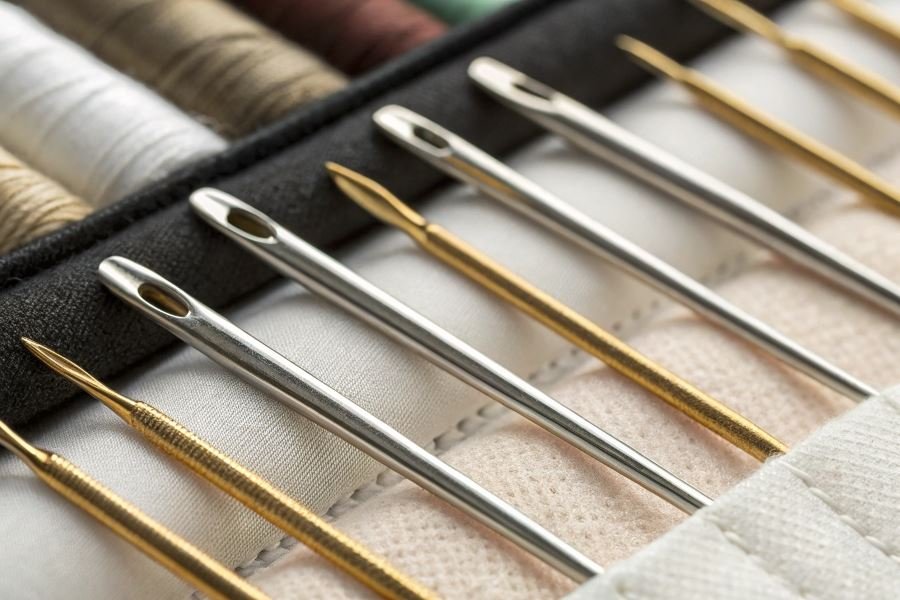
Sewing needles fall into two main categories: universal and specialized. Universal needles are the Swiss Army knives of your sewing kit—designed to handle a variety of common fabrics and basic sewing tasks. They typically feature a slightly rounded point that parts fabric threads rather than piercing them. Specialized needles, however, are the precision instruments—engineered with specific features to excel with particular fabrics, techniques, or challenges.
Why does this distinction matter? Because the wrong needle can lead to skipped stitches, puckered fabric, broken threads, or even permanent damage to delicate materials. The right needle, conversely, makes sewing effortless and produces professional results. Whether you’re hemming denim jeans or creating heirloom silk garments, understanding these differences transforms your sewing from frustrating to fulfilling.
The Anatomy of Sewing Needles: Universal vs. Specialized
When you hold a sewing needle between your fingers, you’re wielding a tool that has evolved over thousands of years. Yet many sewists don’t realize that choosing the right needle is perhaps the single most critical decision they’ll make for any project. The difference between a perfect stitch and a frustrating mess often comes down to this slender metal implement.
Understanding universal and specialized sewing needles: what is the difference can transform your sewing experience from adequate to exceptional. The engineering behind these precision instruments is both fascinating and practical, with each design element serving a specific purpose.
Universal Needles: The Reliable Workhorses
Universal needles represent the Swiss Army knife of the sewing world. Designed with a slightly rounded point that’s sharp enough to penetrate woven fabrics yet gentle enough for some knits, these needles typically feature:
- Medium-length scarf (the indentation above the eye)
- Slightly rounded point with adequate sharpness
- Medium-sized eye for standard thread weights
Size matters tremendously with universal needles. They follow the European sizing system, with common sizes ranging from 70/10 (thinner) to 100/16 (thicker). The smaller the number, the finer the needle—ideal for lightweight fabrics like silk or batiste. Larger sizes handle denim and canvas with greater stability.
Universal needles perform admirably on:
- Medium-weight cottons
- Polyester blends
- Light woolens
- Some stable knits
Specialized Needles: Precision-Engineered Solutions
Specialized needles are where engineering brilliance truly shines. Each type addresses specific fabric challenges through thoughtful modifications to the basic needle design.
| Needle Type | Point Style | Eye Size | Ideal For |
|---|---|---|---|
| Ballpoint | Rounded | Medium | Knits, jersey |
| Microtex | Very sharp | Small | Microfibers, silk |
| Denim | Strong, sharp | Large | Heavy fabrics |
| Stretch | Medium ballpoint | Special scarf | Lycra, spandex |
| Leather | Chisel-shaped | Large | Leather, suede |
Ballpoint needles feature a rounded tip that pushes between fabric fibers rather than piercing them—essential for preserving the integrity of knit fabrics.
Microtex needles deliver precision with their incredibly sharp points, making them perfect for detailed topstitching and working with densely woven fabrics.
Leather needles employ a cutting point rather than a piercing one, creating clean holes through non-woven materials without tearing.
Structural Differences That Impact Performance
The magic of needle design lies in three critical elements:
-
Point geometry – The shape of the tip determines how the needle enters the fabric. Sharp points pierce wovens cleanly; rounded points navigate between knit loops.
-
Scarf depth – This indentation above the eye affects how the hook of the bobbin case catches the thread. Specialized needles often feature deeper scarfs for challenging fabrics.
-
Groove length – The channel running down the needle shaft protects the thread as it passes through fabric. Longer, deeper grooves accommodate thicker threads without friction.
These seemingly minor differences produce dramatically different results across fabric types. Using a universal needle on leather might create holes that are too small, causing thread breakage. Conversely, a leather needle used on delicate silk would create unnecessarily large punctures, potentially damaging the fabric.
The right needle transforms not just your stitching quality but also reduces machine wear, minimizes thread breakage, and ultimately creates more professional results—proving that sometimes the smallest tools make the biggest difference.
Choosing the Right Needle: Universal vs. Specialized
Selecting the perfect needle for your sewing project isn’t just a minor detail—it’s often the difference between professional results and frustrating failures. After exploring the characteristics of both universal and specialized needles, let’s dive into when to use each type and how to maintain your needle collection for optimal performance.
Universal needles shine in everyday sewing
Universal needles earn their name through versatility. These workhorses feature a slightly rounded point with a medium-sharp tip that navigates through a wide range of fabrics without causing damage.
When universal needles make perfect sense:
- Quick projects using medium-weight cotton, polyester, or poly-cotton blends
- Beginners who are building their sewing confidence
- Multi-fabric projects where changing needles would interrupt workflow
- Everyday repairs and simple garment construction
- Budget-conscious sewists who need to limit their tool investment
Universal needles typically come in sizes 70/10 through 100/16, with the 80/12 being the most commonly used size for everyday sewing. While these needles offer convenience, they do have limitations—they won’t deliver optimal results on specialty fabrics like leather, denim, or delicate silks.
Pro tip: Keep a pack of size 80/12 universal needles as your “desert island” sewing supply. They’ll handle about 70% of common sewing tasks adequately.
Specialized needles transform challenging projects
When your fabric demands specific handling or your project requires precision, specialized needles become non-negotiable tools.
Projects that demand specialized needles:
- Denim/jeans needles for heavyweight fabrics with tight weaves
- Ballpoint/jersey needles for stretchy knits to prevent snags and runs
- Leather needles with chisel points that cleanly pierce without tearing
- Microtex/sharp needles for silk, microfiber, and precise topstitching
- Embroidery needles with enlarged eyes for decorative threads
- Quilting needles designed to penetrate multiple layers without deflection
The difference becomes immediately apparent in your results. A universal needle used on leather will create jagged holes and potentially jam your machine, while a proper leather needle slices cleanly through the material.
Needle selection best practices
Making the right choice doesn’t need to be complicated if you follow these guidelines:
- Match to your fabric first – The material you’re sewing should dictate your needle choice
- Consider your thread – Heavier threads require larger needle eyes
- Factor in technique – Decorative stitching needs different needles than construction seams
- When in doubt, test – Always test on scrap fabric before committing to your project
Maintaining your needle collection
Even the perfect needle becomes a liability when worn or damaged.
Essential needle maintenance:
- Replace needles after 8-10 hours of sewing time
- Change immediately if you hear a “popping” sound when sewing
- Store needles in their original packaging or a dedicated case
- Mark specialty needles clearly to avoid confusion
- Dispose of bent or damaged needles safely in a sharps container
Signs your needle needs replacement:
- Skipped stitches
- Fabric snags
- Thread breakage
- Uneven stitch formation
- Unusual machine noise
Your needle is the first point of contact between your machine and fabric. By understanding when to use universal versus specialized needles and maintaining them properly, you’ll elevate your sewing results from acceptable to exceptional—often with just this simple change.
Discover the crucial differences between universal and specialized sewing needles to achieve professional results in your projects. Learn when to use each type and how proper needle selection impacts your sewing success.
Discover the crucial differences between universal and specialized sewing needles to achieve professional results in your projects. Learn when to use each type and how proper needle selection impacts your sewing success.