Ever watched a pristine stainless steel sink corrode after just months of use in a chemical processing plant? Or witnessed a beautiful ceramic basin crack under thermal shock in a commercial kitchen? The right sink material isn’t just about aesthetics—it’s about survival.
The material you select for your sink fundamentally determines its lifespan, functionality, and return on investment. Different production environments create unique challenges that demand specific material properties. What works flawlessly in a food processing facility might fail catastrophically in a laboratory setting.
Material selection is the invisible foundation of operational efficiency. Consider the manufacturing plant where caustic chemicals flow daily through drainage systems—here, chemical resistance isn’t a luxury but a necessity. Similarly, in commercial kitchens where pots transfer from 400°F ovens directly to cleaning stations, heat tolerance becomes paramount.
Three critical factors should guide your material selection:
- Chemical resistance: Can the material withstand repeated exposure to acids, bases, solvents, or cleaning agents?
- Heat tolerance: Will thermal shock cause cracking, warping, or structural failure?
- Impact resistance: Can the material withstand the daily abuse of dropped tools, equipment, or materials?
“The most expensive sink is the one you have to replace twice.” — Industry wisdom that’s proven true countless times.
Understanding these material battlegrounds isn’t just smart business—it’s essential for creating production environments that stand the test of time and chemistry.
Material Mastery: Choosing the Perfect Sink for Industrial Applications
When designing production facilities, the humble sink becomes a critical decision point that impacts efficiency, safety, and longevity. The right material choice can mean the difference between seamless operations and costly maintenance nightmares. Materials for sinks: what is better for different types of production depends entirely on the specific demands of your industrial environment, chemical exposures, and cleaning protocols.
Stainless Steel: The Industrial Workhorse
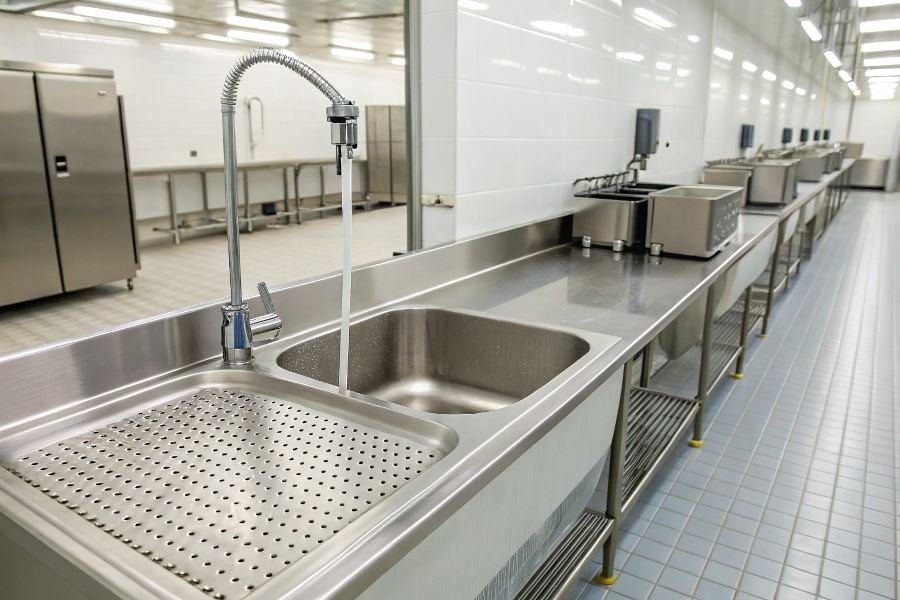
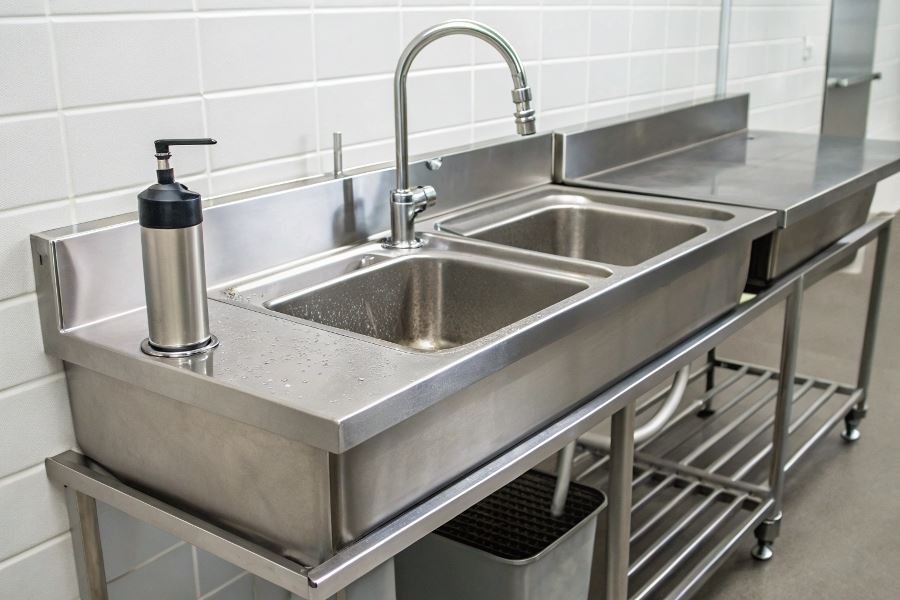
Stainless steel remains the gold standard across demanding industries for compelling reasons. In food processing facilities, 304-grade stainless steel offers the perfect balance of corrosion resistance and affordability, while 316-grade provides enhanced protection against acidic foods and sanitizing chemicals.
Key advantages in food production:
- Non-porous surface prevents bacterial harboring
- Withstands temperature extremes (-50°F to 800°F)
- Resists impact damage from dropped utensils and equipment
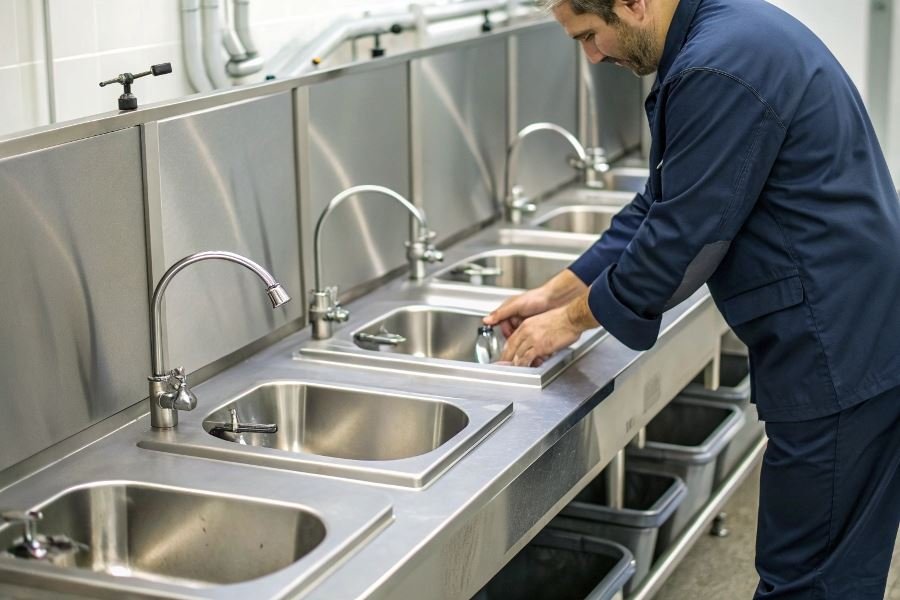
Medical facilities benefit from stainless steel’s exceptional sanitization properties. The material can withstand aggressive disinfectants containing chlorine compounds without degradation, making it ideal for surgical prep areas and laboratory environments.
In chemical production, 316L stainless steel sinks offer superior resistance to:
- Sulfuric acid (concentrations below 10%)
- Phosphoric acid
- Most alkalis and salt solutions
The investment in higher-grade stainless pays dividends through extended service life in harsh chemical environments.
Composite and Engineered Stone: Commercial Kitchen Champions
Composite sinks, typically crafted from quartz or granite particles bound with acrylic resins, deliver impressive performance in moderate industrial settings.
| Material | Heat Resistance | Impact Resistance | Chemical Resistance |
|---|---|---|---|
| Granite Composite | Up to 535°F | Excellent | Good (except strong alkalis) |
| Quartz Composite | Up to 450°F | Very Good | Better than granite with acids |
| Solid Surface | Up to 350°F | Moderate | Excellent with most chemicals |
Commercial kitchens particularly benefit from composite sinks due to their:
- Superior noise dampening properties
- Resistance to staining from coffee, wine, and food colorings
- Ability to withstand thermal shock from ice to boiling water
Engineered stone offers the additional advantage of customization. Facilities can match corporate color schemes or create visual cues for different processing areas, enhancing both aesthetics and functional workflow.
Specialized Materials for Niche Applications
Fireclay sinks excel in artisanal food production where aesthetics matter alongside function. Fired at temperatures exceeding 1800°F, these sinks offer:
- Exceptional resistance to scratching and chipping
- Non-reactive surface for acidic foods
- Distinctive appearance for customer-facing areas
Cast iron sinks with enamel coating find their place in heavy-duty applications where impact resistance is paramount. The 1/4-inch thick enamel surface resists:
- Abrasion from metal tools and equipment
- Thermal shock from rapid temperature changes
- Most common industrial chemicals
Copper sinks serve specialized needs in brewing and distilling operations. Beyond their antimicrobial properties (killing 99.9% of bacteria within two hours), copper’s natural patina development creates a living finish that many artisanal producers find aligns perfectly with their brand identity.
The material selection process must account for specific production demands, maintenance protocols, and budget constraints. The most expensive option isn’t always necessary—but choosing based solely on initial cost often leads to premature replacement and production disruptions.
Choosing the Perfect Sink Material for Your Production Needs
The strategic decision framework
Selecting the optimal sink material isn’t just about aesthetics—it’s a critical business decision that impacts operational efficiency, maintenance costs, and production quality. The decision framework begins with a thorough analysis of your specific production environment. Chemical exposure intensity, temperature fluctuations, and impact frequency form the foundation of this assessment.
For food processing operations, stainless steel (particularly grade 316) delivers unmatched bacterial resistance and durability against acidic ingredients. Beverage manufacturers benefit from the non-porous nature of solid surface materials like Corian, which prevents staining from colorful ingredients while maintaining easy sanitization.
Electronics manufacturing facilities require specialized considerations—static dissipative properties make composite quartz an excellent choice, while semiconductor production often demands the exceptional chemical resistance of epoxy resin sinks.
The most expensive sink material isn’t always the best choice—it’s about finding the perfect match between material properties and your specific production challenges.
Heavy industrial applications face unique challenges where fireclay or heavy-gauge stainless steel provide superior impact resistance. The decision framework must account for regulatory compliance specific to your industry, particularly in pharmaceutical or food production where material certification is non-negotiable.
ROI calculations beyond the price tag
Initial purchase price represents just 15-30% of a sink’s total lifetime cost. The comprehensive ROI calculation must include:
| Cost Factor | Stainless Steel | Composite | Fireclay | Epoxy Resin |
|---|---|---|---|---|
| Initial Cost | $800-3,500 | $1,200-2,800 | $600-2,000 | $1,500-4,000 |
| Annual Maintenance | $50-150 | $100-250 | $75-200 | $25-100 |
| Expected Lifespan | 15-25 years | 10-15 years | 20-30 years | 15-20 years |
| Replacement Downtime | 1-2 days | 1-3 days | 2-4 days | 2-3 days |
Maintenance requirements vary dramatically between materials. While epoxy resin sinks demand minimal upkeep, saving approximately 70 labor hours annually compared to porous materials, they carry a higher initial investment. Stainless steel offers exceptional longevity with moderate maintenance needs, making it cost-effective for high-volume production environments.
The hidden costs of production downtime during sink replacement or repair can exceed $10,000 per day in some manufacturing settings. Materials with modular repair capabilities, like sectional solid surfaces, minimize this expense by allowing targeted repairs without complete replacement.
Emerging material innovations reshaping the industry
The sink material landscape is evolving rapidly with several breakthrough technologies poised to transform production environments:
Antimicrobial copper-infused composites are gaining traction in healthcare and food production, offering 99.9% bacterial reduction within two hours of contact. These materials command a 20-30% premium but deliver substantial savings in sanitization costs.
Nanotechnology-enhanced surfaces represent the cutting edge of sink material development. These surfaces feature molecular-level modifications that dramatically improve chemical resistance while maintaining cleanability. Early adopters report 40% longer service life compared to traditional materials.
Sustainability considerations are driving innovation in recycled content sinks. New manufacturing techniques have overcome previous performance limitations, with recycled content composites now matching or exceeding the durability of virgin materials while reducing environmental impact.
The future belongs to smart materials with embedded sensors that monitor chemical exposure, temperature stress, and structural integrity. These intelligent sinks provide predictive maintenance alerts, potentially extending service life by 30-50% through early intervention.
For production environments requiring absolute precision, the material selection process demands equal precision—balancing immediate needs with long-term performance to maximize both productivity and investment return.
Discover the optimal sink materials for various industrial settings. Compare stainless steel, composite, and specialized options based on chemical resistance, durability, and production-specific requirements for maximum functionality and ROI.
Discover the optimal sink materials for various industrial settings. Compare stainless steel, composite, and specialized options based on chemical resistance, durability, and production-specific requirements for maximum functionality and ROI.