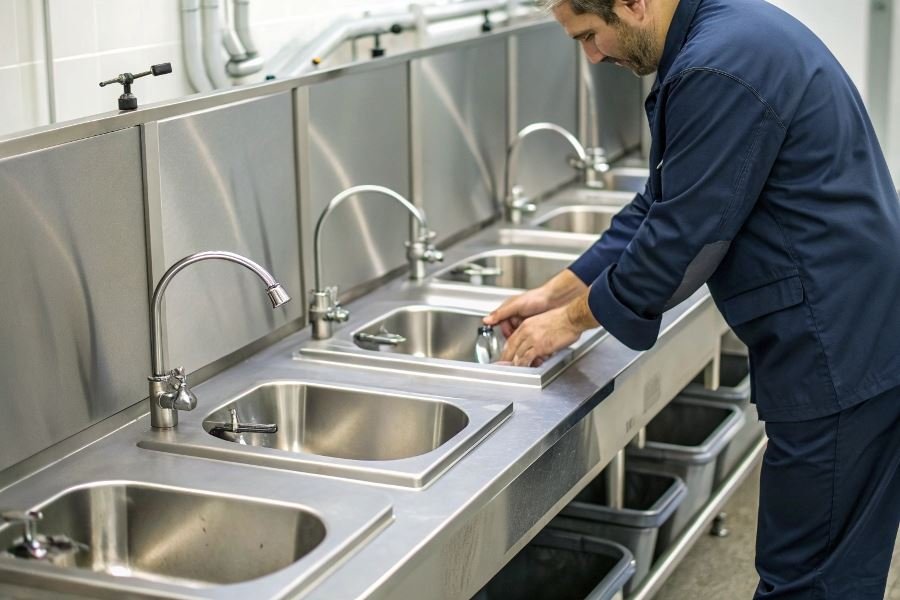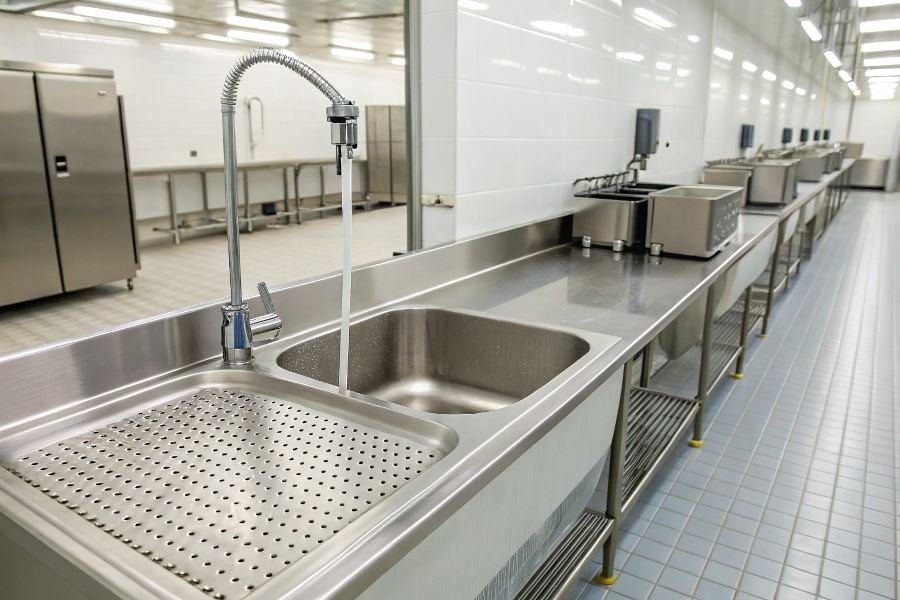
Ever wondered why food poisoning outbreaks aren’t daily headlines? Behind the scenes, a robust framework of regulations silently protects millions of consumers. At the heart of these safeguards sits something surprisingly simple yet critical: the humble handwashing sink.
SanPiN standards—short for Sanitary and Epidemiological Rules and Norms—represent the comprehensive regulatory framework governing hygiene practices in food production facilities. These aren’t arbitrary rules; they’re science-backed protocols designed to create an impenetrable barrier between contaminants and your dinner plate.
The journey of handwashing requirements tells a fascinating story of evolving food safety consciousness. What began as basic recommendations in the early 20th century transformed into rigorous specifications following several devastating foodborne illness outbreaks. The 1993 Jack in the Box E. coli outbreak, which sickened over 700 people, served as a watershed moment, prompting regulatory authorities to strengthen handwashing infrastructure requirements dramatically.
Today’s regulatory landscape features a multi-layered approach. Federal guidelines establish minimum standards, while state and local health departments often implement even stricter requirements. These regulations specify everything from sink placement (no more than 25 feet from food handling areas) to water temperature (minimum 100°F) and hand-drying methods.
“The most effective food safety systems aren’t the ones with the most technology—they’re the ones that recognize human behavior and design accordingly.” – Journal of Food Protection
The evolution of these standards reflects our growing understanding that food safety isn’t just about rules—it’s about creating environments where safe practices become second nature.
Handwashing Sink Standards That Make or Break Food Safety
The difference between a food production facility that consistently passes inspections and one that struggles with compliance often comes down to seemingly minor details—like handwashing stations. These critical control points serve as the first line of defense against cross-contamination and foodborne illness outbreaks.
Food safety regulations worldwide have evolved significantly since the early 2000s, with SanPiN standards for handwashing sinks in food production becoming increasingly stringent. These comprehensive guidelines ensure that every aspect of hand hygiene infrastructure supports proper sanitation practices. The technical specifications alone can fill pages of regulatory documents, but understanding the core requirements will keep your facility ahead of compliance curves.
Sink Design That Drives Compliance
The physical characteristics of handwashing stations directly impact their effectiveness and usage rates. According to industry data, properly designed sinks can increase handwashing compliance by up to 40%.
Key design requirements include:
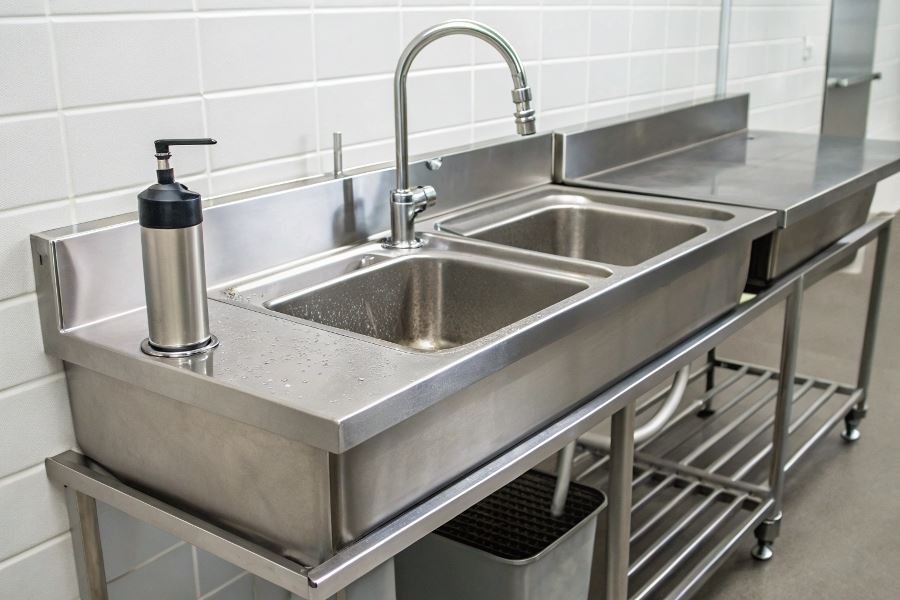
- Minimum basin dimensions of 14″ × 10″ × 5″ (width/length/depth)
- Non-porous, easily cleanable materials (typically stainless steel)
- Rounded internal corners to prevent bacterial harborage
- Splash guards extending at least 8″ from basin edges
- Installation height of 34-36″ from floor to rim
Placement is equally critical—sinks must be installed within 25 feet of food handling areas and positioned to encourage use during critical transition points in production workflows.
Water Systems That Support Sanitation
The water infrastructure supporting handwashing stations requires careful engineering to maintain both safety and functionality.
Temperature control stands as perhaps the most overlooked aspect of sink design. Water must reach and maintain 100°F (38°C) minimum for effective pathogen removal while not exceeding 120°F (49°C) to prevent scalding.
| Requirement | Specification | Rationale |
|---|---|---|
| Water pressure | 20-80 PSI | Ensures adequate flow without splashing |
| Flow duration | Minimum 20 seconds | Supports proper handwashing protocol |
| Drainage capacity | 1.5″ minimum pipe diameter | Prevents standing water |
| Backflow prevention | Air gap or approved device | Protects potable water supply |
Water supply lines must be dedicated to handwashing stations and properly insulated to maintain temperature consistency throughout production shifts.
Touchless Technology and Accessory Standards
The most advanced facilities are eliminating touch points entirely, recognizing that even properly washed hands can be recontaminated by manual fixtures.
Modern compliance requires:
- Foot, knee, or sensor-activated water controls
- Touchless soap dispensers delivering 0.75-1.5ml per activation
- Liquid antimicrobial soap with minimum 1.0% active ingredients
- Paper towel dispensers or high-velocity air dryers (minimum 19,000 LFM)
These accessories must be positioned to prevent dripping onto floors or splash-back onto clean hands. Wall-mounted units should be installed 48″ from floor level for optimal ergonomics.
The integration of usage monitoring systems represents the cutting edge of compliance technology. These systems track handwashing events, duration, and even technique quality through infrared sensors or RFID badges, providing documentation that can prove invaluable during inspections.
By implementing these technical standards, food production facilities create an environment where proper hand hygiene becomes the path of least resistance rather than an inconvenience—transforming compliance from a checkbox exercise into a cornerstone of operational excellence.
Mastering SanPiN Compliance for Food Safety Success
The paper trail that protects your business
Documentation isn’t just bureaucratic busywork—it’s your legal shield and operational compass. SanPiN standards require comprehensive records of handwashing sink installation, maintenance, and daily monitoring. Smart food producers maintain digital and physical logbooks documenting:
- Installation certificates confirming proper sink placement and specifications
- Water quality test results (minimum quarterly testing)
- Temperature monitoring logs (water must maintain 100-120°F/38-49°C)
- Maintenance records including repairs and parts replacement
- Soap and sanitizer refill schedules
Pro tip: Create a centralized compliance dashboard that automatically flags approaching deadlines for inspections and maintenance. This simple system has saved countless operations from costly violations.
Surviving inspections with flying colors
Food safety inspectors don’t announce their arrival—they appear when you least expect them. Their evaluation of handwashing stations follows a methodical protocol that examines:
- Sink accessibility (must be within 25 feet of food handling areas)
- Proper water temperature and pressure
- Availability of soap, sanitizer, and single-use towels
- Functional foot/knee pedals or sensor activation
- Proper drainage and absence of cross-contamination risk
The most common compliance failures aren’t technical—they’re behavioral. Inspectors routinely cite facilities where sinks are properly installed but blocked by equipment or supplies, rendering them effectively useless.
| Common Violation | Typical Fine | Prevention Strategy |
|---|---|---|
| Inaccessible sinks | $500-1,500 | Weekly accessibility audits |
| Improper water temperature | $250-750 | Automated temperature monitors |
| Missing supplies | $100-500 | Inventory management system |
| Cross-contamination risk | $750-2,500 | Dedicated sink zones with visual barriers |
Building a culture of handwashing excellence
Documentation and passing inspections are necessary but insufficient. True compliance requires creating a workplace culture where proper handwashing becomes instinctive.
Employee training must transcend basic instruction. The most successful operations implement:
- Immersive onboarding that includes handwashing demonstrations and practice sessions
- Visual reminders strategically placed throughout facilities (not just bathrooms)
- Peer accountability systems where team members support proper practices
- Recognition programs that celebrate departments with perfect compliance
“The difference between a good food safety program and a great one is turning standards into habits,” notes food safety expert Maria Gonzalez of NSF International.
Maintaining standards requires ongoing vigilance. Leading facilities conduct monthly internal audits using the same criteria as official inspectors. These “practice inspections” identify potential issues before they become violations.
Technology integration has revolutionized compliance management. Smart sinks from manufacturers like T&S Brass can now track usage patterns, automatically document compliance, and even provide real-time feedback to employees about proper handwashing duration and technique.
By transforming documentation from a burden into a business asset, approaching inspections as opportunities rather than threats, and building a culture where compliance becomes second nature, food producers can exceed SanPiN standards while protecting both consumers and their bottom line.
Discover comprehensive SanPiN standards for handwashing sinks in food production facilities. Learn technical specifications, compliance requirements, and best practices to ensure food safety and meet regulatory guidelines.
Discover comprehensive SanPiN standards for handwashing sinks in food production facilities. Learn technical specifications, compliance requirements, and best practices to ensure food safety and meet regulatory guidelines.