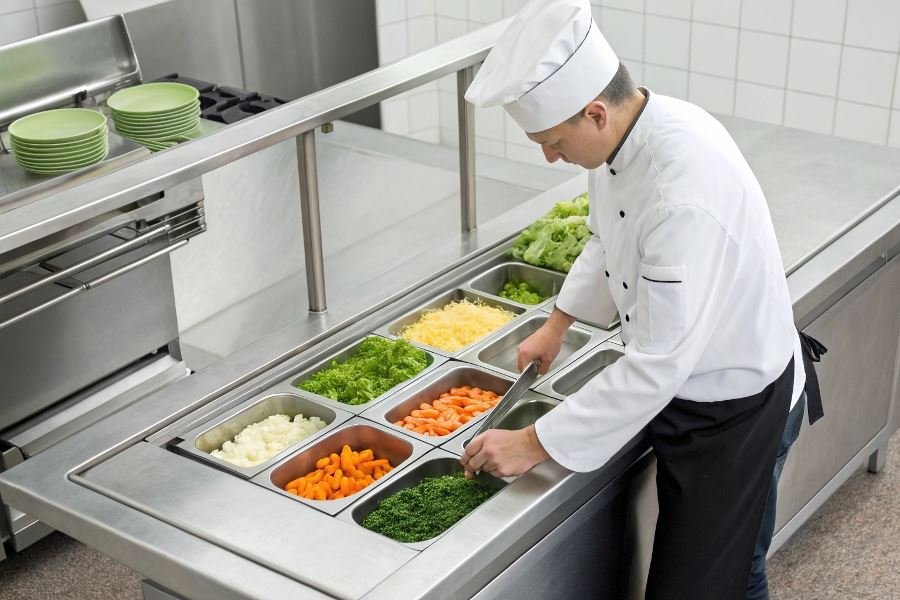
Ever walked into a small production kitchen and wondered how they manage to prep hundreds of meals in what feels like a closet? The secret weapon might be sitting right under your nose: compact vegetable tables.
These specialized workstations are revolutionizing small-scale food processing operations across America. Unlike their bulky industrial counterparts, compact vegetable tables are designed specifically for businesses with limited square footage but unlimited ambition. They’re the unsung heroes of food trucks, boutique restaurants, and artisanal food producers who refuse to let spatial constraints limit their culinary creativity.
What makes these tables game-changers? First, they’re engineered for efficiency. Most models feature integrated cutting surfaces, waste collection systems, and storage compartments—all within a footprint sometimes as small as 3×4 feet. This multifunctionality translates to significant workflow improvements, with some producers reporting up to 30% faster prep times after installation.
The market for these space-efficient solutions has exploded since 2020, with sales growing at approximately 18% annually. Manufacturers are responding with increasingly innovative features: antimicrobial surfaces, height-adjustability for ergonomic comfort, and even smart technology integration that tracks inventory and cutting board sanitization schedules.
“The right compact vegetable table doesn’t just save space—it transforms your entire production process,” notes one equipment specialist. “It’s about making every square inch work harder for your business.”
For small producers looking to scale without changing locations, these specialized tables aren’t just convenient—they’re essential infrastructure for sustainable growth.
The Anatomy of Perfect Compact Vegetable Tables
When every square inch counts, the design of your food prep station becomes a critical business decision. Compact vegetable tables have evolved from simple cutting surfaces into sophisticated workstations that can dramatically improve production efficiency in limited spaces.
For small-scale food producers, finding compact vegetable tables for small productions that balance functionality with spatial economy can be the difference between smooth operations and constant workflow bottlenecks. These specialized workstations have become essential tools for artisanal food businesses looking to maximize output without expanding their footprint.
Space-Saving Design That Works Harder
The most innovative compact tables employ multi-level configurations that stack functionality vertically rather than horizontally. Modern designs feature:
- Fold-down side extensions that deploy only when needed
- Integrated under-counter refrigeration drawers
- Overhead utensil racks that keep tools accessible without consuming prep space
- Nested cutting boards that slide out from concealed compartments
The difference between standard and space-optimized tables can recover up to 40% of your production floor area.
One standout example is the SpaceMaster Pro series, which incorporates adjustable height surfaces that can transform from prep areas to plating stations with minimal reconfiguration time.
Material Selection: Where Safety Meets Longevity
The materials used in compact vegetable tables must satisfy multiple competing demands:
| Material | Durability Rating | Food Safety Profile | Cost Factor | Weight Consideration |
|---|---|---|---|---|
| 304 Stainless Steel | ★★★★★ | Excellent | High | Heavy |
| HDPE Composite | ★★★★☆ | Excellent | Medium | Light |
| Maple Hardwood | ★★★☆☆ | Good (with maintenance) | Medium | Medium |
| Corian Solid Surface | ★★★★☆ | Very Good | High | Medium |
304-grade stainless steel remains the gold standard for professional environments, offering unmatched resistance to corrosion and bacterial growth. However, newer HDPE composite surfaces provide comparable sanitation benefits at reduced weight—a crucial factor when designing mobile compact stations.
The right material choice extends beyond the working surface to include frame construction, which must balance structural integrity with weight considerations.
Ergonomic Excellence in Confined Spaces
The ergonomic challenges of compact workspaces demand thoughtful solutions that prevent repetitive strain injuries while maintaining productivity.
Height-adjustable surfaces have become non-negotiable features, allowing customization for different tasks and worker heights. The ErgoFlex Station incorporates pneumatic adjustment mechanisms that require no electrical connections—perfect for deployment anywhere in your production area.
Other critical ergonomic elements include:
- Rounded front edges that reduce pressure points during extended prep sessions
- Recessed toe kicks that allow workers to stand closer to the work surface
- Strategic placement of undercounter storage to minimize bending and reaching
- Anti-fatigue matting zones integrated into the station footprint
The most effective compact tables incorporate workflow mapping technology during the design phase, analyzing movement patterns to position tools and ingredients at optimal reach distances based on frequency of use.
By investing in thoughtfully designed compact vegetable tables, small production facilities can achieve the operational efficiency of much larger operations while maintaining the flexibility and reduced overhead that gives smaller producers their competitive edge.
Game-Changing Compact Vegetable Tables for Small Productions
Small food production spaces demand big solutions in minimal footprints. The right vegetable preparation station can transform workflow efficiency, boost production capacity, and reduce worker fatigue. After examining dozens of options on the market, these three compact vegetable table solutions stand out for their innovative designs and practical applications.
Folding and expandable preparation stations
The genius of folding vegetable stations lies in their ability to transform from compact storage mode to full production capacity in seconds. The Versa-Prep X200 exemplifies this category with its aircraft-grade aluminum frame that supports up to 300 pounds while weighing just 42 pounds itself. When fully extended, it provides 24 square feet of food-safe workspace, yet folds to a mere 6 square feet for storage.
What makes these solutions particularly valuable is their adaptability:
- Accordion-style expansion that maintains structural integrity even at full extension
- Height-adjustable surfaces accommodating workers from 5’2″ to 6’4″
- Integrated drainage systems that channel vegetable debris and water efficiently
The KitchenFlex Pro takes a different approach with its modular expansion panels that can be configured in L-shapes or straight lines depending on your production needs. Its food-grade stainless steel construction withstands aggressive sanitizers while maintaining NSF certification.
Multi-functional tables with integrated storage
Storage integration transforms simple prep tables into comprehensive workstations. The StorMaster Elite exemplifies this category with under-surface storage that accommodates up to six standard gastronorm containers.
These space-saving marvels typically feature:
| Feature | Benefit |
|---|---|
| Pull-out cutting board drawers | Allows quick switching between vegetable types without cross-contamination |
| Vertical knife storage | Keeps essential tools accessible without sacrificing workspace |
| Adjustable shelving systems | Accommodates containers of varying heights |
The PrepHub 360 takes this concept further with its rotating central storage column that provides access to tools and ingredients from any position around the table. Its 36-inch diameter footprint houses storage equivalent to 12 linear feet of conventional shelving.
Mobile vegetable processing units
Mobility adds another dimension to compact vegetable preparation. The RollingChef Station combines industrial-grade casters with locking mechanisms that provide rock-solid stability during use, yet allow single-person repositioning when needed.
These units excel through:
- Integrated wash stations with filtered water systems
- Battery-powered refrigeration drawers maintaining 38°F for up to 8 hours
- Adjustable configurations that transform from prep to packaging stations
The MobilePro X3 deserves special mention for its patented quick-connect system that allows operators to swap components—adding a scale platform, vacuum sealer, or additional cutting surfaces—without tools in under 30 seconds.
Industry insight: Facilities using mobile processing units report up to 22% reduction in production time compared to fixed-station setups, primarily due to eliminated walking time between stations.
When selecting the right compact vegetable table for your operation, consider your specific production flow, space constraints, and whether your needs fluctuate throughout the day. The best solution often combines elements from multiple categories—perhaps a mobile unit with integrated storage and expandable surfaces—creating a custom solution perfectly tailored to your unique production challenges.
Discover space-efficient vegetable preparation solutions for small food businesses. Our guide reviews top compact tables with innovative designs, durable materials, and ergonomic features that maximize productivity in limited production spaces.
Discover space-efficient vegetable preparation solutions for small food businesses. Our guide reviews top compact tables with innovative designs, durable materials, and ergonomic features that maximize productivity in limited production spaces.