Ever watched a skilled craftsman transform rough concrete into a glass-like surface? That magic happens with a concrete troweling machine—the unsung hero of construction perfection.
Concrete troweling machines represent specialized equipment designed to finish concrete surfaces after pouring and leveling. These powerful tools compress and smooth freshly poured concrete, eliminating air pockets while creating denser, more durable surfaces with superior flatness. Selecting the right machine for your specific project isn’t just about efficiency—it’s about achieving professional-grade results that stand the test of time.
The foundation of flawless finishes
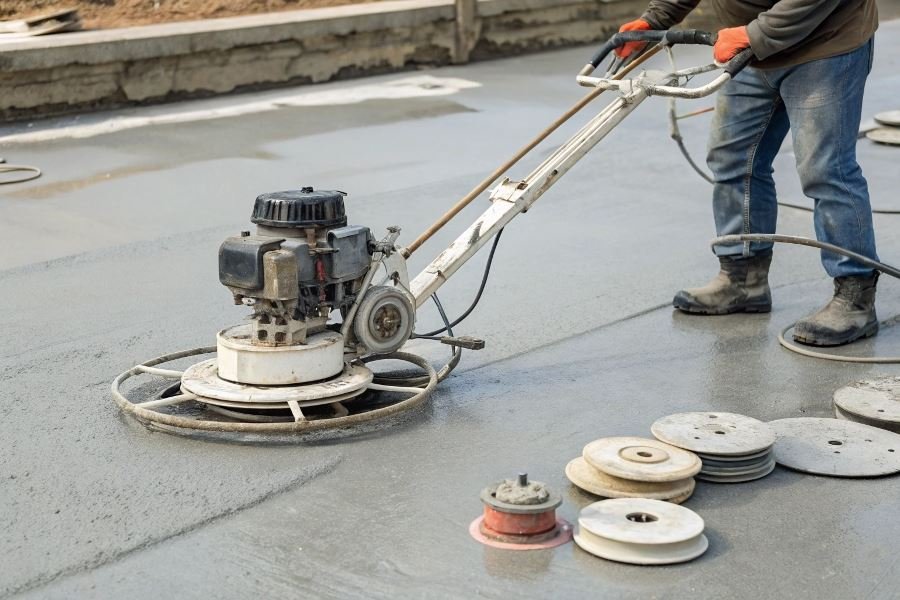
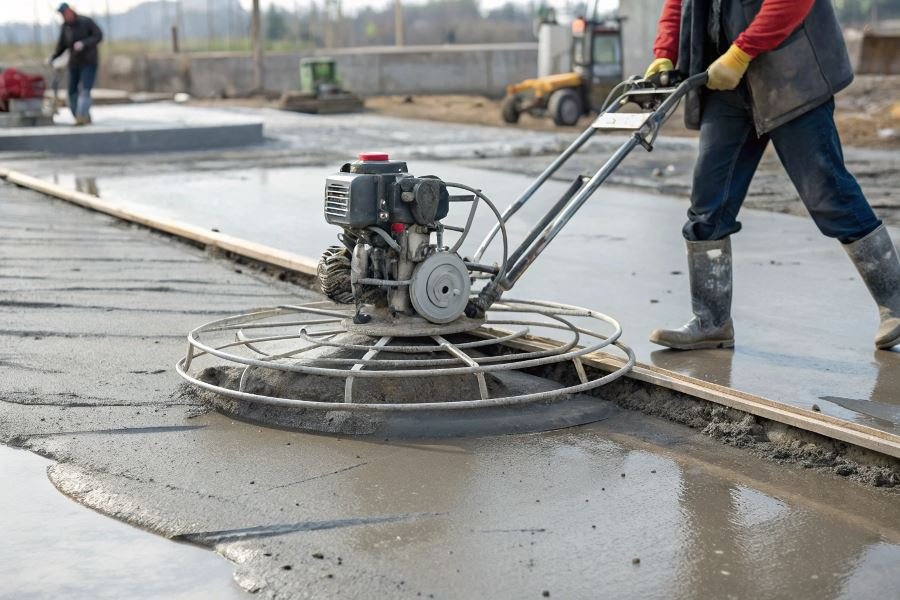
At their core, troweling machines use rotating metal blades (called float pans or finishing blades) that ride across the concrete surface. This mechanical action consolidates the concrete while bringing cream (a mixture of cement and fine particles) to the surface, creating that sought-after smooth finish.
Types that transform
The market offers several distinct categories of troweling machines:
-
Walk-behind trowels: Manually operated machines ideal for smaller areas (500-1,000 sq ft) and detailed work. These single-rotor workhorses provide excellent maneuverability in confined spaces.
-
Ride-on trowels: For larger commercial projects, these multi-rotor behemoths cover vast areas quickly. Some models feature dual 48-inch rotors that can finish up to 10,000 sq ft per hour.
-
Combination machines: Versatile options that can be fitted with float pans for initial passes and finishing blades for final smoothing.
Why selection matters
Choosing the appropriate troweling machine directly impacts:
“The difference between amateur and professional concrete work isn’t just skill—it’s having the right equipment for the specific application.”
The perfect machine match ensures optimal concrete compaction, superior surface hardness, and dramatically reduced finishing time. More importantly, it prevents common defects like chatter marks, swirl patterns, and uneven consolidation that plague improperly finished concrete.
Essential Criteria for Selecting the Perfect Concrete Troweling Machine
When investing in construction equipment, few decisions impact your finished concrete work as significantly as choosing the right troweling machine. The difference between a professional, glass-smooth finish and a subpar surface often comes down to your equipment selection.
Selecting a concrete troweling machine requires careful consideration of several critical factors that will determine both your productivity and the quality of your finished work. How to choose a concrete troweling machine: main criteria involves evaluating power specifications, physical dimensions, blade configurations, build quality, and ergonomic features—all of which directly impact performance on the jobsite.
Power That Performs When It Matters
The heart of any troweling machine is its power system. Most professional-grade models feature either gasoline, propane, or electric motors, with power outputs ranging from 5 to 25 horsepower.
Gasoline engines offer mobility and robust power, typically delivering 8-11 HP for walk-behind models and up to 25 HP for ride-on machines. The Honda GX series engines remain industry favorites for their reliability and serviceability.
Electric motors provide emission-free operation for indoor applications, though they require access to power sources. Modern lithium battery systems have extended runtime capabilities to 4+ hours on a single charge.
The power-to-weight ratio ultimately determines how effectively your machine can handle different concrete mixes and surface areas.
Size and Maneuverability Considerations
| Machine Type | Path Width | Weight | Best Application |
|---|---|---|---|
| Walk-behind | 24″-48″ | 130-250 lbs | Residential, small commercial |
| Ride-on | 48″-120″ | 750-2,000 lbs | Large commercial, industrial |
| Edger | 10″-24″ | 30-60 lbs | Perimeter finishing |
Your machine’s size directly affects productivity. Larger ride-on trowels can finish up to 10,000 sq. ft. per hour, while standard walk-behind models typically handle 2,000-3,000 sq. ft. in the same timeframe.
Consider transportation requirements and doorway access when selecting machine size—the perfect trowel is useless if you can’t get it to the worksite.
Blade Configuration That Delivers Results
The blade system represents your direct contact with the concrete surface. Modern machines offer:
- Combination blades for versatile finishing from float to final burnish
- Float pans for early-stage concrete leveling
- Finish blades for achieving high-gloss surfaces
Advanced models from manufacturers like Allen Engineering feature quick-change blade systems that reduce downtime between finishing stages.
Pitch adjustment mechanisms are crucial—look for systems offering at least 0-30° adjustment range with easy-access controls that can be manipulated while operating.
Durability Built for Demanding Environments
Construction equipment faces punishing conditions, making build quality non-negotiable. Premium machines feature:
- Heavy-gauge steel frames with reinforced stress points
- Sealed bearings and protected drive components
- Powder-coated finishes that resist concrete splatter
- Serviceable components with readily available parts
The initial price difference between economy and professional-grade machines typically disappears after factoring in downtime and repair costs over a 3-5 year period.
Ergonomics That Reduce Operator Fatigue
Operator comfort translates directly to productivity and finish quality. Key ergonomic features include:
- Vibration-dampening handle systems on walk-behind models
- Adjustable seating positions on ride-on machines
- Intuitive controls positioned within natural reach zones
- LED lighting for low-light conditions
- Safety features like automatic shutdown systems
The Wacker Neuson CRT 48 ride-on trowels exemplify ergonomic design with their joystick steering and adjustable seat suspension systems that significantly reduce operator fatigue during extended finishing operations.
When evaluating these criteria comprehensively, you’ll identify the troweling machine that delivers the perfect balance of performance, durability, and value for your specific concrete finishing requirements.
Making the Final Decision on Your Concrete Troweling Machine
When you’ve narrowed down your options and examined the technical specifications, it’s time to make that final decision on your concrete troweling machine investment. This isn’t just about buying equipment—it’s about securing a reliable partner for your concrete finishing projects for years to come.
Smart Budget Planning Beyond the Price Tag
The sticker price is just the beginning of your investment story. Entry-level walk-behind trowels might start around $2,000, while professional ride-on models can command $25,000 or more. But the initial cost rarely tells the complete financial story.
The cheapest machine on the showroom floor often becomes the most expensive option over its lifetime.
Consider calculating your cost-per-square-foot over the machine’s expected lifespan. A $15,000 ride-on trowel that can finish 10,000 square feet daily for 7 years costs significantly less per project than a $5,000 walk-behind that handles only 2,500 square feet daily and lasts 5 years.
Maintenance Economics and Ownership Realities
Maintenance isn’t just an operational concern—it’s a major financial consideration. The true cost of ownership extends far beyond the purchase price:
| Maintenance Factor | Annual Cost Impact | Long-term Considerations |
|---|---|---|
| Blade replacements | 400−1,200 | Quality blades last 20-30% longer |
| Engine servicing | 300−800 | Tier 4 engines may require specialized service |
| Parts availability | Variable | Proprietary parts can cost 40% more |
| Downtime costs | 500−2,000/day | Reliable machines minimize revenue loss |
Machines from manufacturers like Wacker Neuson and Allen Engineering typically offer better parts availability and service networks, reducing potential downtime costs significantly.
Reputation and Warranty as Insurance Policies
A manufacturer’s reputation isn’t just marketing—it’s your safety net. Industry veterans consistently recommend:
- Warranty length and coverage: Look beyond the standard 1-year coverage. Premium manufacturers offer 3-5 year warranties on critical components.
- Service network density: A machine that breaks down 300 miles from the nearest service center becomes an expensive paperweight.
- Parts availability guarantee: Some manufacturers commit to parts availability for 10+ years after model discontinuation.
The concrete finishing industry has consolidated significantly since 2010, with established players demonstrating staying power. Companies with 20+ years in the market typically offer more reliable post-purchase support.
Matching Specifications to Project Requirements
The perfect troweling machine aligns precisely with your typical project profile:
For residential contractors:
- Prioritize machines with adjustable pitch controls and foldable handles
- Consider blade diameter of 24-36 inches for maneuverability
- Weight-to-power ratio matters more than raw horsepower
For commercial contractors:
- Focus on machines with floating pans for initial passes
- Evaluate production rates (square feet per hour)
- Consider dual-fuel options for indoor/outdoor versatility
For industrial applications:
- Ride-on machines with overlapping rotors maximize efficiency
- Hydraulic steering reduces operator fatigue on large pours
- Integrated lighting systems enable 24-hour operations
Your machine selection should reflect not just today’s projects but your growth trajectory for the next 3-5 years. The right troweling machine becomes a competitive advantage, delivering consistent results that distinguish your finished work in an increasingly demanding market.
Discover the 7 essential criteria for selecting the perfect concrete troweling machine for your projects. Learn about power specs, size considerations, blade options, durability factors, and cost-efficiency to make an informed investment in quality concrete finishing equipment.
Discover the 7 essential criteria for selecting the perfect concrete troweling machine for your projects. Learn about power specs, size considerations, blade options, durability factors, and cost-efficiency to make an informed investment in quality concrete finishing equipment.