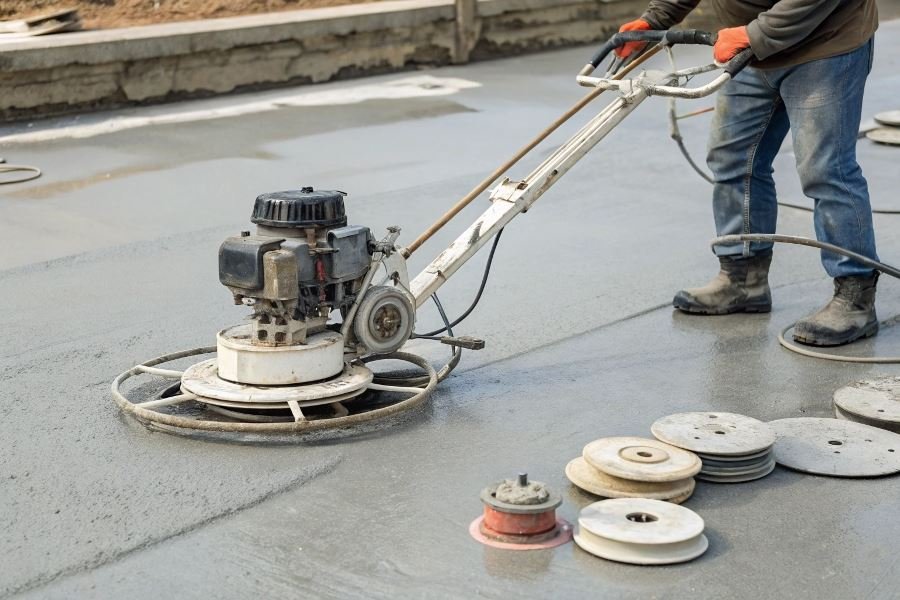
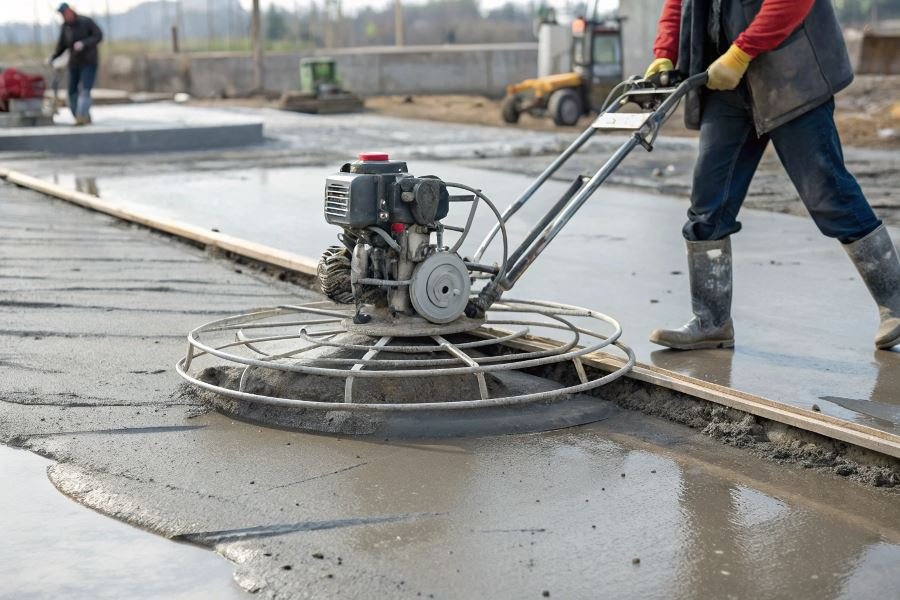
Ever wondered why some concrete floors feel like silk under your feet while others resemble a lunar landscape? The secret often lies not in the materials, but in the muscle behind the machine spreading them.
Floor screed machines—those unsung heroes of construction—transform ordinary concrete into perfectly level surfaces that serve as the foundation for everything from luxury tile to industrial epoxy. But not all screed machines are created equal. The power driving these precision tools directly influences not just how quickly a job gets done, but the fundamental quality of the floor that will support activity for decades.
At its core, a floor screed machine is engineered to distribute and level self-leveling compounds or traditional cement screeds with precision that human hands simply cannot match. Modern machines range from compact 1.5 HP electric models for residential work to robust 25 HP gas-powered beasts that can cover vast commercial spaces with remarkable efficiency.
Power translates directly to performance. Higher-powered machines vibrate more effectively, forcing air bubbles to the surface and creating denser, stronger floors. They also maintain consistent speed under load—critical when working with quick-setting materials where timing means everything.
The market has evolved dramatically since the first mechanical screeds appeared in the 1950s. Today’s premium models feature variable frequency drives that adjust power output based on material viscosity, while smart power management systems prevent overworking materials that could lead to surface defects.
The difference between adequate and exceptional floor preparation often comes down to choosing the right power profile for your specific application.
The Horsepower Factor: Machine Power and Screed Excellence
When professionals talk about floor screed machines, they inevitably circle back to one critical specification: power. The muscle behind these concrete-smoothing workhorses determines not just how quickly you’ll finish a job, but the quality of the finished surface you’ll deliver to clients.
Understanding the power of the floor screed machine and what it affects is fundamental to choosing the right equipment for your specific project needs. The relationship between machine power and results isn’t just marketing talk—it’s physics and engineering working together to create flawless floors that stand the test of time.
Power and Perfect Levelness
The primary function of any screed machine is achieving that glass-like, perfectly level surface. Machine power directly influences this outcome in several ways:
Higher power ratings (typically measured in horsepower or kilowatts) translate to more consistent vibration frequency and amplitude. This matters because:
- Vibration helps eliminate air pockets in the screed mixture
- Consistent power delivery ensures uniform material compaction
- Stronger machines maintain performance even when encountering dense areas
A 3-5 HP Husqvarna power screed might suffice for residential work, but commercial applications often demand 8-12 HP models from manufacturers like Wacker Neuson to maintain consistency across larger pours.
Efficiency Metrics: Time, Labor, and Power
The relationship between machine power and project efficiency is straightforward but often underappreciated:
| Power Range | Typical Coverage | Labor Savings | Best Applications |
|---|---|---|---|
| 2-4 HP | 800-1,200 sq ft/day | Minimal | Small residential |
| 5-8 HP | 1,500-2,500 sq ft/day | Moderate | Medium commercial |
| 9+ HP | 3,000+ sq ft/day | Significant | Large industrial |
Higher-powered machines don’t just work faster—they reduce the physical toll on operators and minimize the risk of setting errors that require costly corrections.
When working with quick-setting materials or in hot weather conditions, that extra horsepower becomes the difference between a smooth operation and a race against time that compromises quality.
Material Demands: Matching Power to Projects
Different flooring materials and project sizes have distinct power requirements:
For standard cement screed:
- Small residential projects (under 1,000 sq ft): 3-5 HP machines from Tomahawk Power typically suffice
- Medium commercial (1,000-3,000 sq ft): 6-8 HP models balance efficiency and maneuverability
- Large industrial (3,000+ sq ft): 9+ HP units from Allen Engineering deliver the necessary output
For specialized materials:
- Self-leveling compounds require less power but more precision
- Fiber-reinforced screeds demand 20-30% more power to achieve proper compaction
- Decorative concrete with aggregates benefits from variable-speed models that can adjust power delivery based on material density
The thickness of your pour also impacts power requirements—each additional inch of depth typically demands 15-20% more machine power to maintain efficiency and quality.
When selecting equipment, remember that underpowered machines lead to operator fatigue, inconsistent results, and extended project timelines. Conversely, oversized equipment brings unnecessary costs and can be unwieldy in confined spaces.
The ideal approach is matching machine power precisely to your typical project scope, with enough headroom to handle occasional larger jobs without compromising the finished product that your clients expect and deserve.
Powering Your Project: Choosing the Right Floor Screed Machine
When it comes to floor screed machines, power isn’t just a specification—it’s the heartbeat of your project’s success. The right power rating can mean the difference between a flawlessly finished floor and days of frustrating rework. Let’s dive into how to match machine power to your specific needs and evaluate the features that truly matter.
Matching machine power to project demands
Floor screed projects vary dramatically in scope and complexity. A small residential bathroom requires significantly different equipment than a 50,000 square foot warehouse floor.
Project size dictates power requirements. For residential projects under 1,000 square feet, machines in the 2-3 HP range typically provide sufficient power. Medium commercial projects (1,000-5,000 square feet) generally require 4-6 HP units, while large industrial applications may demand 7+ HP machines.
Material density creates varying power demands. Consider these requirements:
| Material Type | Recommended Minimum Power |
|---|---|
| Self-leveling | 2-3 HP |
| Standard cement | 3-5 HP |
| Heavy aggregate | 5-7 HP |
| Polymer-modified | 4-6 HP |
The thickness of application also impacts your power needs. For every additional inch of screed depth, experts recommend approximately 1-2 HP of additional power to maintain optimal performance and prevent motor strain.
Three power features that make or break performance
When evaluating floor screed machines, these three power-related specifications deserve your closest attention:
Torque rating matters more than horsepower
While horsepower gets the headlines, torque determines how effectively your machine handles dense materials. Look for machines with high torque ratings at low RPMs—this indicates superior performance under load. The Husqvarna BG 245 excels here with industry-leading torque-to-weight ratios.
Power source flexibility creates opportunities
Modern screed machines offer various power options:
- Electric models (typically 110V or 220V) provide consistent power but require proximity to outlets
- Gas-powered units offer mobility but come with emissions concerns
- Battery-powered options from manufacturers like DeWalt are emerging with impressive 2-hour runtime capabilities
The right power source depends on your typical job site conditions. For indoor finishing work, electric or battery power eliminates ventilation concerns.
Power management systems extend capability
Advanced power management systems automatically adjust output based on material resistance. The Wacker Neuson P35A features intelligent load sensing that prevents motor burnout while maximizing efficiency—technology that pays for itself through extended machine life.
Cost-benefit analysis of higher-powered machines
Investing in a higher-powered screed machine represents a significant upfront cost increase. Entry-level 2 HP models typically start around $2,000, while commercial-grade 6+ HP units can exceed $7,500.
However, the ROI calculation extends beyond the price tag:
A properly powered machine completes projects 30-40% faster than an underpowered alternative, dramatically improving labor efficiency.
Reduced maintenance costs justify premium equipment. Higher-powered machines operating within their capacity experience less strain, resulting in fewer repairs and longer service life. Data from contractors shows machines operating at 70-80% of maximum capacity last nearly twice as long as those consistently pushed to their limits.
Versatility creates additional value. A 5 HP machine handles both light residential and medium commercial work, eliminating the need for multiple specialized units. This flexibility allows contractors to bid on diverse projects without additional equipment investments.
When analyzing total cost of ownership over a typical 5-year period, higher-powered machines often demonstrate superior value despite higher acquisition costs—especially for contractors completing more than 15 projects annually.
Discover how floor screed machine power impacts project quality and efficiency. Learn essential factors for selecting the right power specifications based on your flooring materials and project size. Make an informed investment decision for professional results.
Discover how floor screed machine power impacts project quality and efficiency. Learn essential factors for selecting the right power specifications based on your flooring materials and project size. Make an informed investment decision for professional results.