Ever walked into a store and felt like it somehow knew what you wanted? That’s no coincidence—it’s the result of sophisticated systems working behind the scenes to understand who you are and what you’re looking for.
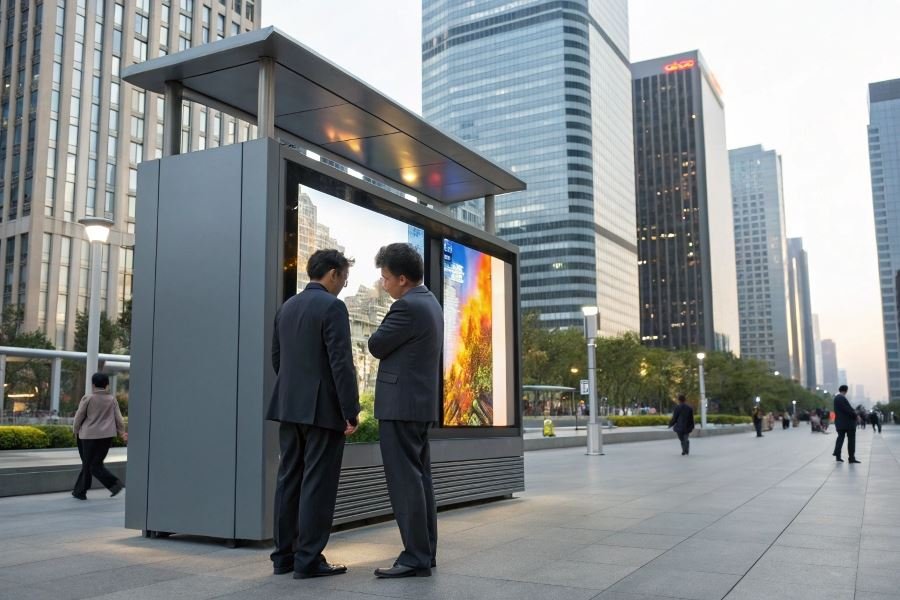
At its core, the integration of advertising displays with visitor analytics represents the marriage of two powerful technologies: dynamic digital signage and real-time customer tracking systems. This fusion creates an intelligent ecosystem where screens don’t just broadcast messages—they respond to the people viewing them. The technology combines hardware (cameras, sensors, displays) with sophisticated software that processes visitor data and triggers relevant content.
“The display that doesn’t know its audience is just expensive wallpaper.” — Retail Intelligence Quarterly
The journey to this integration wasn’t overnight. What began in the early 2000s as simple people-counting devices has evolved into comprehensive systems that can determine demographics, dwell time, emotional responses, and even purchasing patterns. By 2015, early adopters were experimenting with basic responsive displays. Today’s systems are exponentially more sophisticated, capable of processing multiple data streams simultaneously.
For businesses, the value proposition is transformative. When displays connect with analytics, companies gain:
- Measurable ROI on advertising investments
- Personalized customer experiences that drive engagement
- Actionable insights into traffic patterns and behavior
- Dynamic content optimization based on real-time audience composition
This technology doesn’t just count visitors—it understands them, creating a feedback loop that continuously improves both the customer experience and business outcomes.
Building Your Analytics-Powered Display Ecosystem
Hardware Foundations That Won’t Fail You
The foundation of any successful integration between advertising displays and visitor analytics systems begins with robust hardware selection. Digital signage players like the BrightSign XT1144 and Intel NUC mini PCs deliver the processing power needed to simultaneously run content and collect visitor data. These systems require minimum quad-core processors, 8GB RAM, and dedicated graphics capabilities to handle real-time analytics processing without performance degradation.
When selecting displays for integration with visitor analytics systems, resolution matters significantly. 4K displays from manufacturers like Samsung and LG Commercial provide the pixel density needed for both engaging content and embedded analytics tools. The integration of advertising displays with visitor analytics systems works most effectively when the hardware includes built-in sensors or compatibility with external sensor arrays that can track movement patterns, dwell time, and demographic indicators.
Compatibility considerations extend beyond just processing power. Your display network must support standardized protocols like HDMI-CEC, RS-232, or IP control to enable seamless communication between analytics platforms and content management systems. Most implementations require network infrastructure capable of handling at least 100Mbps per display node, with enterprise deployments often necessitating dedicated VLANs to segregate analytics traffic from general network operations.
Data Collection That Respects Boundaries
Modern visitor analytics systems employ multiple methodologies to gather actionable insights. Computer vision technologies using cameras with AI processing can identify demographics, emotional responses, and attention patterns without storing personally identifiable information. Alternatively, WiFi and Bluetooth tracking systems can measure foot traffic patterns and return visitor rates by anonymously logging device MAC addresses.
Privacy compliance frameworks vary by region but generally follow principles established by GDPR in Europe and CCPA in California. Successful implementations require:
- Clear notice of data collection (digital signage should display privacy notifications)
- Purpose limitation (only collect what’s needed for stated business purposes)
- Data minimization (avoid storing raw images or identifiable information)
- Appropriate security measures (encrypted transmission and storage)
| Collection Method | Privacy Impact | Implementation Complexity | Data Richness |
|---|---|---|---|
| Computer Vision | Medium-High | High | Very High |
| WiFi/Bluetooth | Medium | Medium | Medium |
| Touchscreen | Low | Low | Medium-Low |
| QR Code Scanning | Low | Low | High |
Three Integration Approaches That Deliver Results
1. Cloud-Based Integration
This approach connects displays to analytics platforms through cloud services like Google Cloud IoT or AWS IoT. Display content and analytics data flow through centralized cloud infrastructure, enabling real-time content adjustments based on audience metrics. Ideal for multi-location retailers and QSR chains, this approach requires minimal on-premise equipment beyond the displays themselves.
2. Edge Computing Integration
For environments with connectivity limitations or heightened privacy concerns, edge computing places analytics processing directly on local hardware. Solutions like NVIDIA Jetson modules or Intel OpenVINO enabled devices process visitor data locally, sending only aggregated insights to central systems. This approach excels in healthcare settings, luxury retail, and financial institutions where privacy expectations are elevated.
3. Hybrid Middleware Solutions
The most flexible approach uses middleware platforms like Broadsign or Scala to bridge proprietary analytics systems with various display technologies. These solutions provide standardized APIs that allow businesses to mix hardware from different vendors while maintaining consistent analytics capabilities. Particularly valuable for businesses with existing display infrastructure looking to add analytics capabilities without wholesale replacement.
Each integration approach requires careful consideration of your specific business environment, existing technology investments, and long-term analytics goals.
Measuring ROI and Unlocking Future Potential in Display Analytics
When digital signage meets visitor analytics, magic happens—but only if you can measure it. The integration of advertising displays with analytics systems has evolved from a nice-to-have into a business imperative. Let’s dive into how industry leaders are quantifying success, implementing game-changing solutions, and preparing for what’s next in this rapidly evolving space.
KPIs that actually matter
Establishing meaningful metrics for integrated display systems requires looking beyond traditional impressions. The most successful implementations focus on these performance indicators:
Engagement duration – How long viewers interact with content is often more valuable than simple view counts. Top-performing systems now track average dwell time with precision down to the second.
Conversion attribution – Advanced analytics platforms like Google Analytics can now connect in-store display engagement to both immediate and delayed purchases.
Demographic accuracy – Modern systems achieve up to 97% accuracy in age and gender detection, allowing for real-time content personalization.
The difference between good and great measurement is context. Retailers seeing 3.2x ROI on their display investments are those connecting display metrics to broader business outcomes.
| KPI Type | Traditional Approach | Integrated Analytics Approach |
|---|---|---|
| Traffic | Simple count | Qualified visitors by intent |
| Engagement | Views | Attention minutes + emotional response |
| Conversion | Sales lift | Attribution modeling across touchpoints |
| ROI | Cost per impression | Lifetime value influenced |
Real-world success stories
The proof is in the implementation. These case studies demonstrate the transformative power of properly integrated systems:
Retail revolution: A national footwear chain implemented Sightcorp facial analysis with their Samsung display network, resulting in a 27% increase in try-on rates when displays dynamically adjusted messaging based on shopper demographics.
Banking breakthrough: A regional financial institution deployed interactive displays with Quividi analytics, creating a 41% increase in new account applications by tailoring financial product information to visitor profiles.
Healthcare transformation: A medical center network used Intel RealSense technology with their information displays, reducing perceived wait times by 23% through personalized content delivery.
What separates winners from the rest is their willingness to continuously refine based on analytics insights rather than set-and-forget implementation.
Tomorrow’s technology today
The integration landscape is evolving at breakneck speed with several technologies poised to redefine what’s possible:
Edge computing analytics is reducing latency in display responsiveness to under 50 milliseconds, creating truly real-time personalization opportunities without privacy concerns.
Emotional AI from companies like Affectiva is moving beyond demographic detection to understand viewer sentiment, allowing displays to adapt to emotional states rather than just identity markers.
Cross-device journey mapping is emerging as the holy grail, with Adobe Experience Platform leading efforts to connect mobile device IDs with in-store display interactions.
The most forward-thinking implementations are combining these technologies with predictive analytics to anticipate customer needs before they even approach a display.
“The future belongs to systems that don’t just measure what happened, but predict what should happen next based on comprehensive visitor understanding.”
As these technologies mature, the line between digital and physical retail experiences continues to blur, creating unprecedented opportunities for brands that master the integration of displays with increasingly sophisticated analytics capabilities.
Discover how integrating smart advertising displays with visitor analytics systems can transform customer data into actionable insights, maximize ROI, and create targeted marketing experiences while ensuring privacy compliance and measurable results.
Discover how integrating smart advertising displays with visitor analytics systems can transform customer data into actionable insights, maximize ROI, and create targeted marketing experiences while ensuring privacy compliance and measurable results.