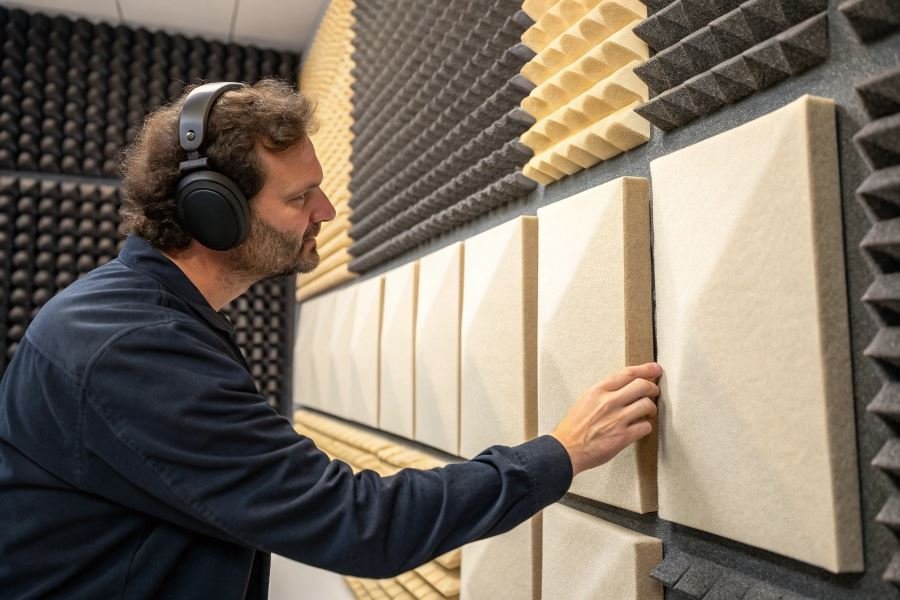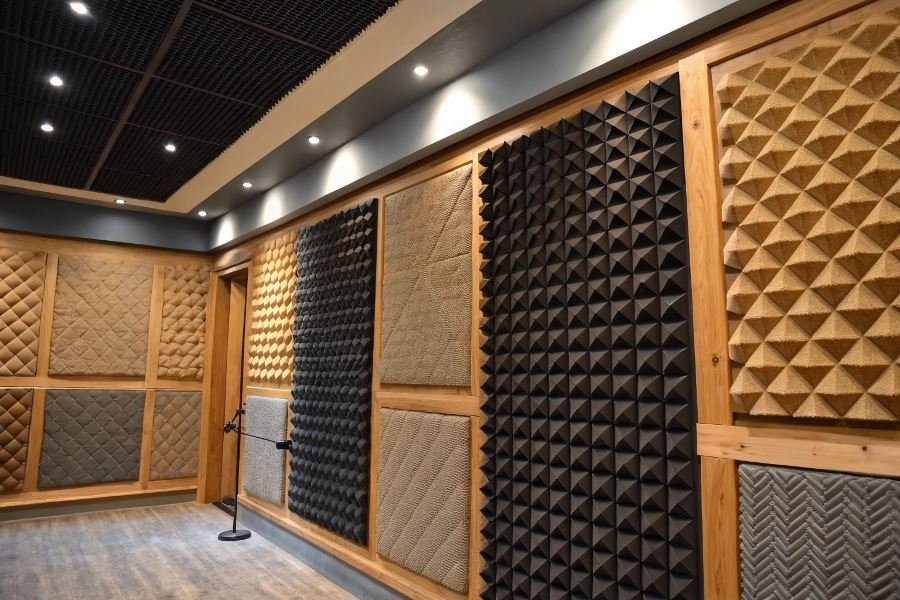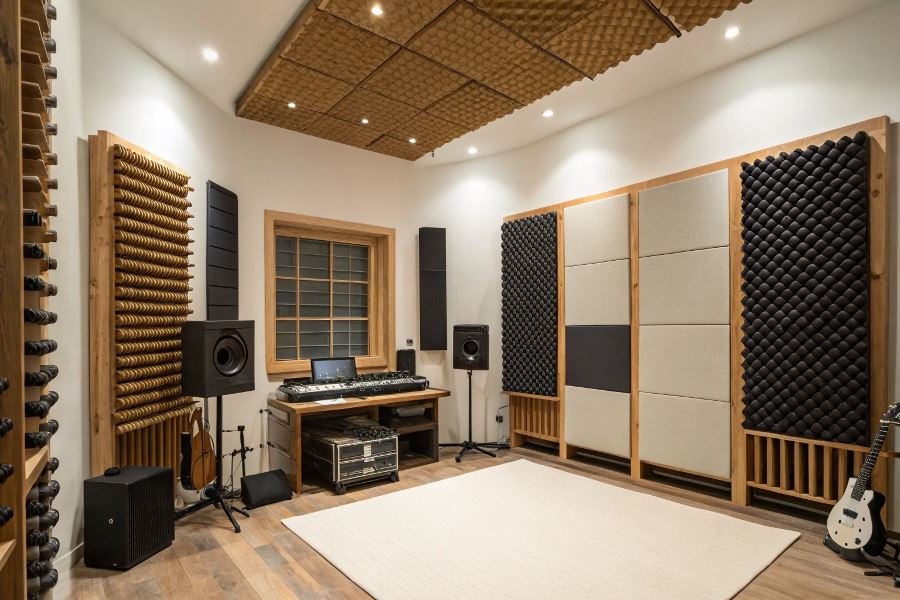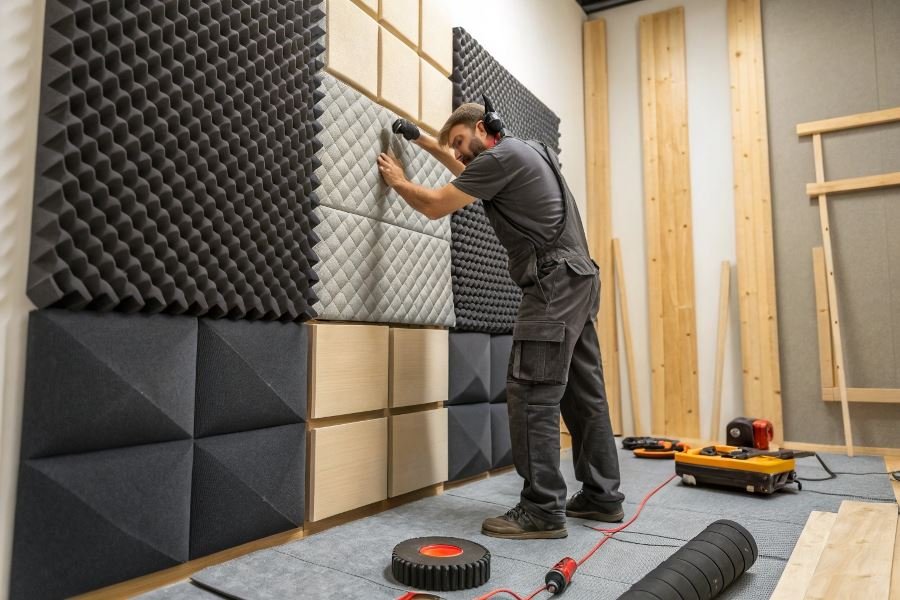
Ever walked into a room and felt like your voice was bouncing off every surface? That echo isn’t just annoying—it’s affecting how you experience your space, whether it’s your home office, recording studio, or entertainment room.
Acoustic panels are the unsung heroes of interior design, absorbing sound waves that would otherwise create that hollow, echoing effect. But commercial options can cost hundreds, even thousands of dollars. The good news? You can build professional-quality panels yourself for a fraction of the cost.
What makes DIY acoustic panels worth your time? Beyond the obvious cost savings (typically 60-70% less than retail), custom panels let you match your exact aesthetic—from fabric choices to dimensions. Plus, there’s something deeply satisfying about solving a sound problem with your own hands.
Project reality check
Let’s be honest about what you’re getting into:
- Difficulty level: Moderate (basic woodworking skills required)
- Time investment: 4-6 hours for your first panel, faster for subsequent ones
- Cost: $30-50 per panel (compared to $80-150 retail)
Tools you’ll need in your arsenal
Your success hinges on having the right tools at hand:
- Wood saw (circular or table saw preferred)
- Staple gun (electric makes life easier)
- Measuring tape and straight edge
- Drill with screwdriver bits
- Utility knife
- Iron (for fabric preparation)
The beauty of this project is that it delivers professional results without professional equipment. With some weekend dedication, you’ll create acoustic treatments that perform like premium products while reflecting your personal style.
The Ultimate Material Guide for DIY Acoustic Panels
When you’re ready to transform your space with custom sound treatment, selecting the right materials becomes your foundation for success. Creating acoustic panels DIY: materials and instructions requires understanding the critical components that make these sound-absorbing wonders work. Let’s dive into the essential materials that will determine both the performance and appearance of your finished panels.
Core Absorption Materials: The Sound-Eating Heart
The core material is what actually absorbs sound waves, making it the most crucial component of your acoustic panel. Each option offers distinct advantages:
Rockwool/Mineral Wool – Often considered the gold standard for DIY acoustic panels, mineral wool (like Rockwool) offers exceptional sound absorption across mid and high frequencies. With an NRC (Noise Reduction Coefficient) rating typically between 0.95-1.00, it’s remarkably effective at 2-4 inches thick. Priced around $45-60 per pack, it balances performance and cost.
Fiberglass Insulation – Similar performance to mineral wool but often more readily available at hardware stores. Owens Corning 703 fiberglass boards have become synonymous with quality acoustic treatment, offering excellent absorption at 2″ thickness for approximately $50-70 per pack.
Acoustic Foam – While convenient, foam typically underperforms compared to mineral wool and fiberglass, especially for low frequencies. Best used for supplementary treatment rather than primary panels. Expect to pay $15-30 per panel.
| Material | NRC Rating | Low Frequency Performance | Cost | Handling Considerations |
|---|---|---|---|---|
| Mineral Wool | 0.95-1.00 | Excellent | $$ | Requires gloves and mask |
| Fiberglass | 0.90-1.00 | Very Good | $$ | Requires gloves and mask |
| Acoustic Foam | 0.50-0.85 | Poor to Fair | $ | Easy to handle |
Frame Construction: The Structural Foundation
Your frame not only holds everything together but determines the panel’s depth, which directly impacts sound absorption performance.
Wood Frames – The most popular choice for DIY enthusiasts:
- Pine – Inexpensive ($15-25 per panel) and easy to work with
- Hardwoods – More expensive but offer superior durability and aesthetic appeal
- 1×3″ or 1×4″ lumber typically provides ideal depth for acoustic panels
Metal Options – For sleeker, more modern designs:
- Aluminum channels – Lightweight and won’t warp
- Steel frames – Maximum durability but require specialized tools
Alternative Solutions:
- PVC frames – Lightweight and water-resistant
- Recycled plastic lumber – Environmentally friendly option
- Composite materials – Offer stability without wood’s tendency to warp
Fabric Selection: The Face of Your Panel
The fabric covering is what you’ll see every day, but it must also allow sound to pass through to the absorption material.
Sound Transparency Factors:
- Breathability test: Hold fabric up to your mouth and try to blow air through it—if you feel resistance, sound will too
- Avoid thick, tightly woven fabrics that reflect rather than transmit sound
- Guilford of Maine FR701 is the industry standard for acoustic transparency
Durability Considerations:
- Polyester blends offer excellent longevity
- Stain resistance becomes crucial in high-traffic areas
- UV resistance matters for panels near windows
Aesthetic Options:
- Solid colors provide clean, professional appearance
- Patterns can transform panels into decorative elements
- Custom-printed fabrics allow for artwork or branding integration
The magic of DIY acoustic panels lies in this trifecta of materials working together. With the right core material absorbing sound, a sturdy frame providing structure, and acoustically transparent fabric creating a finished look, you’ll be well on your way to creating professional-quality acoustic treatment for a fraction of retail cost.
Building Your DIY Acoustic Panels Like a Pro
Safe Material Handling and Cutting Techniques
Working with acoustic materials requires precision and safety. Rockwool and fiberglass—the most effective absorption materials—release tiny particles that can irritate skin and lungs. Always wear protective gear: respirator mask, safety goggles, gloves, and long sleeves before handling these materials.
For cutting, lay your absorption material on a clean, flat surface. Mark your measurements clearly using a straightedge, allowing for a snug fit inside your frames (typically 24″ × 48″ or 24″ × 36″). The ideal thickness ranges from 2″ for general treatment to 4″ for serious low-frequency absorption.
Pro tip: Use an electric carving knife rather than a utility knife for cleaner, more precise cuts through mineral wool or fiberglass. The serrated blade slices through the material with minimal fiber release.
Keep a vacuum with HEPA filtration nearby to immediately clean up any loose fibers. This isn’t just about tidiness—it’s about maintaining a safe workspace throughout your project.
Frame Construction and Mounting Solutions
Your frame serves as both structure and mounting platform for your acoustic panel. The most cost-effective approach uses 1×3″ or 1×4″ pine boards cut to create rectangular frames matching your absorption material dimensions.
For assembly, you have two primary options:
| Assembly Method | Pros | Cons |
|---|---|---|
| Pocket hole jig | Professional finish, strong joints | Requires special tool |
| Corner brackets | Simple, no special tools needed | Visible hardware, less elegant |
When constructing frames, ensure perfect 90° corners for professional results. A carpenter’s square is indispensable here. Pre-drill your holes to prevent splitting, and use wood glue before screwing pieces together for maximum stability.
For mounting considerations, determine your installation strategy early:
- Wall-mounted panels: Add a French cleat system to the back of your frame
- Ceiling-mounted panels: Install eye hooks and use aircraft cable
- Free-standing panels: Create stable bases or use room divider hardware
Remember that heavier panels require more substantial mounting hardware. Don’t compromise on this critical safety element.
Fabric Selection and Professional Finishing Techniques
The fabric covering transforms your panel from functional to beautiful. Select acoustically transparent materials like Guilford of Maine FR701 or similar polyester fabrics that allow sound waves to pass through while providing aesthetic appeal.
When wrapping your panels:
- Cut fabric with a 3-4″ overlap on all sides
- Start by stapling the center of one side to the frame
- Move to the opposite side, pulling fabric taut (but not stretched)
- Work your way around the frame, stapling center points first
- Handle corners with precision by folding them like wrapping a gift
The key to professional results lies in maintaining even tension across the fabric. Too tight and you’ll distort the weave; too loose and you’ll have unsightly wrinkles.
For final installation, arrange panels strategically at first reflection points—the spots where sound waves bounce off surfaces before reaching your ears. Use a mirror to find these points: have someone slide a mirror along walls while you sit in your listening position. When you see your speakers in the mirror, mark that spot.
The difference between amateur and professional acoustic treatment often comes down to installation precision. Take time to ensure panels are level, securely mounted, and positioned for maximum acoustic benefit.
Learn how to create professional-quality acoustic panels at home with our comprehensive DIY guide. Discover the best materials, essential tools, and step-by-step instructions to improve your room's sound quality while saving money.
Learn how to create professional-quality acoustic panels at home with our comprehensive DIY guide. Discover the best materials, essential tools, and step-by-step instructions to improve your room's sound quality while saving money.