Ever wondered why some archival documents survive centuries while others crumble within decades? The secret often lies not in the paper or ink, but in something surprisingly small: the humble stitching needle.
Behind every well-preserved historical manuscript, legal document, or handcrafted book lies a critical decision about which needle connected those pages. Professional bookbinders and archivists know that comparing document stitching needles isn’t just about finding something sharp—it’s about selecting the perfect tool for creating bindings that will withstand generations of use.
“The needle is where craft meets science,” explains master bookbinder Eleanor Winters. “When we compare needles from different manufacturers, we’re evaluating the entire future of that document.”
The foundation of quality comparison
When evaluating document stitching needles, three factors stand above all others:
- Material composition – High-carbon steel needles offer durability while specialty alloys provide flexibility
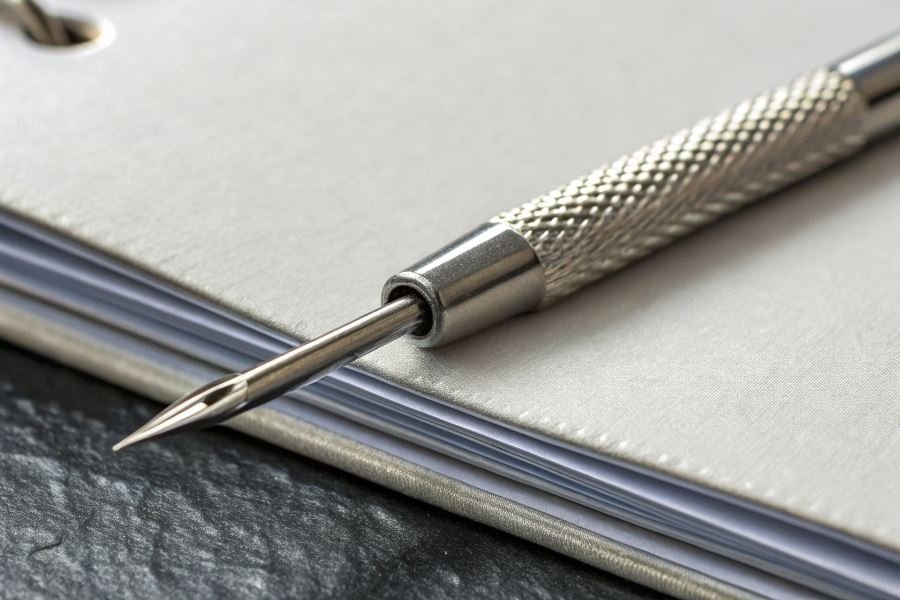
- Point geometry – The angle and sharpness determine how cleanly the needle penetrates without damaging fibers
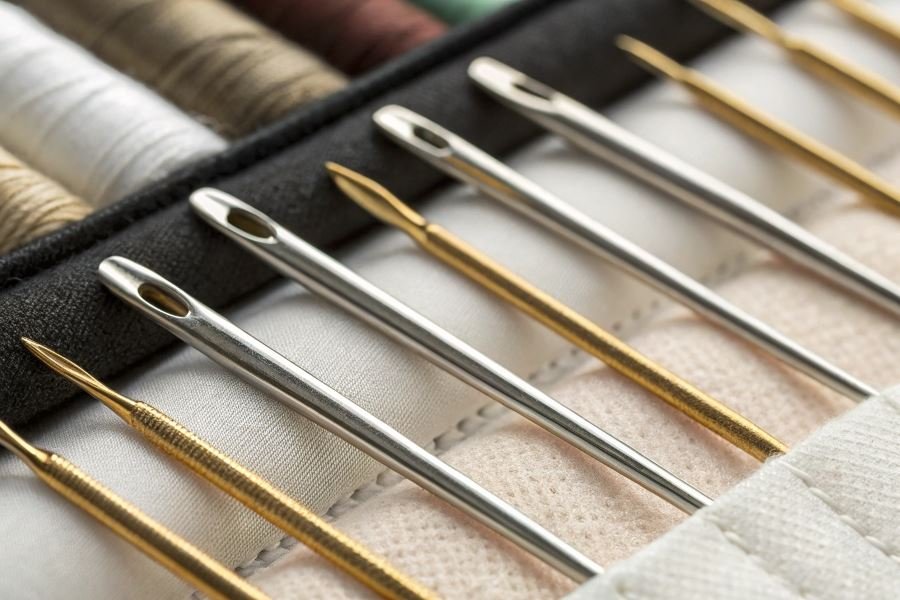
- Eye design – Critical for thread flow and preventing abrasion during the binding process
Today’s market landscape
The document stitching needle market has evolved dramatically, with specialized manufacturers emerging alongside traditional craftsmen. European makers like Prym and John James compete with Japanese specialists such as Clover and Tulip, each bringing distinct metallurgical approaches to their products.
What separates premium needles from basic options isn’t just price—it’s consistency. When binding irreplaceable documents, professionals need needles that perform identically across an entire project, not just for the first few stitches.
The Needle Masters: Document Stitching Excellence
When precision meets craftsmanship in document binding, the humble stitching needle becomes the unsung hero of archival quality. The comparison of document stitching needles from different manufacturers reveals fascinating differences in design philosophy, materials science, and performance characteristics that can dramatically impact your binding projects.
Premium Needles That Define the Industry
The upper echelon of document stitching is dominated by three legendary names: John James, Clover, and Bohin. Each brings centuries of metallurgical expertise to their craft.
John James needles, handcrafted in England since 1840, feature a distinctive gold eye that reduces thread friction. Their premium bookbinding needles maintain exceptional sharpness through hundreds of punctures, with points that resist bending even when penetrating multiple layers of heavyweight paper.
Clover’s Japanese engineering approaches needle design with mathematical precision. Their needles feature microscopically polished channels that guide thread with minimal resistance, reducing hand fatigue during long binding sessions.
Bohin, the French artisan choice, creates needles with slightly more flexible shafts that respond to the binder’s touch, offering tactile feedback that many professionals find irreplaceable.
Material Composition: The Science Behind the Shine
| Manufacturer | Primary Material | Coating | Eye Treatment | Point Hardness (HRC) |
|---|---|---|---|---|
| John James | High-carbon steel | Nickel | Gold plated | 58-60 |
| Clover | Nickel-steel alloy | Chrome | Polished | 56-58 |
| Bohin | Tempered steel | None | Burnished | 54-56 |
The material composition directly impacts longevity and performance. John James uses high-carbon steel with nickel coating, creating needles that maintain their points through thousands of punctures. Their proprietary tempering process prevents brittleness while maintaining rigidity.
Clover’s nickel-steel alloy offers superior rust resistance, critical for archival work in varying humidity conditions. Their chrome coating adds an additional layer of protection while reducing friction.
Bohin takes a different approach with tempered steel that lacks coating but undergoes an intensive burnishing process. This creates a slightly more flexible needle that many artisans prefer for delicate papers, though it may require more frequent replacement.
Value Proposition: Investment vs. Performance
Document stitching needles represent a relatively small investment with outsized impact on final results. The price-to-performance ratio varies significantly:
John James Premium Set ($18-22): The highest initial investment but extraordinary longevity. Cost per bound document averages $0.04 over the needle’s lifetime, making them surprisingly economical for professionals.
Clover Binding Collection ($14-17): Moderate pricing with excellent performance characteristics. Their specialized eye design reduces thread fraying, potentially saving on thread costs over time.
Bohin Artisan Series ($12-15): The most affordable of the premium options. While they may require replacement sooner than competitors, their superior feel makes them the choice for artisans who prioritize the binding experience.
For those who bind documents regularly, the investment in premium needles pays dividends in consistency, reduced hand fatigue, and professional results. The difference between economy needles and these premium options becomes apparent not just in the binding process but in the longevity and appearance of the finished work.
The ideal needle ultimately depends on your specific binding style, paper weight, and personal preference—but understanding these differences ensures your choice is informed rather than arbitrary.
Making the Right Choice: Document Stitching Needles That Deliver
Key differentiators that separate the leaders from the pack
When evaluating document stitching needles across manufacturers, several critical factors emerge as true differentiators. Material composition stands as perhaps the most significant factor—premium manufacturers like Groz-Beckert utilize high-carbon steel with precise nickel coatings that dramatically extend needle life. Their proprietary heat treatment processes result in needles that maintain sharpness through 100,000+ stitching cycles, compared to budget alternatives that dull after just 15,000.
Tip geometry varies substantially between manufacturers. Schmetz needles feature precision-ground tips with consistent 15-degree angles, while economy brands often show variations of 3-5 degrees between needles in the same package. This inconsistency leads to irregular penetration force and document damage over time.
The manufacturing tolerance differences between premium and economy brands can be measured in microns, but the impact on document integrity is measured in years.
| Manufacturer | Material | Tip Consistency | Durability Rating | Price Point |
|---|---|---|---|---|
| Groz-Beckert | Chrome-nickel steel | ±0.01mm | 100,000+ cycles | |
| Schmetz | High-carbon steel | ±0.02mm | 75,000+ cycles | $$$ |
| Organ | Nickel-plated steel | ±0.05mm | 50,000+ cycles | $$ |
| Generic | Basic steel | ±0.1-0.3mm | 10,000-15,000 cycles | $ |
Application-specific recommendations that save time and money
For high-volume legal document processing, Groz-Beckert SAN® 5 needles deliver unmatched performance with their reinforced blade design that prevents deflection even through 300+ page documents. The initial investment of $12-15 per needle package pays dividends through reduced document rejection rates and virtually eliminated needle breakage.
Financial institutions processing sensitive materials benefit most from Organ EBBR needles with their specialized coating that minimizes paper fiber disruption. This results in cleaner perforations and reduced document degradation over time—critical for archival materials that must maintain integrity for decades.
For general office use with moderate volume requirements, Schmetz DB×1 needles offer the best balance of performance and value. Their consistent manufacturing quality ensures reliable operation across various document weights without the premium price of specialized needles.
Long-term investment considerations beyond the price tag
When calculating the true cost of document stitching needles, look beyond the initial purchase price. Premium needles from established manufacturers typically deliver 5-7× longer service life than budget alternatives. This translates to fewer machine stoppages, reduced maintenance requirements, and consistent document quality.
Machine compatibility represents another crucial long-term consideration. Leading manufacturers like Groz-Beckert and Schmetz maintain precise dimensional consistency across production batches, ensuring that needles purchased today will perform identically to those acquired years later. This consistency eliminates the need for machine recalibration when replacing needles.
The wisest investment approach balances immediate budget constraints against long-term operational efficiency. A 30% premium on needle quality often yields a 300% return through extended service life and reduced document rejection rates.
Finally, consider supplier reliability and technical support. Established manufacturers maintain comprehensive documentation, offer troubleshooting assistance, and guarantee consistent product availability—factors that become invaluable when facing tight production deadlines or specialized document requirements.
Discover the definitive comparison of document stitching needles from top manufacturers like John James, Clover, and Bohin. Learn about material quality, durability, and value to make the best choice for your bookbinding and archival projects.
Discover the definitive comparison of document stitching needles from top manufacturers like John James, Clover, and Bohin. Learn about material quality, durability, and value to make the best choice for your bookbinding and archival projects.