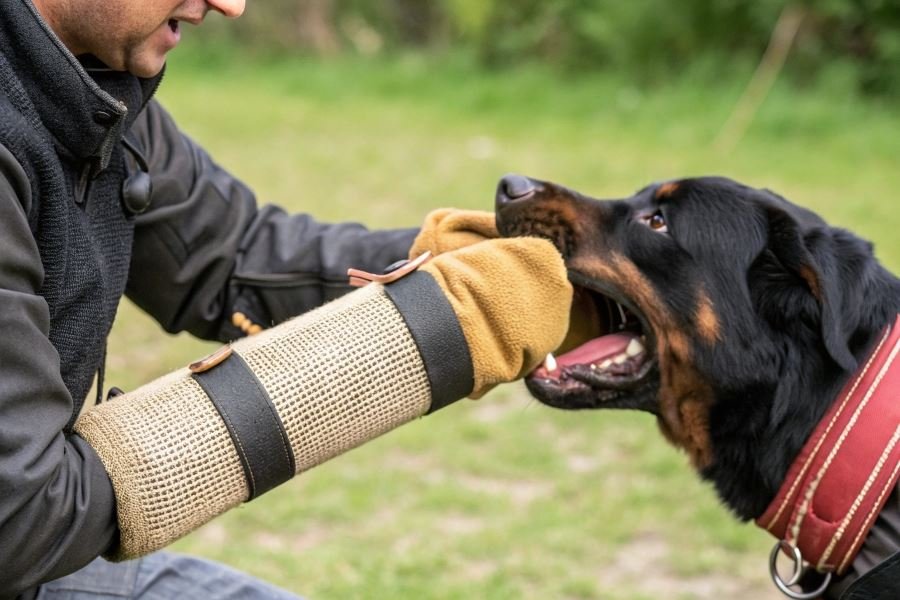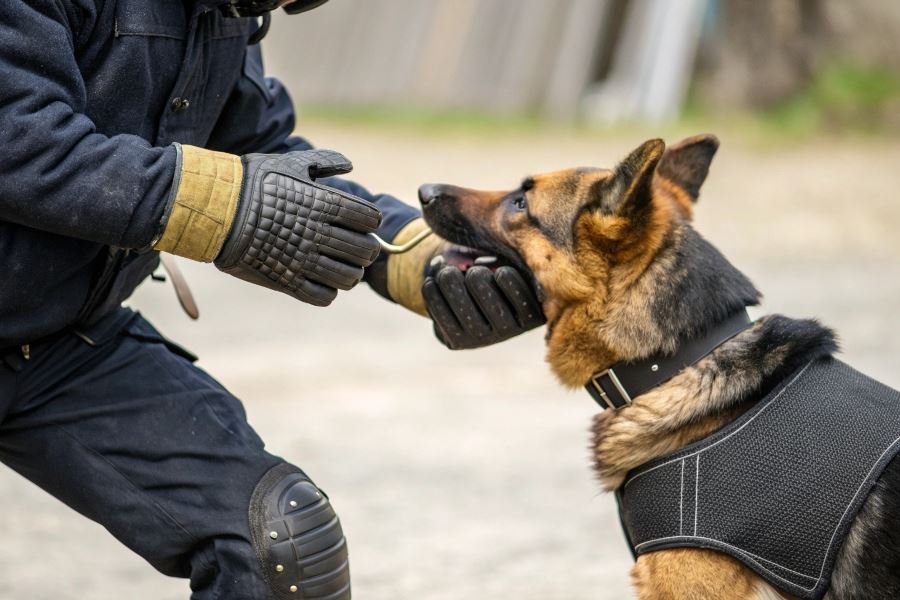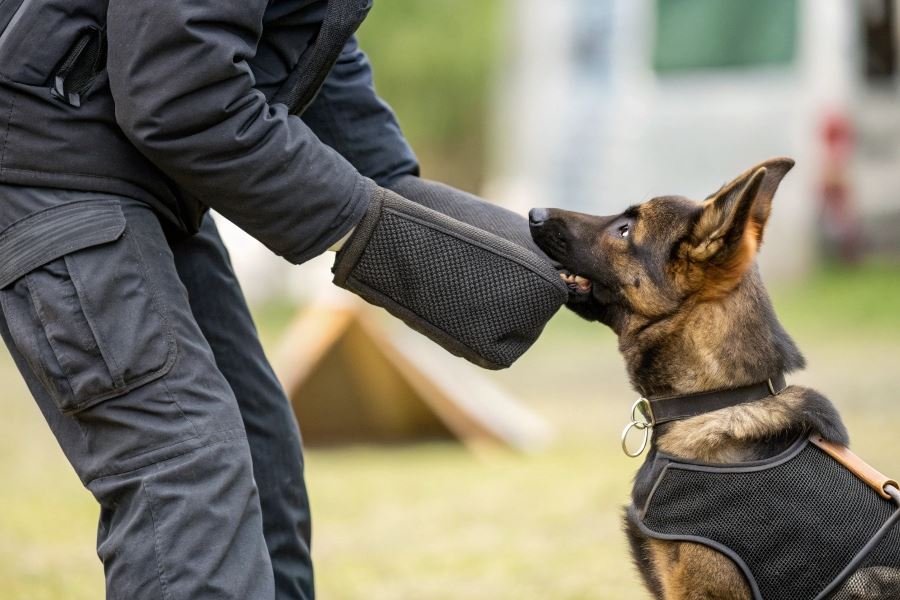
Ever watched a professional K-9 trainer work with a young German Shepherd and wondered how they develop that perfect controlled bite? The secret often lies in one specialized tool that many dog owners overlook: the puppy training sleeve.
A puppy training sleeve is a specialized protective gear worn on the arm during bite work training, designed specifically for young dogs learning proper engagement techniques. Unlike full bite suits or adult dog sleeves, these training aids are crafted with developing canines in mind—balancing protection for the handler with appropriate resistance and feedback for the learning pup.
Why proper equipment matters more than you think
When training working breeds like Belgian Malinois or Rottweilers, using age-appropriate equipment isn’t just convenient—it’s crucial. Young dogs have developing jaws, teeth, and bite inhibition skills. The right training sleeve provides:
- Appropriate resistance that won’t damage developing teeth
- Clear targeting to teach precision biting techniques
- Positive reinforcement through satisfying engagement
- Handler protection without discouraging the puppy
“The foundation of exceptional protection work begins with the right training tools matched to your puppy’s developmental stage.” — Professional K-9 trainers association
Key considerations before purchasing
Selecting the ideal puppy training sleeve requires evaluating several factors:
- Material composition – Look for durable jute or French linen for beginners
- Bite surface area – Younger puppies need wider targets
- Handle positioning – Ensures proper grip during training sessions
- Weight and maneuverability – Lighter sleeves allow for quicker movements
- Growth accommodation – The best sleeves adapt as your puppy develops
The investment in quality training equipment pays dividends in your puppy’s development, creating the foundation for either professional working capabilities or simply better bite inhibition in family pets.
Essential Features of Quality Puppy Training Sleeves
When selecting training equipment for your canine companion, understanding the critical elements that make a training sleeve effective can transform your training sessions from frustrating to rewarding. The market offers countless options, but not all training sleeves deliver the performance needed for proper bite development and handler protection.
Examining puppy training sleeves features of selection requires attention to three fundamental aspects: material composition, proper sizing, and safety features. These elements don’t just affect durability—they directly impact your puppy’s learning curve and your training effectiveness. A well-designed sleeve provides the perfect balance between resistance and give, allowing puppies to develop proper bite technique without damaging their developing teeth and jaws.
Material Composition and Durability Factors
The foundation of any quality training sleeve lies in its materials. Premium sleeves typically feature:
- Jute or French linen exterior – These natural fibers provide appropriate resistance while being gentle on developing teeth
- Reinforced stitching – Double or triple stitching at stress points prevents premature tearing
- Moisture-resistant lining – Prevents saliva absorption that leads to odor and deterioration
The durability of a training sleeve isn’t just about longevity—it’s about consistent performance throughout its lifespan. K9 Dynamics sleeves maintain their shape and resistance even after hundreds of training sessions, while lower-quality alternatives may compress or tear within weeks.
The difference between a $30 sleeve and a $90 sleeve isn’t just $60—it’s the difference between replacing equipment monthly versus annually.
Size and Fit Considerations for Different Breeds
Training sleeves aren’t one-size-fits-all tools. Consider these sizing factors:
| Puppy Size | Recommended Sleeve Diameter | Material Density |
|---|---|---|
| Small Breeds (under 25 lbs) | 2.5-3 inches | Soft-Medium |
| Medium Breeds (25-50 lbs) | 3-4 inches | Medium |
| Large Breeds (50+ lbs) | 4-5 inches | Medium-Firm |
The sleeve should extend approximately 2-3 inches beyond your forearm on both ends, providing adequate protection while maintaining maneuverability. For breeds with particularly strong jaws like German Shepherds or Belgian Malinois, consider sleeves with additional padding in the bite zone.
Safety Features and Bite Resistance Properties
Safety features distinguish professional-grade training sleeves from dangerous imitations. Key safety elements include:
- Rounded edges – Prevent accidental scratches to the puppy’s gums or face
- Non-toxic materials – Puppies will inevitably ingest small fibers during training
- Proper bite surface depth – Allows for full engagement without bottoming out
The bite resistance should progress with your puppy’s development. Ray Allen Manufacturing offers progressive resistance sleeves that can be adjusted as your puppy’s bite strength increases, eliminating the need for multiple purchases.
Modern training sleeves often incorporate hidden handles or grip systems that allow handlers to maintain control even during enthusiastic engagement. These ergonomic features reduce wrist strain and improve training precision, especially during longer sessions.
When evaluating bite resistance, look for sleeves that compress approximately 30-40% under pressure—enough to reward the puppy’s effort while providing sufficient feedback. This “sweet spot” in resistance helps develop proper bite technique without frustrating young dogs or teaching them to release prematurely.
Mastering Your Puppy Training Sleeve Investment
Critical Selection Features That Matter
Selecting the right puppy training sleeve isn’t just about durability—it’s about creating a foundation for successful bite work training. The most effective sleeves balance protection with realistic feedback. Material composition stands as your primary consideration, with high-density foam cores wrapped in jute or French linen offering superior protection while maintaining the tactile sensation dogs need for proper bite development.
The sleeve’s bite surface area directly impacts training progression. Beginners benefit from wider surfaces (6-8 inches) that forgive imprecise bites, while advanced training demands narrower targets (3-5 inches) that reward precision. This progression mirrors how professional trainers develop competition-ready dogs.
The handle configuration often separates amateur-grade from professional equipment. Dual-grip systems with both vertical and horizontal options allow for dynamic movement during training sessions, preventing your dog from anticipating the presentation angle.
Maintaining Your Training Equipment
Training sleeves require systematic care to maintain their effectiveness and extend their lifespan. Implement this maintenance routine:
| Maintenance Task | Frequency | Notes |
|---|---|---|
| Surface cleaning | After each use | Brush away saliva and debris |
| Deep cleaning | Monthly | Use mild soap, air dry completely |
| Structural inspection | Bi-monthly | Check stitching and padding integrity |
| Storage | Continuous | Hang in dry area away from direct sunlight |
Never machine wash your training sleeve. This common mistake compresses the protective foam and degrades the bite surface. Instead, spot clean with a damp cloth and enzymatic cleaner designed for pet equipment.
For sleeves with removable covers, separate components during deep cleaning sessions. This prevents moisture from becoming trapped between layers—the primary cause of premature deterioration and unpleasant odors that can distract your puppy during training.
Training Progression Strategy
Effective bite work development follows a deliberate equipment progression path. Begin with a puppy sleeve featuring softer materials and pronounced visual targets. These entry-level tools from manufacturers like Ray Allen build confidence without overwhelming young dogs.
By months 6-9, transition to intermediate sleeves with moderate resistance and reduced visual cues. This stage develops bite pressure and commitment while maintaining enthusiasm. The Elite K-9 progression series offers excellent intermediate options with replaceable covers.
Advanced training introduces hidden sleeve work, where the equipment becomes less obvious, teaching the dog to target based on movement patterns rather than visual identification. This mimics real-world applications and completes the training cycle.
The most successful trainers maintain multiple sleeve types, understanding that regression to earlier equipment occasionally reinforces fundamentals without frustrating the dog.
Track your puppy’s progress methodically, noting bite quality, commitment duration, and release cleanliness. This documentation reveals patterns that inform when to advance equipment, when to reinforce basics, and how to customize your approach to your specific dog’s learning style.
By investing in quality equipment, maintaining it properly, and following a strategic progression plan, you’re not just purchasing training tools—you’re building the foundation for a confident, controlled working dog with reliable skills.
Discover how to select the perfect puppy training sleeve with our comprehensive guide. Learn about essential materials, proper sizing for different breeds, and key safety features to ensure effective bite training for your young canine companion.
Discover how to select the perfect puppy training sleeve with our comprehensive guide. Learn about essential materials, proper sizing for different breeds, and key safety features to ensure effective bite training for your young canine companion.