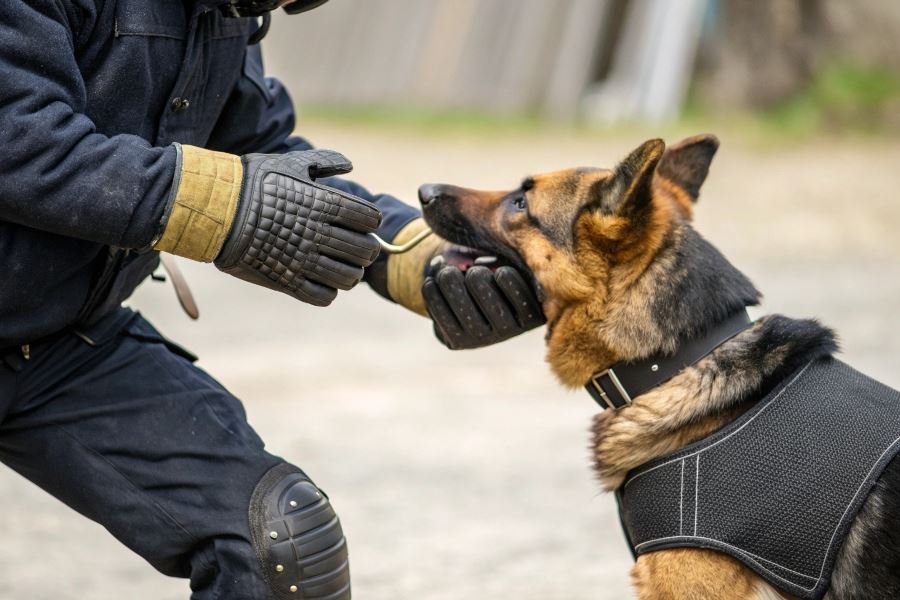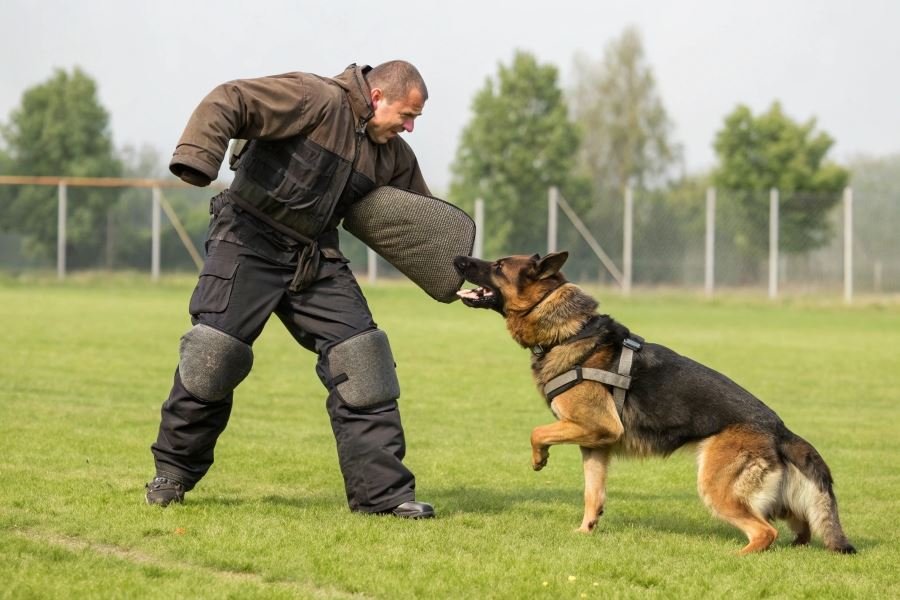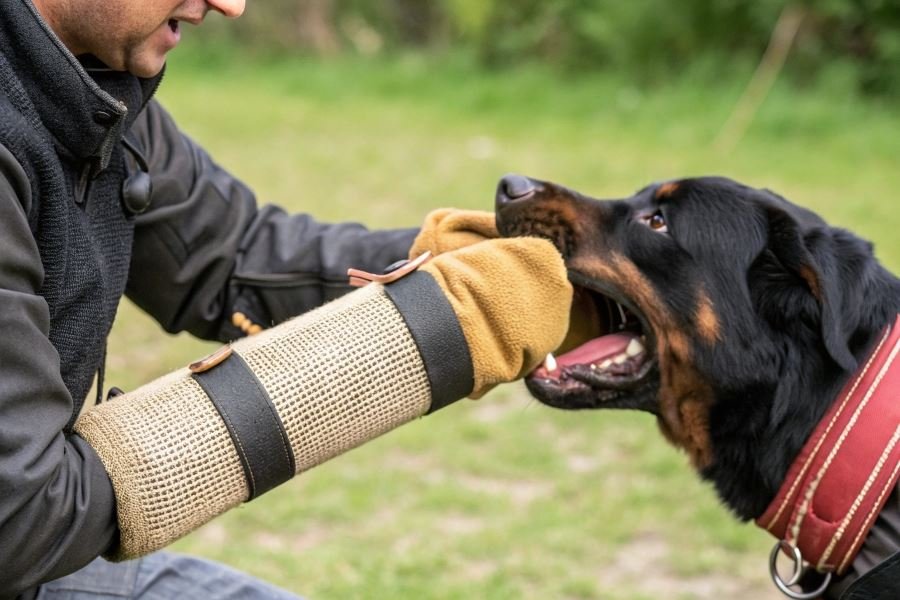
Ever watched a 150-pound Rottweiler latch onto a training sleeve while the handler barely flinches? That’s not magic—it’s materials science at work.
When selecting training sleeves for protection work, the material isn’t just about durability—it’s about creating the perfect learning environment for your specific breed. German Shepherds, Belgian Malinois, and Dobermans all interact differently with training equipment based on their unique bite styles, jaw strength, and training goals.
Material selection makes or breaks training success. The difference between jute, leather, synthetic blends, and neoprene isn’t merely preference—it’s performance. A sleeve that’s too hard can discourage young dogs, while materials too soft might reinforce improper technique in powerful breeds. Studies from the International Working Dog Association show that appropriate material selection can reduce training time by up to 30%.
“The material should match the dog’s development stage, not just its breed,” notes veteran K9 trainer Michael Ritland, whose methods have been adopted by elite military units since 2008.
Materials impact more than training—they directly affect safety. Synthetic materials might offer consistency and weather resistance, but natural fibers like jute provide crucial sensory feedback that helps dogs develop proper bite pressure. For high-drive breeds like the Malinois, this tactile response prevents the development of harmful bite habits that could lead to joint issues later.
Your breed’s anatomy, temperament, and training goals should dictate your material choice—not tradition or convenience.
The Ultimate Guide to Training Sleeve Materials
When selecting the perfect training sleeve for your canine companion, the material choice can make or break your training sessions. Materials for training sleeves: what is better for different breeds depends on factors like bite strength, training goals, and handler comfort. Let’s dive into the world of training sleeve materials and discover which options deliver peak performance for specific breeds and training scenarios.
Jute Training Sleeves: Power and Precision
Jute stands as the gold standard for professional dog training sleeves, particularly for high-drive working breeds. This natural fiber offers the perfect combination of durability and tactile feedback.
Ideal breeds for jute sleeves:
- German Shepherds
- Belgian Malinois
- Dutch Shepherds
- Rottweilers
Jute’s rough texture provides excellent grip for dogs, satisfying their natural prey drive while offering just enough resistance to build confidence. The material’s breathability prevents overheating during intense training sessions, making it perfect for summer work.
The natural fibers also create that distinctive “cracking” sound when bitten, which serves as auditory reinforcement for the dog.
| Jute Sleeve Feature | Training Benefit |
|---|---|
| Textured surface | Enhances grip and satisfaction |
| Natural fibers | Breathable and comfortable |
| Medium-firm bite surface | Builds confidence gradually |
| Lightweight | Reduces handler fatigue |
Leather Training Sleeves: Endurance Champions
Leather training sleeves represent the heavyweight division of bite equipment, offering unmatched durability for the most powerful biters.
Best suited for:
- Cane Corso
- Dogo Argentino
- American Bulldog
- Doberman Pinscher
The exceptional durability of leather makes it ideal for advanced protection training where dogs are delivering full-commitment bites. Premium leather sleeves from manufacturers like Ray Allen can withstand years of training with proper maintenance.
Size considerations matter significantly with leather sleeves:
- Medium breeds (40-70 lbs): Junior or intermediate sleeves
- Large breeds (70-100 lbs): Standard sleeves
- Giant breeds (100+ lbs): Reinforced professional sleeves
The investment in a quality leather sleeve pays dividends through years of reliable training sessions, often outlasting multiple synthetic alternatives.
Synthetic Materials: Versatility Redefined
Modern synthetic training sleeves have revolutionized entry-level and specialized training scenarios with their innovative materials and designs.
Perfect applications include:
- Puppy foundation training
- Wet weather conditions
- Breeds with moderate bite strength
- Budget-conscious handlers
Synthetic materials like ballistic nylon and French linen blends from Elite K-9 offer impressive bite surfaces with specific advantages for particular training contexts.
| Synthetic Material | Best For | Notable Breeds |
|---|---|---|
| Ballistic nylon | All-weather training | Labrador Retrievers, Boxers |
| French linen blend | Precision bite work | Border Collies, Australian Shepherds |
| Neoprene-reinforced | Water training | Newfoundlands, Portuguese Water Dogs |
| Foam-core synthetic | Puppy introduction | All breeds under 12 months |
The washability of synthetic sleeves makes them particularly valuable for multi-dog training facilities where hygiene is paramount. Their lighter weight also reduces handler fatigue during extended training sessions, allowing for more repetitions and better technique development.
When selecting your training sleeve material, remember that matching the right material to your specific breed and training goals will maximize both safety and effectiveness. The perfect sleeve becomes an extension of your training philosophy, not just a piece of equipment.
Mastering the Match: Optimal Training Sleeve Materials for Every Breed
When it comes to protection training, the interface between canine and handler is quite literally the training sleeve. Selecting the right material isn’t just about durability—it’s about creating the perfect learning environment for each unique dog. Let’s dive into how to match materials to your specific breed’s needs and training journey.
Matching Materials to Bite Force and Training Goals
Different breeds bring different tools to the table. A German Shepherd delivers approximately 238 PSI of bite force, while a Rottweiler can generate up to 328 PSI. This fundamental difference demands thoughtful material selection:
| Breed Type | Bite Force Range | Optimal Starting Material | Progression Material |
|---|---|---|---|
| Medium (Malinois, GSD) | 200-250 PSI | Synthetic jute | French linen, leather |
| Heavy (Rottweiler, Cane Corso) | 300+ PSI | Reinforced leather | Kevlar-infused materials |
| Light (Dutch Shepherds, Dobermans) | 150-200 PSI | Soft jute | Synthetic blends |
For young dogs or those new to bite work, softer materials provide crucial positive reinforcement. The satisfaction of a successful bite builds confidence. Conversely, experienced working dogs require materials that can withstand sustained pressure while providing tactical feedback.
The material isn’t just about protection—it’s about communication. The right sleeve material creates a dialogue between handler and dog that transcends verbal commands.
Training goals also dictate material choice. Sport-focused training for Schutzhund competitions typically favors jute for its standardized feel and predictable response. Law enforcement applications often require the progression to leather or synthetic materials that more closely mimic real-world scenarios.
Maintenance Essentials for Training Sleeve Longevity
Each material demands specific care routines to maintain performance and extend lifespan:
Jute sleeves require regular brushing to remove saliva and debris. After heavy training sessions, hang them vertically in a well-ventilated area—never store damp jute sleeves in enclosed containers, as this promotes mildew growth that weakens fibers.
Leather sleeves benefit from periodic conditioning with specialized leather treatments. Apply a thin coat of Lexol Leather Conditioner quarterly to prevent cracking and maintain pliability without compromising the material’s integrity.
Synthetic materials typically require less maintenance but benefit from UV-protected storage. Many handlers overlook that even synthetic materials can degrade from prolonged sun exposure, reducing their effective lifespan by up to 40%.
Professional Progression Pathways
Professional trainers consistently recommend a methodical transition between materials as training advances. This progression typically follows three phases:
-
Foundation Phase: Begin with softer, more forgiving materials that reward engagement and build drive. For most breeds, jute provides the ideal starting point.
-
Development Phase: As technique improves, transition to intermediate materials like French linen or synthetic blends that require more precise targeting and stronger commitment.
-
Mastery Phase: Advanced training incorporates harder materials like reinforced leather or specialized synthetic compounds that demand full commitment and proper technique.
The transition timing between phases should be dictated by the dog’s progress, not an arbitrary schedule. Rushing transitions can create hesitation or improper technique that requires extensive remedial training.
Master trainers emphasize that material progression should be gradual, often incorporating mixed sessions where dogs experience both familiar and new materials in the same training day. This approach builds confidence while expanding capabilities, creating versatile working dogs ready for any challenge.
Discover the optimal training sleeve materials for different dog breeds. Compare jute, leather, and synthetic options based on bite strength, durability, and training goals for maximum effectiveness and safety.
Discover the optimal training sleeve materials for different dog breeds. Compare jute, leather, and synthetic options based on bite strength, durability, and training goals for maximum effectiveness and safety.