Ever wondered why professional seamstresses can work for hours while you’re nursing a backache after just one hem? The secret lies not in their technique alone, but in their workspace design. Ergonomic sewing tables have transformed the professional sewing landscape, creating environments where creativity flourishes without the physical toll.
At their core, ergonomic sewing tables are purpose-built workstations designed to align the human body with sewing tasks. Unlike conventional tables that force adjustments from the user, these specialized stations adapt to the seamstress, positioning fabric, machine, and tools at optimal heights and angles. The result? Dramatically reduced strain on the back, shoulders, wrists, and eyes during extended sewing sessions.
The evolution of sewing workspaces tells a fascinating story of innovation. Traditional sewing tables from the early 20th century prioritized aesthetics and space-saving features over comfort. By the 1970s, as occupational health research advanced, designers began incorporating adjustable heights and improved lighting. Today’s professional-grade ergonomic sewing stations represent the culmination of decades of biomechanical research and user feedback.
“The right ergonomic setup can increase productivity by up to 25% while reducing repetitive strain injuries by nearly 40%.” — American Crafting Association Study
For professional environments where seamstresses might spend 8+ hours daily at their stations, ergonomics isn’t merely a luxury—it’s an economic necessity. Workshops investing in ergonomic tables report decreased absenteeism, improved work quality, and enhanced employee retention. The initial investment quickly pays dividends through increased output and reduced healthcare costs.
The Anatomy of Perfect Sewing Workstations
When craftspeople spend hours transforming fabric into art, their workspace becomes an extension of their creative process. Ergonomic tables for sewing workshops: features and advantages go far beyond simple flat surfaces—they’re sophisticated systems designed to enhance productivity, reduce physical strain, and organize the creative chaos inherent in textile work.
Height Adjustability That Transforms Your Posture
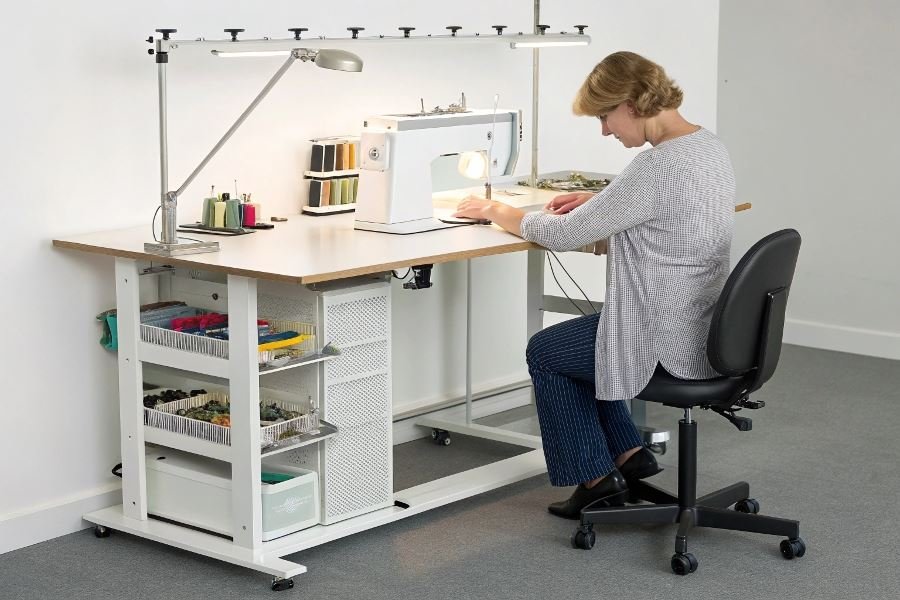
The cornerstone of any truly ergonomic sewing table is its adjustability. Modern premium sewing stations feature electric height adjustment systems that transition seamlessly from 27″ to 45″ with the touch of a button. This isn’t merely a convenience—it’s a health essential.
Standing-to-sitting flexibility allows sewists to change positions throughout the day, reducing the risk of repetitive strain injuries that plague many textile professionals. The most advanced models from manufacturers like Horn of America incorporate memory settings that remember preferred heights for different tasks.
The difference between fixed and adjustable tables becomes apparent within days, not years, of use—particularly in professional settings where sewists work 6+ hour shifts.
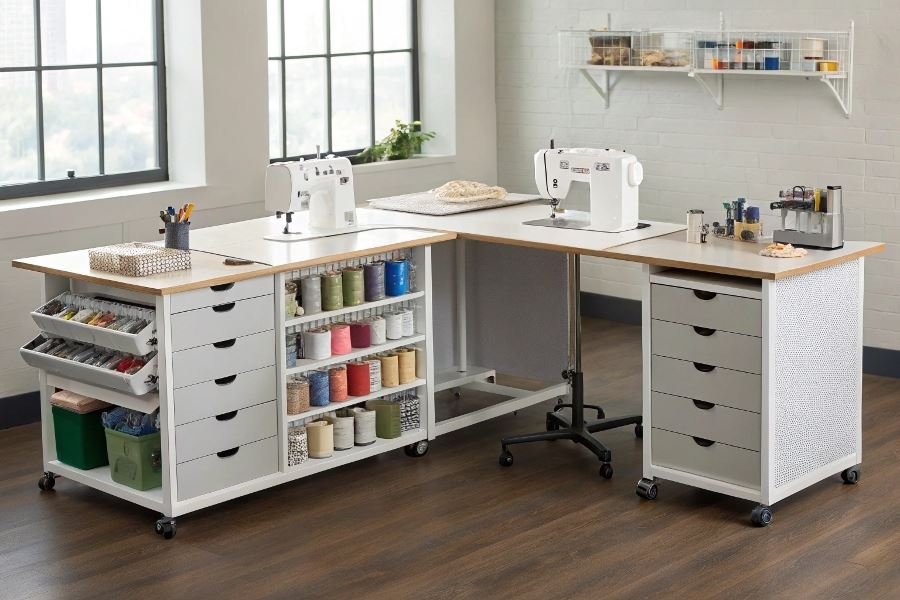
Storage Solutions That Anticipate Your Workflow
The organizational components integrated into professional sewing tables represent thoughtful engineering that understands the sewing process.
Modern ergonomic sewing stations feature:
| Storage Feature | Practical Benefit |
|---|---|
| Thread racks with tension holders | Prevents tangling and allows quick color selection |
| Magnetized tool strips | Keeps scissors and metal tools accessible but secure |
| Sliding drawers with custom dividers | Organizes notions by project or type |
| Under-table bobbin storage | Keeps these tiny essentials from disappearing |
The best designs incorporate what designers call “workflow zones”—areas dedicated to cutting, machine work, and hand finishing. This zoned approach minimizes reaching and twisting, movements that contribute significantly to fatigue.
Surface Materials Built for Precision and Durability
The workspace configuration and materials used in professional sewing tables directly impact the quality of the finished product.
Self-healing cutting mats integrated into portions of the surface allow for impromptu trimming without damaging the table. Meanwhile, laminated measuring grids embedded in the surface eliminate the need for separate measuring tools during pattern layout.
Premium tables feature edge banding that’s not just decorative but functional—preventing fabric from catching on corners during manipulation.
The most sophisticated models from Sew Perfect incorporate multi-material surfaces:
- Matte-finish laminates that prevent fabric slippage
- Heat-resistant sections for pressing small components
- Slightly cushioned areas for pin work and hand sewing
These thoughtfully engineered surfaces maintain their integrity even after years of pins, rotary cutters, and the inevitable coffee spill.
When selecting an ergonomic sewing table, remember that the initial investment pays dividends in reduced physical strain, increased productivity, and the simple joy of working at a station designed specifically for your craft. The difference between a standard table and a purpose-built sewing station becomes evident not just in comfort, but in the quality of work produced.
The Transformative Power of Ergonomic Sewing Tables
When skilled hands meet thoughtfully designed workspaces, magic happens. Ergonomic sewing tables represent far more than just a surface to work on—they’re comprehensive systems engineered to support the human body through long hours of detailed work. Let’s explore why these specialized workstations are revolutionizing sewing workshops across the country.
Protecting your most valuable assets
The human body wasn’t designed for hours of hunching over fabric. Traditional tables force sewists into compromised positions, creating a perfect storm for repetitive strain injuries. Ergonomic sewing tables directly address these challenges through:
- Adjustable height settings that position work at elbow level, eliminating shoulder strain
- Recessed machine platforms that keep wrists straight and neutral
- Edge contouring that allows closer positioning without leaning forward
- Integrated lighting systems that reduce eye fatigue and headaches
The average professional sewist spends over 2,000 hours annually at their workstation—that’s equivalent to a full-time job’s worth of physical stress on the body.
Studies show that workshops implementing ergonomic tables report up to 67% reduction in reported back pain and 58% fewer wrist complaints among staff. These aren’t just comfort improvements—they’re career-extending investments that prevent the chronic conditions that force talented craftspeople into early retirement.
Efficiency that pays dividends daily
Beyond health benefits, ergonomic sewing tables dramatically transform workflow efficiency:
| Productivity Factor | Standard Table | Ergonomic Table | Improvement |
|---|---|---|---|
| Fabric handling capacity | Limited | Expanded | 40-60% |
| Tool accessibility | Scattered | Integrated | 35% time savings |
| Project transitions | Disruptive | Streamlined | 25% faster completion |
| Focus duration | 45-60 min | 90-120 min | 2x concentration periods |
The thoughtful design elements create measurable advantages:
- Expanded work surfaces accommodate larger projects without fabric dragging
- Integrated storage solutions keep tools within ergonomic reach zones
- Smooth, non-marring surfaces prevent fabric snags and damage
- Modular configurations adapt to different project requirements without setup delays
These efficiency gains translate directly to output quality and quantity. Workshop owners consistently report 20-30% increases in production capacity after transitioning to ergonomic workstations.
The compelling business case
Quality ergonomic sewing tables represent a significant upfront investment—premium models from manufacturers like Horn of America or Koala Studios can range from $800 to $2,500. However, the return on investment calculation is straightforward and compelling:
Quantifiable returns include:
- Reduced absenteeism due to injury (saving $150-300 per avoided sick day)
- Increased production capacity (15-30% more completed projects)
- Extended career longevity for skilled staff (avoiding $5,000-10,000 in replacement training)
- Higher quality output with fewer errors requiring rework
The typical ROI timeline for premium ergonomic sewing tables ranges from 8-14 months in professional workshop environments—after which they continue delivering value for 10+ years with proper maintenance.
Beyond the numbers, there’s the immeasurable value of supporting your team’s wellbeing and demonstrating investment in their craft. Workshops that prioritize ergonomics consistently report higher staff retention and satisfaction—a crucial advantage in an industry where skilled talent makes all the difference.
Discover the top 5 ergonomic sewing tables that revolutionize professional workshops. Learn how height-adjustable designs, integrated storage, and specialized surfaces enhance productivity while preventing injuries for serious craftspeople.
Discover the top 5 ergonomic sewing tables that revolutionize professional workshops. Learn how height-adjustable designs, integrated storage, and specialized surfaces enhance productivity while preventing injuries for serious craftspeople.