What if the ancient volcanic rock in your pedicurist’s hand is actually holding your feet back from their best potential?
Professional foot care has undergone a remarkable transformation since pumice stones were first discovered near volcanic sites thousands of years ago. These naturally porous rocks became the gold standard for foot exfoliation, but today’s professional pedicure salons face a critical decision between tradition and innovation. The comparison between pumice stones and modern alternatives isn’t just about preference—it’s about effectiveness, hygiene, and client satisfaction.
The journey from volcanic rock to high-tech solutions
Pumice stones emerged as foot care tools in ancient civilizations, with evidence of their use dating back to 100 BCE in Roman bathhouses. Their natural abrasiveness made them perfect for removing calluses and dead skin. Fast forward to the 21st century, and we’ve developed specialized tools like diamond-tipped electronic files, ceramic foot files, and disposable foot buffers that promise superior results.
The universal challenges of foot exfoliation
Professional pedicurists consistently battle three primary challenges: removing stubborn calluses, maintaining proper sanitation, and achieving consistent results. While pumice stones excel at tackling thick calluses, they present significant hygiene concerns as their porous nature can harbor bacteria between clients. Modern alternatives like glass foot files offer non-porous surfaces that can be thoroughly sanitized, addressing a critical safety concern in professional settings.
Evaluating effectiveness: The professional’s criteria
When determining which tool deserves a place in their arsenal, professionals consider:
- Efficiency: How quickly and effectively does the tool remove dead skin?
- Control: Does it allow for precision work around delicate areas?
- Client comfort: Is the experience pleasant or uncomfortable?
- Longevity: How frequently must the tool be replaced?
- Versatility: Can it address various foot conditions and skin types?
The ideal foot care tool balances these factors while meeting strict salon hygiene standards—a balance that increasingly favors modern alternatives despite the timeless appeal of the humble pumice stone.
Professional Foot Care Arsenal: Tools of the Trade
The Volcanic Wonder: Natural Pumice Stone
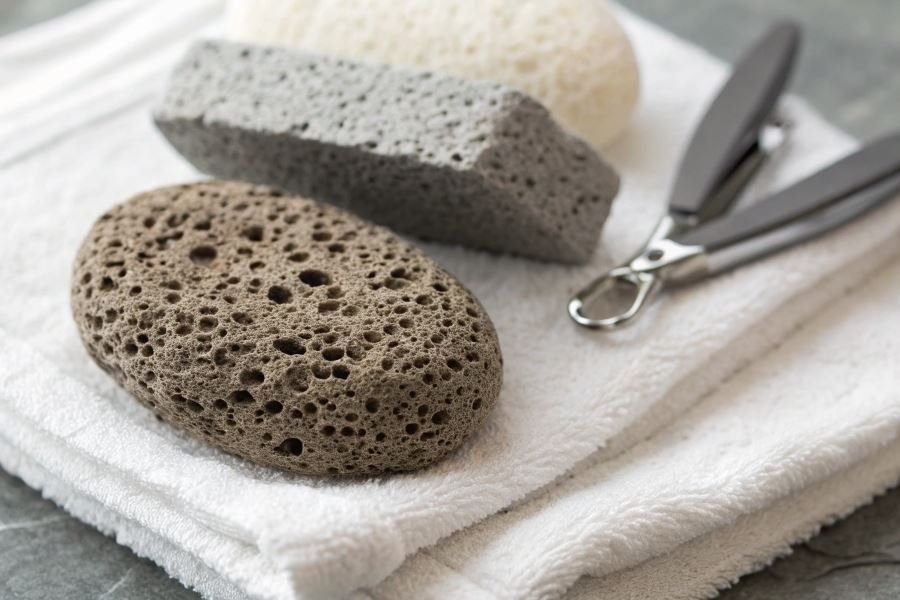
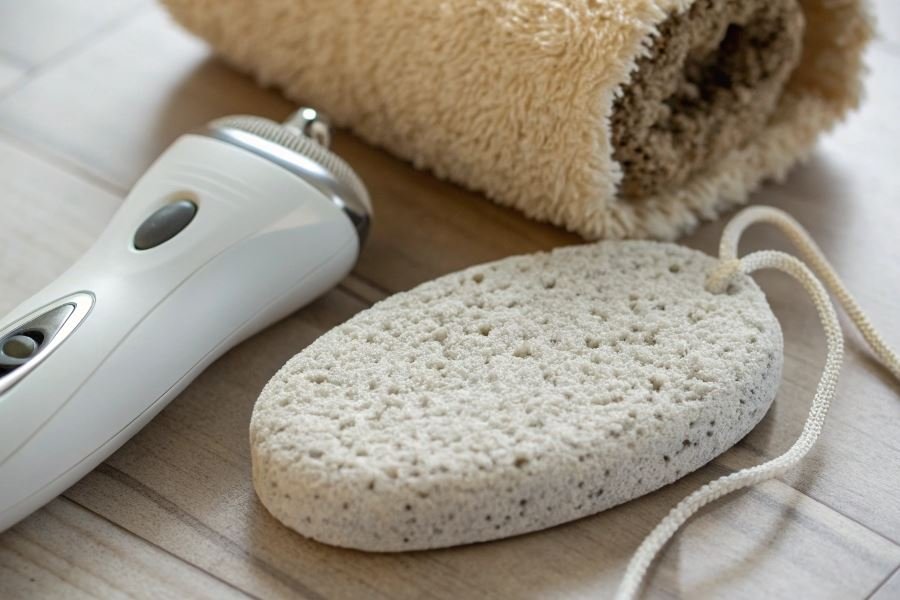
Natural pumice stone stands as the original foot care hero in professional pedicure settings. Formed when volcanic lava cools rapidly with gas bubbles trapped inside, these lightweight, porous rocks have served as exfoliation tools for centuries. Their naturally abrasive surface makes them exceptionally effective at removing dead skin and calluses without harsh chemicals.
When conducting a comprehensive comparison of pumice stone and other tools for foot care in a pedicure salon, professionals consistently note pumice’s unmatched gentleness on sensitive skin. The stone’s varying porosity levels—from fine to coarse—allow technicians to customize treatments based on callus severity and skin sensitivity.
However, pumice stones aren’t without limitations in salon environments. Their porous nature makes them challenging to sanitize completely between clients, raising hygiene concerns. Additionally, natural pumice stones wear down with use, requiring frequent replacement and creating inconsistent results as their texture changes over time.
Engineered Excellence: Synthetic Foot Files
Synthetic foot files have revolutionized professional pedicures with materials specifically engineered for consistent performance. These tools typically feature stainless steel, glass, or ceramic surfaces with precisely manufactured grit patterns.
The advantages are substantial:
- Superior sanitation: Most synthetic files can be thoroughly disinfected or even sterilized between clients
- Consistent performance: No degradation in abrasiveness over dozens of uses
- Precision engineering: Available in exact grit measurements for predictable results
Metal foot files from brands like Tweezerman offer exceptional durability, with some professional models lasting years rather than months. Glass files provide gentler exfoliation with remarkable precision, while ceramic options balance durability with skin-friendly abrasion.
The Power Players: Electric Callus Removers
Electric callus removers represent the technological frontier in professional foot care. These devices utilize rotating mineral rollers or microabrasion technology to remove calluses with unprecedented efficiency.
| Feature | Benefit | Consideration |
|---|---|---|
| Variable speed settings | Customizable treatment intensity | Requires proper training to prevent over-exfoliation |
| Rechargeable batteries | Cordless operation for technician mobility | Battery life impacts salon workflow |
| Replaceable heads | Maintains hygiene standards | Ongoing operational costs |
Devices like the Pedi Perfect have transformed salon efficiency, reducing treatment time by up to 65% compared to manual methods. This efficiency translates directly to increased appointment capacity and revenue potential.
The precision of electric tools also enhances client comfort significantly. The controlled, even pressure eliminates the “scrubbing” sensation that manual tools can create, making treatments more pleasant for sensitive clients. Many salons report higher client satisfaction scores after implementing electric callus removal systems.
However, these power tools require a higher initial investment and ongoing maintenance. They also demand proper technique—technicians must receive specific training to prevent over-exfoliation, which can damage healthy skin tissue.
The most successful salons typically maintain a complete arsenal of all three tool categories, selecting the appropriate option based on client needs, skin condition, and treatment goals. This comprehensive approach ensures optimal results while maintaining the highest standards of safety and client satisfaction.
Maximizing ROI: The Professional’s Guide to Foot Care Tools
Crafting the perfect professional routine
The most successful pedicure professionals don’t rely on a single tool—they orchestrate an ensemble. Integrating pumice stones with modern alternatives creates a comprehensive approach that addresses varying client needs and skin conditions. The key is sequencing: begin with hydration (10-15 minute soak), follow with mechanical exfoliation (pumice for stubborn calluses, electronic files for precision work), and finish with chemical exfoliants for refinement.
Cross-training your staff on multiple tools significantly improves service quality. Salons reporting the highest client retention rates implement standardized training protocols where technicians must demonstrate proficiency with at least three different foot care tools before working independently.
“The difference between a good pedicurist and a great one isn’t the tools they use—it’s knowing precisely which tool to use when, and why.” – Industry insight from top-performing salons
For wet services, the traditional sequence of pumice stone followed by foot files yields superior results compared to using either tool exclusively. For dry services, electronic files followed by glass files creates the smoothest finish while minimizing skin trauma.
The dollars and sense of tool selection
The economics of foot care tools reveals fascinating patterns when analyzed over their complete lifecycle:
| Tool Type | Initial Investment | Replacement Frequency | Annual Cost (4 stations) | Client Perception Value |
|---|---|---|---|---|
| Natural Pumice | $5-12 | 2-3 months | $80-288 | High (natural appeal) |
| Electronic File | $120-350 | 2-3 years | $160-700 | Very High (tech appeal) |
| Glass Files | $15-30 | 6-12 months | $60-240 | Medium-High |
| Disposable Files | $0.50-2 | Single use | $1,040-4,160 | Low-Medium |
The data reveals that while electronic files require higher upfront investment, their longevity makes them surprisingly cost-effective. However, the hidden costs often determine true ROI: pumice stones require minimal maintenance but need proper sanitization protocols, while electronic files require replacement bits and occasional servicing.
Salons charging premium rates ($75+ for basic pedicures) report that investing in higher-quality tools allows them to command these prices while maintaining 85%+ client retention rates. The investment typically pays for itself within 3-4 months through increased service pricing.
What clients actually care about
Client satisfaction research reveals fascinating disconnects between what professionals focus on and what clients value:
Comfort trumps efficiency. While electronic files work faster, 72% of clients rank comfort as their primary concern. Pumice stones, when used with proper technique, score highest on comfort metrics despite taking longer.
Visible results matter more than methodology. Clients care less about which tools you use and more about the transformation they can see and feel. Before-and-after comparisons dramatically increase satisfaction rates regardless of tools used.
The sensory experience significantly influences perceived value. The sound of electronic files creates anxiety for some clients, while others associate it with thoroughness and precision. Natural tools like pumice create perceptions of authenticity and craftsmanship that clients willingly pay premium prices for.
The most successful salons don’t choose between traditional and modern—they strategically deploy both, explaining the benefits of each tool during the service. This educational approach not only improves satisfaction but creates opportunities for retail product recommendations that complement the professional service.
Discover the pros and cons of traditional pumice stone versus modern electric callus removers and synthetic files for professional pedicures. Learn which tools offer the best results for salon foot care and client satisfaction.
Discover the pros and cons of traditional pumice stone versus modern electric callus removers and synthetic files for professional pedicures. Learn which tools offer the best results for salon foot care and client satisfaction.