When a fire breaks out in an industrial facility, every second counts. The difference between containment and catastrophe often hinges on one critical factor: proper fire protection infrastructure. Fireproof panels represent the frontline defense against what could otherwise become devastating industrial disasters.
The stakes couldn’t be higher for facility managers and safety directors. A 2023 report by the National Fire Protection Association revealed that industrial fires cause over $1.2 billion in direct property damage annually, with countless more lost in production downtime and business interruption. Beyond financial considerations, the human cost remains immeasurable.
The critical role of fire safety in industrial environments
Industrial settings present unique fire hazards—from flammable materials and chemicals to high-temperature processes and complex electrical systems. Fireproof panels serve as crucial passive fire protection elements, designed to:
- Contain fires within compartmentalized areas
- Prevent flame spread between building sections
- Maintain structural integrity during extreme heat exposure
- Provide critical evacuation time for personnel
Understanding fireproof panel varieties
Not all fireproof panels offer equal protection. The market presents several distinct options:
| Panel Type | Fire Rating | Best Applications | Key Advantages |
|---|---|---|---|
| Mineral Wool | 1-4 hours | Manufacturing plants, warehouses | Excellent thermal insulation, sound absorption |
| Gypsum-Based | 1-2 hours | Office areas, clean rooms | Lightweight, easy installation |
| Cement-Based | 2-4+ hours | High-risk areas, chemical storage | Superior durability, moisture resistance |
| Composite | 1-3 hours | Versatile applications | Balanced performance, cost-effective |
Navigating compliance requirements
Industrial fire protection doesn’t exist in a regulatory vacuum. Facility managers must navigate a complex web of requirements including:
- NFPA standards (particularly NFPA 251 and 285) governing fire testing methodologies
- International Building Code (IBC) specifications for industrial occupancies
- ASTM E119 testing protocols for fire-resistance ratings
- UL listings verifying performance claims
- Local jurisdiction requirements that may exceed national standards
Selecting appropriate fireproof panels requires balancing these regulatory demands with practical considerations of cost, installation complexity, and long-term maintenance needs.
Essential Factors for Fireproof Panel Selection
Fire Resistance Ratings That Actually Matter
When selecting fireproof panels for industrial facilities, understanding fire resistance ratings isn’t just important—it’s critical. These ratings, measured in minutes (30, 60, 120, 240), indicate how long a panel can maintain its structural integrity during a standardized fire test. The higher the number, the longer the protection.
The process of choosing fireproof panels for industrial facilities demands careful attention to these performance classifications. Most industrial applications require a minimum of 60 minutes, but facilities housing flammable materials or critical operations should consider 120 minutes or higher. The International Building Code (IBC) and ASTM E119 standards provide the benchmarks against which these panels are tested.
Performance classifications go beyond time ratings. Look for panels with:
- Flame spread index (FSI) under 25
- Smoke developed index (SDI) under 450
- Surface burning characteristics that meet ASTM E84
Material Composition and Longevity
The core material of fireproof panels determines not just fire resistance but overall durability and performance. Common core materials include:
| Core Material | Fire Resistance | Durability | Cost Factor |
|---|---|---|---|
| Mineral Wool | Excellent | High | Medium-High |
| Gypsum | Very Good | Medium | Low-Medium |
| Calcium Silicate | Excellent | Very High | High |
| Vermiculite | Good | Medium | Medium |
Facing materials matter tremendously. Steel facings with corrosion-resistant coatings extend panel life in harsh industrial environments. For chemical facilities, consider panels with specialized chemical-resistant coatings that won’t degrade when exposed to specific compounds.
The thickness of panels directly correlates with both fire resistance and thermal insulation properties. Most industrial applications benefit from panels between 50-150mm thick, depending on specific requirements.
Installation Requirements and Structural Integration
The finest fireproof panel becomes worthless if improperly installed. Structural compatibility is non-negotiable when selecting panels for your facility.
Weight considerations are paramount. Heavier panels provide excellent fire resistance but may require additional structural support. Before selection, have your facility’s load-bearing capacity professionally assessed by a structural engineer.
Connection systems between panels create potential weak points in fire protection. Look for:
- Tongue and groove joints that maintain fire integrity
- Concealed fastening systems that won’t compromise the fire barrier
- Specialized sealants rated for the same fire resistance as the panels
Installation complexity directly impacts both cost and reliability. Some systems require specialized contractors certified by manufacturers like Kingspan or Rockwool, while others offer more straightforward installation processes.
Compliance and Certification Verification
Before finalizing your selection, verify that panels carry appropriate certifications from recognized testing laboratories like UL or Intertek. These third-party verifications ensure the panels meet claimed performance specifications under standardized testing conditions.
Remember that local building codes may have specific requirements beyond national standards. Always consult with local authorities having jurisdiction (AHJ) before making final selections to ensure complete compliance with regional regulations.
Sealing the Deal: Your Fireproof Panel Decision Framework
The dollars and sense of fire protection
When finalizing your fireproof panel selection, the initial sticker price is just the opening chapter of a much longer financial story. A comprehensive cost-benefit analysis reveals that premium panels commanding higher upfront investments—sometimes 30-40% above baseline options—often deliver exponentially greater value over their operational lifetime.
Consider this: A manufacturing facility that invested in top-tier fireproof panels from Kingspan reported that their $175,000 installation prevented an estimated $3.2 million in potential damage during a localized fire event. The math becomes even more compelling when factoring in business continuity—every day of operational downtime typically costs industrial facilities between $10,000 and $250,000 depending on scale and industry.
The wisest investment isn’t always the least expensive option, but rather the one that provides the most robust protection relative to your specific risk profile.
Insurance premiums represent another critical financial consideration. Many insurers offer premium reductions of 5-15% for facilities utilizing certified fireproof panels that exceed minimum code requirements—savings that accumulate significantly over decades of operation.
Lifecycle planning beyond installation day
Fireproof panels aren’t “set and forget” components. Their maintenance requirements and lifecycle considerations should factor prominently in your decision-making process.
| Panel Type | Expected Lifespan | Maintenance Frequency | Typical Maintenance Costs |
|---|---|---|---|
| Mineral Wool | 30-50 years | Every 5-7 years | $2-4 per sq ft |
| Gypsum-Based | 20-30 years | Every 3-5 years | $3-5 per sq ft |
| Cement-Based | 40+ years | Every 8-10 years | $4-7 per sq ft |
| Composite | 25-35 years | Every 4-6 years | $3-6 per sq ft |
The most durable panels typically feature corrosion-resistant facings and moisture-repellent cores. Promat systems, for instance, maintain their fire-resistance properties even after decades of exposure to industrial environments containing chemicals, oils, and temperature fluctuations.
Maintenance protocols vary dramatically between panel types. Some require specialized coatings every few years, while others need only basic inspection and minimal intervention. These ongoing requirements translate directly to operational expenses and potential facility downtime during maintenance periods.
The expertise equation in your protection strategy
The finest fireproof panels in the world deliver suboptimal protection when improperly specified or installed. Working with certified suppliers and qualified installation professionals isn’t merely a best practice—it’s an essential risk management strategy.
Certified suppliers provide crucial documentation verifying that panels meet or exceed relevant standards like ASTM E119, UL 263, or FM 4880. These certifications aren’t just paperwork—they represent rigorous testing under conditions designed to replicate real-world fire scenarios.
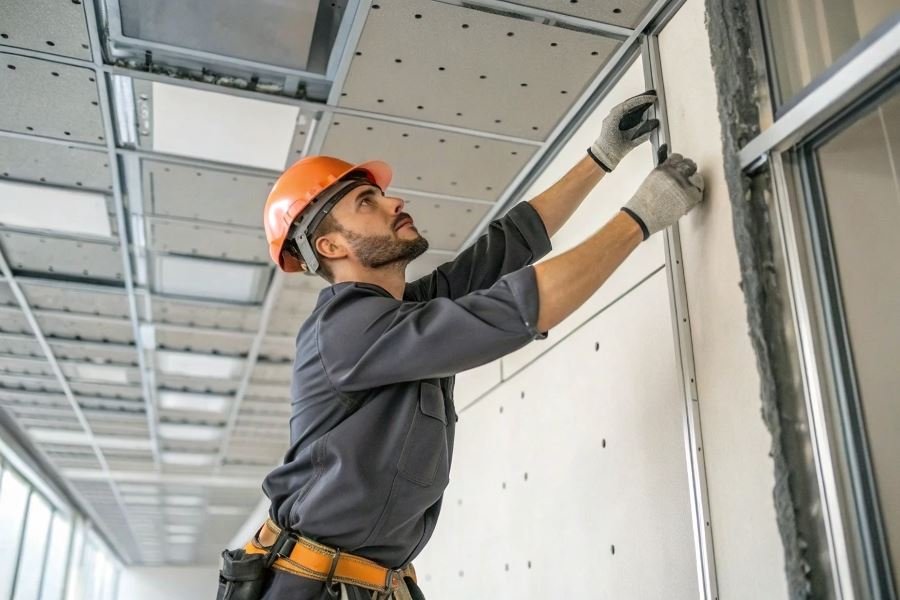
Installation expertise proves equally critical. Professional installers from companies like Hilti understand the nuanced requirements of proper panel seaming, penetration sealing, and structural attachment—details that can mean the difference between effective compartmentalization during a fire event and catastrophic failure.
Request comprehensive documentation of installer qualifications, including specialized training certifications specific to your chosen panel system. The most reputable installation teams provide detailed photographic documentation of completed work, particularly for critical junctions and penetrations that will be concealed upon project completion.
By balancing financial considerations with lifecycle planning and expert implementation, your fireproof panel selection becomes not merely a code compliance exercise, but a strategic investment in operational resilience and asset protection.
Discover how to select the right fireproof panels for industrial facilities with our comprehensive safety guide. Learn about fire resistance ratings, material options, compliance requirements, and cost considerations to protect your industrial investment.
Discover how to select the right fireproof panels for industrial facilities with our comprehensive safety guide. Learn about fire resistance ratings, material options, compliance requirements, and cost considerations to protect your industrial investment.