Did you know the average American household wastes nearly $1,500 worth of food annually? Much of this waste stems from improper storage that accelerates spoilage. The right food container isn’t just about organization—it’s a critical investment in your family’s health and your financial wellbeing.
Selecting food storage containers might seem straightforward, but the difference between mediocre and excellent options can significantly impact food freshness, safety, and your environmental footprint. The market offers countless options, from classic glass jars to innovative vacuum-sealed systems, each designed for specific storage needs.
The foundation of smart food storage begins with understanding three essential criteria: material safety, airtight sealing capability, and appropriate sizing for your specific needs. These factors determine not just how long your food remains fresh, but also whether harmful chemicals might be leaching into your meals.
Your storage needs should dictate your choices. Meal preppers require different solutions than those primarily storing leftovers. Consider how you’ll use the containers:
- Do you need microwave-safe options for quick reheating?
- Will containers travel in lunch boxes where lightweight durability matters?
- Are you storing acidic foods that might react with certain materials?
“The right container extends food life by up to 300%, reducing both waste and grocery expenses while preserving nutritional value.”
Understanding these fundamentals transforms food storage from a mundane necessity into a strategic system that protects both your health and your wallet.
The Ultimate Food Storage Container Guide
Material Matters: Safety and Longevity
When evaluating how to choose a food storage container: main criteria, the material should top your priority list. Not all containers are created equal, and your choice significantly impacts food safety, longevity, and even taste preservation.
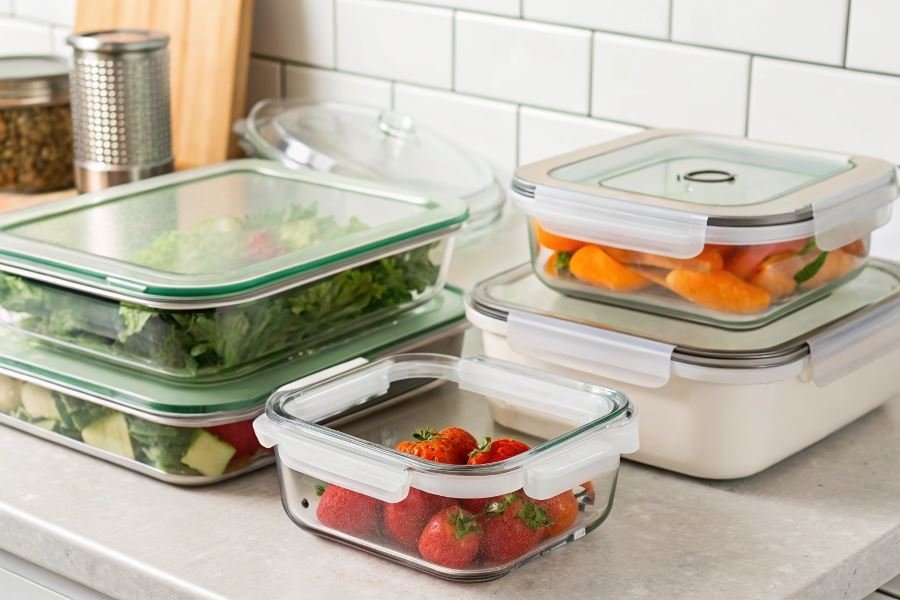
Glass containers represent the gold standard for many food storage enthusiasts. They’re non-porous, meaning they won’t absorb food odors or stains. High-quality borosilicate glass from brands like Pyrex can transition seamlessly from freezer to oven (up to 450°F), offering unmatched versatility. While heavier and more breakable than alternatives, their durability often translates to decades of use rather than years.
Plastic options have evolved dramatically. Modern food-grade containers should explicitly state they’re BPA-free, phthalate-free, and ideally made from polypropylene (#5) or LDPE (#4). Rubbermaid and Tupperware lead with innovations in this space, but remember: even high-quality plastic containers typically need replacement every 3-5 years as they develop scratches that harbor bacteria.
Stainless steel containers offer the perfect middle ground—virtually unbreakable, lightweight, and impervious to stains and odors. Premium options from U-Konserve or LunchBots feature food-grade 18/8 stainless steel (304 grade) that won’t leach chemicals or metallic tastes into your food.
Seal the Deal: Airtight and Leakproof Features
The difference between mediocre and exceptional food storage often comes down to the seal. An airtight container creates a hermetic environment that dramatically extends food freshness by preventing oxidation—the primary culprit behind food spoilage.
Look for containers with silicone gaskets that create a compression seal when locked. The best designs feature a four-sided locking mechanism rather than just two sides, creating uniform pressure around the entire perimeter.
For liquid storage, leakproof testing is non-negotiable. Quality manufacturers subject their containers to rigorous testing—often involving 24-hour inversion tests with colored water. This feature becomes particularly crucial for transporting soups, sauces, or marinated items.
Freshness indicators represent the cutting edge in food storage technology. Some premium containers now incorporate vacuum-seal pumps or color-changing lids that visually confirm when the optimal seal has been achieved or compromised.
Space Optimization: Size, Shape, and Stackability
The most functional food storage system balances capacity needs with spatial efficiency. The average American refrigerator contains 18-22 cubic feet of storage, making strategic container selection essential.
Modular systems with uniform footprints in varying heights offer the most efficient use of shelf space. Square and rectangular containers utilize approximately 25-30% more space than round containers of similar volume—a significant difference when organizing a crowded refrigerator.
| Container Shape | Space Efficiency | Pouring Ease | Cleaning Difficulty |
|---|---|---|---|
| Square | Excellent | Fair | Moderate |
| Rectangular | Very Good | Good | Easy |
| Round | Poor | Excellent | Very Easy |
Nesting capabilities matter when containers aren’t in use. The best designs allow empty containers to stack inside one another, reducing storage footprint by up to 70%. Look for containers with removable silicone gaskets that can be stored separately to prevent deformation during storage.
Stackability features like interlocking ridges or anti-slip surfaces prevent the precarious tower of containers from tumbling when the refrigerator door opens. OXO Good Grips containers exemplify this with their innovative SmartSeal technology that creates stable stacking without requiring perfect alignment.
By prioritizing material quality, seal integrity, and spatial efficiency, you’ll build a food storage system that preserves freshness, prevents waste, and brings order to kitchen chaos.
Making the Perfect Food Storage Match
Food-Specific Container Selection
The relationship between your leftovers and their containers isn’t just casual—it’s a commitment. Different foods demand different storage solutions. For acidic foods like tomato sauce or citrus-based dishes, glass containers like Pyrex prevent staining and chemical reactions. Leafy greens thrive in containers with ventilation systems that regulate moisture—OXO GreenSaver containers extend lettuce life by up to 60% through their innovative carbon filter system.
For long-term storage, consider these pairings:
| Food Type | Ideal Container | Expected Storage Life |
|---|---|---|
| Soups/Stews | Glass with locking lids | 3-4 days refrigerated |
| Dry goods | Airtight plastic or glass | 6-12 months |
| Berries | Ventilated containers | 5-7 days (vs. 2-3 in original packaging) |
| Cheese | Specialized cheese storage | 2-3 weeks (vs. 1 week in plastic wrap) |
The freezer demands different considerations entirely. Silicone bags from Stasher excel here—they’re freezer-safe to -40°F, can handle boiling temperatures, and create an airtight seal that prevents freezer burn better than traditional containers.
Practical Sustainability Meets Budget Reality
The perfect food storage system balances three competing priorities: practicality, environmental impact, and cost. While glass containers offer superior longevity and zero chemical leaching, their higher upfront cost and weight make them impractical for certain situations.
Budget-conscious sustainability doesn’t mean compromise. Repurposed glass jars from pasta sauce or pickles make excellent free storage options. For those willing to invest, stainless steel containers like those from U-Konserve offer virtually unlimited lifespan with minimal environmental impact.
Consider the true cost equation:
- Initial purchase price
- Expected lifespan (replacements needed)
- Versatility across storage needs
- Energy efficiency (microwave vs. stovetop reheating)
The most sustainable container is ultimately the one you’ll actually use consistently rather than abandon in a cabinet.
Top Container Recommendations for Every Need
Everyday Versatility Champion
Glasslock Container Set combines tempered glass with airtight, leakproof locking lids. These workhorses handle freezer-to-oven transitions, resist stains, and maintain perfect seal integrity through hundreds of uses. Their modular design allows efficient stacking in refrigerators and cabinets.
Budget-Friendly Workhorse
Rubbermaid Brilliance containers deliver remarkable performance at accessible price points. Their crystal-clear design allows instant food identification, while the airtight seal prevents leaks even when tossed in bags. The BPA-free plastic resists stains and odors remarkably well for the price point.
Sustainable Innovation Leader
Bee’s Wrap reusable food wraps represent the cutting edge of sustainable storage. Made from organic cotton infused with beeswax, these moldable wraps replace single-use plastic wrap. They naturally preserve food freshness through antimicrobial properties in the beeswax while creating a breathable seal that extends produce life.
The perfect food storage system isn’t about finding one magical container—it’s about building a thoughtful collection that addresses your specific needs while aligning with your values around sustainability, practicality, and budget.
Discover the essential criteria for selecting the perfect food storage containers in 2025. Learn about material safety, airtight features, and optimal sizing to preserve freshness, reduce waste, and organize your kitchen efficiently.
Discover the essential criteria for selecting the perfect food storage containers in 2025. Learn about material safety, airtight features, and optimal sizing to preserve freshness, reduce waste, and organize your kitchen efficiently.