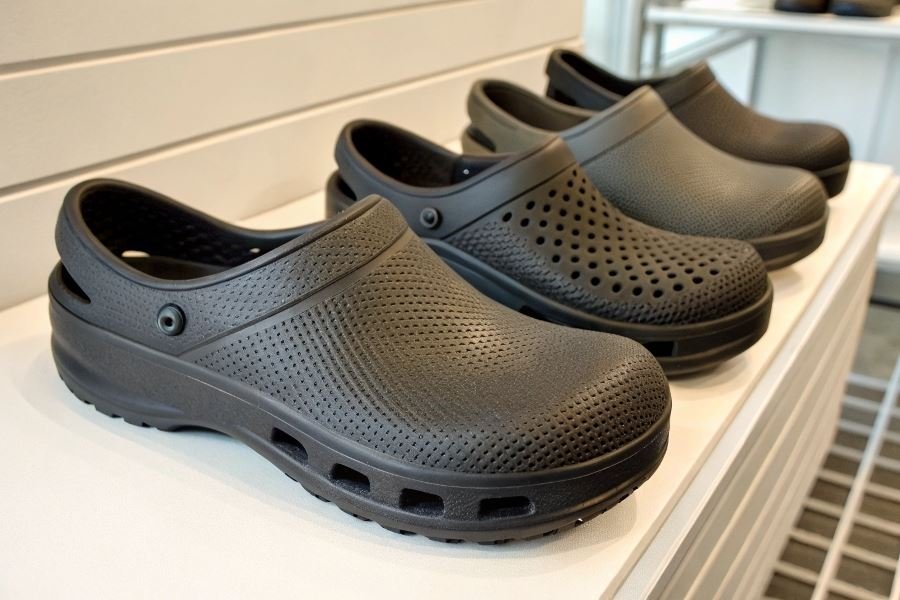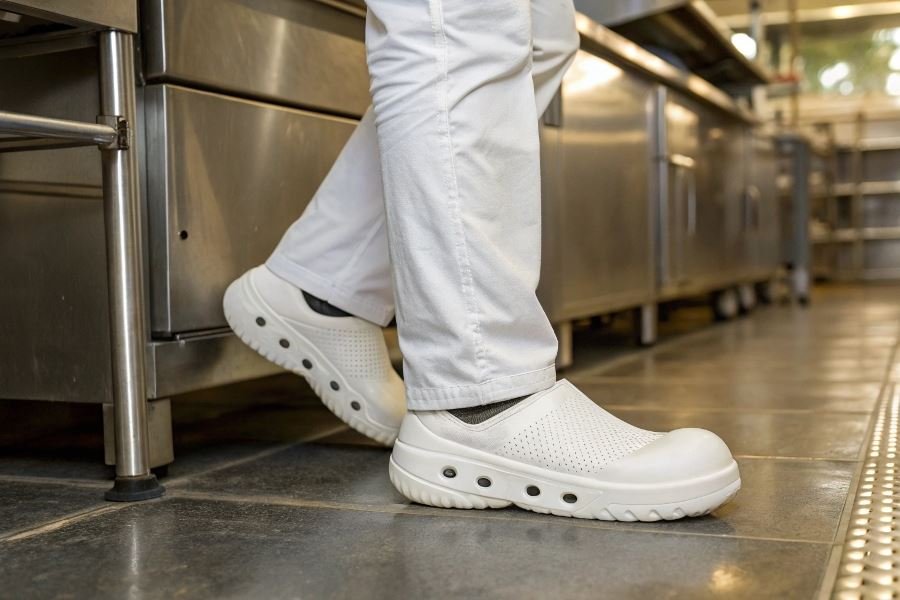
Ever wondered why food workers can’t just wear their favorite sneakers on the production floor? The $15 billion food safety industry knows something most don’t: proper footwear isn’t just about comfort—it’s a critical defense against contamination that could affect thousands of consumers.
Food production environments present a unique challenge where the right footwear serves as the foundation of both worker safety and product integrity. The specialized slippers used in these settings aren’t merely workplace accessories; they’re engineered barriers that prevent cross-contamination while protecting workers from slips, falls, and chemical exposure.
“The average food production worker walks approximately 4 miles per shift on surfaces that are frequently wet, greasy, or recently sanitized.” — American Food Safety Institute
The regulatory landscape
FDA regulations and OSHA standards mandate specific footwear requirements in food facilities, with non-compliance potentially resulting in hefty fines exceeding $10,000 per violation. These regulations aren’t arbitrary—they’re built on decades of food safety research showing that proper footwear significantly reduces contamination risks.
What makes a slipper food-production worthy?
The ideal food production slipper combines several critical elements:
- Non-porous materials that resist absorption of liquids and bacteria
- Slip-resistant outsoles that maintain traction on wet surfaces
- Closed designs that fully protect the foot from falling objects
- Washable construction allowing for daily sanitization
- Comfort features that reduce fatigue during long shifts
Unlike conventional footwear, these specialized slippers are designed to withstand the harsh cleaning chemicals and frequent washing cycles necessary in food production environments, while still providing the support needed for workers standing 8+ hours daily.
The Critical Elements of Food Production Footwear
When working in food production environments, the right footwear isn’t just about comfort—it’s about safety, hygiene, and productivity. The specialized demands of food processing facilities require slippers that can withstand constant moisture, provide reliable traction, and support workers through long shifts. Let’s examine what makes certain work slippers superior choices for food production settings.
Grip That Won’t Quit
In food production facilities, floors become slick battlegrounds of spilled liquids, food residue, and cleaning solutions. This creates a perfect storm for slip-and-fall accidents—consistently among the top workplace injuries in the industry.
The question of what work slippers are better to choose for food production often begins with examining the outsole design. Premium food-service footwear features specialized rubber compounds with multi-directional tread patterns that channel liquids away from contact points. These designs create significantly more friction on wet surfaces than standard footwear.
Industry-leading slip-resistant ratings should meet or exceed a coefficient of friction of 0.40 on both wet and oily surfaces according to ASTM F2913 testing standards. Look for footwear certified by organizations like the Shoe and Allied Trade Research Association (SATRA) that specifically tests for kitchen and food production environments.
Materials That Stand Up to Scrutiny
Food production environments demand footwear that can withstand rigorous cleaning protocols while preventing contamination risks.
Water-resistant uppers are non-negotiable, with synthetic materials like treated polyurethane and TPU (thermoplastic polyurethane) offering superior performance over traditional leather. These materials prevent liquid absorption while allowing for quick sanitization between shifts.
The best options feature:
| Material Feature | Benefit |
|---|---|
| Seamless construction | Eliminates crevices where bacteria can hide |
| Non-porous surfaces | Prevents absorption of food particles and liquids |
| Chemical resistance | Withstands harsh cleaning agents without degradation |
| Quick-dry properties | Minimizes moisture retention between shifts |
Crocs Professional and Birkenstock Professional lines offer excellent examples of footwear with closed-cell foam construction that can be thoroughly sanitized while maintaining structural integrity.
Support Systems for Marathon Shifts
The physical demands of food production work—standing for 8-12 hours on hard surfaces—require footwear with exceptional ergonomic design.
Arch support is paramount for preventing plantar fasciitis and other repetitive stress injuries. The best food production slippers incorporate contoured footbeds that distribute weight evenly across the foot.
Shock absorption technology in the midsole significantly reduces impact forces that travel up the kinetic chain. Materials like EVA (ethylene-vinyl acetate) and polyurethane provide the ideal balance of cushioning and stability.
Additional comfort features worth prioritizing include:
- Padded heel collars to prevent blisters during extended movement
- Removable insoles that can be replaced as they wear down
- Wider toe boxes that allow for natural foot splay during long shifts
- Lightweight construction (under 12 oz per shoe) to reduce fatigue
Dansko Professional Clogs have earned their reputation in food service environments specifically for their rocker-bottom design that promotes proper gait and reduces strain during long periods of standing.
By selecting footwear that excels in these three critical areas—slip resistance, cleanability, and ergonomic support—food production workers can significantly improve both safety and comfort during demanding shifts.
Top Work Slippers That Elevate Food Production Safety
Best Overall: Birkenstock Professional Clogs
When safety meets comfort in food production environments, Birkenstock Professional clogs consistently outperform the competition. These German-engineered workhorses feature slip-resistant polyurethane soles that exceed industry standards for wet and oily surfaces—critical when navigating kitchen floors or processing areas.
What truly distinguishes these clogs is their anatomically designed cork footbed that molds to your unique foot shape over time. For professionals standing 8-12 hours daily, this personalized support significantly reduces fatigue and potential back strain.
The waterproof leather upper resists food splashes and sanitizing chemicals while remaining breathable. Most importantly, they meet all HACCP food safety requirements with their closed-toe design and easy-to-clean surfaces.
Key specifications:
- Slip resistance rating: SRC (highest available)
- Weight: 10.6 oz per shoe
- Heel height: 1.5 inches
- Removable insole for custom orthotics
- Available in sizes 4-14 (men’s and women’s)
Budget-Friendly: Crocs On-The-Clock Work Slippers
Not every food production facility has the budget for premium footwear, which is where Crocs On-The-Clock work slippers deliver exceptional value. At approximately $45-55 per pair, they cost roughly half of premium options while maintaining essential safety features.
These lightweight slippers (just 8 oz each) feature Croslite foam construction that resists odors—a significant advantage in food production environments. The enclosed heel design provides stability during movement, while the roomy toe box accommodates natural foot spreading during long shifts.
Their slip-resistant treads perform admirably on wet surfaces, though they don’t quite match premium options on heavily oiled floors. The trade-off comes in quick-drying capabilities; after sanitization, these slippers dry in approximately 20 minutes versus the hour+ required for leather alternatives.
| Feature | Rating (1-5) |
|---|---|
| Slip resistance | ⭐⭐⭐⭐ |
| Comfort | ⭐⭐⭐⭐ |
| Durability | ⭐⭐⭐ |
| Sanitization ease | ⭐⭐⭐⭐⭐ |
| Value | ⭐⭐⭐⭐⭐ |
Premium Choice: Dansko Professional Clogs
For supervisors and managers who split time between production floors and offices, Dansko Professional clogs offer unmatched versatility. These premium slippers ($135-150) feature hand-finished leather uppers that maintain a professional appearance while meeting all food safety requirements.
The polyurethane rocker bottom promotes natural walking motion and reduces impact stress—particularly valuable when transitioning between different facility areas throughout the day. The reinforced toe box exceeds impact protection standards while maintaining a sleeker profile than typical safety footwear.
What separates these from standard options is their longevity. While budget options typically require replacement every 6-8 months of daily use, Danskos routinely last 2-3 years in similar conditions—making their higher initial investment more economical long-term.
The memory foam footbed provides immediate comfort without the break-in period required by cork alternatives. For management personnel who may wear different footwear between shifts, this immediate comfort proves invaluable.
Industry recognition: Dansko remains the only footwear brand to receive the American Podiatric Medical Association Seal of Acceptance for promoting good foot health in professional environments.
Each of these options balances the critical requirements of food production footwear: slip resistance, comfort for extended standing, ease of sanitization, and protection from falling objects or compression. Your specific choice should align with budget constraints, shift duration, and the particular hazards of your production environment.
Discover the best work slippers for food production that combine safety, comfort, and hygiene compliance. Our guide covers slip-resistant options, easy-clean materials, and top recommendations for all positions and budgets in food manufacturing environments.
Discover the best work slippers for food production that combine safety, comfort, and hygiene compliance. Our guide covers slip-resistant options, easy-clean materials, and top recommendations for all positions and budgets in food manufacturing environments.