$5.3 billion. That’s what foodborne illnesses cost the U.S. economy annually in healthcare expenses and lost productivity. Behind many contamination issues? Improper storage infrastructure.
When designing a food production facility, shelving units aren’t just furniture—they’re critical control points that directly impact product safety, operational efficiency, and regulatory compliance. The right shelving system creates a foundation for everything from cross-contamination prevention to inventory management, while the wrong choice can lead to costly recalls or failed inspections.
Material matters: Not all shelves are created equal
Food-grade shelving requires materials that resist corrosion, prevent bacterial growth, and withstand aggressive cleaning protocols. Stainless steel (particularly 304 and 316 grades) dominates the industry for its durability and sanitation properties, though advanced polymers offer lightweight alternatives for specific applications.
“The material selection process should begin with understanding your specific production environment. High-moisture areas demand different solutions than dry storage zones.”
Regulatory frameworks that guide selection
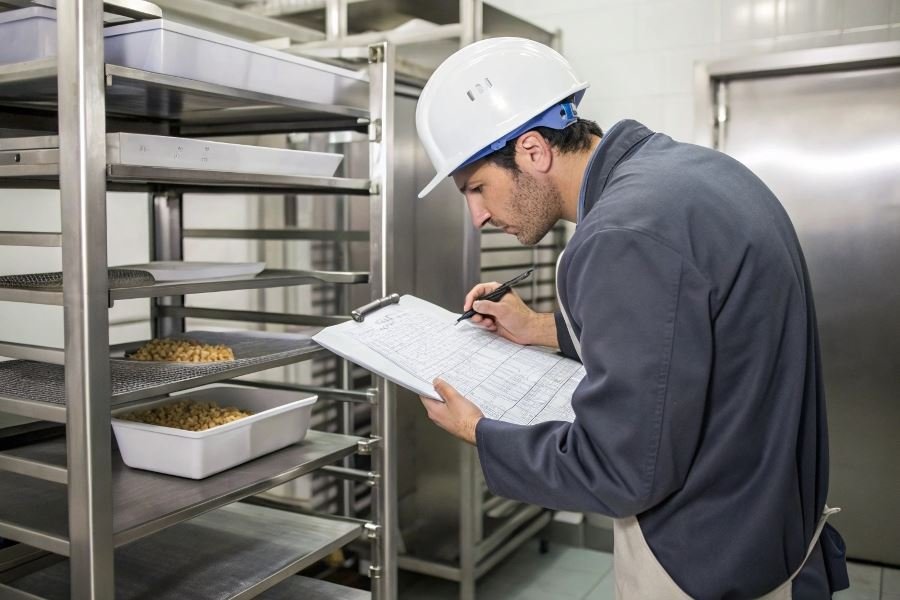
The FDA Food Safety Modernization Act established stringent requirements for food contact surfaces, including shelving. NSF certification provides third-party verification that shelving meets food safety standards—look for these markings when evaluating options.
Design elements that enhance safety and efficiency
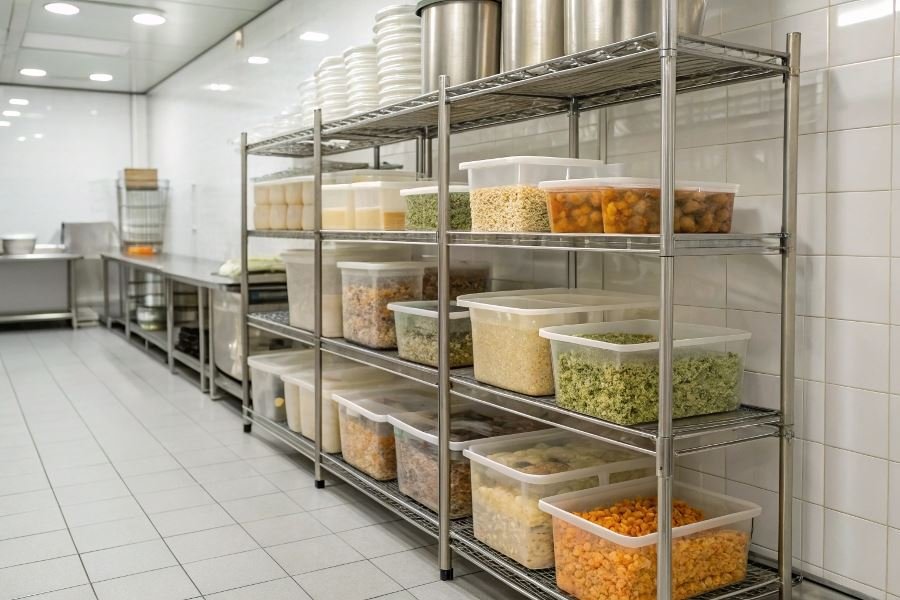
- Open wire designs promote air circulation and prevent dust accumulation
- Adjustable heights accommodate changing inventory needs
- Smooth, crevice-free construction eliminates harborage points for bacteria
- Load capacity ratings that match your heaviest products with appropriate safety margins
The most effective shelving systems balance these technical requirements with practical considerations like accessibility, mobility, and space utilization—creating an environment where food safety and production efficiency work in harmony.
Essential Criteria for Food Production Shelving
Selecting the right shelving for food production environments isn’t just about storage—it’s about compliance, efficiency, and food safety. The shelving units you choose directly impact your operation’s productivity, sanitation protocols, and ultimately, your bottom line.
When evaluating how to choose a shelving unit for food production, three critical factors demand your attention: material composition, design functionality, and load-bearing capabilities. Each element plays a crucial role in maintaining food safety standards while maximizing operational efficiency in your facility.
Food-Safe Materials That Perform
Stainless steel remains the gold standard for food production environments. The 304-grade (18/8) stainless steel offers exceptional corrosion resistance and can withstand harsh cleaning chemicals. For environments with higher acidity or salt exposure, consider upgrading to 316-grade stainless steel with added molybdenum for superior protection.
Polymer shelving alternatives have gained significant traction in recent years, offering advantages like:
- Lighter weight (typically 30-50% lighter than metal equivalents)
- Natural resistance to bacteria growth
- No risk of rust or corrosion
- Lower initial investment cost
Cambro polymer shelving systems feature antimicrobial Camguard technology, providing an additional layer of protection against contaminants.
For dry storage areas, aluminum shelving offers a cost-effective middle ground—lighter than stainless steel but more durable than polymer options.
The material you select must withstand your specific cleaning protocols, temperature fluctuations, and moisture levels without degradation or contamination risk.
Design Features That Enhance Performance
Shelving design directly impacts workflow efficiency and sanitation effectiveness. Key considerations include:
Adjustability and Accessibility
Modern food production shelving should feature tool-free adjustment capabilities, allowing for quick reconfiguration as product needs change. Look for systems with:
- Height adjustments at 1-inch increments
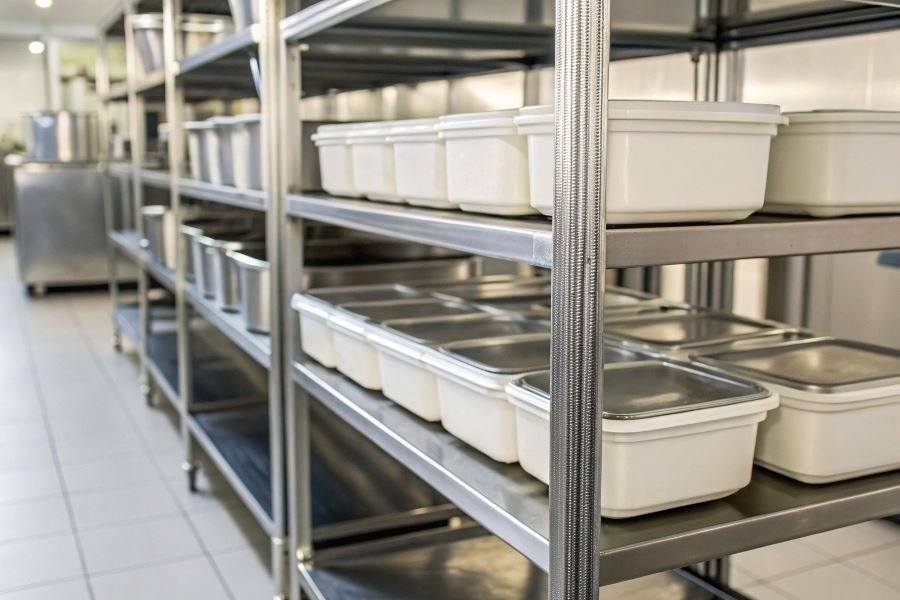
- Removable shelves for thorough cleaning
- Open grid designs for air circulation and visibility
Metro offers shelving systems with QuadTruss design, providing up to 25% more strength while maintaining excellent visibility and airflow.
Cleaning Considerations
Food-grade shelving must be designed for efficient cleaning and sanitizing:
| Design Feature | Benefit |
|---|---|
| Smooth welds | Eliminates crevices where bacteria can hide |
| Removable shelf mats | Allows thorough sanitizing in dishwashers |
| Rounded corners | Prevents product damage and improves cleaning access |
| Minimal horizontal surfaces | Reduces dust collection areas |
NSF certification should be non-negotiable for any shelving used in food production. This independent verification ensures the shelving meets strict standards for materials, design, and construction.
Load Capacity and Environmental Durability
Food production environments demand shelving that can handle substantial weight while withstanding challenging conditions:
- Static load capacity: Quality stainless steel shelving should support 600-800 pounds per shelf
- Mobile applications: Reduce capacity expectations by approximately 30% for shelving on casters
- Temperature resistance: Verify operating range covers your needs (-20°F to 200°F is common for quality systems)
Eagle Group manufactures heavy-duty shelving systems rated for up to 1,000 pounds per shelf in static applications, with specialized coatings for extreme temperature environments.
Consider the specific demands of your production area—freezers require different specifications than hot, humid environments near cooking equipment. The right shelving investment delivers years of reliable service while maintaining the highest standards of food safety.
Making the Smart Shelving Investment for Food Production
Cost versus long-term value equation
Selecting the right shelving for food production isn’t just about the initial price tag—it’s about calculating the total cost of ownership. Premium stainless steel systems from manufacturers like Metro or Cambro might command $2,500-5,000 for a complete setup, but their 15-20 year lifespan transforms that investment into pennies per day. Meanwhile, budget alternatives priced at $800-1,200 often require replacement within 3-5 years.
The math becomes even clearer when factoring in operational efficiency. Food-grade shelving with optimized designs can reduce product handling time by up to 25%, translating to labor savings that often exceed $10,000 annually for medium-sized operations.
The cheapest shelving is rarely the most economical. The true cost emerges when you calculate replacement frequency, maintenance requirements, and operational efficiency impacts.
Consider the case of Riverside Bakery, which initially saved $3,000 by choosing economy shelving, only to spend an additional $12,000 in replacements and lost productivity over five years. Their switch to Eagle Group shelving systems ultimately delivered 340% ROI within three years.
Implementation and maintenance mastery
Successful shelving implementation begins with precise measurement and thoughtful layout planning. Allow for:
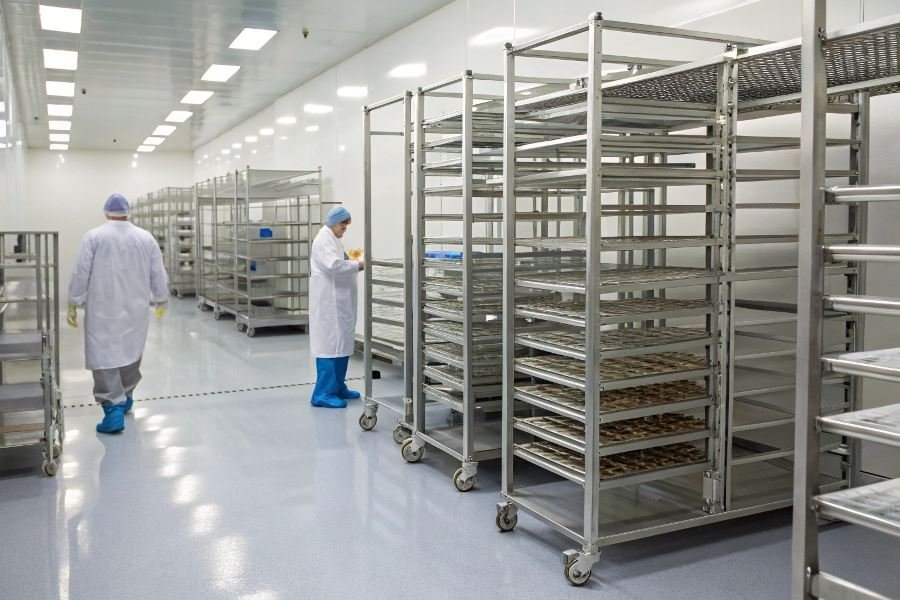
- 36-42 inches of aisle clearance for single-person access
- 54-60 inches for two-way traffic zones
- 10-15% additional capacity beyond current needs for growth
Maintenance protocols should be documented and scheduled with religious consistency. High-performance food production environments typically follow this maintenance cadence:
| Maintenance Task | Frequency | Key Considerations |
|---|---|---|
| Full sanitization | Weekly | Use food-safe cleaners at proper dilution |
| Wheel/caster inspection | Monthly | Check for debris buildup and bearing wear |
| Load distribution audit | Quarterly | Verify weight limits aren’t exceeded |
| Complete disassembly cleaning | Bi-annually | Focus on joints and connection points |
Implementing a digital maintenance tracking system can reduce compliance issues by up to 87% while extending shelving lifespan by 30-40%.
Top shelving solutions by production scale
Small-Scale Operations (Under 5,000 sq ft)
Nexel Wire Shelving delivers exceptional value for artisanal producers with its modular design and 800 lb capacity per shelf. The epoxy-coated options starting at $350 per unit offer excellent corrosion resistance while remaining budget-friendly. Their quick-adjust shelf height feature accommodates seasonal production changes without tools.
Mid-Size Production (5,000-20,000 sq ft)
Krowne Metal solid shelving systems represent the sweet spot for growing operations. Their patented antimicrobial surface treatment reduces contamination risk by 99.9%, while the reinforced corner design increases load capacity to 1,200 lbs per shelf. The integrated labeling system streamlines inventory management and FIFO compliance.
Large-Scale Industrial Production (20,000+ sq ft)
InterMetro Industries Super Erecta Pro represents the gold standard for high-volume environments. The investment ($4,800-7,500 per comprehensive unit) delivers unmatched durability with its proprietary Microban technology and 2,000+ lb capacity. The modular design allows for custom configurations that maximize vertical space utilization while minimizing floor footprint.
The shelving decision ultimately comes down to aligning your specific production requirements with solutions engineered to deliver maximum efficiency, compliance, and longevity. The right choice pays dividends through reduced maintenance, improved workflow, and enhanced food safety for years to come.
Discover essential criteria for selecting food-grade shelving units that meet safety regulations and production needs. Learn about optimal materials, design features, and capacity requirements to ensure compliance and efficiency in your food facility.
Discover essential criteria for selecting food-grade shelving units that meet safety regulations and production needs. Learn about optimal materials, design features, and capacity requirements to ensure compliance and efficiency in your food facility.