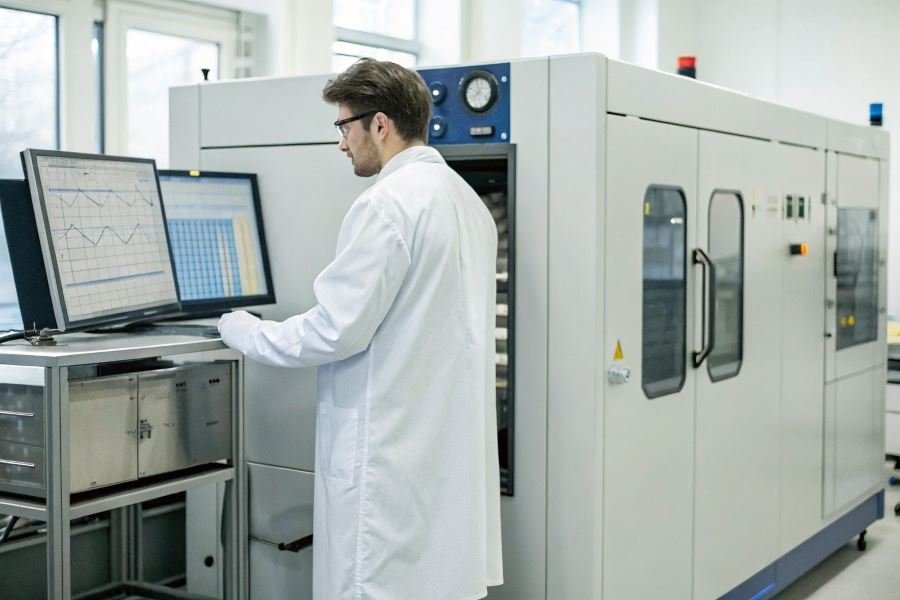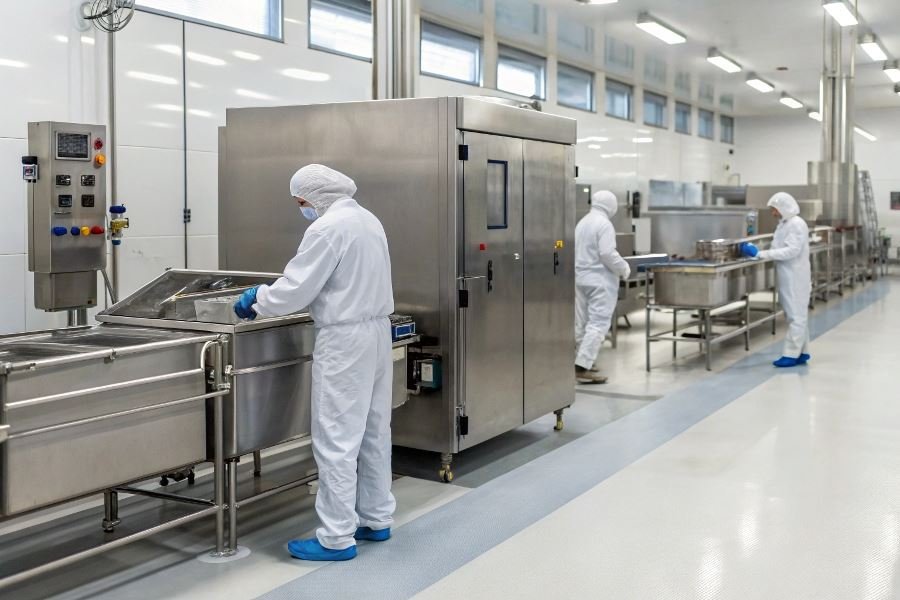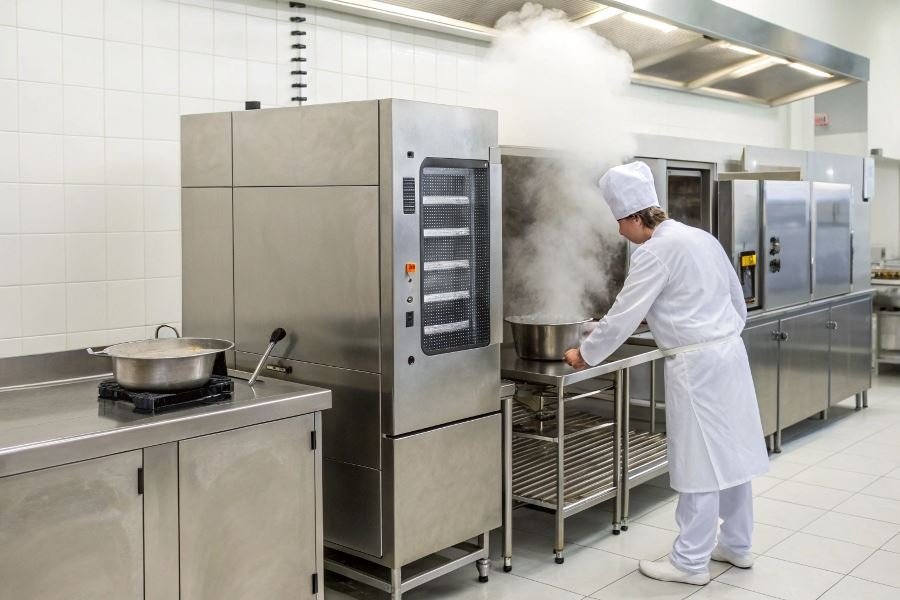
Ever wondered why that jar of pasta sauce in your pantry stays fresh for months? Behind every safe, shelf-stable food product lies a critical process that few consumers ever think about: sterilization. This invisible guardian stands between your dinner table and potentially dangerous microorganisms.
Sterilization technology has evolved dramatically since Nicolas Appert first developed canning in 1809. Today’s food manufacturers face a complex decision matrix when selecting the right sterilization equipment—one that balances food safety, product quality, operational efficiency, and regulatory compliance.
The life-extending power of proper sterilization
At its core, sterilization eliminates pathogenic microorganisms and inactivates enzymes that would otherwise cause food spoilage or safety hazards. The stakes couldn’t be higher: inadequate sterilization can lead to product recalls, brand damage, or even foodborne illness outbreaks.
Effective sterilization extends shelf life from days to years while maintaining nutritional value and sensory qualities. For example, properly sterilized canned vegetables can remain safe for consumption for 2-5 years when stored appropriately.
Sterilization technologies: A spectrum of solutions
Modern food producers can choose from several sterilization approaches:
- Thermal processing (retort, aseptic, and ohmic heating)
- Non-thermal technologies (high-pressure processing, pulsed electric fields)
- Chemical sterilization (hydrogen peroxide, peracetic acid)
- Radiation (gamma rays, electron beams, X-rays)
Each technology offers distinct advantages for different food matrices and packaging formats.
Selecting your sterilization champion
The “right” sterilizer depends on multiple factors:
- Product characteristics: Heat sensitivity, pH, viscosity, particulate content
- Packaging requirements: Container material, size, shape
- Production demands: Throughput needs, batch vs. continuous processing
- Economic considerations: Initial investment vs. operational costs
- Regulatory landscape: Regional requirements and export market standards
The most successful food manufacturers approach sterilizer selection as a strategic decision rather than merely a technical one—balancing food safety imperatives with brand quality promises.
Essential Criteria for Choosing the Perfect Sterilizer
When investing in sterilization equipment for food production, the decision impacts everything from product quality to your bottom line. Selecting the right sterilizer requires balancing multiple factors that directly affect your operation’s success.
Product Compatibility Is Non-Negotiable
Different food products demand different sterilization approaches. Heat-sensitive items like dairy products may require gentler methods such as High-Temperature Short-Time (HTST) processing, while acidic foods might tolerate higher temperatures. The process of how to choose a sterilizer for food production begins with a thorough analysis of your specific product characteristics.
pH levels matter significantly. Products with pH below 4.6 (acidic foods) can often use less intense thermal treatments, while low-acid foods (pH above 4.6) typically require more rigorous sterilization parameters to eliminate pathogens like Clostridium botulinum.
Consider your product’s:
- Thermal sensitivity
- Viscosity
- Particulate content
- Packaging requirements
- Desired shelf life
The wrong sterilization method can destroy product quality, texture, and nutritional value—even when microbial safety is achieved.
Production Capacity and Facility Integration
Your sterilizer must align with both current production volumes and future growth plans. Undersized equipment creates bottlenecks; oversized systems waste resources.
Facility constraints often dictate viable options. Consider:
| Constraint Type | Considerations |
|---|---|
| Physical Space | Footprint, height requirements, access for maintenance |
| Utilities | Steam capacity, water quality, electrical requirements |
| Workflow | Integration with existing production lines |
| Staff Expertise | Technical knowledge required for operation |
Batch vs. continuous systems represent a critical decision point. While batch sterilizers like retorts offer flexibility for multiple product types, continuous systems like tubular heat exchangers or Tetra Pak UHT units deliver higher throughput for single-product operations.
The Economics of Sterilization
The initial purchase price represents just a fraction of a sterilizer’s lifetime cost. Forward-thinking manufacturers evaluate:
- Energy consumption patterns across different load conditions
- Water usage including cooling requirements
- Labor requirements for operation and maintenance
- Downtime costs for cleaning and maintenance
- Product loss rates during processing
Modern sterilizers from manufacturers like JBT FoodTech or Steriflow incorporate energy recovery systems that can reduce operational costs by 15-30% compared to older models.
Calculate your return on investment (ROI) based on total cost of ownership. A higher initial investment in equipment with superior energy efficiency often pays dividends within 2-3 years of operation.
Consider automation capabilities that reduce labor costs while improving consistency. Systems with advanced monitoring from providers like Endress+Hauser can provide real-time validation of sterilization parameters, reducing both risk and quality control expenses.
The ideal sterilizer balances product quality, operational efficiency, and economic performance—creating a sustainable competitive advantage through optimized food safety systems.
Sealing the Deal: Making Your Sterilizer Decision Count
Meeting regulatory requirements head-on
Food safety isn’t negotiable. When selecting a sterilizer for your production line, regulatory compliance forms the foundation of your decision-making process. The FDA’s Food Safety Modernization Act (FSMA) established in 2011 demands preventive controls that your sterilization equipment must satisfy. Meanwhile, 3-A Sanitary Standards dictate specific design requirements for food processing equipment, ensuring cleanability and food safety.
Beyond domestic regulations, if you’re exporting, your equipment needs to meet international standards like ISO 22000 for food safety management systems. The European Hygienic Engineering & Design Group (EHEDG) guidelines may also apply, particularly for equipment destined for EU markets.
Industry insight: Documentation matters as much as performance. The best sterilizers come with comprehensive validation protocols that demonstrate their effectiveness to inspectors.
Don’t overlook industry-specific requirements. Dairy processing demands different validation parameters than ready-to-eat meat products or shelf-stable beverages. JBT FoodTech and Steriflow offer specialized documentation packages tailored to different food categories.
Evaluating manufacturer credibility and support
A sterilizer is a long-term relationship, not a one-time purchase. Manufacturer reputation serves as your insurance policy against future headaches. Companies like Allpax and Steris have decades-long track records in the food industry, with established user communities and case studies demonstrating their equipment’s longevity.
Service support deserves particular scrutiny. Consider these critical factors:
| Support Element | Questions to Ask | Why It Matters |
|---|---|---|
| Response Time | How quickly can technicians arrive on-site? | Every hour of downtime costs thousands |
| Parts Availability | Are critical components stocked domestically? | Imported parts can mean weeks of waiting |
| Training Programs | Is comprehensive operator training included? | Proper operation prevents costly mistakes |
| Warranty Terms | What’s covered beyond the standard 12 months? | Extended coverage for critical components provides peace of mind |
The most reputable manufacturers offer preventive maintenance programs that can extend equipment life by 5-7 years. Surdry and Stock America have particularly strong reputations for their comprehensive service packages.
Planning implementation without production disruption
Even the perfect sterilizer becomes problematic if implementation halts your production. Realistic timeline planning requires working backward from your target completion date. Most installations follow this general sequence:
- Site preparation (2-4 weeks)
- Equipment delivery and positioning (1-2 weeks)
- Utility connections and calibration (1-2 weeks)
- Validation testing (1-3 weeks)
- Operator training (1 week)
- Production ramp-up (1-2 weeks)
Integration with existing lines demands particular attention. The best manufacturers offer pre-installation consulting to identify potential bottlenecks. Steritech provides 3D modeling services that visualize how new equipment will fit within your current layout, preventing costly surprises during installation.
Consider phased implementation if complete production stoppage isn’t feasible. Many manufacturers can design temporary bypass systems allowing partial production during installation. While this extends the timeline, it maintains revenue flow during the transition.
Your sterilizer decision ultimately balances compliance requirements, manufacturer reliability, and implementation practicality. The right choice delivers food safety confidence while enhancing your production efficiency for years to come.
Discover how to choose the optimal sterilizer for your food production facility based on product compatibility, capacity needs, and regulatory requirements. Learn about different technologies to ensure food safety and maximize shelf life.
Discover how to choose the optimal sterilizer for your food production facility based on product compatibility, capacity needs, and regulatory requirements. Learn about different technologies to ensure food safety and maximize shelf life.