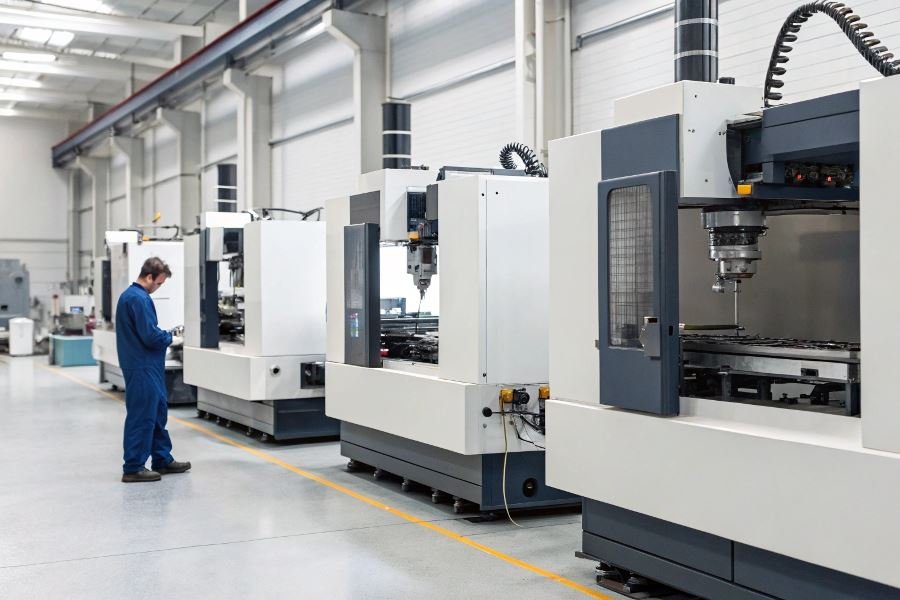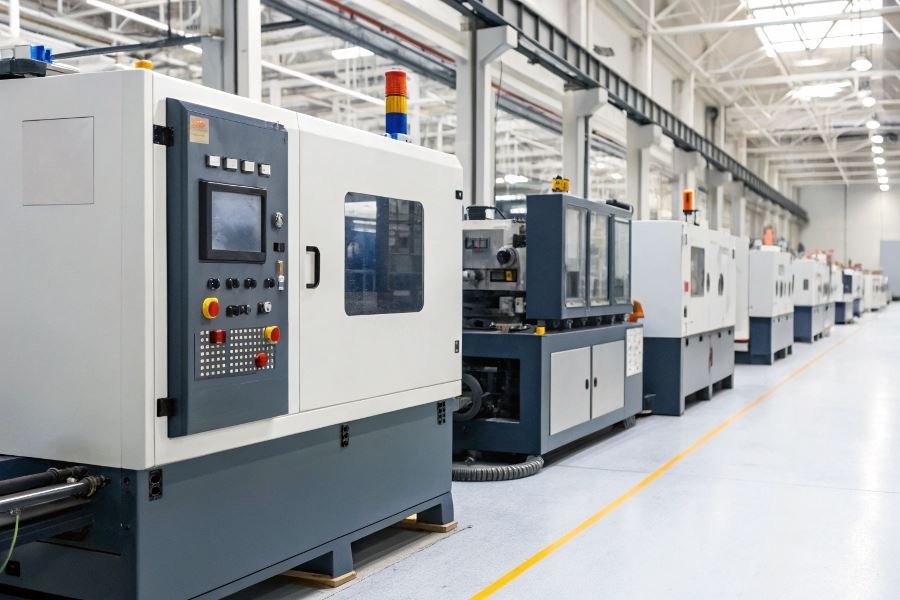
Ever wondered why some manufacturing facilities hum with minimal human intervention while others buzz with operators at every station? The answer often lies in their choice of molding technology—a decision that can make or break production efficiency, product quality, and ultimately, profitability.
Molding technology serves as the backbone of countless industries, from automotive components and medical devices to consumer electronics and household products. These sophisticated systems transform raw materials into precisely shaped parts through carefully controlled applications of heat, pressure, and cooling. The versatility of molding processes has made them indispensable in manufacturing everything from intricate smartphone casings to robust industrial equipment housings.
When manufacturers face the critical decision between automatic and semi-automatic molding machines, they’re essentially choosing their operational philosophy. This choice isn’t merely about automation levels—it’s about aligning production capabilities with business objectives. The right molding system can dramatically reduce waste, accelerate production cycles, and ensure consistent quality, while the wrong choice can lead to costly inefficiencies and missed opportunities.
Three key factors typically drive this decision:
- Production volume requirements – High-volume operations generally benefit from fully automatic systems, while smaller batches may be more economical with semi-automatic options
- Available skilled labor – Semi-automatic machines require more operator intervention and expertise
- Capital investment capacity – Automatic systems demand higher upfront investment but often deliver lower per-unit costs over time
Understanding these fundamental considerations provides the foundation for making an informed choice that will shape your manufacturing capabilities for years to come.
Performance Metrics That Make or Break Your Molding Operation
When evaluating automatic versus semi-automatic molding machines, the decision ultimately comes down to hard performance data. Manufacturing leaders know that choosing the right equipment isn’t just about upfront costs—it’s about long-term operational excellence that drives profitability.
The debate between automatic vs semi-automatic molding machines: what to choose often centers around five critical performance metrics that determine whether your investment will pay dividends or become a production bottleneck. Let’s dive into the numbers that matter most.
Production Throughput That Drives Revenue
Automatic molding systems deliver undeniable advantages in pure output capacity:
| Machine Type | Average Cycle Time | Units Per 8-Hour Shift | Annual Output Potential |
|---|---|---|---|
| Fully Automatic | 15-30 seconds | 960-1,920 units | 240,000-480,000 units |
| Semi-Automatic | 45-90 seconds | 320-640 units | 80,000-160,000 units |
The throughput differential becomes particularly significant in high-volume operations where Engel Machinery and Arburg automatic systems can achieve 3-4x the output of comparable semi-automatic equipment.
Quality Consistency That Builds Your Brand
Defect rates tell the real story about machine performance:
Semi-automatic systems typically show defect rates between 3-7%, largely due to operator variability. Meanwhile, fully automatic systems from manufacturers like Sumitomo (SHI) Demag maintain remarkably consistent 0.5-2% defect rates across production runs.
The quality difference becomes exponentially important when producing precision components where tolerances matter.
Energy Consumption That Affects Your Bottom Line
Modern automatic molding machines have made impressive efficiency gains:
- Semi-automatic systems: 0.5-0.7 kWh per kg of processed material
- Automatic systems: 0.3-0.5 kWh per kg of processed material
This 30-40% efficiency advantage translates to approximately $15,000-25,000 in annual energy savings for medium-volume operations processing 500 tons annually.
Setup Flexibility That Keeps You Competitive
While automatic systems excel in throughput, semi-automatic machines offer distinct advantages in flexibility:
| Feature | Semi-Automatic | Automatic |
|---|---|---|
| Average Setup Time | 30-45 minutes | 1-2 hours |
| Changeover Cost | $75-150 | $200-400 |
| Minimum Economic Run Size | 100-250 units | 500-1,000 units |
For manufacturers running diverse product lines with frequent changeovers, Boy Machines semi-automatic systems can provide the versatility needed for rapid market response.
Maintenance Requirements That Determine Uptime
Long-term reliability metrics reveal the true cost of ownership:
Automatic systems from premium manufacturers like KraussMaffei typically require scheduled maintenance every 2,000-2,500 operating hours with annual maintenance costs averaging 3-5% of the machine purchase price.
Semi-automatic systems generally need attention every 1,000-1,500 hours but at lower absolute costs—typically 5-7% of purchase price annually.
The maintenance math favors automatic systems for operations running multiple shifts, while semi-automatic equipment may prove more economical for single-shift operations.
The performance data makes clear that neither technology holds absolute superiority. The optimal choice emerges from aligning machine capabilities with your specific production requirements, volume expectations, and operational constraints.
Making the Right Molding Machine Choice for Your Business
Business Scale Drives Equipment Needs
The size of your operation fundamentally shapes your molding machine requirements. Small workshops producing limited quantities often find semi-automatic machines provide the perfect balance of control and output. A custom trophy manufacturer producing 50-100 pieces daily might thrive with a semi-automatic setup, allowing for personalized attention to each piece while maintaining reasonable production rates.
Conversely, medium to large operations with production targets in the thousands daily need the consistent output that only automatic molding machines can deliver. A major automotive parts supplier running 24/7 operations would find manual intervention between cycles completely impractical at scale.
The tipping point typically occurs when daily production exceeds 500 units or when labor costs begin outweighing equipment investment.
Investment Economics That Make Sense
Initial capital outlay presents the most obvious difference between these technologies. Semi-automatic machines from manufacturers like Wabash MPI typically range from 30, 000−75,000, while comparable automatic systems often start at $120,000 and can exceed $500,000 for advanced configurations.
However, the ROI calculation extends far beyond purchase price:
| Factor | Semi-Automatic | Automatic |
|---|---|---|
| Initial Investment | Lower ($30K-75K) | Higher ($120K-500K+) |
| Labor Cost (Annual) | Higher ($45K-60K per operator) | Lower (1 operator can manage multiple machines) |
| Production Capacity | 40-60% of automatic | 100% (baseline) |
| Energy Consumption | Lower | Higher |
| Maintenance Costs | Lower | Higher |
Most businesses see automatic machines paying for themselves within 2-4 years through labor savings and increased output. A medium-sized operation running two shifts might save $90,000+ annually in labor costs alone with an automatic system.
Workforce Considerations Matter
Semi-automatic machines require skilled operators who understand cycle timing, material behavior, and quality control. These operators need comprehensive training but develop valuable hands-on expertise. The human element allows for real-time adjustments and quality monitoring that can be particularly valuable for complex or precision parts.
Automatic systems shift skill requirements toward programming and maintenance rather than cycle-by-cycle operation. While fewer operators are needed, those remaining require more technical training in PLC systems, robotics, and preventative maintenance protocols. Fanuc Robotics and similar automation providers offer specialized training programs that can bridge this knowledge gap.
Future-Proofing Your Investment
The molding industry continues evolving toward greater connectivity and intelligence. Modern automatic systems from manufacturers like Engel come equipped with Industry 4.0 capabilities including:
- Real-time production monitoring
- Predictive maintenance algorithms
- Remote diagnostics and troubleshooting
- Energy consumption optimization
- Quality control data integration
Semi-automatic machines typically offer fewer upgrade paths and more limited connectivity options. Businesses anticipating growth should consider automatic systems with modular designs that allow for incremental capacity increases and technology integration without complete replacement.
For operations expecting to expand production by 25%+ within five years, the scalability advantages of automatic systems often justify the higher initial investment, even if current volume doesn’t demand full automation.
Discover the key differences between automatic and semi-automatic molding systems to make an informed investment decision. Compare production capacity, quality consistency, costs, and scalability to find the perfect match for your manufacturing needs.
Discover the key differences between automatic and semi-automatic molding systems to make an informed investment decision. Compare production capacity, quality consistency, costs, and scalability to find the perfect match for your manufacturing needs.