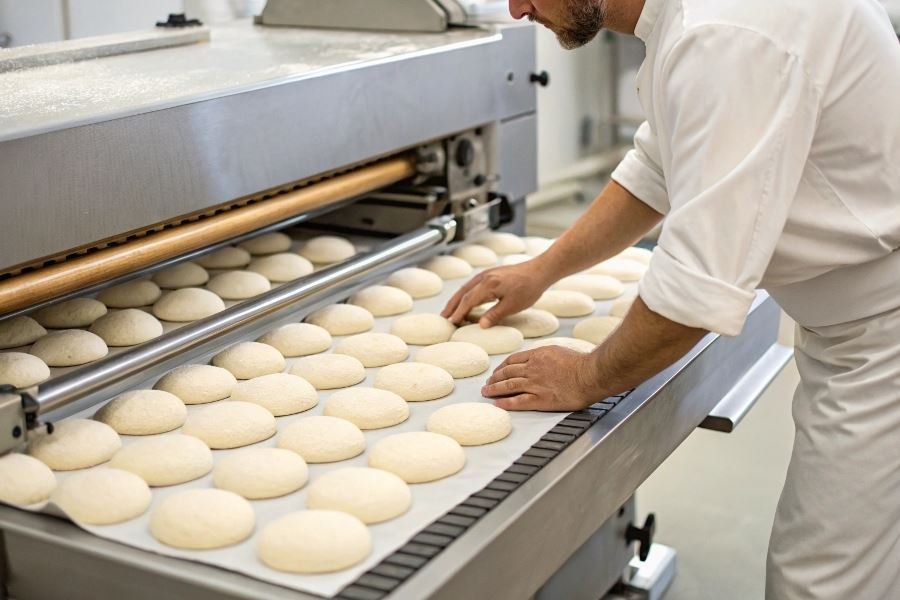
Ever watched a master baker transform a shapeless mass of dough into perfectly uniform loaves with seemingly magical precision? Behind that magic often stands the unsung hero of commercial bakeries: the dough molding machine. Yet choosing the wrong one can transform your bakery dreams into costly nightmares.
The relationship between dough and machine is intimate and complex. Like a skilled dance partner, your molding equipment must respond perfectly to your dough’s unique characteristics. The right machine doesn’t just shape your product—it defines your operation’s efficiency, consistency, and ultimately, profitability.
The foundation of bakery success
Proper machine selection forms the cornerstone of successful commercial bakery operations. A study by the American Baking Institute revealed that bakeries using optimally matched molding equipment reported up to 23% higher production efficiency and significantly lower waste rates. This translates directly to your bottom line.
When dough dictates technology
Not all dough is created equal. The hydration level, gluten development, and ingredient composition dramatically alter how dough responds to mechanical handling:
- High-hydration artisan doughs require gentle, minimal stress systems
- Stiff bagel doughs demand robust machines with powerful compression capabilities
- Enriched sweet doughs need specialized handling to prevent butter separation
Decision drivers beyond dough type
Your selection process must consider:
“The perfect molding machine balances your dough requirements with production volume, space constraints, and future growth plans.”
Factors like maintenance requirements, energy efficiency, and automation capabilities will determine whether your investment delivers long-term value or becomes an expensive mistake.
Technical Mastery: Selecting the Perfect Dough Molding Machine
When investing in bakery equipment, the technical specifications of dough molding machines can make or break your production efficiency. The difference between a good machine and the perfect machine often comes down to understanding the intricate relationship between your dough requirements and equipment capabilities.
Selecting a molding machine for specific types of dough requires careful analysis of technical specifications that align with your production goals. Whether you’re handling delicate pastry dough or dense bread varieties, the right machine transforms your operation from merely functional to exceptionally productive. Let’s dive into the critical technical considerations that will guide your decision-making process.
Capacity, Dimensions, and Power Requirements
The technical foundation of any molding machine selection begins with three fundamental metrics:
Production capacity directly impacts your output potential. Modern industrial molders range from 500 pieces per hour for artisanal operations to 15,000+ pieces hourly for high-volume production. The Rondo Doge line, for example, offers scalable capacity options that grow with your business.
Physical dimensions matter more than you might think:
| Machine Type | Typical Footprint (L×W) | Height | Weight |
|---|---|---|---|
| Compact | 4’×3’ | 5’ | 500 lbs |
| Mid-range | 8’×4’ | 6’ | 1200 lbs |
| Industrial | 12’×6’ | 7’ | 2500+ lbs |
Remember that clearance requirements often add 30% to these dimensions for proper operation and maintenance.
Power consumption varies dramatically based on throughput and functionality. Single-phase 220V systems might suffice for smaller operations, while industrial models typically require three-phase 480V connections with 5-15 kW demands. The VMI Baking equipment line provides detailed power efficiency ratings that can reduce operational costs by up to 20% compared to older models.
Automation and Programmable Features
The technological sophistication of molding machines has advanced dramatically, offering unprecedented control:
Automation levels now span from basic mechanical systems to fully integrated smart factories. Mid-tier machines typically offer:
- Automated dough feeding systems
- Precise weight control (±1g tolerance)
- Synchronized multi-stage operations
Programmable features represent the brain of modern molding systems. The Koenig Menes controller allows storage of up to 200 product recipes with adjustable parameters for:
- Pressure sensitivity for delicate doughs
- Variable speed controls (15-80 strokes per minute)
- Customizable forming patterns
The ability to fine-tune these settings for different dough types can reduce waste by up to 40% while improving product consistency.
Material Construction and Sanitation
The materials touching your dough directly impact both product quality and operational efficiency:
Food-grade stainless steel (304 or 316 grade) remains the gold standard for dough-contact surfaces, offering corrosion resistance and durability. However, specialized coatings like the Marel TenderCoat system provide enhanced release properties for sticky doughs.
Sanitation design features have evolved significantly:
- Tool-free disassembly reduces cleaning time by up to 70%
- CIP (Clean-in-Place) systems automate sanitation cycles
- Sloped surfaces and elimination of “dead zones” prevent bacterial growth
Maintenance accessibility often gets overlooked but significantly impacts downtime. Leading manufacturers like Fritsch design machines with quick-access panels and modular components that reduce maintenance time by up to 60%.
The technical specifications of your molding machine aren’t just numbers on a spec sheet—they’re the blueprint for your production success. By methodically evaluating these factors against your specific dough requirements, you’ll identify equipment that delivers optimal performance for years to come.
Sealing the Deal: Making the Final Decision on Your Dough Molding Machine
When you’ve narrowed down your options for dough molding equipment, the final decision-making process requires careful analysis beyond just technical specifications. This critical phase determines not just your immediate production capabilities, but your operation’s long-term success.
The numbers never lie: ROI and cost-benefit analysis
The sticker price of a molding machine is merely the starting point. A comprehensive cost-benefit analysis reveals the true investment picture:
- Initial acquisition costs – Beyond the machine price, factor in shipping, installation, and facility modifications
- Operational expenses – Energy consumption can vary dramatically between models, with high-efficiency machines often costing $3-5K more upfront but saving $1,200+ annually
- Maintenance projections – Premium models from manufacturers like Rondo typically require 30% less maintenance than budget alternatives
Calculate your ROI by examining production capacity increases, labor savings, and product consistency improvements. A properly selected molding machine should demonstrate payback within 18-36 months depending on production volume.
The cheapest machine rarely delivers the lowest total cost of ownership. A $15,000 difference in purchase price can disappear quickly when accounting for efficiency, downtime, and maintenance.
Beyond the machine: Vendor relationships matter
The relationship with your equipment supplier extends far beyond the purchase transaction:
| Support Element | What to Evaluate | Red Flags |
|---|---|---|
| Warranty Coverage | Duration, parts inclusion, labor terms | Limited coverage under 12 months |
| Technical Support | Response time, availability hours, communication channels | No weekend support for 24/7 operations |
| Parts Availability | Stocking locations, shipping timeframes | Parts sourced exclusively overseas |
| Service Network | Geographic coverage, technician certification | Sparse coverage in your region |
Manufacturers like Koenig and Fritsch have established robust North American support networks, while some emerging brands offer compelling price points but limited infrastructure. This distinction becomes critical during production emergencies when every hour of downtime translates to lost revenue.
Implementation roadmap for seamless integration
Even the perfect machine can fail without proper implementation planning:
- Pre-installation preparation – Allow 4-8 weeks for facility modifications, electrical upgrades, and workflow redesign
- Installation timeline – Most professional installations require 3-5 days, followed by 1-2 days of calibration
- Training requirements – Comprehensive operator training typically demands:
- Basic operation: 8-16 hours
- Advanced settings/adjustments: 16-24 hours
- Maintenance procedures: 8-12 hours
Phased implementation often yields better results than immediate full-scale production. Begin with simpler dough formulations before progressing to more challenging varieties. Document machine performance metrics during this period to establish your baseline for ongoing optimization.
The most successful implementations include follow-up training sessions 30-60 days after initial installation, when operators have developed specific questions based on real production experience. Manufacturers like VMI offer these follow-ups as part of premium installation packages.
By methodically addressing financial considerations, support infrastructure, and implementation planning, you’ll not only select the right molding machine but ensure it delivers its full potential from day one.
Discover how to select the perfect dough molding machine for your bakery operation. Learn to match machine specifications with dough types, evaluate automation features, and make cost-effective decisions that enhance production efficiency and product quality.
Discover how to select the perfect dough molding machine for your bakery operation. Learn to match machine specifications with dough types, evaluate automation features, and make cost-effective decisions that enhance production efficiency and product quality.