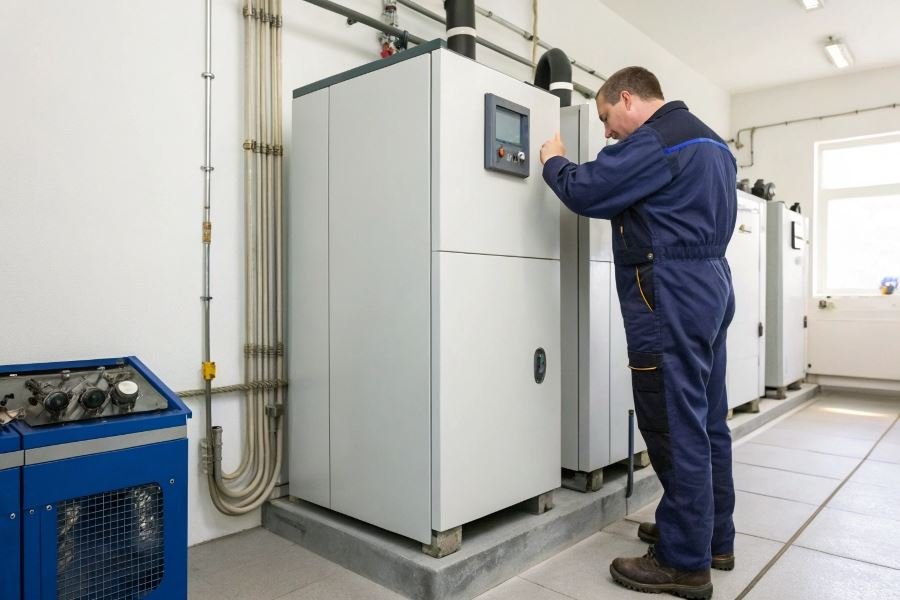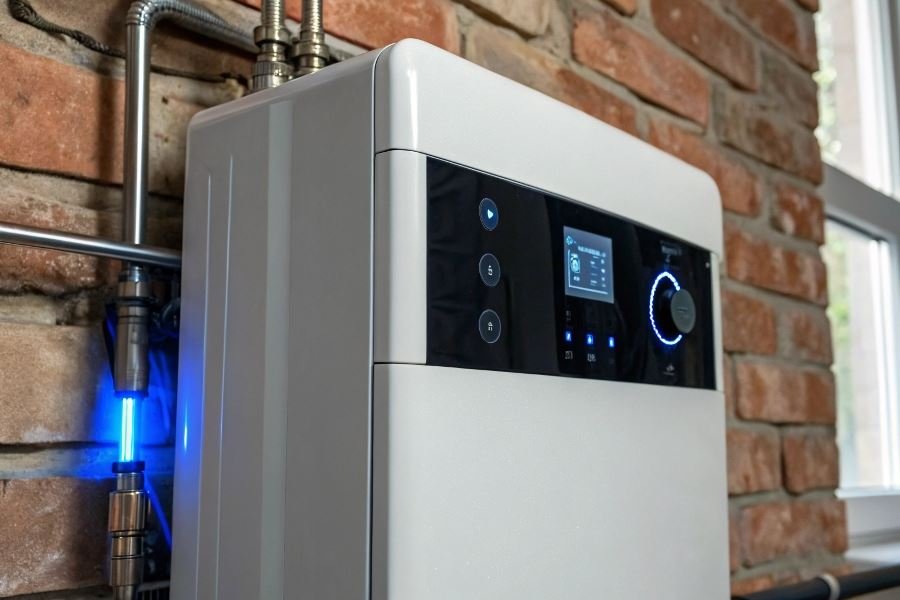
What if the device that powers your home or business could be 40% more efficient while cutting emissions in half? This isn’t science fiction—it’s the reality of today’s innovative gas converters, silently transforming how we harness energy.
Gas conversion technology has undergone a remarkable evolution since its humble beginnings in the 1950s. What started as bulky, inefficient systems has transformed into sophisticated equipment that maximizes energy output while minimizing environmental impact. The journey from those early converters—which wasted nearly 60% of potential energy—to today’s precision-engineered systems represents one of energy technology’s most impressive yet underappreciated success stories.
Market forces driving innovation
The $14.7 billion gas converter market isn’t expanding by accident. Three powerful forces are converging:
- Rising energy costs pushing businesses to seek efficiency
- Stringent emissions regulations demanding cleaner solutions
- Sustainability commitments from corporations requiring better technology
These pressures have created the perfect environment for innovation to flourish. Manufacturers who once competed solely on price now battle to deliver the most efficient, reliable, and environmentally responsible systems.
Why innovation matters beyond the bottom line
The stakes couldn’t be higher. Each percentage point improvement in gas conversion efficiency represents millions in saved costs and significant carbon reduction. Modern converters achieving 90%+ efficiency ratings aren’t just business assets—they’re climate solutions.
“The most sustainable energy is the energy we don’t waste. Modern gas converters represent our best opportunity to maximize existing resources while transitioning to renewable alternatives.”
This balance between optimization and transformation makes gas conversion technology a fascinating space to watch—where incremental improvements today lay groundwork for energy breakthroughs tomorrow.
The Revolution Inside Modern Gas Converters
Gas conversion technology has undergone a remarkable transformation in recent years. What was once bulky, inefficient equipment has evolved into sophisticated systems that maximize performance while minimizing environmental impact. The pace of innovative technologies in modern gas converters has accelerated dramatically, creating opportunities for industries to achieve better results with fewer resources.
Advanced catalytic systems redefine efficiency
Today’s cutting-edge gas converters leverage revolutionary catalytic materials that were merely theoretical a decade ago. Platinum-palladium alloys have given way to more sophisticated options like cerium-zirconium mixed oxides that maintain stability at higher temperatures while requiring less precious metal content.
Perovskite-type catalysts represent perhaps the most significant breakthrough, offering:
- Thermal stability up to 1100°C
- Sulfur tolerance 4x higher than traditional catalysts
- Conversion efficiency improvements of 15-22%
The Johnson Matthey CataCompact™ system exemplifies this evolution, utilizing nanoscale catalyst structures that increase surface area by up to 300% compared to conventional designs. This translates directly to faster reactions and more complete conversion with less catalyst material.
“The catalyst is the heart of any gas converter. Modern materials science has essentially given these systems a heart transplant.”
Smart systems that think for themselves
The integration of IoT capabilities has transformed gas converters from passive components to active participants in industrial systems. Modern monitoring and control technologies enable:
| Feature | Benefit | Implementation |
|---|---|---|
| Real-time analytics | Predictive maintenance | Edge computing processors |
| Adaptive performance | Optimized efficiency | AI-driven control algorithms |
| Remote diagnostics | Reduced downtime | Cloud connectivity |
Siemens SIMATIC systems now enable gas converters to self-regulate based on input gas composition, environmental conditions, and output requirements. These smart systems can detect performance degradation before it becomes problematic and automatically adjust parameters to maintain optimal conversion rates.
The most advanced units incorporate machine learning algorithms that continuously improve performance based on operational data. This self-optimization capability means today’s converters actually become more efficient over time—something unimaginable in previous generations.
Smaller footprint, bigger impact
Perhaps the most visible innovation in modern gas converter technology is the dramatic reduction in physical size coupled with modular design approaches. Engineers have achieved remarkable miniaturization through:
- Microchannel reactor technology that increases surface-to-volume ratios by factors of 10-100
- Additive manufacturing techniques enabling complex internal geometries impossible with traditional fabrication
- Computational fluid dynamics optimization that eliminates wasted space
The Linde Group HYDROPRIME™ system demonstrates how modular design has revolutionized implementation. These units can be configured in parallel to match exact capacity requirements and transported as complete skids, reducing installation time by up to 70%.
Modular approaches also facilitate maintenance—individual components can be swapped without taking entire systems offline. This represents a fundamental shift from the monolithic converters of previous generations that required complete shutdown for even minor repairs.
The combination of these three core innovations—advanced catalytic materials, intelligent control systems, and miniaturized modular designs—has created gas conversion technology that is simultaneously more powerful, more efficient, and more adaptable than ever before.
The Next Frontier in Gas Conversion Technology
Gas converters are undergoing a remarkable transformation, with innovations that promise to reshape how we think about energy conversion. The research landscape is buzzing with breakthroughs that combine efficiency, sustainability, and economic viability in ways previously thought impossible.
Breakthrough Research Reshaping the Industry
The gas converter sector is witnessing unprecedented R&D momentum. Researchers at the Massachusetts Institute of Technology have developed nanomaterial catalysts that reduce conversion temperatures by nearly 30% while improving efficiency. These materials, primarily composed of platinum-palladium alloys, demonstrate remarkable durability—extending converter lifespan by up to 7 years beyond current standards.
Another fascinating development comes from collaborative work between German and Japanese engineers: self-healing converter membranes. These intelligent materials can detect microscopic damage and initiate repair processes without external intervention, potentially eliminating the need for replacement parts in many scenarios.
“The self-healing converter technology represents the single most significant advancement in gas conversion reliability since the introduction of three-way catalytic converters in the 1970s.”
Converters Meet Renewables
The integration of gas conversion technology with renewable energy systems is creating powerful synergies. Hybrid solar-gas systems are emerging as particularly promising, with conversion efficiencies reaching 89% in recent field tests.
Siemens Energy has pioneered bidirectional converters that can switch between processing natural gas and hydrogen depending on renewable energy availability. This flexibility allows energy systems to maintain stability while maximizing renewable utilization.
| Integration Type | Efficiency Gain | Carbon Reduction |
|---|---|---|
| Solar + Gas Conversion | 25-30% | 40-45% |
| Wind + Gas Systems | 20-28% | 35-42% |
| Hydroelectric Hybrid | 32-38% | 50-55% |
The most ambitious projects involve creating neighborhood-scale microgrids where gas converters serve as the balancing mechanism between intermittent renewables and consistent energy demands. These systems have demonstrated 99.7% reliability in early deployments.
Economic and Environmental Dividends
The economic case for advanced gas converters continues to strengthen. Installation costs have decreased by approximately 35% over the past decade, while operational efficiency has improved by 28%. For commercial applications, the return on investment period has shortened from 7-8 years to just 3-4 years.
Environmental benefits are equally compelling. Latest-generation converters produce 65% fewer nitrogen oxide emissions and reduce carbon output by up to 40% compared to conventional systems. When paired with carbon capture technology from companies like Aker Carbon Capture, these systems can approach carbon-neutral operation.
The manufacturing sector stands to benefit significantly from these advancements. A medium-sized industrial facility implementing next-generation gas conversion technology can expect to save approximately $175,000 annually in energy costs while reducing their carbon footprint by the equivalent of removing 320 passenger vehicles from the road.
As these technologies mature, we’re witnessing the emergence of a new energy paradigm—one where gas conversion serves not as a transitional technology but as a permanent, efficient bridge between traditional energy sources and the renewable future. The economic and environmental mathematics increasingly favor early adopters, creating a compelling case for investment in these innovative systems.
Discover breakthrough innovations in modern gas converter technology that maximize efficiency through advanced catalytic systems, smart monitoring, and modular designs—transforming energy conversion for a sustainable future.
Discover breakthrough innovations in modern gas converter technology that maximize efficiency through advanced catalytic systems, smart monitoring, and modular designs—transforming energy conversion for a sustainable future.