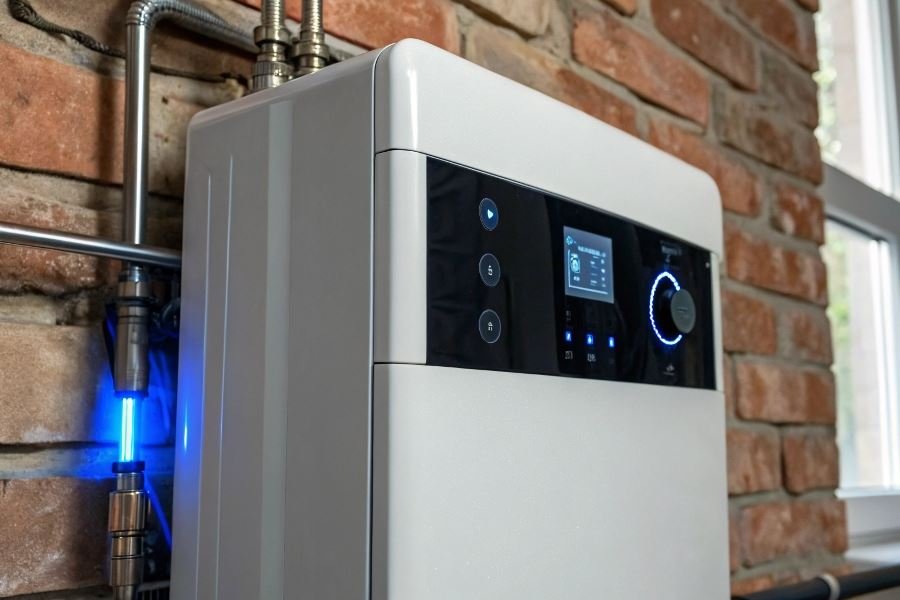
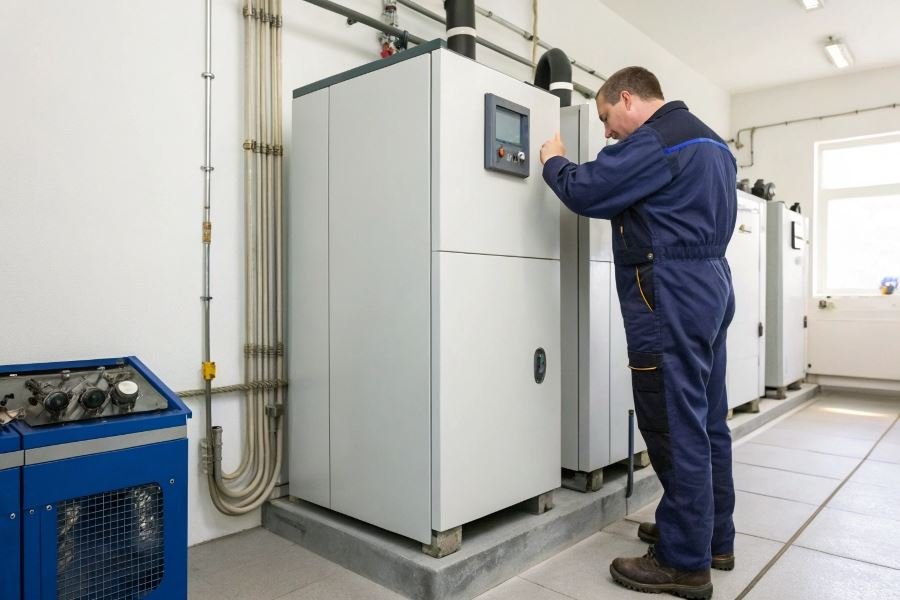
Ever wondered why some manufacturing plants consistently outperform their competitors? Behind the scenes, the humble industrial gas converter often makes the critical difference. These specialized devices transform raw gas inputs into precisely calibrated outputs that power everything from steel production to pharmaceutical manufacturing—yet they remain one of the most overlooked components in industrial planning.
Industrial gas converters serve as the vital bridge between raw gas resources and usable energy or process gases. They’re the unsung heroes in chemical processing, power generation, and manufacturing, where they convert natural gas, syngas, or other feedstocks into application-specific outputs with carefully controlled properties. The right converter doesn’t just work—it transforms your entire operation.
When evaluating industrial gas converters, three factors consistently determine success: conversion efficiency, operational reliability, and compatibility with existing systems. A mere 5% improvement in conversion efficiency can translate to hundreds of thousands in annual savings for mid-sized operations. Meanwhile, reliability issues can cascade into production delays costing upwards of $10,000 per hour in some industries.
“The most expensive converter is the one that fails when you need it most.” — A lesson many operations managers learn the hard way.
Beyond immediate performance metrics, proper converter selection dramatically impacts workplace safety. Converters handling combustible gases operate under significant pressure and temperature conditions, where equipment failure risks catastrophic consequences. The National Safety Council reports that inadequate gas handling equipment contributed to 23% of major industrial accidents between 2015-2020.
Selecting the right industrial gas converter isn’t just a technical decision—it’s a strategic investment in your operation’s future.
Technical Essentials That Make or Break Gas Converters
When evaluating industrial gas converters, the difference between optimal performance and costly inefficiency often comes down to technical specifications that many overlook. The most successful manufacturing operations recognize that proper converter selection directly impacts both operational efficiency and bottom-line results.
Identifying the right criteria for selecting an industrial gas converter requires a methodical approach that balances immediate operational needs with long-term performance considerations. The technical specifications aren’t just numbers on a datasheet—they represent the converter’s ability to handle your specific processing demands without compromising safety or efficiency.
Flow capacity that matches your operational rhythm
Flow capacity represents perhaps the most fundamental parameter in gas converter selection. Undersized converters create bottlenecks that strangle production, while oversized units waste capital and operating expenses.
To properly size your converter:
- Calculate your peak flow requirements (not just average)
- Add a safety margin of 15-20% for operational flexibility
- Consider future expansion needs
Pressure requirements work hand-in-hand with flow capacity. Most industrial applications require converters that maintain consistent pressure across varying flow rates. The pressure differential—the difference between inlet and outlet pressure—determines energy consumption and ultimately affects operating costs.
| Flow Requirement | Recommended Converter Type | Typical Pressure Range |
|---|---|---|
| Low (<500 SCFM) | Membrane or PSA | 80-150 PSI |
| Medium (500-2000 SCFM) | Cryogenic or PSA | 100-250 PSI |
| High (>2000 SCFM) | Cryogenic | 150-500 PSI |
Material compatibility: The chemistry behind longevity
Gas converters face a constant chemical assault. The materials used in construction must withstand not just the target gas but also impurities, moisture, and temperature fluctuations.
For oxygen-rich environments, converters from Air Products utilize specialized copper-free components to prevent combustion risks. Hydrogen applications demand materials that resist hydrogen embrittlement—typically specialized stainless steel alloys or composites.
Material selection considerations include:
- Corrosion resistance against both process gases and environmental factors
- Mechanical strength at operating pressures and temperatures
- Compatibility with catalysts and filtering media
- Resistance to fatigue from pressure cycling
The wrong material choice can lead to catastrophic failure, while the right selection ensures years of reliable service. This makes material compatibility assessment one of the most critical yet often underappreciated aspects of converter selection.
Temperature performance that doesn’t waver
Industrial gas converters must maintain performance across temperature ranges that would render consumer-grade equipment useless. Thermal efficiency—how effectively the converter manages heat—directly impacts energy consumption and operational costs.
Temperature considerations fall into three critical categories:
- Operating temperature range – The span within which the converter maintains specified performance
- Thermal cycling tolerance – How well the equipment handles repeated heating and cooling
- Heat management systems – Methods for dissipating or recovering thermal energy
Modern high-efficiency converters from Chart Industries incorporate advanced heat exchangers that recover up to 85% of thermal energy, dramatically reducing operating costs in cryogenic applications.
Industry insight: A properly sized converter with optimal thermal efficiency can reduce energy consumption by 20-30% compared to standard models, often paying for its premium price within 18-24 months of operation.
By focusing on these three technical pillars—flow capacity, material compatibility, and temperature performance—you establish a foundation for selecting industrial gas converters that deliver reliable performance while minimizing both capital and operational expenses.
Mastering the Selection Process for Industrial Gas Converters
Building your evaluation arsenal
The difference between a good industrial gas converter and the perfect one often comes down to your evaluation process. Creating a comprehensive checklist isn’t just helpful—it’s essential. Start with your non-negotiables: flow capacity, pressure ratings, and material compatibility. Then layer in secondary considerations like footprint dimensions, connection types, and control interfaces.
Document everything systematically. A well-structured spreadsheet comparing at least three potential models across 15-20 critical parameters will illuminate differences that casual browsing might miss. Include columns for manufacturer specifications and your facility’s actual requirements to identify potential mismatches before they become expensive problems.
The most expensive converter isn’t always the best—but the one that precisely matches your process requirements always is.
Industry leaders typically evaluate converters against ASME B31.3 process piping standards while incorporating facility-specific requirements. This dual-lens approach ensures both universal quality and perfect fit for your unique operation.
Beyond the purchase price
The sticker shock of premium industrial gas converters—sometimes reaching $50,000 for specialized high-capacity models—often distracts from the more significant long-term financial picture. Total Cost of Ownership (TCO) calculations reveal that purchase price typically represents just 20-35% of lifetime costs.
Maintenance requirements vary dramatically between models and manufacturers. Some require quarterly service intervals while others operate reliably for 18-24 months between scheduled maintenance. This difference alone can represent thousands of operational hours and substantial labor savings.
| Maintenance Factor | Economy Models | Premium Models |
|---|---|---|
| Service Interval | 3-6 months | 18-24 months |
| Replacement Parts | Often proprietary | Industry standard |
| Technical Support | Limited hours | 24/7 availability |
| Warranty | 1 year typical | Up to 5 years |
| Field Serviceability | Limited | Comprehensive |
When calculating TCO, factor in downtime costs, which can exceed $10,000 per hour in some production environments. A converter with 99.8% uptime versus one with 98.5% reliability represents significant operational advantage over a 10-year service life.
Meeting and exceeding compliance standards
Industry-specific certification requirements create a complex compliance landscape that varies by application, geography, and industry. At minimum, industrial gas converters should carry appropriate UL certification for electrical components and CSA approval for pressure-bearing elements.
For specialized applications, additional certifications become critical:
- Food and pharmaceutical: FDA-compliant materials and 3-A Sanitary Standards
- Aerospace: AS9100 certification and NADCAP compliance
- Oil and gas: API 6A and NACE MR0175 standards for hydrogen sulfide environments
Documentation requirements extend beyond the converter itself to installation, commissioning, and ongoing maintenance records. Implementing a digital documentation system that tracks certification status, inspection dates, and compliance verification creates an audit-ready environment while simplifying regulatory interactions.
The most successful implementations incorporate compliance requirements into the initial selection process rather than attempting to retrofit compliance after purchase. This proactive approach prevents costly surprises and ensures smooth operational integration from day one.
Discover the essential criteria for selecting industrial gas converters that maximize efficiency and safety. Learn about flow capacity, material compatibility, and temperature requirements to make informed decisions for your operational needs.
Discover the essential criteria for selecting industrial gas converters that maximize efficiency and safety. Learn about flow capacity, material compatibility, and temperature requirements to make informed decisions for your operational needs.