
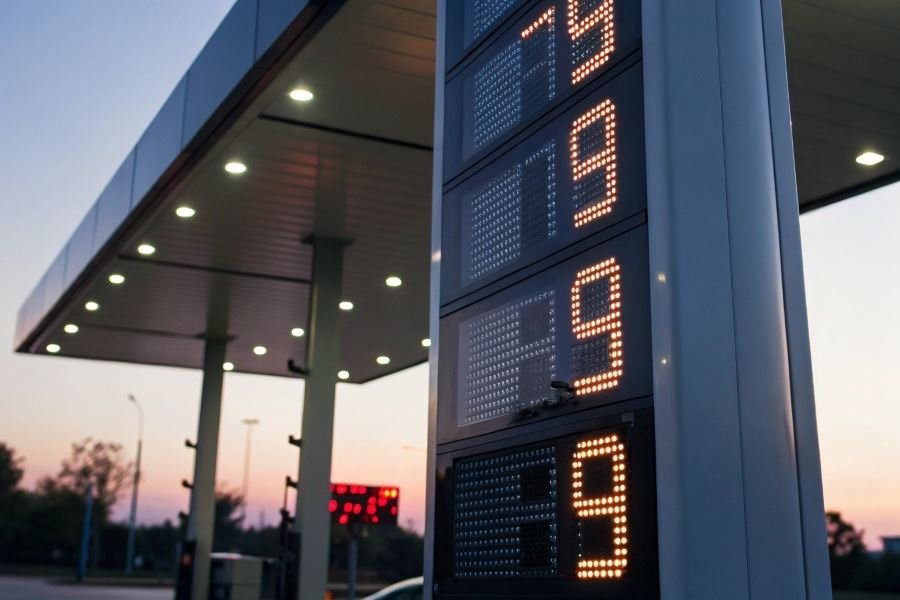
The right display doesn’t just show numbers—it transforms your entire operation.
When a driver pulls into your gas station, they’re making split-second decisions based largely on what they see on your displays. These critical interfaces have evolved dramatically since the basic LED price signs of the 1990s, becoming sophisticated command centers that can drive sales, streamline operations, and create competitive advantage in an increasingly tight market.
Gas station display technology has undergone a remarkable transformation. Today’s market offers everything from weather-resistant LCD panels to cloud-connected digital signage systems that can be updated remotely. The technology powering these displays has become more energy-efficient, with some modern LED displays consuming up to 70% less power than models from just a decade ago.
Why your display choice matters more than you think
Selecting the appropriate display technology isn’t merely an aesthetic decision—it’s a strategic business investment. The right display system can dramatically reduce transaction times, minimize user errors, and significantly enhance customer experience. In high-volume stations, even saving 5-10 seconds per transaction can translate to hundreds of additional customers served daily.
The three pillars of display selection
When evaluating display options for your fuel station, three fundamental criteria should guide your decision-making process: environmental durability, visibility performance, and integration capabilities. These factors form the foundation of a display system that will perform reliably while delivering maximum return on investment through improved operational efficiency and enhanced customer satisfaction.
Technical Specifications That Make or Break Gas Station Displays
When selecting digital displays for your fuel station, the technical specifications aren’t just numbers on a spec sheet—they’re the difference between a system that thrives for years and one that fails when you need it most. The harsh reality of gas station environments demands displays that can withstand everything from scorching summer heat to winter storms while maintaining perfect visibility and seamless operation.
Understanding how to choose a display for a gas station requires evaluating three critical technical criteria that separate premium solutions from problematic ones. The technical backbone of these systems determines whether your customers can easily read fuel prices from the road or struggle to see them on bright days.
Weather Warriors: Durability Requirements
Gas station displays face a brutal gauntlet of environmental challenges that would destroy consumer-grade screens within months. Professional-grade displays must offer:
- IP65 or higher ratings for protection against dust and water jets
- Temperature tolerance ranges of -40°F to 140°F (-40°C to 60°C)
- Corrosion-resistant housings that withstand fuel vapors and road salt
The Daktronics Vanguard series exemplifies this durability with sealed electronics compartments and conformal-coated circuit boards that prevent moisture damage. These aren’t just nice-to-have features—they’re essential for displays expected to operate 24/7/365 in exposed locations.
The average lifespan of a properly specified gas station display should exceed 7 years of continuous operation, even in extreme climate zones.
Brightness That Cuts Through Sunlight
A display that’s unreadable defeats its primary purpose. Outdoor visibility requirements are non-negotiable:
| Environment | Minimum Brightness (nits) | Recommended Brightness (nits) |
|---|---|---|
| Shaded areas | 1,500 | 2,000 |
| Partial sun | 2,500 | 3,500 |
| Direct sunlight | 5,000+ | 7,000+ |
The Watchfire Signs Price Watcher series delivers exceptional brightness with automatic dimming sensors that adjust output based on ambient light conditions. This not only ensures visibility but optimizes power consumption and extends LED lifespan.
Anti-glare treatments and wide viewing angles (minimum 140° horizontal) ensure your display remains readable from multiple approach directions, maximizing customer awareness of your current pricing.
Integration: The Invisible Technical Challenge
The most overlooked aspect of gas station displays is their ability to communicate with existing systems. Modern displays must offer:
- Real-time POS integration with major platforms like Verifone and Gilbarco Veeder-Root
- Multiple communication protocols including TCP/IP, RS232, and wireless options
- Automated price updates that eliminate manual entry errors
The technical architecture should include redundant communication pathways and local memory storage to maintain operation even during network outages. Skyline Products electronic price displays exemplify this approach with their fault-tolerant design and comprehensive API documentation.
Remember that the most technically advanced display is worthless if it can’t reliably receive pricing updates from your management system. Compatibility verification should be a mandatory step in your selection process, with documented proof of successful integration with your specific POS and fuel management infrastructure.
Maximizing Your Gas Station Display Investment
Smart Content Management That Scales
Gas station displays need to adapt quickly to changing promotions, fuel prices, and menu offerings. Today’s leading display systems offer cloud-based content management platforms that transform how operators control their messaging. The Daktronics Visiconn system exemplifies this evolution, allowing staff to update content across multiple locations from a single dashboard—even from a smartphone.
Remote update capabilities have become non-negotiable for modern operations. When fuel prices change, displays should reflect those updates within minutes, not hours. Advanced systems from providers like Watchfire Signs offer scheduling features that automatically adjust promotional content based on time of day, maximizing the effectiveness of your messaging during morning commutes versus evening traffic.
Real-world impact: A multi-location operator in Texas reported 22% higher in-store sales after implementing remotely managed promotional content that could be synchronized across 35 locations simultaneously.
Energy Efficiency That Protects Your Bottom Line
Display technology has undergone a remarkable transformation in power consumption. Modern LED displays consume approximately 60% less energy than models from just five years ago. This efficiency translates directly to operational savings.
| Display Type | Average Power Consumption | Annual Energy Cost |
|---|---|---|
| Traditional LCD | 300-500 watts | 788−1,314 |
| Modern LED | 120-200 watts | 315−526 |
| Smart LED with ambient sensors | 80-150 watts | 210−394 |
Energy costs calculated at average commercial rate of $0.15/kWh running 16 hours daily
Maintenance requirements vary dramatically between technologies. Samsung outdoor-rated displays feature IP56 weather protection and automated temperature management systems that extend component life in extreme conditions. The best displays now offer self-diagnostic capabilities that alert operators to potential issues before they cause downtime.
The True Cost Equation
Total cost of ownership extends far beyond the initial purchase price. A comprehensive TCO analysis must include:
- Installation costs – Including electrical work and structural modifications
- Energy consumption – Calculated over the expected lifespan
- Maintenance expenses – Both preventative and reactive
- Content creation and management – Often overlooked but significant
- Replacement parts and service contracts
The ROI timeline for modern gas station displays typically ranges from 14-36 months, depending on location traffic and implementation strategy. Skyline Products electronic price signs have demonstrated ROI acceleration through their ability to implement price changes 4x faster than manual methods.
“The display that costs least to purchase often costs most to own,” as the industry wisdom goes.
High-brightness displays from manufacturers like LG Commercial may command a 30-40% premium upfront but deliver superior visibility that extends effective viewing distances by up to 50 feet—dramatically increasing customer engagement and ultimately driving more forecourt-to-store conversions.
When evaluating ROI expectations, consider that a properly implemented display system should influence approximately 8-12% of customer purchase decisions, potentially adding 0.35−0.75 to the average transaction value across fuel and convenience purchases.
Discover the essential criteria for selecting optimal gas station displays in 2025. Learn about weather resistance, visibility standards, system integration, and cost-effective solutions that maximize operational efficiency and customer experience.
Discover the essential criteria for selecting optimal gas station displays in 2025. Learn about weather resistance, visibility standards, system integration, and cost-effective solutions that maximize operational efficiency and customer experience.


