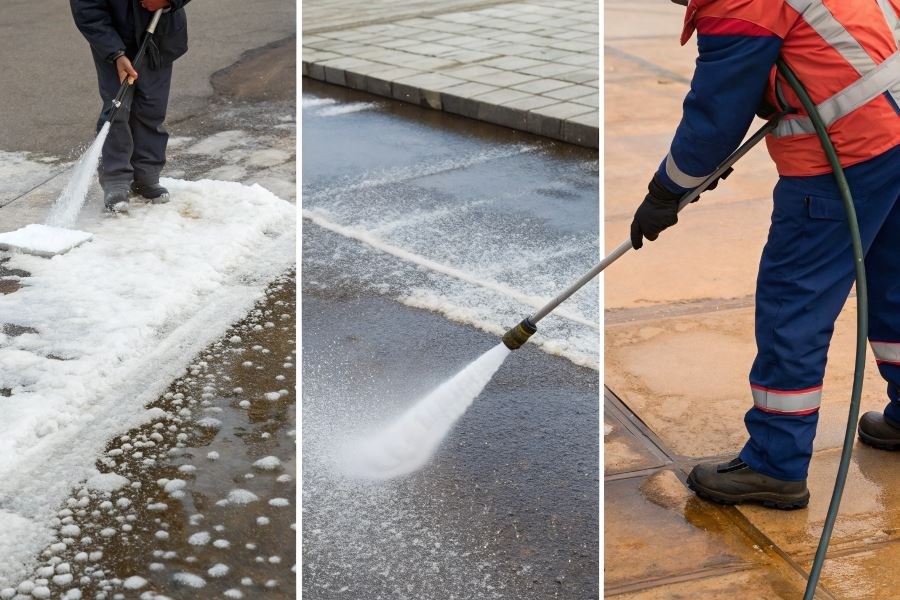
Ever wondered why some properties remain ice-free during winter storms while others become treacherous skating rinks? The difference often lies not in the products used, but in how they’re applied. Proper anti-icing isn’t just about throwing salt around—it’s a calculated science that protects both people and property.
When winter weather threatens, the difference between safety and liability often comes down to understanding the critical balance between effectiveness and surface protection. Anti-icing materials—those substances applied before ice forms—create a barrier that prevents snow and ice from bonding to surfaces, making removal significantly easier and reducing slip hazards.
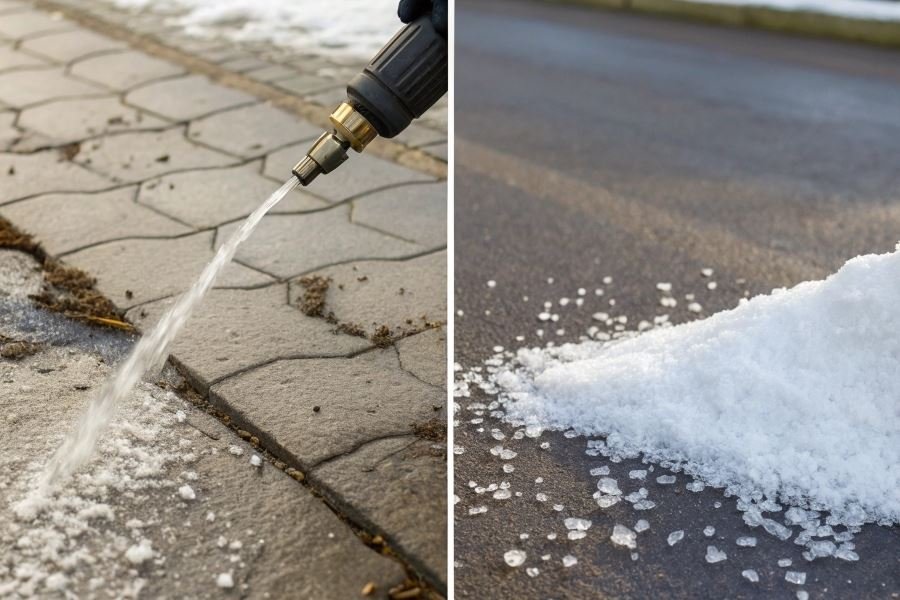
The anti-icing arsenal includes liquid brines (typically sodium, calcium, or magnesium chloride), solid granular materials (rock salt, calcium chloride pellets), and newer eco-friendly alternatives derived from agricultural byproducts. Each serves specific purposes: liquid brines excel on highways and large paved areas, while granular products work better on walkways and stairs where precision matters.
Selecting the right material depends on several key factors:
- Temperature range: Standard rock salt becomes ineffective below 15°F, while calcium chloride works down to -25°F
- Surface material: Concrete, metal, and vegetation all react differently to various deicers
- Environmental concerns: Runoff into waterways and damage to vegetation require consideration
- Traffic patterns: High-traffic areas need different treatment approaches than rarely-used pathways
Proper application timing might be the most overlooked factor—applying materials just before precipitation begins maximizes effectiveness while minimizing the quantity needed, creating both economic and environmental benefits.
Surface-Specific Anti-Icing Techniques That Actually Work
When winter strikes, knowing how to properly apply anti-icing materials on different surfaces becomes crucial for safety and property protection. Each surface—whether concrete, asphalt, or metal—demands specific approaches to maximize effectiveness while minimizing damage. The difference between haphazard application and strategic deployment can mean thousands in repair costs come spring.
Concrete Surface Application: Precision Matters
Concrete surfaces like driveways, sidewalks, and steps require careful consideration when applying anti-icing materials. The porous nature of concrete makes it particularly vulnerable to damage from certain deicers.
Best practices for concrete:
- Apply calcium magnesium acetate (CMA) or calcium chloride at 2-4 oz per square yard
- Pre-wet concrete surfaces lightly before application for better adhesion
- Maintain a 2-3 inch buffer from vegetation and grass edges
- Use a broadcast spreader for even distribution on larger areas
Never use rock salt (sodium chloride) directly on new concrete less than one year old. The chemical reaction can cause spalling—those unsightly chips and flakes that destroy your investment.
Pro tip: For concrete steps, apply anti-icing materials before precipitation begins, focusing on edges and high-traffic zones for maximum effectiveness.
Asphalt Application: Strategic Coverage
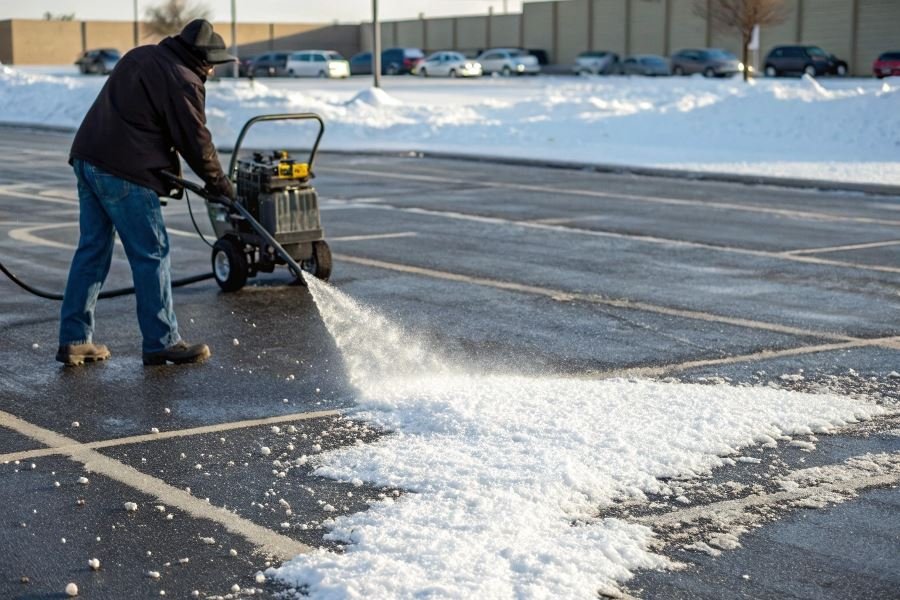
Asphalt surfaces in parking lots and roadways benefit from different application techniques than concrete. While more resilient than concrete, asphalt still requires thoughtful application to prevent deterioration of the binding agents.
Effective asphalt application methods:
- Use sodium chloride (rock salt) at 5-10 oz per square yard for temperatures above 15°F
- Switch to calcium chloride or magnesium chloride for temperatures below 15°F
- Apply in a W-pattern for parking lots to ensure comprehensive coverage
- Focus on high-traffic areas and slopes first
| Temperature Range | Recommended Deicer | Application Rate |
|---|---|---|
| Above 25°F | Sodium Chloride | 5-7 oz/sq yd |
| 15-25°F | Calcium Chloride | 3-6 oz/sq yd |
| Below 15°F | Magnesium Chloride | 3-5 oz/sq yd |
Pre-treating asphalt 24-48 hours before expected snowfall can reduce overall deicer usage by up to 30%, saving both materials and surface integrity.
Metal Surface Protection: The Corrosion Challenge
Metal surfaces present unique challenges when it comes to anti-icing. Railings, equipment, and metal stairs require specialized approaches to prevent the accelerated corrosion that many deicers can cause.
Specialized metal surface techniques:
- Use potassium acetate or propylene glycol-based deicers exclusively
- Apply with a spray bottle or pump sprayer for controlled distribution
- Maintain thin, even coating rather than heavy application
- Wipe excess material after ice threat has passed to prevent residue buildup
Critical warning: Standard chloride-based deicers will dramatically accelerate corrosion on metal surfaces, potentially reducing lifespan by years rather than months.
For commercial metal staircases, consider installing heating elements as a long-term solution that eliminates the need for chemical deicers entirely.
By tailoring your anti-icing approach to each specific surface type, you’ll not only improve safety during winter conditions but also extend the lifespan of your property investments. Remember that proper application techniques aren’t just about quantity—timing, distribution patterns, and material selection all play crucial roles in effective winter maintenance.
Mastering Anti-Icing Best Practices for Long-Term Surface Protection
Strategic timing maximizes anti-icing effectiveness
The secret to successful anti-icing isn’t just about what materials you use—it’s when you use them. Applying anti-icing treatments before precipitation begins delivers up to 30% more efficiency than waiting until snow accumulates. The ideal application window falls 2-4 hours before expected snowfall, allowing materials to bond properly with surfaces.
For frequency, consider these evidence-based guidelines:
- Commercial properties: Reapply every 6-8 hours during continuous precipitation
- Residential driveways: One application before storm onset, followed by a second application if precipitation exceeds 4 hours
- Walkways with heavy foot traffic: Every 4-6 hours to maintain effectiveness
Temperature monitoring transforms good anti-icing into great anti-icing. When pavement temperatures drop below 15°F (-9°C), traditional salt becomes significantly less effective. At these temperatures, switching to calcium chloride or magnesium chloride delivers superior performance despite the higher cost—ultimately saving money by requiring fewer applications.
Eco-conscious anti-icing alternatives protect watersheds
Traditional rock salt (sodium chloride) remains the most widely used anti-icing material, but its environmental impact can’t be ignored. Each winter, approximately 20 million tons of salt enters North American watersheds, affecting aquatic ecosystems and vegetation.
Environmentally-conscious alternatives are gaining traction:
| Anti-Icing Material | Environmental Impact | Effective Temperature | Relative Cost |
|---|---|---|---|
| Calcium Magnesium Acetate | Minimal watershed impact | Effective to 0°F (-18°C) | 3-5x higher |
| Beet juice solutions | Biodegradable, reduces chloride use | Enhances salt performance to -20°F (-29°C) | 2x higher |
| Sand/salt mixtures | Reduces total chloride load | Improves traction rather than melting | Similar |
| Potassium acetate | Biodegradable, low toxicity | Effective to -15°F (-26°C) | 4x higher |
The initial investment in eco-friendly alternatives often pays dividends through reduced surface damage and environmental remediation costs.
For sensitive areas near waterways or protected vegetation, consider targeted application strategies. Using pre-wetted materials reduces bounce and scatter by up to 30%, ensuring anti-icing compounds stay where needed rather than washing into storm drains.
Post-winter restoration preserves surface integrity
The battle against ice doesn’t end when temperatures rise. Proactive post-winter maintenance prevents cumulative damage from anti-icing materials:
-
Thorough surface cleaning: Power wash concrete and masonry surfaces to remove residual salt compounds that continue drawing moisture and causing deterioration.
-
Neutralization treatments: Apply diluted white vinegar solution (1:3 ratio with water) to neutralize alkaline salt residue on concrete surfaces.
-
Sealing vulnerable surfaces: Concrete exposed to anti-icing materials should receive penetrating sealers every 2-3 years to prevent moisture intrusion through microscopic cracks.
For metal surfaces like railings and decorative elements, inspect for early corrosion indicators and apply protective coatings before minor damage escalates. Catching corrosion early can extend metal component lifespan by 5-7 years.
Remember that different surfaces require tailored restoration approaches. While asphalt may need crack sealing to prevent water infiltration, concrete often benefits from densifiers that strengthen the surface against future chemical exposure.
By implementing these comprehensive best practices, you’ll not only effectively manage winter hazards but also protect your property investment for years to come.
Learn effective techniques for applying anti-icing materials on concrete, asphalt, and metal surfaces. Discover proper timing, eco-friendly alternatives, and surface-specific methods to ensure safety while preventing damage during winter conditions.
Learn effective techniques for applying anti-icing materials on concrete, asphalt, and metal surfaces. Discover proper timing, eco-friendly alternatives, and surface-specific methods to ensure safety while preventing damage during winter conditions.