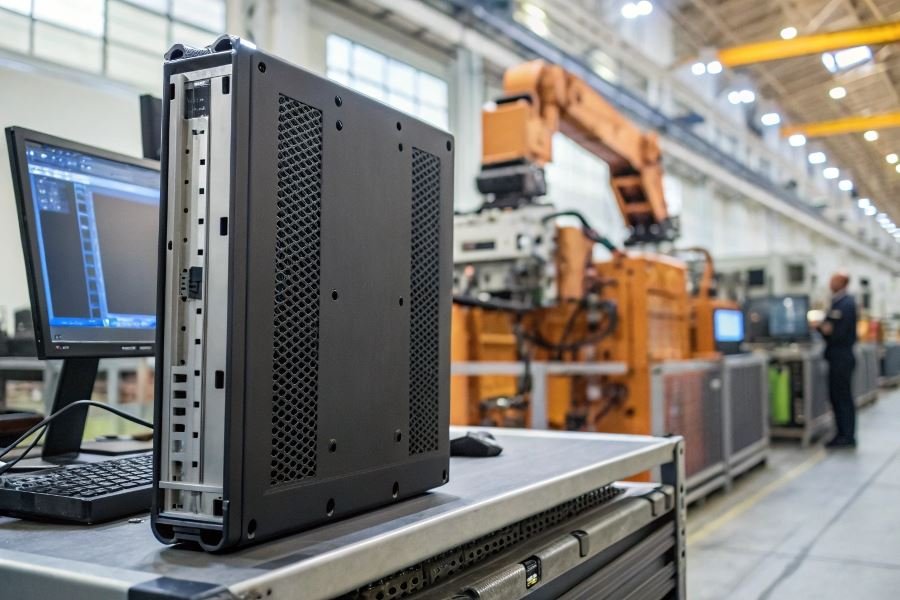
What powers the machines that build our world? Behind every automated assembly line and smart factory floor stands a critical technology that rarely gets the spotlight: the industrial panel PC.
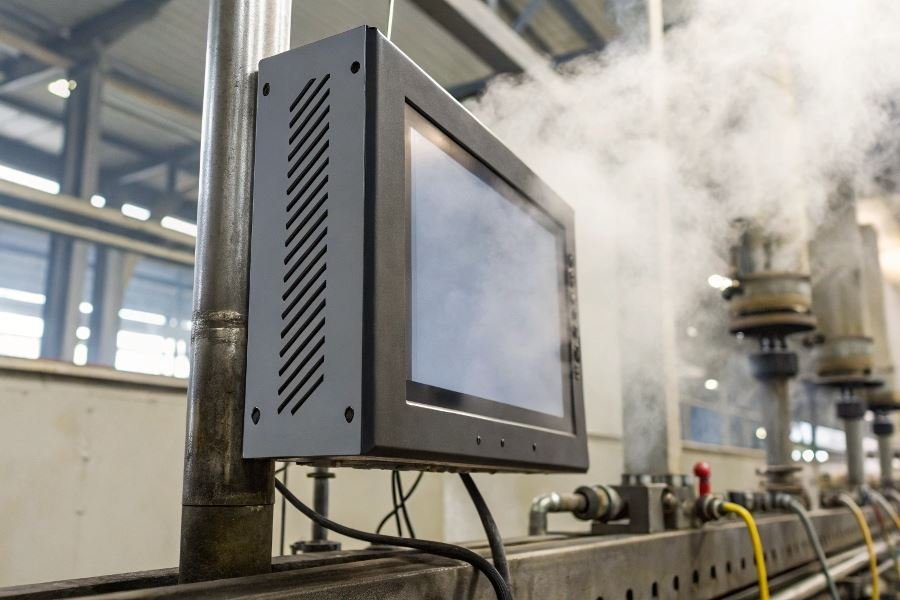
Industrial panel PCs represent the perfect marriage of computing power and rugged reliability. Unlike their consumer counterparts, these specialized computers are designed to thrive in environments where dust, vibration, temperature extremes, and 24/7 operation are the norm. At their core, they combine a high-performance processor, touchscreen display, and specialized I/O options in a sealed, fanless enclosure that can withstand the harshest manufacturing conditions.
The evolution of these workhorses has been remarkable. What began as simple human-machine interfaces in the 1980s has transformed into sophisticated computing platforms that now serve as command centers for entire production lines. The integration of IoT capabilities, edge computing, and advanced visualization tools has revolutionized how factories operate, creating unprecedented efficiency and flexibility.
Consumer vs. Industrial: A world of difference
| Feature | Consumer PCs | Industrial Panel PCs |
|---|---|---|
| Lifespan | 2-3 years | 7-10+ years |
| Operating temperature | 50-95°F | -4-140°F (or wider) |
| Dust/water protection | None | IP65/IP66 rated |
| Vibration resistance | Minimal | Military-grade standards |
| Component availability | Short-term | Long-term guaranteed |
The price difference between consumer and industrial models isn’t just about durability—it’s about total cost of ownership. When a $2,000 industrial panel PC prevents a $50,000 production stoppage, the investment becomes crystal clear.
Built to Endure: Essential Features of Industrial Panel PCs
Industrial panel PCs represent the backbone of modern manufacturing floors, control rooms, and harsh operational environments where consumer-grade computers would fail within hours. These specialized computing solutions combine robust construction with advanced functionality to deliver reliable performance where it matters most.
When examining industrial panel PCs: features and advantages of use become immediately apparent in their physical construction. Unlike their commercial counterparts, these machines are engineered from the ground up to withstand conditions that would quickly destroy standard computing equipment. This fundamental difference drives their adoption across industries from oil and gas to food processing and transportation.
Ruggedized Design That Refuses to Quit
The first thing you’ll notice about industrial panel PCs is their unapologetically robust construction. These aren’t sleek, fragile devices designed for air-conditioned offices—they’re computing workhorses built to thrive in punishment.
Shock and vibration resistance stands as a cornerstone feature, with many models certified to military standards like MIL-STD-810G. This means they can withstand drops, constant vibration from heavy machinery, and even the occasional impact without missing a beat.
The housing materials tell another story of durability:
| Material | Benefits | Common Applications |
|---|---|---|
| Aluminum | Lightweight, excellent heat dissipation | Food processing, clean rooms |
| Stainless Steel | Corrosion resistant, easy to sanitize | Chemical plants, outdoor installations |
| Industrial Polymers | Impact resistant, non-conductive | Mobile applications, high-impact areas |
Many industrial panels from manufacturers like Advantech feature fully-sealed bezels that prevent dust, moisture, and other contaminants from reaching sensitive internal components.
Fanless Cooling: Silent Reliability
Perhaps the most ingenious engineering aspect of industrial panel PCs is their fanless cooling system. By eliminating fans—the components most likely to fail in traditional computers—manufacturers have removed a critical point of failure.
These systems employ passive cooling techniques including:
- Heat pipes that transfer thermal energy away from processors
- Strategically placed heat sinks that maximize surface area
- Thermally conductive chassis designs that turn the entire case into a cooling element
This fanless design delivers three immediate advantages:
- Dramatically improved reliability with fewer moving parts
- Complete protection against dust infiltration that would otherwise clog fans
- Silent operation critical in noise-sensitive environments
The IP (Ingress Protection) ratings further demonstrate their environmental resilience. Models with IP65 ratings are completely dust-tight and protected against low-pressure water jets, while IP69K-rated units can withstand high-pressure, high-temperature wash-downs common in food processing facilities.
Temperature Range That Defies Limits
Standard computers typically operate within a narrow temperature window of 50°F to 95°F (10°C to 35°C). Industrial panel PCs from companies like Dell and Siemens shatter these limitations with extended temperature ranges.
Many industrial models operate flawlessly in environments from -40°F to 158°F (-40°C to 70°C), making them suitable for:
- Freezing cold outdoor installations in northern climates
- Scorching hot desert deployments or near-furnace operations
- Rapid temperature fluctuations that would cause condensation issues in standard equipment
This temperature resilience isn’t just impressive—it’s transformative for operations that previously required expensive climate control systems just to keep their computers functioning.
The combination of these features creates computing platforms that deliver consistent performance in environments where consumer and even commercial-grade equipment simply cannot survive.
Transforming Industry Through Panel PC Integration
Manufacturing Process Control Reimagined
Industrial panel PCs have revolutionized manufacturing process control by creating seamless automation integration pathways. Unlike conventional computing solutions, these rugged workhorses connect directly to PLCs, motors, sensors, and robotics systems through multiple I/O options. When Siemens implemented panel PCs across their motor assembly lines, they reported a 37% reduction in production bottlenecks and near-instant response to process variations.
The true advantage emerges in unified control environments. A single industrial panel PC can replace multiple specialized controllers, creating a centralized command center that eliminates communication delays between systems. This integration capability means operators can:
- Monitor production metrics while simultaneously adjusting machine parameters
- Respond to quality control alerts without switching between systems
- Access historical performance data alongside real-time operations
Manufacturing facilities using integrated panel PC solutions typically experience 15-22% improvements in production efficiency during the first year of implementation.
Human-Machine Interface Evolution
The touchscreen revolution didn’t bypass industrial environments—it transformed them. Modern industrial panel PCs feature multi-touch interfaces with glove-compatible screens that function reliably even in harsh conditions. Advantech panel PCs maintain responsiveness in environments ranging from -20°C to 60°C while resisting dust, vibration, and moisture ingress.
What makes these interfaces truly revolutionary is their contextual adaptability:
| Interface Feature | Operational Benefit |
|---|---|
| Role-based access | Displays only relevant controls to specific workers |
| Gesture support | Enables operation with dirty or gloved hands |
| Customizable layouts | Adapts to different production processes |
| Multi-language support | Accommodates diverse workforce needs |
The ergonomic advantages translate directly to productivity gains. Workers interact more naturally with equipment, reducing training time by up to 40% compared to traditional button-and-dial interfaces. Error rates in manual data entry typically drop by 60-75% when migrating from keyboard-based systems to well-designed touch interfaces.
Real-Time Data Intelligence
Perhaps the most transformative advantage of industrial panel PCs lies in their data collection and monitoring capabilities. These systems serve as both operational interfaces and data gateways, capturing thousands of process variables simultaneously.
The real magic happens when this data becomes actionable intelligence:
- Predictive maintenance alerts identify potential equipment failures before they occur
- Production anomalies trigger immediate notifications rather than appearing in end-of-shift reports
- Energy consumption patterns reveal optimization opportunities in real-time
Rockwell Automation customers implementing panel PC-based monitoring systems have documented average downtime reductions of 23% and maintenance cost savings of $270,000 annually in medium-sized manufacturing operations.
Beyond operational improvements, these systems create digital twins of production processes—virtual replicas that enable simulation and optimization without disrupting actual production. This capability allows manufacturers to test process changes virtually before implementing them physically, dramatically reducing the risk associated with production modifications.
The combination of robust hardware, intuitive interfaces, and powerful data capabilities makes industrial panel PCs not just control devices, but strategic assets in manufacturing excellence.
Discover how rugged industrial panel PCs revolutionize smart manufacturing with fanless cooling, IP-rated protection, and extended temperature operation. Explore their durability advantages and seamless integration for process control and real-time monitoring.
Discover how rugged industrial panel PCs revolutionize smart manufacturing with fanless cooling, IP-rated protection, and extended temperature operation. Explore their durability advantages and seamless integration for process control and real-time monitoring.