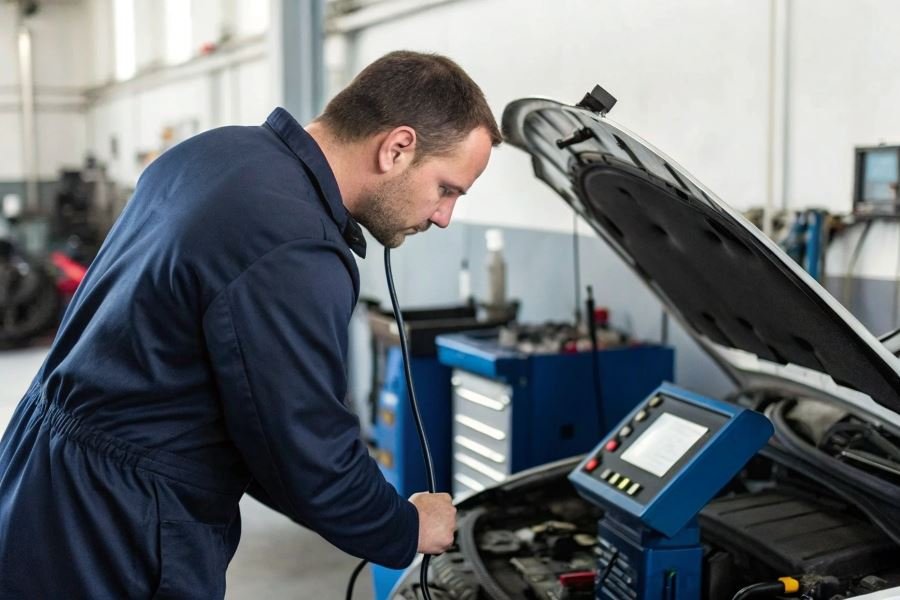
Ever wondered why some mechanics can diagnose fuel system issues in minutes while others spend hours guessing? The secret often lies not in experience alone, but in their testing equipment. Fuel injector testers have quietly revolutionized vehicle diagnostics, transforming what was once an art of intuition into a science of precision.
When fuel injectors fail, everything from engine performance to fuel economy suffers. Yet many automotive professionals still rely on outdated methods to diagnose these critical components. Choosing the right injector tester isn’t just about having another tool—it’s about fundamentally changing how accurately and efficiently you can identify problems.
The market offers three primary categories of injector testing equipment: pressure testers that verify fuel delivery rates, electrical testers that examine injector solenoid function, and comprehensive testing systems that evaluate spray patterns and atomization quality. Each serves distinct diagnostic purposes, with prices ranging from $100 for basic models to $5,000+ for professional-grade systems.
“The quality of your diagnosis is only as good as the quality of your testing equipment.” — This principle applies doubly for fuel injection systems.
What separates adequate testing from exceptional diagnostics is the tester’s ability to provide quantifiable data rather than subjective assessments. Modern injector testers don’t just tell you if an injector works—they measure precisely how well it works compared to manufacturer specifications. This distinction makes all the difference between replacing parts unnecessarily and fixing only what’s truly broken.
The right tester doesn’t just save time—it transforms your entire approach to fuel system maintenance.
Technical Essentials for Selecting a Premium Injector Tester
When precision meets performance in fuel system diagnostics, the right injector tester becomes your workshop’s most valuable asset. The difference between mediocre and exceptional fuel system maintenance often comes down to the capabilities of your testing equipment.
Selecting an appropriate injector tester requires understanding several critical technical parameters that directly impact your diagnostic accuracy. The process of how to choose a tester for injectors: main criteria involves evaluating compatibility, pressure capabilities, flow measurement precision, and diagnostic features—all working together to deliver reliable results that translate to optimal engine performance.
Fuel System Compatibility
Modern vehicles employ diverse fuel delivery systems, making versatility a non-negotiable feature in quality testing equipment.
Multi-system compatibility should be your first checkpoint. Premium testers like the Bosch EPS 205 offer testing capabilities across:
- Conventional port fuel injection (PFI)
- Direct gasoline injection (GDI/TFSI/FSI)
- Common rail diesel systems
- Piezoelectric injectors
The best units provide dedicated adapters and testing protocols for each system type, eliminating the need for multiple specialized tools.
Pressure Range and Measurement Accuracy
Fuel systems operate at dramatically different pressures—from 40-60 PSI in traditional gasoline systems to upwards of 29,000 PSI (2,000 bar) in modern diesel applications.
Your tester’s pressure capabilities must align with the vehicles you service most frequently.
| Fuel System Type | Typical Pressure Range | Recommended Tester Capability |
|---|---|---|
| Conventional Gasoline | 40-60 PSI | 0-100 PSI |
| GDI/TFSI | 500-3,000 PSI | 0-3,500 PSI |
| Common Rail Diesel | 5,000-29,000 PSI | 0-30,000 PSI |
Measurement accuracy is equally crucial—look for testers with pressure sensors offering ±1% accuracy or better. The ASNU GDI Master exemplifies this precision with digital pressure monitoring accurate to ±0.5%.
Flow Rate Testing Precision
Injector performance is ultimately measured by flow rate consistency. Superior testers evaluate:
- Static flow rate (volume delivered over time)
- Dynamic flow (spray pattern and atomization quality)
- Injector balance (variation between injectors)
Precision requirements increase with modern engines. While older systems might tolerate 5% variation between injectors, today’s high-efficiency engines demand balance within 1-2%.
The best testers, such as the Launch CNC-602A, offer flow measurement resolution down to 0.1mL and can detect variations as small as 0.5% between injectors—essential for diagnosing subtle performance issues.
Diagnostic Intelligence
Beyond basic measurements, advanced diagnostic capabilities transform raw data into actionable insights:
- Real-time waveform analysis displays injector electrical response patterns
- Automated test sequences ensure consistent evaluation procedures
- Comparative analysis against manufacturer specifications
- Simulation capabilities for replicating various engine conditions
Look for systems with intuitive interfaces that visualize spray patterns and provide clear pass/fail criteria. The Delphi YDT-35 exemplifies this with its color-coded performance mapping and automated diagnostic reporting.
The most valuable diagnostic tools also offer data export capabilities, allowing you to maintain detailed service records and track injector performance over time—a feature increasingly important for fleet maintenance programs and warranty documentation.
Smart Shopping for Injector Testers
When investing in diagnostic equipment for your shop or garage, injector testers represent a significant decision point. The right tester can dramatically improve your efficiency and accuracy, while the wrong choice might leave you with an expensive paperweight. Let’s dive into the practical considerations that should guide your selection process.
Balancing Budget with Business Needs
The price range for injector testers spans from $200 for basic DIY models to $5,000+ for professional-grade equipment. This isn’t just about what you can afford—it’s about calculating return on investment.
For professional mechanics and shop owners, premium testers from manufacturers like Bosch or LAUNCH typically pay for themselves within 3-6 months through:
- Faster diagnostic times (15-20 minutes saved per vehicle)
- Expanded service capabilities
- Reduced comebacks and warranty work
DIY enthusiasts and small operations should consider mid-range options ($500-1200) that offer essential functionality without breaking the bank. The OTC 6550 strikes this balance particularly well.
The most expensive tester isn’t always the best choice—the right tester is the one that matches your specific workflow and testing volume.
User Experience and Learning Investment
Even the most powerful tester becomes worthless if your team can’t effectively operate it. Consider these practical aspects:
| Factor | What to Look For |
|---|---|
| Interface | Intuitive controls, clear display, modern connectivity |
| Setup Time | Under 5 minutes from box to first test |
| Maintenance | Self-cleaning features, readily available parts |
| Training Resources | Video tutorials, comprehensive manual, tech support |
The learning curve varies dramatically between models. ASNU injector testers are renowned for their user-friendly operation, while some Chinese imports might require significant time investment before delivering reliable results.
Maintenance requirements deserve special attention. Some units require weekly calibration and regular cleaning, while others feature self-diagnostic systems that minimize downtime.
Reputation and Support Infrastructure
The diagnostic equipment landscape is littered with here-today-gone-tomorrow manufacturers. Your investment deserves better protection.
When evaluating manufacturer reputation, look beyond marketing claims to:
- Industry presence: Companies with 10+ years in the market typically offer more reliable products
- User forums: Real-world feedback from actual technicians reveals performance in daily use
- Update frequency: Regular firmware updates indicate ongoing product support
Warranty terms vary significantly—from 90-day limited coverage to comprehensive 3-year protection plans. Delphi stands out with their 24-month warranty that includes loaner equipment during repairs.
Matching Equipment to Operation Type
Different business models demand different equipment profiles:
For high-volume repair shops: Prioritize speed and durability. The FADA GIT-8 processes up to 12 injectors simultaneously, dramatically increasing throughput.
For specialty performance shops: Look for testers with advanced flow rate measurement and pattern analysis. DeatschWerks equipment excels at precision testing for modified vehicles.
For mobile mechanics: Consider compact, battery-capable units like the Hickok portable series that deliver professional results without requiring shop infrastructure.
For diesel specialists: Invest in purpose-built equipment designed for high-pressure common rail systems. The Bosch EPS 205 remains the gold standard despite its premium price point.
By carefully matching your equipment selection to your specific business requirements, you’ll ensure that your injector tester becomes a profit center rather than an expense.
Discover the 5 essential criteria for selecting the perfect injector tester for your automotive needs. Learn about compatibility, pressure ranges, flow testing capabilities, and key features that ensure accurate fuel system diagnostics and optimal vehicle performance.
Discover the 5 essential criteria for selecting the perfect injector tester for your automotive needs. Learn about compatibility, pressure ranges, flow testing capabilities, and key features that ensure accurate fuel system diagnostics and optimal vehicle performance.