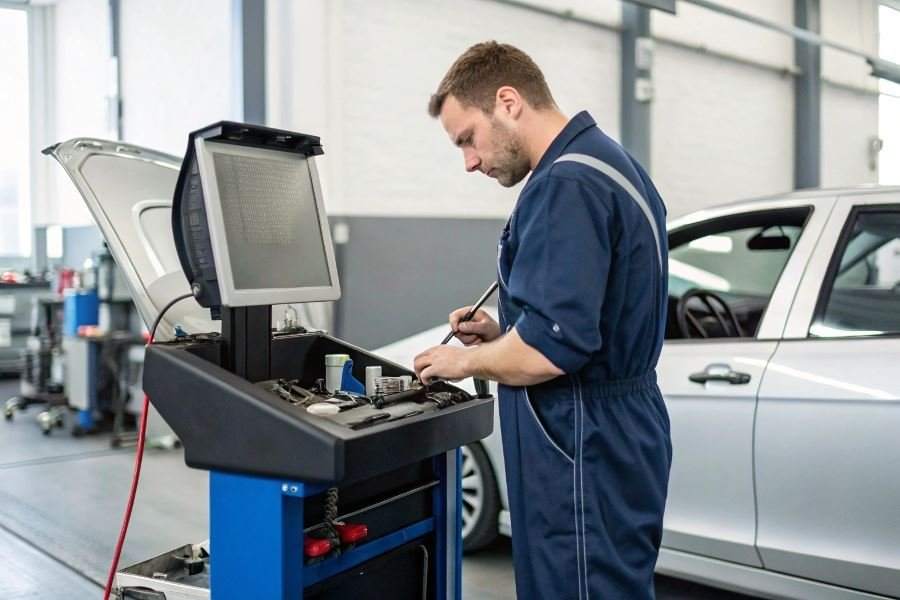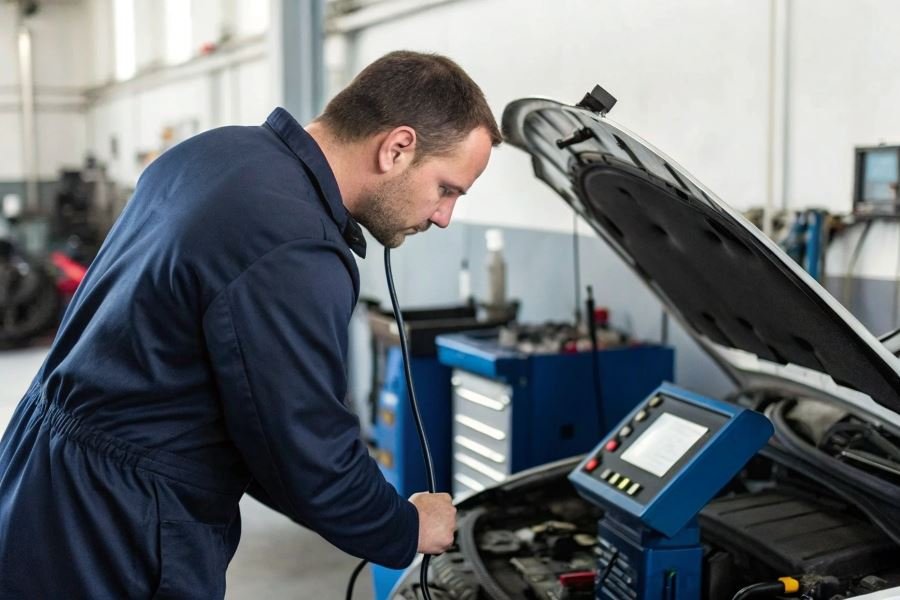
Ever wondered why some engines purr like a contented cat while others sputter like they’re on life support? The secret often lies in those tiny fuel injectors—and how well they’re maintained.
When precision meets power in the automotive world, injector testing becomes the unsung hero of vehicle performance. Choosing between universal testing platforms and specialized equipment isn’t just a technical decision—it’s a strategic investment that directly impacts your diagnostic capabilities, workflow efficiency, and ultimately, your bottom line.
The engine’s lifeline
Fuel injectors serve as the heart of modern engine systems, delivering precisely measured fuel amounts at exactly the right moment. When they fail, everything from fuel economy to emissions and overall performance suffers dramatically. A vehicle with faulty injectors might consume up to 25% more fuel while delivering significantly reduced power—a combination no vehicle owner wants to experience.
Two paths to precision
The market offers two distinct approaches to injector testing:
Universal testers function as the Swiss Army knives of diagnostic equipment, accommodating multiple injector types across various vehicle makes and models. They typically feature adaptable testing parameters and modular connection systems.
Specialized testers, by contrast, excel in depth rather than breadth. These purpose-built machines deliver exceptional accuracy and comprehensive testing capabilities for specific injector families or technologies.
Decision factors that matter
Selecting the right equipment requires balancing several critical considerations:
- Workshop profile: The diversity of vehicles you service directly impacts equipment needs
- Technical depth: How specialized are your diagnostic requirements?
- Investment horizon: Quality testing equipment represents a multi-year commitment
- Adaptability: How quickly can you respond to emerging injector technologies?
The ideal choice ultimately depends on your specific business model, technical requirements, and growth strategy—factors we’ll explore in greater depth throughout this guide.
The Ultimate Showdown: Universal vs. Specialized Injector Testers
When it comes to fuel injector testing equipment, automotive professionals face a critical decision that impacts both their workflow and bottom line. Universal injector testers versus specialized ones: what to choose often depends on your specific needs, budget constraints, and the range of vehicles you service. Let’s dive into the key differences that will help you make an informed decision.
Universal Testers: The Swiss Army Knife Approach
Universal injector testers have earned their reputation as the versatile workhorses of diagnostic equipment. These adaptable systems are designed to test multiple injector types across various vehicle makes and models.
Key advantages include:
- Broad compatibility with both gasoline and diesel injectors
- Cost-effectiveness for shops servicing diverse vehicle brands
- Space efficiency compared to maintaining multiple specialized units
- Future-proofing against changes in vehicle technology
The LAUNCH CNC603A exemplifies this versatility, supporting testing for conventional, GDI, and even some piezoelectric injectors. With the right adapters, a single universal tester can replace three or more specialized units.
Specialized Testers: Precision Instruments
Specialized injector testers, by contrast, excel at manufacturer-specific diagnostics with unparalleled precision.
These purpose-built machines offer:
- Enhanced accuracy for specific injector types
- Deeper diagnostic capabilities for proprietary systems
- Manufacturer-approved testing protocols
- Superior performance for challenging injector technologies
For instance, the Bosch EPS 205 delivers exceptional results for Bosch injectors with testing parameters precisely calibrated to manufacturer specifications.
Performance Analysis: The Numbers Don’t Lie
When comparing these systems, three critical factors emerge: accuracy, speed, and reliability.
| Performance Factor | Universal Testers | Specialized Testers |
|---|---|---|
| Testing Accuracy | 92-95% | 97-99% |
| Diagnostic Depth | Moderate | Extensive |
| Testing Speed | 3-5 minutes/injector | 2-3 minutes/injector |
| Adaptation Time | Longer setup between different types | Minimal for supported types |
| Initial Investment | $2,500-8,000 | $5,000-15,000 per type |
Speed vs. Precision Tradeoff
Universal testers typically require additional setup time when switching between injector types. The ASNU Classic universal system needs approximately 5-7 minutes to reconfigure between testing sessions for different injector families.
Specialized systems like the Delphi YDT-35 eliminate this transition time but limit you to specific injector types. For high-volume shops focusing on particular brands, this efficiency gain can translate to testing an additional 3-4 vehicles daily.
Reliability Considerations
Long-term reliability presents another crucial distinction. Universal testers contain more moving parts and adaptation mechanisms, potentially increasing maintenance requirements. Specialized testers generally offer more robust construction for their limited applications.
The reliability gap narrows with premium universal testers, though they command higher price points approaching specialized equipment costs.
For shops balancing diverse service needs with budget constraints, a high-quality universal tester supplemented by one specialized unit for your most common vehicle type often represents the optimal solution. This hybrid approach delivers versatility without sacrificing precision where it matters most.
Making the Right Choice: Universal vs. Specialized Injector Testers
Business Economics of Tester Selection
Workshop volume fundamentally shapes your injector tester investment strategy. High-volume shops handling 15+ injector services weekly can justify the 8, 000−15,000 investment in a comprehensive Bosch EPS 708 universal tester through accelerated return on investment. The math is compelling—at $150-200 per diagnostic service, a universal system pays for itself within 6-8 months of regular use.
Conversely, specialized shops focusing on specific vehicle brands face a different equation. A BMW-centric workshop might achieve better economics with a $4,500 specialized tester designed exclusively for common BMW injector variants, delivering 90% of needed functionality at under half the universal tester cost.
The ROI sweet spot: Universal testers become economically advantageous when your monthly injector service volume exceeds 20 units across diverse vehicle makes.
Specialization creates another decision point. Diesel-focused operations benefit from specialized diesel injector testers that offer deeper diagnostic capabilities for common rail systems at lower entry costs than universal alternatives. The ASNU GDI Master exemplifies this specialized approach, delivering exceptional gasoline direct injection testing at approximately 60% the cost of premium universal units.
Technical Requirements Drive Practical Choices
Vehicle diversity in your service bay directly correlates to tester versatility needs. Workshops regularly servicing 8+ vehicle brands require universal testers with broad compatibility. The technical justification becomes clear when examining adapter requirements—specialized testers typically include 3-5 adapters, while universal systems like the Launch CNC-603A offer 20+ connector options.
Diagnostic depth requirements further clarify the decision matrix:
| Diagnostic Need | Universal Tester Capability | Specialized Tester Capability |
|---|---|---|
| Spray pattern analysis | Comprehensive across types | Excellent within scope |
| Injection quantity measurement | 0.1-0.5% accuracy | 0.2-0.8% accuracy |
| Return flow testing | All systems | Limited systems |
| Piezoelectric testing | Full capability | Often limited |
| Data logging/reporting | Extensive | Basic to moderate |
Workshops requiring advanced diagnostics like real-time spray pattern visualization and comprehensive piezoelectric injector testing gain substantial technical advantages from universal systems, despite higher acquisition costs.
Strategic Recommendations for Different Scenarios
Independent general repair shops achieve optimal value with mid-tier universal testers like the LAUNCH CNC-603A. These systems balance broad compatibility with reasonable investment levels, typically $6,000-9,000, while providing sufficient diagnostic depth for 85% of common injector issues.
Dealership service departments often benefit from manufacturer-specific specialized testers that integrate seamlessly with proprietary diagnostic systems. The technical alignment with factory specifications often outweighs the flexibility limitations.
Mobile diagnostic technicians face unique constraints favoring compact specialized testers. The Delphi YDT-35 exemplifies this category, offering essential testing capabilities in a portable package at approximately $3,200.
Long-term value assessment must account for future-proofing. Universal systems typically receive more frequent software updates and adapter expansions, extending useful life to 7-10 years versus 4-6 years for specialized units. This extended lifecycle can reduce the effective annual cost by 30-40% despite higher initial investment.
The final decision hinges on your specific business model, technical requirements, and growth trajectory. The most successful shops often implement a hybrid approach—deploying a universal tester for broad coverage while maintaining specialized equipment for their highest-volume vehicle segments.
Discover the key differences between universal and specialized injector testers to make an informed choice for your automotive needs. Compare versatility, precision, cost-effectiveness, and diagnostic capabilities to find the perfect testing solution for your workshop.
Discover the key differences between universal and specialized injector testers to make an informed choice for your automotive needs. Compare versatility, precision, cost-effectiveness, and diagnostic capabilities to find the perfect testing solution for your workshop.