Ever wondered why some auto shops charge premium rates while others struggle to keep the lights on? The answer often lies hidden in their diagnostic capabilities – particularly when it comes to fuel injector systems. The difference between guesswork and precision can mean thousands in revenue and countless loyal customers.
Fuel injectors are the unsung heroes of modern engines, delivering precisely measured fuel doses measured in milliseconds. When they fail, everything from fuel economy to emissions and engine power suffers dramatically. A vehicle with malfunctioning injectors might still run, but it’s like trying to sprint with a pebble in your shoe – technically possible, but painfully inefficient.
The technology for diagnosing these critical components has undergone a remarkable transformation. What began as rudimentary pressure testing in the 1980s has evolved into sophisticated electronic analysis systems that can detect microscopic imperfections in spray patterns and timing. Today’s diagnostic equipment can identify issues that would have been impossible to detect even a decade ago.
The competitive edge of precision diagnostics
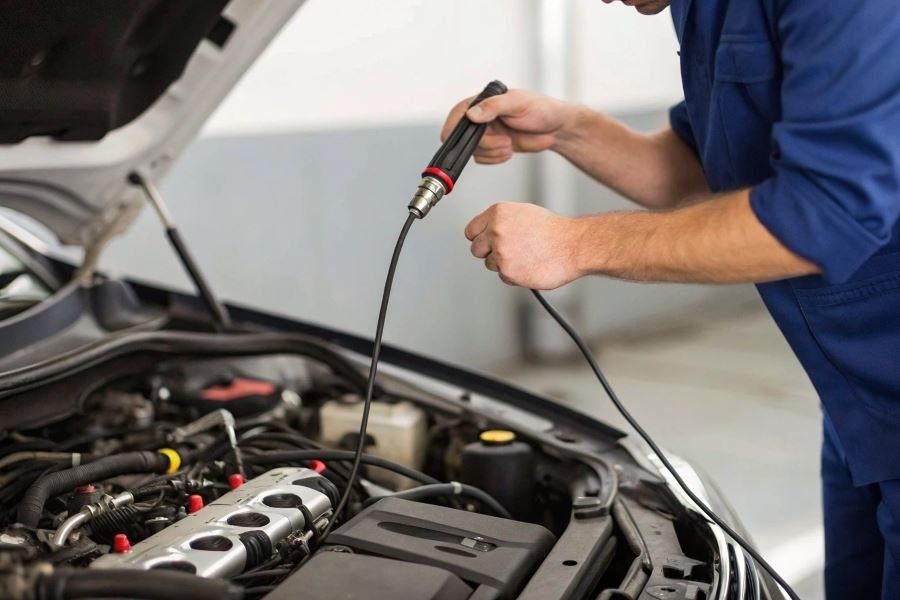
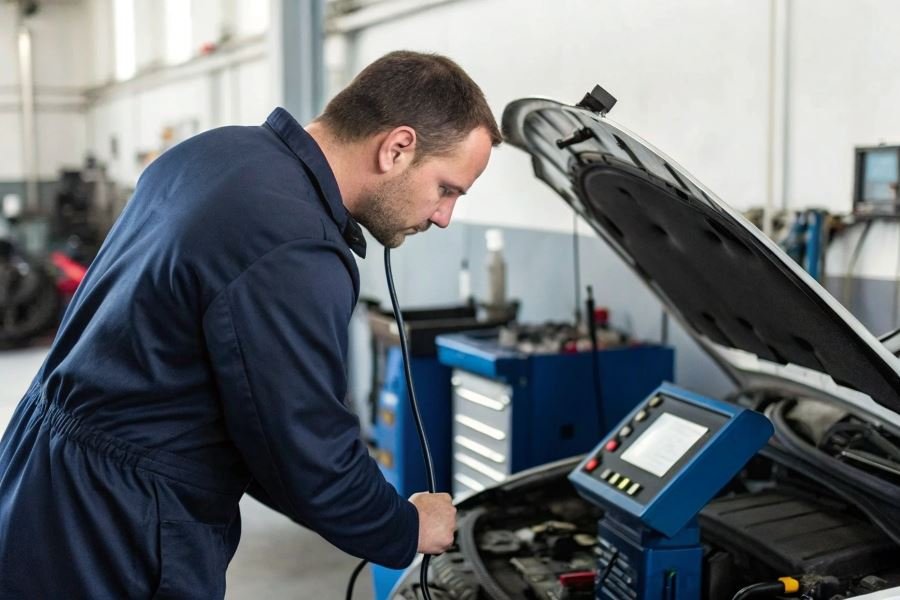
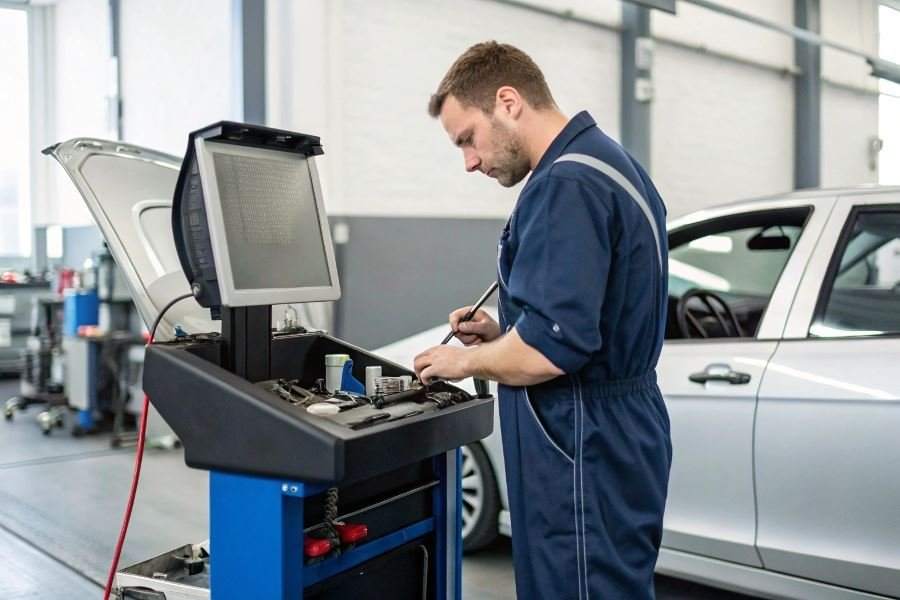
For auto service businesses, investing in quality injector diagnostic equipment isn’t just about fixing cars – it’s about building a reputation for reliability. Shops equipped with ultrasonic cleaners, flow rate testers, and electronic pulse testers can diagnose problems with certainty rather than speculation.
The most successful service centers understand that customers don’t just pay for repairs – they pay for confidence. When you can show a customer exactly why their vehicle is underperforming with data-driven evidence rather than hunches, you transform the entire service experience from a necessary expense into a valuable investment in their vehicle’s longevity.
Essential Injector Diagnostic Equipment for Modern Auto Service
The backbone of any serious auto service operation lies in its diagnostic capabilities. When it comes to fuel injector performance, having the right equipment isn’t just convenient—it’s critical for accurate diagnosis and effective repairs. The specialized tools required for comprehensive injector diagnostics represent a significant investment, but one that pays dividends in customer satisfaction and repair precision.
Modern vehicles demand modern solutions, and injector diagnostics equipment has evolved dramatically to meet these challenges. Auto service professionals need a complete arsenal of specialized tools to properly evaluate, test, and repair fuel injectors across today’s diverse vehicle landscape. From ultrasonic cleaners to advanced software systems, each piece of equipment serves a specific purpose in the diagnostic workflow.
Ultrasonic Cleaners and Test Benches
At the heart of any injector diagnostic setup is the ultrasonic cleaner. These sophisticated machines use high-frequency sound waves to create microscopic bubbles that implode against injector surfaces, removing carbon deposits and contaminants without damaging delicate components. Premium models like the Launch CNC602A can simultaneously clean and test up to 6 injectors, dramatically improving workshop efficiency.
Test benches take diagnosis to the next level by simulating real-world operating conditions. These systems allow technicians to:
- Observe spray patterns under various RPM conditions
- Identify leakage issues at different pressure levels
- Verify balanced delivery across multiple injectors
- Test injector response times to electronic signals
Industry-leading test benches now incorporate transparent viewing chambers with high-speed cameras, enabling technicians to capture and analyze spray patterns with unprecedented clarity.
Flow Rate Testing and Pressure Measurement
Precision is paramount when diagnosing injector issues. Flow rate testing equipment measures the exact volume of fuel delivered by each injector, typically expressed in cubic centimeters per minute (cc/min).
The difference between a properly functioning injector and one requiring replacement can be as little as 3-5% deviation from specifications.
| Test Type | Measurement | Typical Tolerance | Equipment Precision |
|---|---|---|---|
| Static Flow | cc/min | ±3% | ±0.5% |
| Dynamic Flow | cc/cycle | ±2% | ±0.3% |
| Leakage | cc/min | <1.5 cc/min | ±0.1 cc/min |
Digital pressure gauges have largely replaced analog models, offering greater accuracy and the ability to record pressure fluctuations over time. Modern systems like the Snap-on EEFI500A can measure fuel pressure with accuracy to within 0.1 PSI while simultaneously monitoring electrical signals to the injector.
Software and Electronic Diagnostic Tools
The final frontier in injector diagnostics involves sophisticated software solutions that interpret data from multiple sensors. These systems can:
- Compare actual injector performance against manufacturer specifications
- Generate comprehensive reports for customer documentation
- Predict potential failures before they occur
- Guide technicians through calibration procedures
The Bosch KTS series represents the gold standard in electronic diagnostic tools, offering compatibility with virtually all vehicle makes and models. These systems connect directly to the vehicle’s ECU to monitor injector pulse width, duty cycle, and response characteristics in real-time.
Advanced diagnostic software now incorporates machine learning algorithms that can identify patterns indicative of specific failure modes, dramatically reducing diagnostic time. Some systems even maintain cloud-based databases of known issues, allowing technicians to benefit from collective experience across thousands of repair facilities.
For auto service operations serious about injector diagnostics, investing in this comprehensive suite of equipment isn’t optional—it’s essential for delivering accurate diagnoses and effective repairs in today’s increasingly complex automotive landscape.
Maximizing Your Auto Service with Strategic Injector Diagnostics
The ROI of premium diagnostic equipment
Investing in quality injector diagnostic equipment represents one of the most significant financial decisions for auto service businesses. Premium ultrasonic cleaners and flow rate testers typically range from $5,000 to $25,000, while comprehensive diagnostic stations can exceed $50,000. However, this investment consistently delivers returns through multiple revenue streams.
A modern ASNU Classic Injector Diagnostic System can diagnose issues in 15-20 minutes that might take hours through traditional methods. This efficiency translates directly to higher service capacity—often allowing shops to double their injector-related service volume.
The math is compelling: A $15,000 diagnostic system that enables just two additional $250 injector service jobs daily recoups its investment in approximately 30 business days.
Beyond direct revenue, quality equipment dramatically reduces misdiagnosis rates. Shops using precision diagnostic tools report warranty return rates below 2%, compared to industry averages of 7-12% with conventional methods. This precision builds reputation and customer loyalty—the most valuable assets in the competitive auto service landscape.
Technical proficiency drives equipment value
Even the most sophisticated diagnostic equipment becomes merely expensive decoration without properly trained technicians. The technical complexity of modern fuel injection systems demands specialized knowledge that evolves continuously.
Training requirements typically include:
| Training Type | Duration | Recommended Frequency | Focus Areas |
|---|---|---|---|
| Manufacturer-specific | 2-3 days | Upon purchase | Equipment operation, maintenance |
| Diagnostic methodology | 1 week | Annually | Testing protocols, result interpretation |
| Advanced troubleshooting | 3-5 days | Every 2 years | Complex system diagnosis, emerging technologies |
Leading shops implement tiered certification programs for technicians, with senior staff achieving master certification through organizations like ASE (Automotive Service Excellence). These certified technicians typically command 30-40% higher wages but generate 60-80% more revenue through faster, more accurate diagnostics.
Tomorrow’s diagnostic landscape
The injector diagnostic technology horizon shows several transformative trends that forward-thinking auto services should monitor:
AI-powered diagnostic assistance is emerging through systems like Bosch’s KTS diagnostic series, which incorporates machine learning to identify patterns in injector performance data that human technicians might miss. These systems can reduce diagnostic time by up to 40% while improving accuracy.
Remote diagnostic capabilities are expanding rapidly, with equipment that can transmit real-time data to manufacturer support centers or specialized consultants. This democratizes expertise, allowing smaller shops to access specialized knowledge previously available only to dealerships.
Integration with predictive maintenance systems represents perhaps the most significant shift. Modern diagnostic equipment increasingly connects with vehicle telematics to anticipate injector failures before they occur. This proactive approach transforms the service model from reactive repair to preventive maintenance—a paradigm that typically generates 25-35% higher customer lifetime value.
The most successful auto services are those that view diagnostic equipment not as a cost center but as a strategic investment in capability. By carefully analyzing return on investment, prioritizing technical training, and staying ahead of technological trends, shops can transform injector diagnostics from a necessary function into a significant competitive advantage.
Discover the essential diagnostic equipment auto services need for precise fuel injector testing and repair. Learn about ultrasonic cleaners, test benches, and electronic tools that improve service quality and boost shop profitability.
Discover the essential diagnostic equipment auto services need for precise fuel injector testing and repair. Learn about ultrasonic cleaners, test benches, and electronic tools that improve service quality and boost shop profitability.