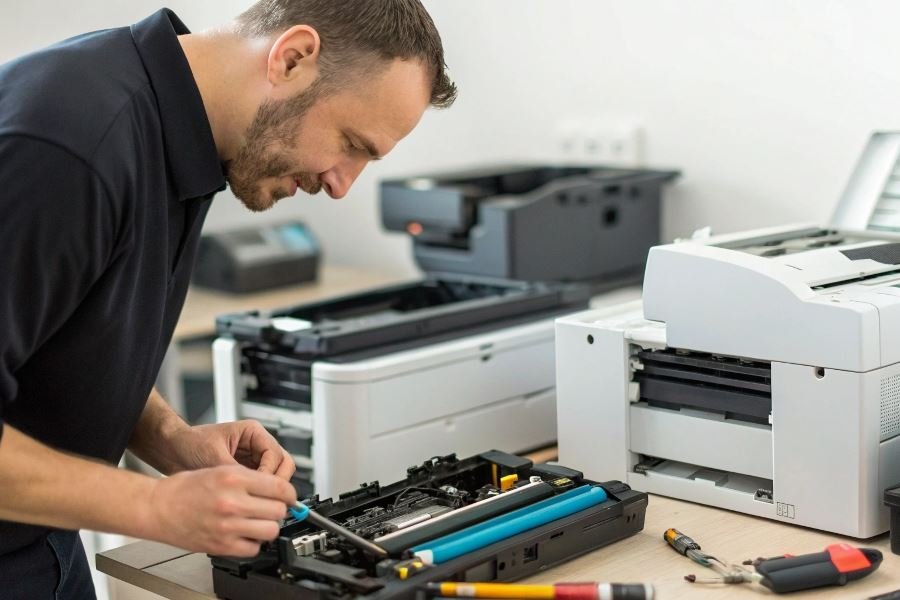
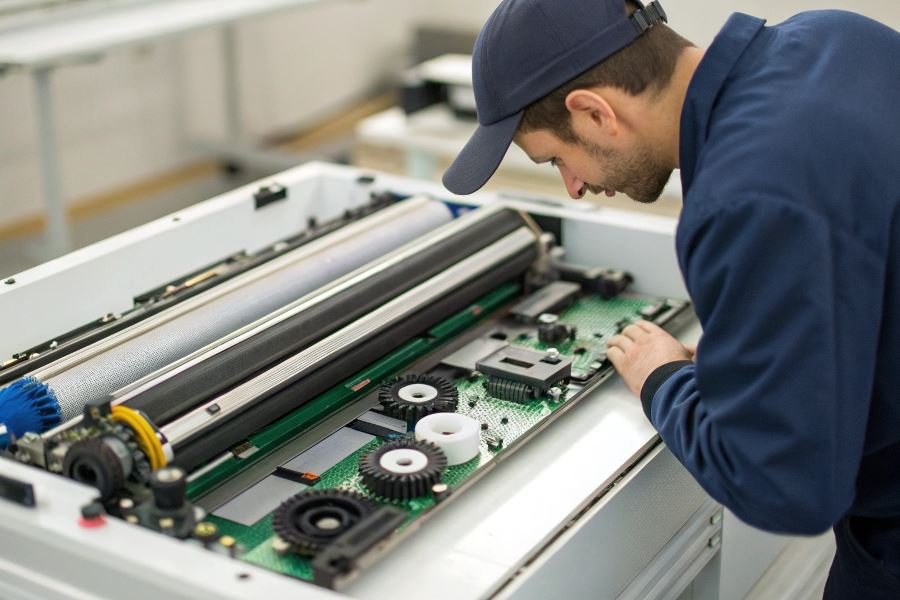
Ever wondered why some printers seem to last forever while others fail within months? The secret isn’t luck—it’s in the parts.
When your trusty inkjet printer displays that dreaded error message, you’re faced with a critical decision that impacts not just your immediate printing needs, but potentially hundreds of dollars in future costs. Selecting and installing the right spare parts for inkjet printers involves understanding a delicate ecosystem of components designed to work in perfect harmony. Like a precision timepiece, each gear and spring matters.
The longevity equation: Quality parts = Extended printer life
Quality replacement parts directly influence your printer’s lifespan. Research from the Technical Imaging Products Association shows printers maintained with genuine parts typically last 40% longer than those repaired with generic alternatives. This translates to approximately 18-24 additional months of reliable service—a significant return on a relatively small investment.
Components most likely to need replacement
Your printer’s most vulnerable parts include:
- Print heads: The workhorses responsible for precise ink distribution
- Ink cartridge carriages: The mechanical systems that guide print heads
- Paper feed assemblies: Including rollers that frequently wear down
- Maintenance stations: Critical for cleaning and preserving print heads
The genuine advantage
While aftermarket parts may seem economically attractive, genuine manufacturer parts offer significant benefits:
- Perfect compatibility with existing systems
- Consistent print quality without unexpected variations
- Reduced risk of cascading failures where one faulty part damages others
- Manufacturer warranty protection that remains intact
When properly selected and installed, quality replacement parts don’t just fix problems—they prevent future headaches while maintaining the precision engineering that makes modern inkjet printing possible.
The Heartbeat of Your Printer: Essential Components Demystified
When your inkjet printer starts producing streaky prints or refusing to feed paper, understanding the critical spare parts can save you hundreds in replacement costs. Selecting and installing the right components isn’t just about compatibility—it’s about maximizing print quality and extending your printer’s lifespan.
The world of spare parts for inkjet printers features selection and installation challenges that even experienced users find daunting. Each component plays a crucial role in the printing ecosystem, with quality variations that can dramatically impact performance. Let’s break down the essential components that keep your printer running smoothly.
Printheads: The Brain Behind Perfect Prints
Printheads represent the most sophisticated component in your printer, containing microscopic nozzles that precisely deposit ink droplets. When selecting replacement printheads, consider these critical factors:
- OEM vs. third-party compatibility: Original manufacturer printheads typically offer superior longevity but at premium prices
- DPI resolution capabilities: Higher resolution printheads (1200+ DPI) deliver sharper text and images
- Nozzle count: More nozzles generally mean faster printing and better detail rendering
Installation requires precision and clean hands. Before installing, run the printer’s cleaning cycle, then power down completely. Most modern printheads from HP and Canon use snap-in mechanisms, while Epson models often require careful alignment with guide pins.
Never touch the nozzle surface or electrical contacts during installation—oils from your fingers can permanently damage these delicate components.
Ink Cartridges: The Lifeblood of Quality Output
Selecting compatible ink cartridges involves navigating a maze of options beyond simple color matching. Key compatibility factors include:
| Compatibility Factor | Why It Matters |
|---|---|
| Chip technology | Controls communication with printer |
| Ink formulation | Affects drying time and color accuracy |
| Capacity (ml/cc) | Determines cost per page |
| Age since manufacture | Fresh ink performs better |
For proper installation, always remove the protective tape completely and avoid touching the ink ports. Insert cartridges at the angle specified by the manufacturer—forcing them can damage the carriage assembly. After installation, run alignment pages to ensure optimal performance.
Pro tip: Many printers from Brother and Canon require you to press until you hear a “click” sound, confirming proper seating of the cartridge.
Paper Feed Mechanisms: Unsung Heroes of Reliability
Paper feed issues account for approximately 40% of all printer service calls. Quality replacement parts for feed mechanisms must match precise specifications:
- Pickup rollers: Look for silicone-based materials rather than rubber for longer life
- Separation pads: Thickness tolerance should be within 0.1mm of original specifications
- Feed gears: Metal gears outlast plastic but must match tooth count exactly
When installing feed components, clean all surrounding areas with isopropyl alcohol first. For pickup rollers from Lexmark and HP printers, ensure the one-way clutch mechanism faces the correct direction—backward installation will cause immediate paper jams.
The paper path should be completely free of debris before reassembly. Even a tiny paper fragment can cause persistent feeding problems.
Proper selection and installation of these critical components will dramatically extend your printer’s useful life while maintaining professional-quality output for years to come.
Maximizing Printer Performance Through Strategic Parts Management
Building a Maintenance Strategy That Pays Off
Printer maintenance isn’t just about fixing what breaks—it’s about creating a system that prevents problems before they start. Quality replacement components form the backbone of any effective long-term strategy. When you invest in premium parts like HP printheads or Epson dampers, you’re not just buying hardware—you’re buying time. These components typically last 2-3 times longer than budget alternatives, reducing your maintenance frequency dramatically.
The most successful maintenance approaches follow a three-tier system:
- Preventative replacement of wear items before failure
- Performance monitoring using diagnostic tools
- Environmental optimization to extend component life
Implementing a parts inventory system for critical components can reduce printer downtime by up to 78% according to a ServiceTech analysis. This approach transforms maintenance from reactive firefighting to strategic management.
The difference between amateur and professional printer maintenance isn’t technical knowledge—it’s having a system that anticipates failures instead of responding to them.
OEM vs Third-Party: The Real Cost Calculation
The debate between original equipment manufacturer (OEM) and third-party parts extends far beyond the initial price tag. Let’s break down the true economics:
| Factor | OEM Parts | Quality Third-Party | Budget Third-Party |
|---|---|---|---|
| Initial Cost | $$ | $ | |
| Lifespan | 18-24 months | 12-18 months | 3-6 months |
| Print Quality | Excellent | Very Good | Variable |
| Warranty Impact | None | Possible | Likely |
| Total Cost/Year | $175-250 | $120-180 | $200-400 |
The surprising revelation? Budget parts often cost more in the long run. When factoring in replacement frequency, print quality issues, and potential damage to other components, premium third-party parts from manufacturers like InkOwl often represent the sweet spot between cost and performance.
For business users, the calculation must include opportunity costs. A printer failure during a critical project can cost thousands in lost productivity—making that $30 saved on a budget printhead seem insignificant.
Troubleshooting After Installation: Solving the Puzzles
Even perfect parts can present problems when newly installed. The most common post-installation issues have straightforward solutions:
Print quality degradation typically indicates incomplete initialization. Running three consecutive cleaning cycles allows new components to fully prime with ink.
Error messages after cartridge replacement often result from contact misalignment. Remove and reinstall with firm, even pressure on all contact points.
Unusual noises following belt or gear replacement suggest improper tensioning. Most manufacturers provide specific tension specifications—follow them precisely rather than estimating by feel.
For persistent issues, diagnostic software like PrinterLogic can identify subtle problems that visual inspection might miss. These tools can detect pressure irregularities, flow restrictions, and electrical anomalies that manifest as print quality issues.
The most valuable troubleshooting approach combines systematic testing with detailed documentation. Recording which solutions resolved specific problems creates an invaluable knowledge base for future maintenance, transforming each problem into an investment in expertise.
Discover expert tips for selecting and installing inkjet printer spare parts. Learn about printheads, cartridges, and feed mechanisms to extend your printer's life and optimize performance. Quality parts guide for DIY maintenance.
Discover expert tips for selecting and installing inkjet printer spare parts. Learn about printheads, cartridges, and feed mechanisms to extend your printer's life and optimize performance. Quality parts guide for DIY maintenance.