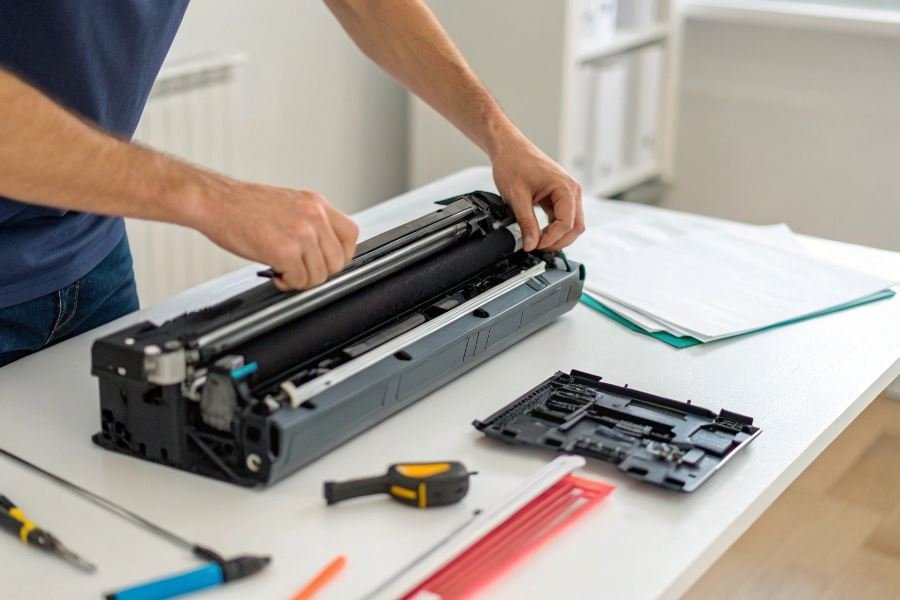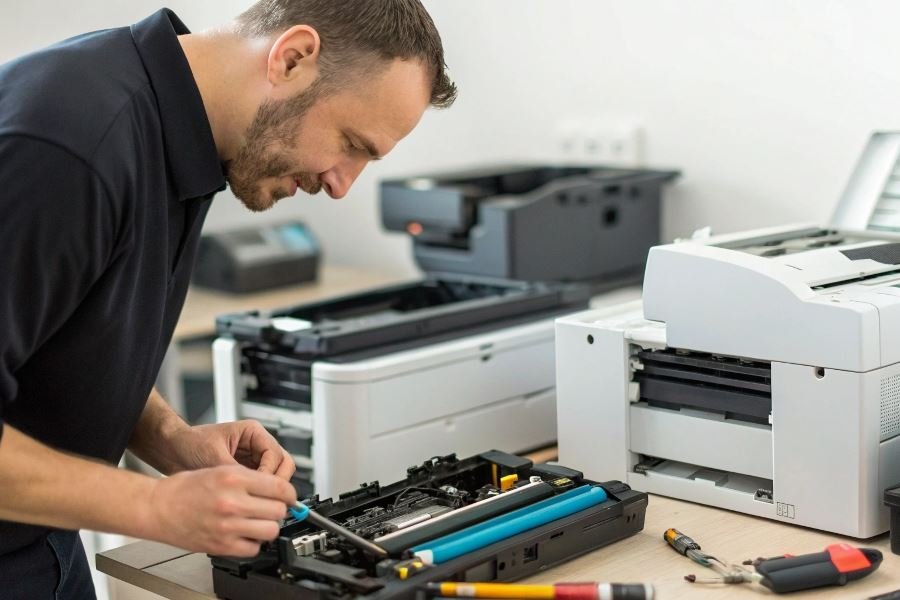
Ever wondered why replacing a tiny plastic gear in your office printer can cost more than a dinner for two? The world of printer parts hides a fascinating economic battleground where universal components are challenging long-established manufacturer monopolies.
When your multifunction printer displays that dreaded error message, you face a critical choice: pay premium prices for Original Equipment Manufacturer (OEM) parts or explore universal alternatives. Universal spare parts are third-party components designed to function across multiple printer models, often spanning different brands and generations. These parts represent both a practical solution to maintenance challenges and a direct challenge to the closed ecosystems printer manufacturers have carefully constructed.
The compatibility landscape has evolved dramatically since the 1980s when each printer was essentially a proprietary island. The standardization push that began in the early 2000s created opportunities for third-party manufacturers to develop components that work across multiple devices. Today’s universal parts market offers savings of 40-70% compared to OEM alternatives, with the global aftermarket printer parts industry now exceeding $20 billion annually.
What’s particularly interesting is how universal parts manufacturers have overcome sophisticated obstacles. Many printer giants implemented electronic authentication chips in components like toner cartridges, creating digital “handshakes” between parts and printers. Third-party developers responded with reverse-engineered solutions that maintain functionality while breaking dependency on single-source suppliers.
The battle between universal compatibility and manufacturer-controlled ecosystems continues to shape how businesses approach printer maintenance, balancing immediate cost savings against long-term reliability considerations.
Smart Spending: The Universal Parts Advantage
The Financial Upside of Universal Components
When printer maintenance budgets tighten, universal spare parts emerge as the unsung heroes of the office equipment world. These cross-compatible components typically cost 30-45% less than their OEM counterparts while delivering comparable performance in most applications. The economics become even more compelling at scale—organizations managing fleets of 50+ multifunction printers can realize annual savings of $3,000-5,000 through strategic deployment of universal parts.
The marketplace for universal spare parts for different models of multifunction printers offers possibilities that extend beyond mere cost savings, though limitations do exist depending on printer complexity and manufacturer specifications. Smart procurement managers recognize that certain components—particularly those with standardized designs—present minimal risk when sourced from reputable third-party manufacturers.
Cost analysis reveals the sweet spot: Fusers, transfer rollers, and paper pickup assemblies offer the highest ROI when purchased as universal components. A typical OEM fuser assembly for enterprise-grade multifunction printers costs $180-250, while universal alternatives from quality manufacturers like Katun or Static Control deliver comparable performance at $95-130.
Supply Chain Resilience Through Universal Compatibility
The global supply chain disruptions that began in 2020 taught procurement specialists a valuable lesson: single-source dependencies create vulnerability. Universal components provide critical redundancy when OEM parts face extended backorders.
During peak disruption periods, offices equipped with universal-compatible maintenance strategies maintained 94% uptime compared to 76% for OEM-exclusive operations.
This availability advantage translates directly to operational continuity. When manufacturer-specific components face 8-12 week lead times, universal alternatives often remain accessible through diversified distribution networks with 2-3 day delivery windows.
The Universal Parts Hall of Fame
Three universal components stand out for their exceptional cross-compatibility across printer brands and models:
1. Pickup Rollers: The Compatibility Champions
These humble rubber components achieve near-universal status with compatibility rates exceeding 85% across major brands. Their standardized dimensions and materials science make them ideal candidates for third-party manufacturing.
| Brand Compatibility | Models Covered | Average Lifespan | Cost Savings |
|---|---|---|---|
| HP, Canon, Lexmark | 120+ models | 50,000 pages | 65% |
| Kyocera, Ricoh | 85+ models | 45,000 pages | 58% |
| Xerox, Konica | 70+ models | 55,000 pages | 52% |
2. Fuser Assemblies: The Reliability Workhorses
Modern fuser designs have converged toward standardized heating elements and pressure systems. Universal fusers from manufacturers like Metrofuser achieve 70-75% cross-compatibility rates across mid-range multifunction devices.
Engineering insight: The thermal profiles and pressure specifications have become increasingly standardized, allowing third-party manufacturers to create fusers that perform within 3-5% of OEM specifications for temperature consistency and paper handling.
3. Maintenance Kits: The Comprehensive Solution
Complete maintenance kits represent the highest-value universal offering, bundling rollers, separation pads, and transfer components. These kits achieve 65% cross-compatibility while delivering savings of $150-300 per maintenance cycle compared to OEM alternatives.
The best universal maintenance kits include precision-engineered components that match OEM specifications for critical measurements like durometer hardness ratings and electrical conductivity—ensuring performance without compromising print quality or reliability.
By strategically incorporating these universal components, organizations can maintain equipment performance while significantly reducing operational costs and improving supply chain resilience.
The Hidden Costs of Universal Printer Parts
When managing a fleet of multifunction printers, the allure of universal spare parts is undeniable. They promise convenience and cost savings, but this convenience comes with important trade-offs that deserve careful consideration. Before committing to universal components for your printing infrastructure, understanding their limitations can save you from unexpected downtime and expenses.
The compatibility conundrum
Universal parts face significant hurdles when bridging the gap between different printer ecosystems. While manufacturers like HP, Canon, and Xerox design their machines with proprietary specifications, universal part makers must reverse-engineer solutions that work across multiple platforms.
This reverse-engineering process creates several challenges:
- Firmware conflicts – Many modern printers run authentication checks that may reject non-OEM components
- Generational differences – A universal part designed for 2020-era printers may not function properly in newer models
- Interface variations – Connection points, power requirements, and communication protocols differ substantially between brands
One office manager discovered this reality when a universal fuser assembly worked perfectly in their Canon imageRUNNER but caused paper jams in their Ricoh multifunction device, despite the supplier’s assurance of cross-compatibility.
Performance disparities that affect your bottom line
The quality gap between universal and OEM (Original Equipment Manufacturer) parts manifests in several measurable ways:
| Performance Factor | OEM Parts | Universal Parts |
|---|---|---|
| Average Lifespan | 100% | 70-85% |
| Print Quality Consistency | High | Variable |
| Failure Rate | 3-5% | 8-15% |
| Energy Efficiency | Optimized | Generally lower |
These differences stem from manufacturing tolerances, material quality, and design precision. Universal parts typically use more generic materials to maintain cost advantages, which can affect:
- Toner adhesion – Resulting in less vibrant colors and potential smudging
- Heat distribution – Leading to inconsistent fusing and potential paper jams
- Mechanical precision – Causing more wear on surrounding components
Warranty and reliability considerations
Perhaps the most significant limitation involves the long-term implications for your equipment. Installing universal parts typically voids manufacturer warranties, creating a cascade of potential issues:
“The decision to use universal parts isn’t just about the immediate cost savings—it’s about calculating the total cost of ownership over the device’s lifetime.”
When evaluating universal parts against OEM alternatives, consider:
- Service contract implications – Many service providers will not honor agreements if non-OEM parts are present
- Diagnostic complications – When problems arise, technicians may struggle to determine if the universal part is the culprit
- Downstream damage – Suboptimal performance from one component can accelerate wear on others
A manufacturing business in Detroit learned this lesson when universal feed rollers in their Konica Minolta bizhub caused paper misalignment that eventually damaged the more expensive imaging drum—a repair that cost four times the initial savings.
While universal parts offer compelling advantages in certain scenarios, their limitations demand thoughtful analysis. The most successful approach often involves strategic deployment—using universal components for less critical functions while maintaining OEM parts for core systems that affect print quality and reliability.
Discover the cost-saving benefits and potential limitations of universal printer parts across different multifunction models. Learn when compatibility works best and how to avoid common pitfalls when choosing alternatives to OEM components.
Discover the cost-saving benefits and potential limitations of universal printer parts across different multifunction models. Learn when compatibility works best and how to avoid common pitfalls when choosing alternatives to OEM components.