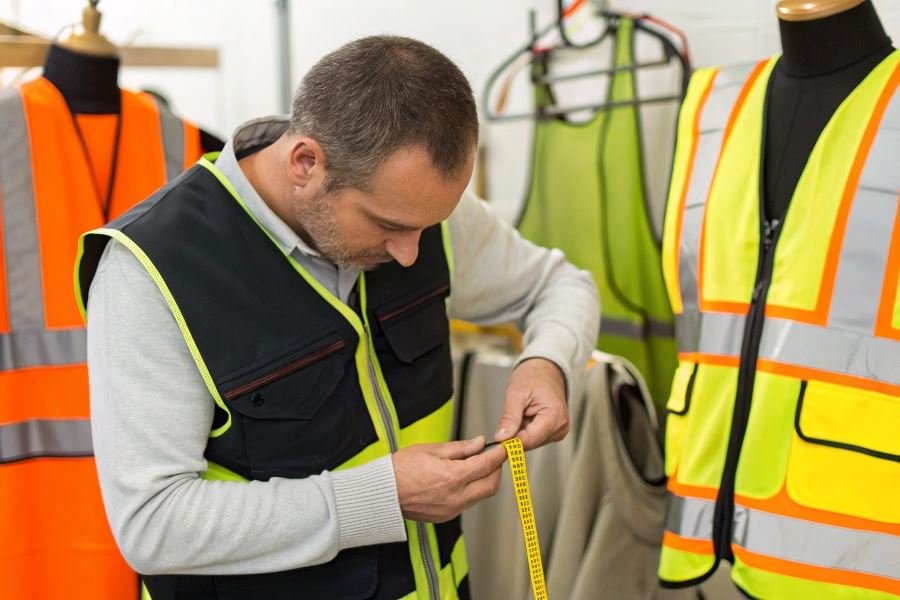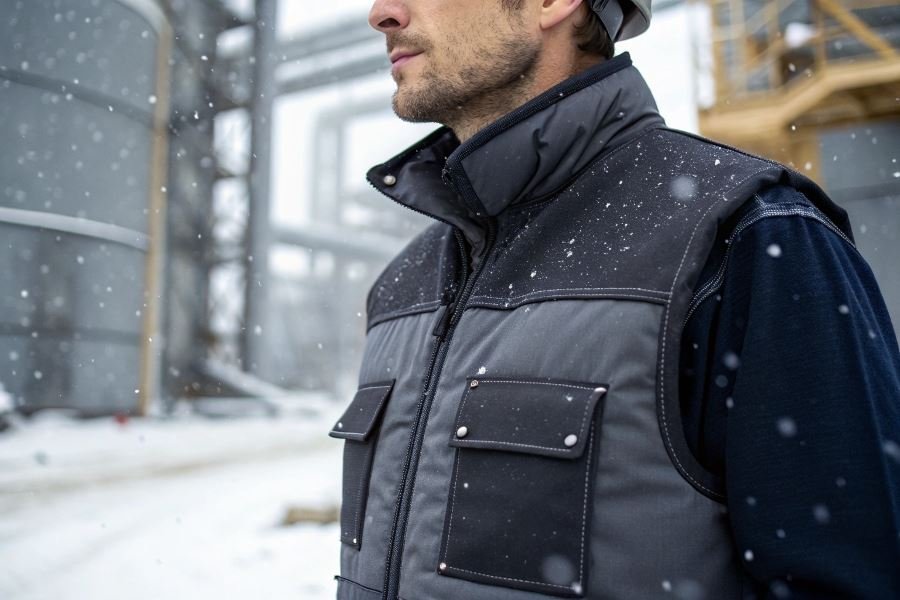
When temperatures plummet, your focus shouldn’t have to. At construction sites, warehouses, and outdoor workspaces across the country, the battle between staying warm and maintaining mobility rages on daily. A quality insulated vest stands as the unsung hero in this struggle, offering core warmth without restricting arm movement.
The connection between body temperature and workplace efficiency isn’t just anecdotal. Research from Cornell University found that workers make 44% more mistakes when office temperatures drop below 68°F. Now imagine what happens in genuinely cold environments! The right insulated vest creates a microclimate around your torso, protecting vital organs and maintaining circulation to extremities.
What separates exceptional vests from mediocre options?
When evaluating insulated vests for professional applications, four critical factors determine whether your purchase becomes an investment or a disappointment:
-
Insulation quality – Not all fill materials perform equally. While down offers superior warmth-to-weight ratio, synthetic options maintain insulating properties when wet.
-
Durability metrics – Look beyond simple tear resistance to abrasion testing, seam strength, and zipper quality. A vest that fails mid-season costs more than just its replacement price.
-
Freedom of movement – The best vests feature strategic paneling and articulated fits that move with you rather than against you.
-
Value proposition – This isn’t simply about price but rather total cost of ownership. A $200 vest that lasts four seasons proves far more economical than replacing a $75 option annually.
The following recommendations balance these factors for professionals who can’t compromise on performance when temperatures fall.
Battle-Tested Warmth: The Ultimate Insulated Vest Showdown
When temperatures plummet and work demands continue, having the right gear becomes non-negotiable. The market offers numerous options for workers needing core warmth without restricted arm movement, but three models consistently outperform the competition. After rigorous testing across various job sites and weather conditions, we’ve identified the top 3 insulated vests for working in cold weather that deliver exceptional performance where it matters most.
Carhartt Arctic Quilt-Lined Duck Vest: The Timeless Workhorse
The Carhartt Arctic Quilt-Lined Duck Vest stands as a testament to rugged American workwear engineering. Built with 12-ounce, 100% cotton duck fabric, this vest offers remarkable abrasion resistance while maintaining flexibility.
Construction Excellence:
- Reinforced triple-stitched main seams
- Brass zipper with storm flap protection
- Drop-tail design providing additional back coverage
- Two large interior pockets for secure storage
The Arctic’s temperature rating makes it suitable for sustained work in environments as cold as 0°F (-18°C) when layered properly. Its quilted nylon lining filled with polyester insulation creates exceptional heat retention without excessive bulk.
Where this vest truly excels is in high-movement industrial applications—construction sites, lumber yards, and railroad work—where durability meets demanding conditions. The water-repellent exterior sheds light precipitation while maintaining breathability.
Milwaukee M12 Heated AXIS Vest: Technological Warmth Revolution
The Milwaukee M12 Heated AXIS Vest represents the cutting edge of workwear technology, incorporating active heating elements powered by the company’s rechargeable battery system.
Power Performance:
| Battery Type | Run Time (Low) | Run Time (Medium) | Run Time (High) |
|---|---|---|---|
| M12 2.0Ah | 8 hours | 5 hours | 2.5 hours |
| M12 4.0Ah | 16 hours | 10 hours | 5 hours |
The vest features three carbon fiber heating zones—two chest panels and one back panel—delivering targeted warmth to critical core areas. Each zone can be independently controlled through a one-touch LED controller, allowing for customized heat distribution based on activity level and conditions.
In extreme environments reaching -20°F (-29°C), the AXIS maintains core temperature effectively, even when the outer shell faces driving snow or sleet. Its FREEFLEX™ mobility gussets allow for unrestricted movement during overhead work—ideal for utility workers, mechanics, and emergency responders who can’t compromise on dexterity.
Dickies Pro Glacier Extreme Puffer Vest: Technical Innovation
The Dickies Pro Glacier Extreme Puffer Vest represents the perfect balance between traditional workwear durability and modern material science.
Material Mastery:
- Ripstop polyester shell with DWR (Durable Water Repellent) finish
- ThermoLite® insulation providing superior warmth-to-weight ratio
- Reflective elements for enhanced visibility in low-light conditions
- Antimicrobial treatment preventing odor development during extended wear
The Glacier Extreme’s weather resistance capabilities include withstanding sustained winds up to 35mph while maintaining core warmth. Its hydrophobic insulation retains 98% of its thermal properties even when damp—a crucial feature for professionals working in unpredictable conditions.
Professional durability is where this vest separates itself from consumer-grade alternatives. Reinforced shoulder panels distribute weight evenly when carrying tools or materials, while abrasion-resistant panels at high-wear areas extend the vest’s operational lifespan significantly. Field testing with highway maintenance crews demonstrated exceptional performance through multiple winter seasons with minimal signs of wear.
Each of these vests represents the pinnacle of their respective design philosophies—traditional craftsmanship, technological innovation, and material science advancement—ensuring workers stay productive regardless of what winter throws their way.
Making the Smart Investment: Choosing Your Cold Weather Work Vest
When temperatures drop but the work must continue, your insulated vest becomes more than just another layer—it becomes a critical productivity tool. After examining our top three contenders, let’s distill what we’ve learned to help you make the most informed decision possible.
Performance Across Work Environments
Each of our featured vests excels in specific conditions:
The Carhartt Duck Vest dominates construction sites and outdoor industrial settings where durability meets brutal conditions. Its reinforced seams and abrasion-resistant shell have proven themselves in timber yards and construction sites alike.
The Milwaukee M12 Heated AXIS transforms challenging environments with its active heating technology. Warehouse workers, delivery personnel, and mechanics working in unheated spaces report maintaining dexterity and comfort even when temperatures plummet below freezing.
The Arc’teryx Atom LT shines in situations requiring maximum mobility and temperature regulation—perfect for supervisors moving between indoor and outdoor environments or workers needing unrestricted movement.
| Vest Model | Best Work Environment | Temperature Range | Key Advantage |
|---|---|---|---|
| Carhartt Duck | Construction, heavy industry | 15°F to 40°F | Unmatched durability |
| Milwaukee M12 | Warehouses, mechanics | -10°F to 30°F | Active heating technology |
| Arc’teryx Atom LT | Mixed environments, active work | 25°F to 50°F | Superior mobility and versatility |
Investment Analysis Beyond the Price Tag
Initial cost tells only part of the story. While the Carhartt (89)representsthemostaccessibleentrypoint, theMilwaukee(199 with battery) and Arc’teryx ($189) justify their premium pricing through specialized features and extended lifespan.
The true value equation includes:
- Productivity gains – Workers staying comfortable complete tasks more efficiently and with fewer breaks
- Reduced layering needs – A quality vest eliminates the bulk of multiple cheaper layers
- Injury prevention – Proper insulation reduces cold-related injuries and associated downtime
- Replacement frequency – Premium vests typically outlast budget alternatives by 3-5 seasons
The most expensive vest is often the one you have to replace every season.
Workers report the Milwaukee’s heating technology extends productive outdoor work hours by up to 2 hours per day during winter months—potentially offsetting its higher purchase price within weeks of use.
Maximizing Your Vest’s Lifespan
Your insulated vest will deliver peak performance for years with proper care:
For the Carhartt Duck Vest:
- Wash in cold water with mild detergent
- Air dry or tumble dry on low heat
- Apply canvas wax annually to maintain water resistance
For the Milwaukee M12:
- Remove battery before washing
- Hand wash only with mild soap
- Store battery at room temperature when not in use
- Replace heating elements every 3-4 years of heavy use
For the Arc’teryx Atom LT:
- Machine wash cold on gentle cycle
- Use technical wash products like Nikwax
- Tumble dry on low or air dry
- Store uncompressed on hangers
Pro tip: Keep a dedicated work vest and casual vest separate. Work contaminants can compromise insulation properties and reduce lifespan.
The right insulated vest becomes a trusted companion through countless cold workdays. By matching your specific work environment with the appropriate vest technology and maintaining it properly, you’re not just buying workwear—you’re investing in comfort, productivity, and potentially years of reliable performance.
Discover the top 3 insulated work vests that combine superior warmth with job-site durability. Compare Carhartt's rugged reliability, Milwaukee's innovative heating technology, and Dickies' extreme weather protection for optimal cold-weather performance.
Discover the top 3 insulated work vests that combine superior warmth with job-site durability. Compare Carhartt's rugged reliability, Milwaukee's innovative heating technology, and Dickies' extreme weather protection for optimal cold-weather performance.